


2026 Specialty Paper Cosmetic Packaging: Key Techniques, Market Trends & Supplier Selection Guide
The global beauty industry is undergoing a quiet but profound transformation. After years of glitter, gloss, and maximalist branding, the pendulum has swung toward something more considered, more tactile, and more responsible. Specialty paper packaging has moved from the periphery to the center of this shift, becoming an indispensable element in how premium cosmetic brands express their identity, protect their formulations, and connect with increasingly discerning consumers.
In 2026, specialty paper—with its rich textures, natural feel, and compatibility with advanced finishing techniques—now represents the majority of high-end cosmetic packaging ranges. According to industry observations, specialty paper packaging accounts for approximately 68% of premium cosmetic lines, while conventional foil-stamped white card has seen its share plummet from 65% in 2024 to just 38% in early 2026. This is not a temporary trend. It is a structural shift driven by consumer demand for authenticity, sustainability, and sensory engagement.
This guide examines the manufacturing techniques that define specialty paper cosmetic packaging in 2026, the market trends shaping brand strategies, and the criteria for selecting a supplier who can deliver on these demands.
- I. Key Manufacturing Techniques for Specialty Paper Cosmetic Packaging in 2026
- 1. Embossing, Debossing & Foil Stamping
- 2. Invisible Security Fibers & Precision Die-Cutting
- 3. Flocked Inserts & Water-Resistant Finishes
- II. Major Trends Driving Specialty Paper Cosmetic Packaging in 2026
- 1. Sustainable Packaging Becomes Essential
- 2. Tactile Minimalism Takes Center Stage
- 3. Flexible Small-Batch Customization for DTC Brands
- III. What to Look for When Choosing a Specialty Paper Packaging Supplier in 2026
- Manufacturing Capability: Manufacturer or Broker?
- Sample Quality and Material Verification
- Quality Control and Production Consistency
- Sustainability Credentials and Capabilities
- Communication, Responsiveness, and Accountability
- Total Landed Cost, Not Just Unit Price
- Conclusion
I. Key Manufacturing Techniques for Specialty Paper Cosmetic Packaging in 2026
The techniques that transform a simple sheet of specialty paper into a premium packaging experience have evolved significantly. Today's leading manufacturers combine precision engineering with material sensitivity, creating packaging that engages both the eye and the hand.
1. Embossing, Debossing & Foil Stamping
Embossing and debossing remain foundational techniques for adding dimension and tactility to specialty paper packaging. Embossing raises selected elements—logos, patterns, or text—above the surface, creating a three-dimensional effect that catches light and invites touch. Debossing presses elements inward, producing a quieter, more restrained tactile impression.
In 2026, the most sophisticated applications involve strategic restraint. Rather than covering an entire surface with decoration, designers are using embossing and debossing selectively—a single embossed logo on an otherwise minimal surface, or a debossed pattern that reveals itself only upon closer inspection. Blind embossing, which creates texture without ink or foil, is particularly effective on uncoated and textured specialty papers, where the play of light across the raised surface becomes part of the design.
Hot foil stamping continues to deliver high-impact metallic accents, but its application has become more refined. Rather than large foil blocks, manufacturers now favor thin foil lines, delicate borders, and precision-stamped logos that catch light without overwhelming the paper's natural character. The combination of foil stamping with embossing—sometimes called sculpted hot-foil embossing—creates a layered effect that is visually arresting and tactilely rich.
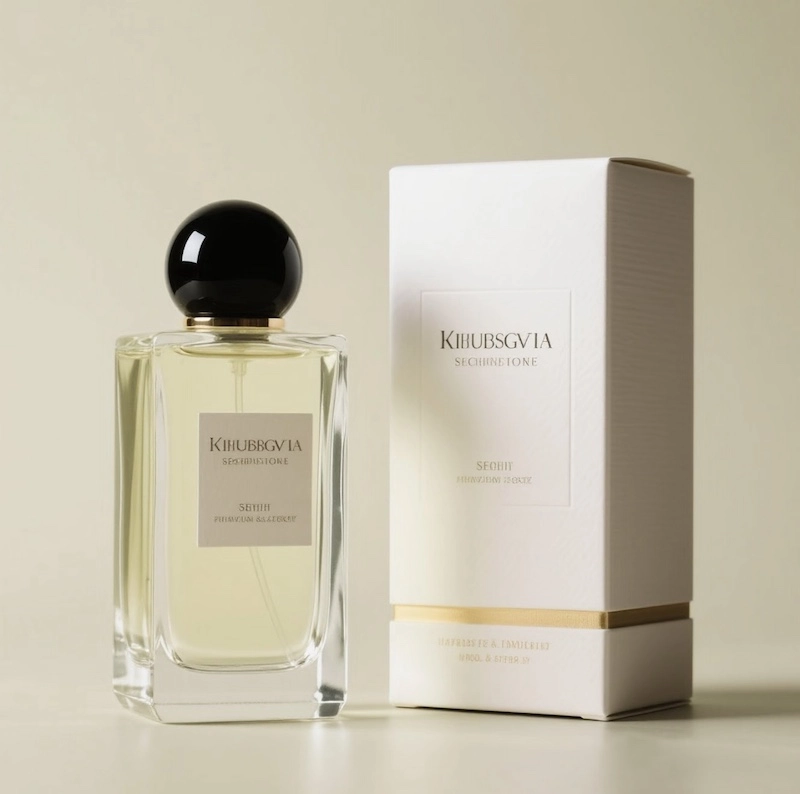
A notable 2026 innovation is the integration of foil stamping with die-cutting to create window-like effects. In a case study from Cir Label, a perfume packaging design used a dual-label structure: the front label was produced on specialty paper with direct hot-foil stamping, then die-cut to remove the center area, leaving only the four corners and a surrounding metallic frame. This preserved the metallic texture while creating a natural “window” through which the artwork on the back label could be revealed, aligning the metallic frame, the floating floral image, and the text on the specialty paper within the same visual plane. This technique demonstrates how traditional finishing methods can be combined in innovative ways to create multi-layered storytelling effects.
2. Invisible Security Fibers & Precision Die-Cutting
As counterfeit cosmetics continue to plague the luxury beauty market, packaging security has become a critical concern. Invisible security fibers embedded directly into specialty paper substrates offer a discreet but powerful authentication solution.
These fibers are embedded into the paper during manufacturing and remain invisible under normal lighting conditions. They fluoresce only when exposed to specific wavelengths of light, such as UV or infrared. This allows brands, retailers, and consumers to verify authenticity using simple detection devices. The technology has evolved significantly: modern security fibers can be formulated to include chemical sensitization features, meaning the material changes color if removal with solvents is attempted, providing an additional layer of tamper evidence.
The integration of security fibers into specialty paper is particularly valuable for cosmetic packaging because it does not compromise the aesthetic quality of the material. The fibers are invisible in daylight and do not affect printability, texture, or finish. They can be combined with other security features—holograms, micro-text, or QR codes—to create multiple layers of protection.
Precision die-cutting complements these security measures by enabling complex structural features that are difficult to replicate. Micro-perforations, intricate window shapes, and tamper-evident tear patterns all require die-cutting tolerances measured in fractions of a millimeter. In 2026, leading manufacturers are using laser-cut dies and CNC-machined tooling to achieve levels of precision that were previously impossible, ensuring that every package meets exacting security and aesthetic standards.
3. Flocked Inserts & Water-Resistant Finishes
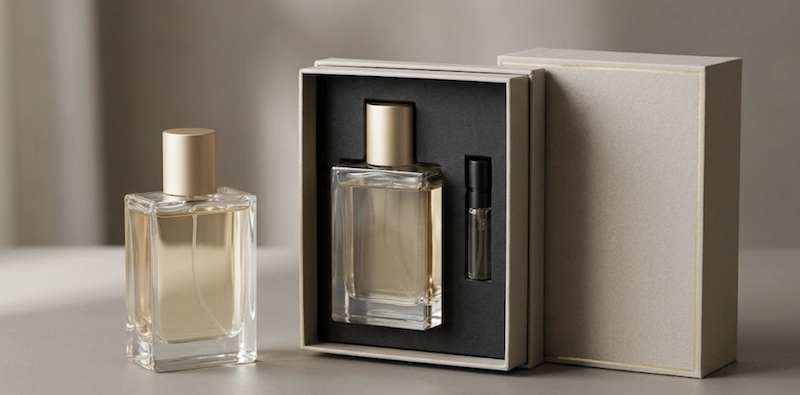
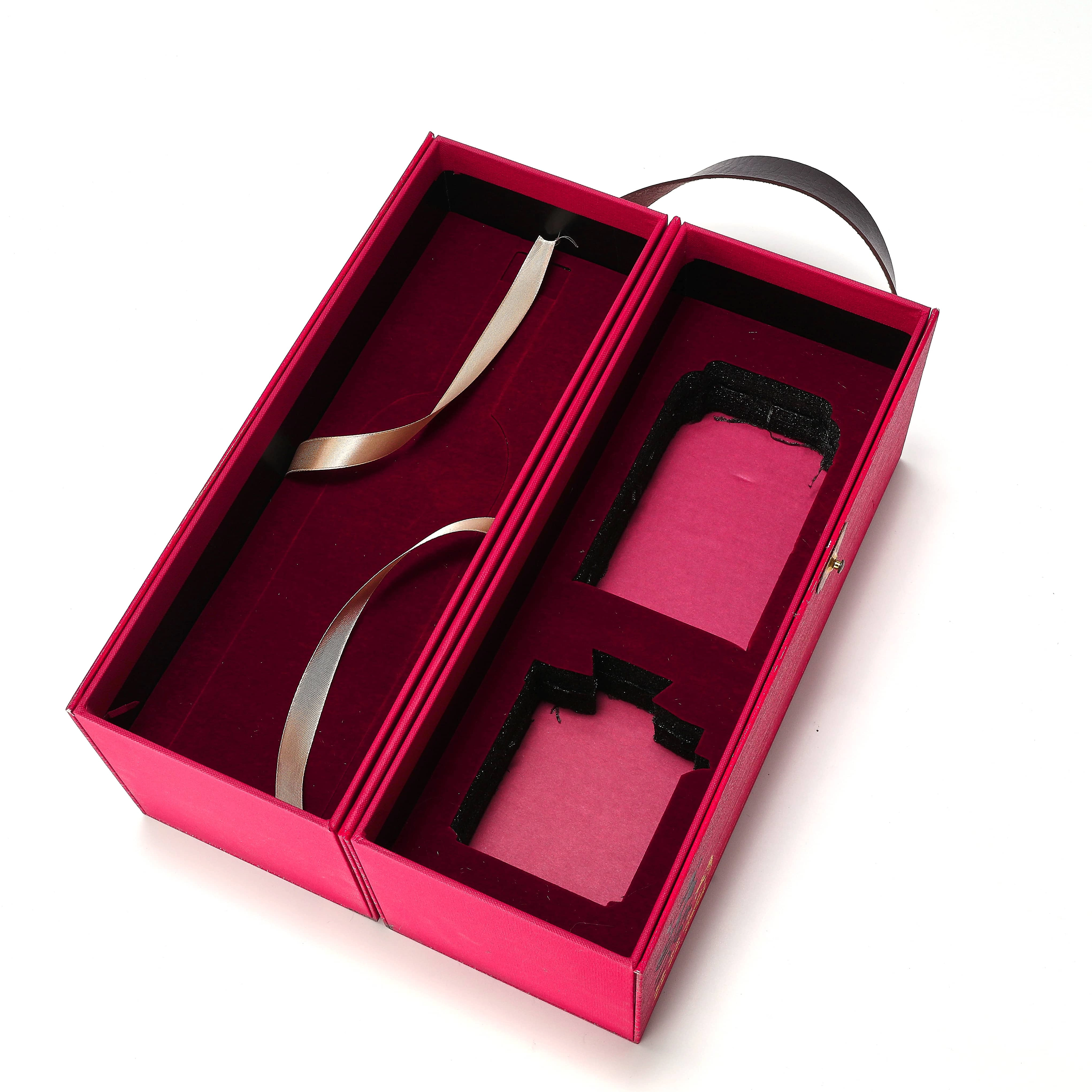
The interior of a cosmetic package is no longer an afterthought. Flocked inserts—created by electrostatically applying short fibers to an adhesive-coated paper or board surface—have become a signature element of premium cosmetic packaging. These inserts provide a soft, velvet-like texture that cradles the product while adding a layer of sensory luxury.
Flocked EVA (ethylene-vinyl acetate) inserts are particularly common in skincare and fragrance packaging. The EVA foam provides structural cushioning and shock absorption, while the flocked surface adds a tactile, premium feel. These inserts are custom-shaped to fit the exact contours of bottles, jars, or tubes, providing in-place protection during transit and an elegant presentation upon opening. The industry standard combines EVA foam with velvet flocking for heavy glass vessels, where both protection and presentation are paramount.
Water resistance has become a critical requirement for specialty paper cosmetic packaging, particularly for products used in bathrooms or humid environments. Traditional paper-based packaging can warp, weaken, or lose its structural integrity when exposed to moisture. In response, manufacturers have developed a range of water-resistant specialty papers and coatings.
Mineral paper, made from calcium carbonate rather than wood pulp, offers a compelling solution. It is waterproof, tear-resistant, and greaseproof, making it suitable for cosmetic packaging that must remain impeccable in humid environments. Notpaper, a mineral paper alternative, achieves up to 99% less water consumption and up to 67% lower CO₂ emissions compared to traditional paper, while eliminating the use of wood entirely.
For traditional specialty papers, water resistance is achieved through bio-based coatings that provide barrier properties against moisture, oils, and fats. The Pulp in Action consortium—which includes Chanel, L'Occitane, L'Oréal, and Shiseido among its members—has demonstrated that paper-based packaging with bio-based coatings can meet the protection requirements of high-quality cosmetic formulations, including a waterproof shower gel tube made of paper and a 500-milliliter refill bag that survived multiple drop tests.
II. Major Trends Driving Specialty Paper Cosmetic Packaging in 2026
The techniques described above do not exist in a vacuum. They are responses to—and enablers of—three dominant market trends that are reshaping cosmetic packaging strategy.
1. Sustainable Packaging Becomes Essential
Sustainability has moved from a competitive advantage to a baseline expectation. In 2026, it is no longer sufficient for a brand to offer recyclable packaging as an option; sustainable packaging is becoming the default, and brands that fail to adapt risk losing market access and consumer trust.
The regulatory landscape is a powerful driver. The European Union's Packaging and Packaging Waste Regulation (PPWR) imposes binding requirements on recyclability, material reduction, and substance restrictions that will fundamentally reshape packaging design across the beauty industry. Consumer expectations are equally forceful: studies in 2026 show purchase intent reaching up to 80% in the UK and 73% in Germany for carton-based home and personal care concepts.
Specialty paper is well-positioned to meet these demands. Unlike plastic or mixed-material packaging, paper-based solutions are renewable, recyclable, and compatible with existing recycling streams. The innovations emerging in 2026—bio-based barrier coatings, mineral paper alternatives, and fiber-based refill systems—demonstrate that paper packaging can deliver the performance, protection, and aesthetic qualities that premium cosmetics require.
The shift is visible across the industry. Neopac's PaperX FiberTop tube has been certified as technically recyclable in the conventional paper stream. Amcor, in partnership with L'Oréal, launched a recyclable refill pouch that replaces traditional multi-material laminates with a PE-based structure claimed to reduce carbon footprint by 76%. These developments signal a fundamental realignment: sustainability is no longer an add-on to packaging strategy; it is the strategy.
2. Tactile Minimalism Takes Center Stage
The visual language of premium cosmetics has shifted decisively toward restraint. Where once brands competed through elaborate graphics and high-saturation colors, the most sophisticated packaging now communicates through material, texture, and proportion.
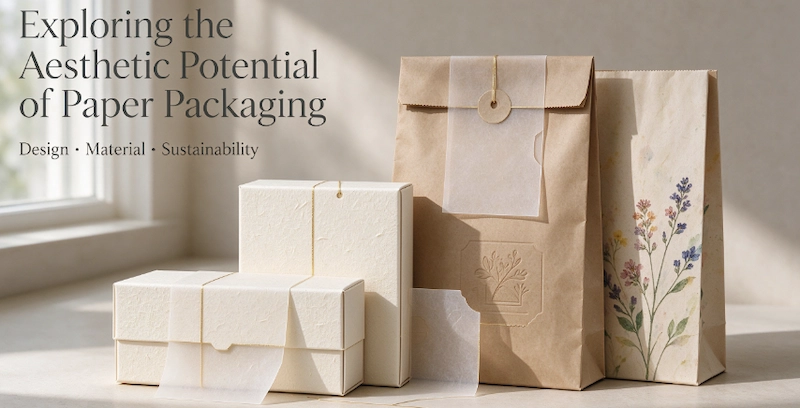
This aesthetic—variously described as “tactile minimalism,” “quiet luxury,” or “material-led design”—places the physical qualities of specialty paper at the center of the brand experience. Understated typography, generous negative space, and a limited color palette allow the paper's natural texture, grain, and weight to become the primary visual and tactile statement.
The Ojai Wild packaging, designed by Dustin Byerley and nominated for a 2026 DesignRush award, exemplifies this approach. The packaging relies on raw textures and natural substrates that mirror the brand's botanical growing process, reinforcing authenticity and avoiding the polished artificiality common in the beauty category. Typography is understated and purposeful, allowing the product itself to remain the primary focal point. Hierarchy is communicated through proportion and spacing rather than graphic noise or high color saturation.
In practical terms, tactile minimalism translates into specific material and finishing choices. Textured specialty papers—including embossed patterns, flocked surfaces, leather-like finishes, and linen textures—now account for 42% of specialty paper packaging orders, up from a much smaller share just two years ago. Biodegradable specialty papers, such as bamboo pulp embossed papers and sugarcane fiber textures, account for an additional 10%. Foil stamping is used sparingly, often limited to a single thin line or a small logo, allowing the paper's character to dominate.
The implications for manufacturers are significant. Tactile minimalism demands exceptional material quality and precision finishing. A poorly executed emboss or an uneven foil stamp is immediately visible on a minimal surface. There is nowhere to hide. This places a premium on manufacturing expertise and quality control—factors that should weigh heavily in supplier selection.
3. Flexible Small-Batch Customization for DTC Brands
The direct-to-consumer (DTC) beauty sector has exploded in recent years, and the packaging industry has had to adapt to its unique requirements. DTC brands launch quickly, test frequently, and iterate based on real market feedback. They cannot afford the traditional packaging model of high minimum order quantities, long lead times, and rigid inventory commitments.
In 2026, the rise of AI-driven flexible supply chains has fundamentally altered the economics of small-batch cosmetic packaging. Platforms now offer “1-piece minimum order,” instant quoting, and AI-assisted design tools that compress the traditional design-to-production cycle from weeks to hours. Brands can order 200 units for a market test, gather real customer feedback on design, texture, and unboxing experience, and then scale production based on validated demand.
This model is particularly valuable for specialty paper packaging, where material and finish choices have a direct impact on perceived quality and brand positioning. A DTC brand can test two or three different specialty paper textures—say, a soft-touch matte finish versus a textured embossed paper—in small batches, measure customer response through conversion rates and reviews, and then commit to a larger order with confidence.
The implications for specialty paper manufacturers are twofold. First, they must be able to handle small runs profitably, which requires flexible production systems and efficient setup processes. Second, they must be able to scale rapidly when a brand's test proves successful. The manufacturers who thrive in this environment are those who have invested in digital printing, automated die-cutting, and modular finishing capabilities that allow for efficient changeovers between jobs.
III. What to Look for When Choosing a Specialty Paper Packaging Supplier in 2026
Selecting the right supplier is one of the most consequential decisions a cosmetic brand can make. The wrong choice can lead to quality problems, missed deadlines, and packaging that fails to deliver on the brand's promise. The right choice becomes a strategic partner who helps the brand navigate material innovations, sustainability requirements, and evolving consumer expectations.
Manufacturing Capability: Manufacturer or Broker?
The first question to ask is deceptively simple: are you a manufacturer or a broker? Many companies selling custom specialty packaging never touch a sheet of paperboard. They take orders, mark them up, and hand production to a plant you will never visit. Brokers can work well for simple projects, but when something goes wrong—a color drifts between the proof and the press run, a die-cut lands slightly off, a ship date slips—the person you have been emailing has to call someone else to find out why. Every answer arrives secondhand.
A manufacturer owns the presses, the dies, and the schedule. When you ask a question, the person answering can walk onto the floor and look. Ask directly: “Which plant will make my boxes, and can I visit it?” A manufacturer names the town. A broker changes the subject.
For specialty paper packaging, this distinction matters even more. Specialty papers have unique grain directions, fold tolerances, and surface characteristics that affect everything from printing to wrapping to durability. A manufacturer with direct control over production can adjust processes in real time to accommodate these material-specific requirements. A broker cannot.
Sample Quality and Material Verification
Always request physical samples before committing to production. Digital proofs cannot represent texture, gloss, metallic reflection, or the subtle variations that define specialty papers. Physical swatches should be reviewed under the lighting conditions in which the packaging will actually be seen—retail lighting for shelf products, natural light for unboxing experiences.
When evaluating samples, check the following:
Paper GSM and composition: Verify that the paper weight and type match your specifications. For specialty papers, check whether the material is coated or uncoated, whether it contains recycled content, and whether it holds any relevant certifications (FSC, PEFC, etc.).
Print quality and color accuracy: Assess whether Pantone spot colors match across different components. CMYK printing supports complex artwork, but specialty papers may absorb ink differently than coated papers, resulting in softer or more muted color appearance.
Finishing quality: Examine embossing depth and consistency, foil stamping alignment and adhesion, and the quality of die-cutting. For flocked inserts, check the density and uniformity of the flocking. For water-resistant papers, test moisture resistance under realistic conditions.
Structural performance: Fold and unfold the sample to assess fold endurance. Check the quality of glued seams and magnetic closures. For rigid boxes and foldable structures, verify that the wrap remains clean around corners and hinges after repeated opening
Quality Control and Production Consistency
A supplier's ability to deliver consistent quality across production runs is as important as their ability to produce a good sample. Ask about their quality control processes: Do they inspect incoming materials? Do they monitor printing and finishing during production? Do they conduct final inspections before shipment?
For specialty paper packaging, quality control must address the specific challenges of the material. Color consistency is more difficult to maintain on textured or uncoated papers. Embossing and foil stamping registration must be tightly controlled to avoid misalignment. Flocked inserts must be checked for uniformity and adhesion. A supplier with rigorous QC systems will have documented procedures and inspection records that demonstrate their commitment to consistency.
Sustainability Credentials and Capabilities
If your brand has sustainability commitments—and in 2026, most do—your supplier must be able to support them. Ask about their access to FSC-certified and recycled-content papers. Inquire about water-based coatings and their compatibility with paper recycling streams. Discuss whether they can provide packaging that meets the PPWR's recyclability and substance restriction requirements.
The most forward-thinking suppliers are already investing in sustainable material innovation. They can advise on emerging options such as mineral paper, bio-based barrier coatings, and fiber-based refill systems. They understand the trade-offs between different materials and can help you make informed decisions that balance sustainability, performance, and cost.
Communication, Responsiveness, and Accountability
The specialty packaging process involves dozens of decisions and potential points of failure. A supplier who communicates clearly, responds promptly, and takes accountability when issues arise is worth more than one who simply offers the lowest price.
Ask for a dedicated point of contact. Confirm whether they have English-speaking staff if you are sourcing internationally. Request written confirmation of production schedules and lead times. A supplier who proactively identifies missing specifications and explains production risks clearly is far easier to work with than one who waits for you to discover problems
Total Landed Cost, Not Just Unit Price
Finally, evaluate suppliers on total landed cost rather than unit price alone. Two quotes that appear similar on a per-unit basis may differ significantly when you account for tooling costs, setup fees, shipping, customs duties, and the cost of quality problems or delays.
Prepare a detailed request for quotation that includes dimensions, material specifications, GSM, printing requirements, finishing processes, components, quantity, packaging requirements, destination, and Incoterms. Compare quotes like-for-like, ensuring that every supplier is quoting on the same specifications. Investigate unusually low prices: they often reflect thinner paper, fewer finishing processes, weaker construction, or different shipping terms.
Conclusion
Specialty paper cosmetic packaging in 2026 is defined by a convergence of forces: the technical sophistication of manufacturing, the cultural shift toward tactile minimalism, the regulatory and ethical imperative of sustainability, and the operational flexibility demanded by DTC brands. These forces are not separate—they are interconnected, and they all point in the same direction: toward packaging that is more considered, more responsible, and more meaningful.
For brands, the opportunity is significant. Specialty paper offers a canvas for brand expression that is both timeless and contemporary. It communicates quality through material honesty rather than decorative excess. It aligns with the sustainability expectations of modern consumers. And it creates a sensory experience that plastic packaging cannot replicate.
For manufacturers, the challenge is to meet these expectations with precision, consistency, and creativity. The suppliers who will lead in 2026 and beyond are those who combine technical mastery with material sensitivity, who invest in sustainable innovation, and who understand that their role is not simply to produce boxes but to help brands tell their stories through the physical experience of packaging.
The surface, in other words, has become the story.
Special Shape Boxes
How long does it usually take from design confirmation to delivery?
The lead time is usually 15-25 days, depending on the production of the order
Rigid Lift-off Box
How long does it usually take from design confirmation to delivery?
The lead time is usually 15-25 days, depending on the production of the order
Can I order a sample of my rigid box?
Yes, we strongly recommend that you do so, we provide a variety of sample types to meet different usage situations and help you guarantee the best results!
OEM Services
How long does the production process take?
Production time depends on order quantity, complexity, and customization. Generally, the process takes 7-20 days after design confirmation and sample approval. We strive for fast turnaround times while maintaining high-quality standards.
Rigid Drawer Box
How long does it usually take from design confirmation to delivery?
The lead time is usually 15-25 days, depending on the production of the order

Start Your Packaging Journey Today
Discover Our Curated Collection of Bespoke Packaging Cases & Tailored System Solutions
© 2025 WINPACK PRINTING. All rights reserved

Winpack Printing
https://www.facebook.com/alexwenhua123?mibextid=ZbWKwL
https://www.instagram.com/wenhua_printpackaging/