




Magnetic Closure Box vs Drawer Box: Which Is Right for Your Product?
A practical B2B guide to comparing rigid magnetic boxes and drawer boxes by structure, presentation, product protection, cost, materials, and sampling requirements.
VS
RIGID DRAWER BOX
Choosing between a magnetic closure box and a rigid drawer box is more than a packaging design decision. The structure you select can affect how customers interact with your product, how securely items fit inside the packaging, how much space finished boxes occupy, and which manufacturing details need careful control.
Both styles are commonly considered for premium gift packaging, cosmetics, jewelry, and branded product sets. However, they create different opening experiences and present different design and production considerations.
Quick Answer
Choose a magnetic closure box when your product benefits from a hinged opening and a broad, immediate reveal of the contents. Consider a rigid drawer box when you want a controlled sliding movement and a tray-based presentation. Neither structure is automatically stronger, cheaper, or more sustainable. The best choice depends on product dimensions, weight, insert design, printing requirements, order quantity, and shipping conditions. For a reliable decision, compare physical samples and quotations based on equivalent specifications.
Key Takeaways
What Is a Magnetic Closure Box?
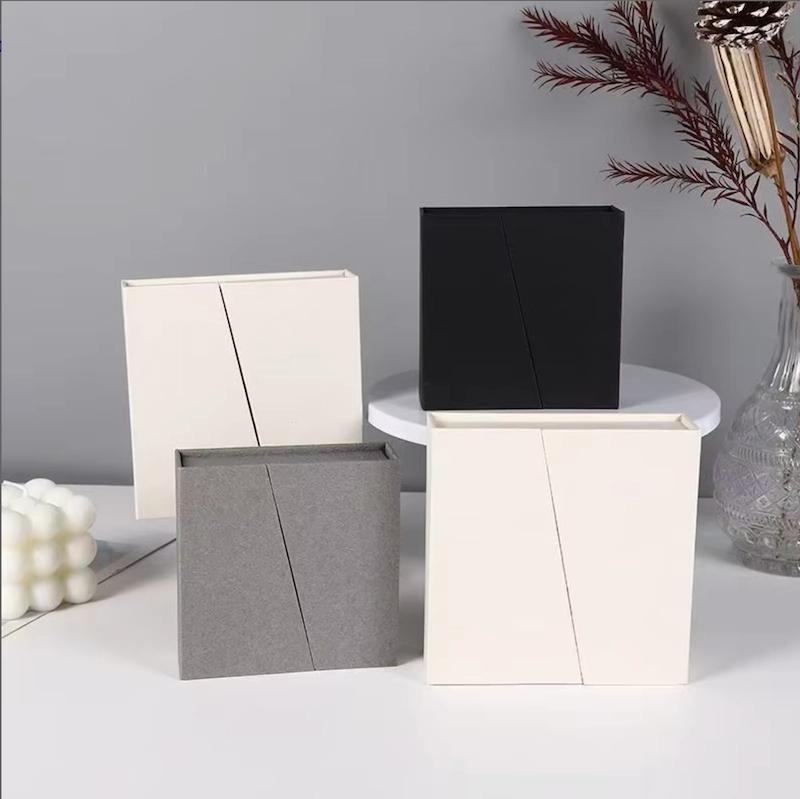
A magnetic closure box is a packaging structure that uses embedded magnets to help keep a lid or flap closed. A common rigid version features a hinged lid attached to the main box body, often with paper-wrapped rigid board construction.
When the lid opens, the product and interior presentation can be viewed together. This makes magnetic boxes a useful design option for gift sets and products where the presentation of the complete interior layout matters.
Key Structural Considerations
A magnetic closure should not be treated as a substitute for a protective insert or shipping carton. Its primary function is to support the intended opening and closing experience.
Explore Winpack Printing's custom rigid magnetic boxes for product-style references.
What Is a Rigid Drawer Box?
A rigid drawer box, also known as a sleeve-and-tray box or sliding gift box, consists of an outer sleeve and an inner tray.
The tray moves in and out of the sleeve to reveal the product. Unlike a hinged magnetic box, the opening movement is linear, allowing the contents to appear gradually.
Drawer boxes can work particularly well when products are arranged in a fitted tray or when the brand wants the opening movement itself to be part of the unboxing experience.
Key Structural Considerations
A tray that fits too tightly may be difficult to open. Excessive clearance may produce unwanted movement or an inconsistent feel.
Magnetic Box vs Drawer Box: Key Differences
The most significant difference between the two structures is how the packaging opens and presents its contents.
| Comparison Factor | Magnetic Closure Box | Rigid Drawer Box |
|---|---|---|
| Opening mechanism | Hinged lid or flap with magnetic closure | Sliding tray inside an outer sleeve |
| Product reveal | Broad and relatively immediate | Gradual as the tray slides outward |
| Main structural control | Lid alignment and closure positioning | Tray clearance and sliding friction |
| Insert placement | Inside the main box body | Inside the sliding tray |
| Opening accessories | Magnetic components | Optional ribbon pull or finger notch |
| Sampling priority | Closure feel and lid fit | Sliding movement and tray fit |
Both structures can be customized with printed papers, decorative materials, inserts, and finishing treatments where technically appropriate.
Which Box Should You Choose?
For procurement teams, the decision should begin with the product's requirements rather than a preference for one opening style.
| Packaging Priority | Consider First | What to Verify |
|---|---|---|
| Display several products together | Magnetic closure box | Lid clearance and insert layout |
| Create a gradual product reveal | Drawer box | Sliding friction and tray stability |
| Package compact jewelry | Drawer box | Insert fit and product movement |
| Present a large premium gift set | Magnetic closure box | Dimensions, lid movement, and structural strength |
| Include multiple compartments | Either structure | Insert geometry and usable internal space |
| Reduce shipping volume | Compare engineered designs | Carton packing quantity and finished dimensions |
| Minimize packaging cost | Request both quotations | Materials, inserts, finishes, quantity, and logistics |
| Protect fragile products | Either, with suitable protection | Product retention and appropriate transit testing |
Scenario 1: A Premium Skincare Gift Set
A beauty brand plans to package three skincare bottles in a presentation box and wants customers to see all three products immediately after opening.
A magnetic closure box may be worth evaluating first. The buyer should still check bottle weight, glass protection, insert fit, and lid clearance.
Scenario 2: A Compact Jewelry Collection
A jewelry brand wants a controlled sliding opening and dedicated compartments for small accessories.
A rigid drawer box may be suitable, provided the tray slides smoothly and the products remain secure when the tray is extended.
Scenario 3: An International Corporate Gift Project
A company needs customized packaging for promotional gifts shipped internationally. Both structures may meet the branding requirements.
The buyer should compare unit prices, finished box dimensions, outer carton packing quantities, freight implications, and assembly requirements.
Which Structure Provides Better Product Protection?
Neither magnetic closure boxes nor drawer boxes should be considered inherently more protective. Protection depends on the complete packaging system, including board construction, product fit, inserts, closures, and transportation packaging.
Board Construction and Product Weight
Rigid board provides shape and structural support, but the appropriate specification depends on the dimensions and weight of the contents.
Increasing board thickness may improve certain aspects of rigidity, but it also affects material consumption, weight, dimensions, and cost. Buyers should select board specifications based on the actual product requirements.
For a more detailed overview of board cores, wrapping materials, and decorative options, read our guide to rigid box materials and paperboard options.
Inserts and Product Retention
Custom inserts are important when products must remain positioned during handling. Possible insert concepts include die-cut paperboard, molded pulp, and suitable foam-based constructions.
For fragile or heavy items, provide the product dimensions, weight, and any sensitive surfaces. Actual insert material availability and suitability should be confirmed with the manufacturer.
Closure Is Not the Same as Transit Protection
Magnetic closures help hold lids in place, while drawer structures depend on sleeve-to-tray fit and any additional retention features. Neither should be assumed to prevent opening or product movement under every shipping condition.
For packaging intended for shipping, buyers should evaluate the complete packed product rather than relying on the box closure alone. The ISTA packaging test procedures provide a recognized framework for evaluating packaged products under different transport conditions. The appropriate test should be selected according to the product and distribution environment.
Cost Factors B2B Buyers Should Compare
A magnetic closure box is not always more expensive than a drawer box, and a drawer box is not automatically the lower-cost option.
Cost depends on design complexity, material consumption, order quantity, finishing processes, assembly requirements, and packaging configuration.
Magnetic Closure Box Cost Drivers
A magnetic box quotation may be influenced by the number and positioning of magnets, hinged-lid construction, wrapping requirements, decorative finishing, and insert complexity.
Rigid Drawer Box Cost Drivers
Drawer box costs may be influenced by the separate sleeve and tray components, required fit accuracy, wrapping materials, pull features, and insert construction.
Compare the Total Packaging Cost
A lower unit price does not necessarily mean a lower total landed packaging cost. Ask suppliers to quote equivalent product requirements and identify structural differences.
Materials, Printing and Finishing Options
Both rigid box structures may be manufactured with paperboard cores and printed or decorative wrapping papers.
Common customization approaches in the packaging industry include CMYK printing, spot-color printing, hot foil stamping, embossing, debossing, spot UV, and surface coatings or laminations.
Actual options depend on the material, box structure, production method, and the manufacturer's confirmed capabilities.
Finishing Considerations for Magnetic Boxes
Decorative treatments should be evaluated around hinged areas, closure points, and lid edges. Wrapping materials and surface treatments can affect folding behavior, appearance, and alignment.
Finishing Considerations for Drawer Boxes
Drawer boxes require attention to surfaces that come into contact during sliding. Material buildup, surface texture, or coatings may influence friction and clearance between the sleeve and tray.
For custom rigid boxes with specific brand colors, buyers should confirm artwork requirements, color profiles, and proofing methods before production. The International Color Consortium's color management resources provide useful technical background on consistent color reproduction across printing workflows.
Sustainability Considerations
Neither magnetic closure boxes nor drawer boxes should automatically be described as more environmentally friendly.
Environmental performance depends on material composition, manufacturing choices, adhesives, magnets, coatings, transport requirements, and the available recovery or recycling systems.
When comparing the environmental impact of magnetic closure boxes and drawer boxes, buyers should consider material consumption, packaging weight, reuse potential, and end-of-life handling. The U.S. EPA's sustainable materials management hierarchy emphasizes source reduction and reuse as important approaches to reducing waste.
Buyers requiring recycled content, responsible sourcing documentation, or other environmental attributes should specify these requirements in the RFQ and request supporting evidence.
Shipping, Storage and Assembly Considerations
Many conventional rigid magnetic boxes and drawer boxes are shipped in their assembled form, which can influence shipping volume and storage requirements.
However, the actual logistics impact depends on box dimensions, packing configuration, protective materials, and transport conditions.
Shipping Information to Confirm
Some packaging designs can be engineered for collapsible or flat-pack shipment. These should be assessed separately from conventional assembled rigid boxes.
For overseas orders, freight comparisons should be based on actual packing specifications rather than box style alone.
Customization and Sampling: What Should Buyers Check?
A physical sample helps buyers identify structural or finishing problems before approving a custom packaging order.
The most useful sample review combines appearance checks with functional evaluation.
Magnetic Closure Box Sampling Checklist
Rigid Drawer Box Sampling Checklist
For either structure, review internal dimensions, insert fit, printing appearance, finishing quality, and product retention.
Before approving mass production, buyers should review physical samples for dimensional accuracy, opening performance, insert fit, and finishing quality. Our custom rigid box sampling and prototyping guide explains the key stages of sample development and approval.
How to Choose a Custom Rigid Box Supplier
A suitable packaging supplier should be able to explain the proposed structure, materials, manufacturing considerations, and limitations.
When comparing manufacturers, ask how they handle structural sampling, material specifications, print approval, dimensional tolerances, and production quality expectations.
For magnetic boxes, discuss lid alignment and closure consistency. For drawer boxes, discuss sleeve-to-tray fit and sliding behavior.
Buyers should also clarify which costs and services are included in the quotation, especially inserts, printing, special finishes, sampling, and packing.
Supplier Evaluation Questions
What Information Should You Include in Your RFQ?
An accurate RFQ allows a packaging manufacturer to compare options against the same product and purchasing requirements.
| RFQ Field | Information to Provide |
|---|---|
| Box structure | Magnetic closure, drawer box, or both |
| Internal dimensions | Length × width × height, with units |
| Product information | Photos, dimensions, weight, and fragility |
| Quantity | Estimated order quantity per design |
| Artwork | Design files, dielines, or reference artwork |
| Materials | Preferred board and wrapping paper, if known |
| Printing | Color requirements and inside/outside printing |
| Finishes | Foil stamping, embossing, coating, or other treatments |
| Inserts | Product layout, insert preferences, and compartments |
| Delivery | Destination and target timing |
If you are unsure which structure to choose, request a comparison quotation for both options.
Ask the supplier to explain differences in material usage, insert design, construction, and shipping configuration.
Frequently Asked Questions
Is a magnetic box more expensive than a drawer box?
Not always. Magnetic components and hinged construction affect one design, while sleeve-and-tray manufacturing and fit requirements affect the other. A reliable comparison requires quotations based on equivalent specifications.
Which box is better for fragile products?
Either may be suitable when combined with appropriately engineered inserts and transport packaging. Product fragility, weight, and distribution conditions matter more than the opening mechanism alone.
Can both box types use custom inserts?
Yes. Both structures can accommodate insert designs, subject to product dimensions, weight, material suitability, and manufacturing feasibility.
Are drawer boxes suitable for luxury packaging?
Yes. Their sliding mechanism can create a controlled premium opening experience. The final presentation depends on materials, fit, printing, and finishing quality.
Which structure is better for international shipping?
Neither is automatically more efficient. Buyers should compare master carton dimensions, packing quantities, freight requirements, and any assembly needs.
Should I request a sample before mass production?
For a new custom structure, physical sampling is advisable to evaluate fit, opening behavior, appearance, and product presentation. The sample approval process and any applicable charges should be confirmed with the supplier.
Compare Both Packaging Structures with Winpack Printing
Choosing between a magnetic closure box and a rigid drawer box depends on your product, desired unboxing experience, customization requirements, and purchasing priorities.
Share your product dimensions, weight, estimated order quantity, product photos, artwork, preferred finishes, and delivery destination. Winpack Printing can review your requirements and discuss potential packaging structures, subject to technical feasibility and project confirmation.
Request a Packaging Quotation







Winpack Printing
https://www.facebook.com/alexwenhua123?mibextid=ZbWKwL
https://www.instagram.com/wenhua_printpackaging/