


What is a "Mailer Box"? Why should enterprises consider adopting it?
In the fiercely competitive field of e-commerce and direct-to-consumer (DTC) brands, the function of packaging is no longer limited to physical protection. It arrives at the customer's door from the warehouse through the logistics network, and actually plays the role of a brand contact point. Among many packaging forms, Mailer Boxes have been widely adopted from start-ups to medium-sized enterprises in recent years. This article aims to explain the basic definition and core advantages of Mailer Boxes, and sort out seven feasible strategies to reduce printing costs without sacrificing packaging quality. These strategies are suitable for e-commerce operators at different stages of development.
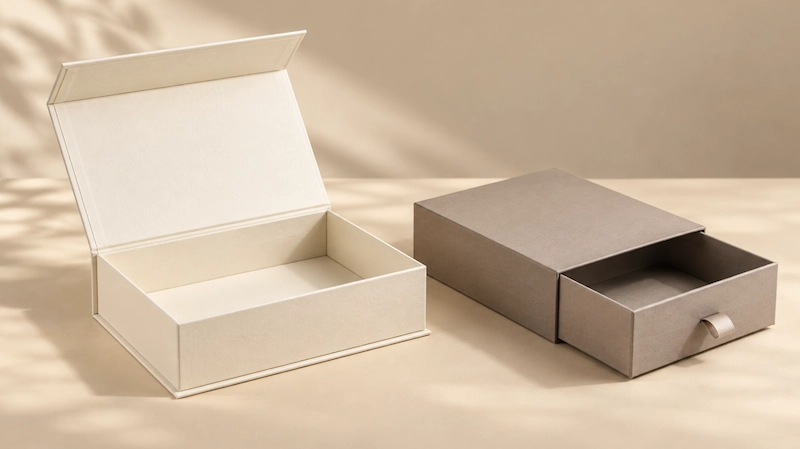
Mailer Box is a packaging container made of corrugated board, which is designed to deliver a single piece of goods directly in the mailing or express delivery scenario. Compared with conventional shipping boxes, Mailer Boxes emphasize the neatness of the appearance in structure and are usually used to carry lightweight products - such products not only need sufficient pressure protection in the circulation process, but also need to present a positive visual impression in the unpacking process.
- Why should enterprises adopt Mailer Boxes?
- 1. Brand building and customer experience
- 2. Transportation cost savings
- 3. Protection measures and product safety
- 4. Sustainability and environmental protection
- 5. Operational efficiency
- Two strategies to control printing and transportation-related costs under the premise of maintaining packaging quality standards.
- Strategy 1: Reasonably adjust the size of the packaging box
- Strategy 2: Reduce the complexity of printing
- Conclusion
Why should enterprises adopt Mailer Boxes?
1. Brand building and customer experience
The external printing area of the Mailer Box can be used to display the brand logo, color and graphic design, and these visual elements directly carry brand identification information. In recent years, the unboxing video has spread on social media platforms, making the unboxing link of packaging an important contact point for consumers to contact brands. A well-designed Mailer Box can improve potential consumers' brand recall and may encourage first-time buyers to spontaneously share in social networks, and then turn into an informal promoter of the brand. In addition, the Mailer Box continues to present brand information throughout the transportation process from the warehouse to the recipient, which is equivalent to a mobile medium through the logistics chain.
2. Transportation cost savings
The Mailer Box is made of lightweight corrugated board and can be customized according to the product size, which helps to reduce the transportation cost of logistics carriers by dimensional weight. Size-matched packaging avoids paying for excess space, and compact boxes can reduce warehousing space. In some cases, reducing the packaging size is even better than replacing it with cheaper packaging materials.
3. Protection measures and product safety
Although the Mailer Box is made of lightweight materials, its box wall strength and cover closure structure can effectively limit the displacement of the contents during transportation. This physical constraint reduces the probability of product damage caused by collision, thus reducing the additional costs of returns and replacements.
4. Sustainability and environmental protection
Some consumers have taken the recyclability of the packaging into consideration when purchasing. Mailer Boxes made of recyclable kraft paper or corrugated board can convey the response of enterprises to their environmental responsibility to the market. At the same time, if such materials are compatible with existing municipal or commercial recycling systems, they may reduce waste disposal fees and dilute comprehensive costs throughout the life cycle.
5. Operational efficiency
The self-locking structure (without tape or auxiliary sealing materials) shortens the packaging operation time of a single package. For brands with large orders and fast turnover, this time saving will be directly translated into the improvement of labor cost and outbound efficiency.
Two strategies to control printing and transportation-related costs under the premise of maintaining packaging quality standards.
Strategy 1: Reasonably adjust the size of the packaging box
Adjusting the packaging size is a direct way to reduce the overall cost. Excessive boxes not only increase transportation expenses due to dimensional weight pricing, but also increase the amount of void fill and take up additional warehouse space. Specific operations can include: calculating the impact of dimensional weight of different major carriers under different transport scales; making the inner diameter of the box as close as possible to the actual size of the product; testing different size schemes through small batch samples to balance the protective performance and comprehensive cost. Size matching should be moderate - if the box is too large, the freight and filling costs will increase, and if it is too small, it will increase the risk of damage and returns.
Strategy 2: Reduce the complexity of printing
The proportion of printing and post-processing processes in the total cost of packaging units is usually 15% to 35%. The ratio increases with the superposition of processes such as the number of colors, varnishing, embossing or spot UV, and the setting cost also increases. Reducing printing costs can be cut from the following paths: limit the number of colors (the cost of 1-2 color printing is obviously lower than the full CMYK four-color process); simplify the layout design and reduce the level of visual elements; carefully choose special surface treatments, such as foil stamping or embossing, because of its high unit price, it is only suitable for use in key parts; or the substrate Body integration design, for example, the natural brown color of kraft paper can form a style by leaving white or single-color printing, thus eliminating the full-plate background color coverage.
In terms of cases, after some packaging printing enterprises adopted Expanded Color Gamut (ECG) printing technology, the average printing line speed increased from 200 m/min to 400 m/min. At the same time, the unit energy consumption decreased, and there was no obvious loss in the visual color effect.
Conclusion
The Mailer Box is intermediate between ordinary corrugated shipping boxes and high-end gift boxes in the packaging line: the former focuses on protection and neglects display, while the latter emphasizes visual but is expensive. The Mailer Box takes into account both - it not only uses the corrugated structure to provide the necessary compression strength and cushioning performance, but also carries the brand visual identity through the printable outer surface. For e-commerce and direct-to-consumer (DTC) brands, the use of Mailer Boxes can affect multiple cost and value dimensions at the same time: transportation costs are reduced by size adaptation and lightweight materials, brand recognition is enhanced through continuous unpacking contacts, and customer experience is improved by the neatness and beauty of the unpacking process. The outbound efficiency has also been improved by the design of self-locking structure and so on.
The core point of this article is that packaging cost control should be positioned as efficiency optimization throughout the life cycle, rather than simply reducing material cost. In the specific implementation, one of the above strategies can be selected for piloting, quantifying its impact on indicators such as transportation costs, damage rate or customer feedback, and then gradually extending to other links according to data feedback. This gradual adjustment path will eventually produce observable positive effects in terms of profit margin and customer satisfaction.

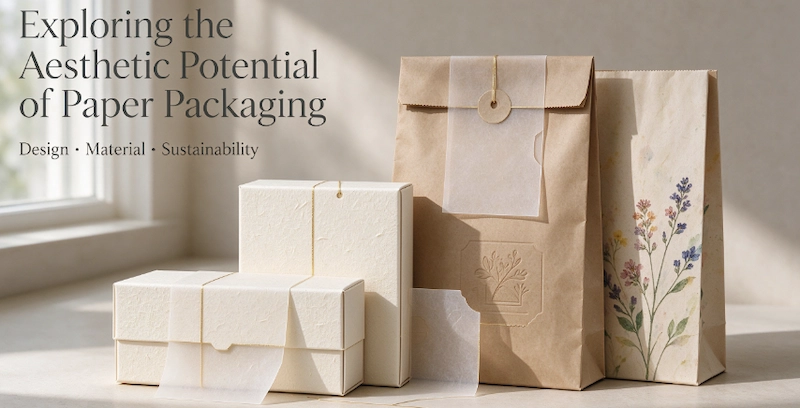
About Printing Craftsmanship
What is the difference between offset and digital printing?
Offset Printing: Best for large-volume production, offering high-quality prints at a lower cost per unit.
Digital Printing: Suitable for short runs, allowing quick setup, customization, and fast printing.
How does UV printing work?
UV printing uses ultraviolet light to cure ink instantly, resulting in vibrant colors, water resistance, and high durability. It is commonly used for packaging, signage, and promotional items.
About Us
What are your lead times?
Production typically takes 12-16 days, and 16-21 days for larger volume orders. Shipping times will depend on the shipping channel you choose.
How to start the mass production?
Once received the 30% deposite, we will arrange the mass prouction.The balance need to be paid before delivery.
Rigid Magetic Boxes
Can I get a sample before placing an official order?
Yes, we provide samples to our customers. Please contact our sales team to inquire about sample availability and pricing.

Start Your Packaging Journey Today
Discover Our Curated Collection of Bespoke Packaging Cases & Tailored System Solutions
© 2025 WINPACK PRINTING. All rights reserved

Winpack Printing
https://www.facebook.com/alexwenhua123?mibextid=ZbWKwL
https://www.instagram.com/wenhua_printpackaging/