




Automation and Machinery Commonly Used by a Custom Packaging Manufacturer
- Why automation matters in modern packaging production
- Production capacity, consistency and traceability
- Cost per unit and total landed cost
- Core machinery and their roles in custom packaging manufacturing
- Prepress and plate-making systems
- Printing presses: flexo, offset (litho) and digital
- Die-cutting, creasing and finishing lines
- Automation integration: software, inspection and material handling
- Workflow and MIS integration
- In-line inspection and quality control
- Robotic handling and palletizing
- Selecting machinery as a custom packaging manufacturer
- Matching technology to product mix
- Quantifiable criteria: speed, TCO and space
- Maintenance, spare parts and vendor support
- Practical recommendations and common pitfalls
- Start with the product, not the machine
- Energy, sustainability and material choices
- Automation ROI checklist
- Case profile and supplier capabilities: Winpack
- Frequently Asked Questions (FAQ)
- 1. What core machines should a startup custom packaging manufacturer buy first?
- 2. How do I decide between digital and offset printing?
- 3. What inspection systems are necessary for pharmaceutical or food packaging?
- 4. How important is MIS integration with production equipment?
- 5. What are common maintenance pitfalls that reduce uptime?
- Contact and next steps
I work regularly with custom packaging manufacturers to design production lines that balance speed, cost, and quality. In this article I summarize the automation and machinery most commonly used in custom box and paper packaging production, explain why each machine matters to operational performance, and provide evidence-based guidance you can use to evaluate equipment choices, improve throughput, and reduce waste. My descriptions link to industry resources so you can verify standards and specification claims.
Why automation matters in modern packaging production
Production capacity, consistency and traceability
As a custom packaging manufacturer, you produce runs that vary from prototypes to mid-volume production and sometimes high-volume repeat orders. Automation—whether in prepress, printing, die-cutting, gluing, or inspection—reduces unit variability and shortens cycle time. Automated feeders, register-control systems, and in-line inspection give consistent quality and enable traceability for regulated sectors such as food and pharmaceuticals. For regulatory context on food-contact packaging guidance see the U.S. Food & Drug Administration (FDA) documentation on packaging and food-contact substances https://www.fda.gov/food/packaging-food-contact-substances-fcs.
Cost per unit and total landed cost
Automation shifts costs from labor to capital. I advise teams to model cost-per-unit across multiple scenarios—manual, semi-automated, and fully automated—factoring labor rates, machine depreciation, maintenance, scrap rates, and setup times. Industry groups such as PMMI (The Association for Packaging and Processing Technologies) provide benchmarking data that can be useful when building ROI models https://www.pmmi.org/.
Core machinery and their roles in custom packaging manufacturing
Prepress and plate-making systems
Prepress automation includes file preparation, color management, and screen/plate making. For flexography and offset processes, an automated plate-making system improves repeatability and reduces human error. Many manufacturers now run CTP (computer-to-plate) or digital plate-making lines with press-ready output. This stage sets the baseline for color accuracy and print registration.
Printing presses: flexo, offset (litho) and digital
Printing is a core differentiator for a custom packaging manufacturer. Each technology has a sweet spot:
- Flexographic presses excel on corrugated and some folding cartons—good for variable substrate thickness and high-speed runs.
- Offset (lithographic) presses provide superior image quality for many folding carton applications—Heidelberg is a leading vendor in this space https://www.heidelberg.com/global/en/home.jsp.
- Digital presses (e.g., HP Indigo, Xerox, Kodak Prosper families) are ideal for short runs, variable data, and rapid proof-to-production transitions.
Choosing the right press reduces makeready time and waste. I usually recommend a hybrid strategy: maintain at least one high-quality offset or gravure press and invest in a digital press for proofs and short customized runs.
Die-cutting, creasing and finishing lines
Die-cutting determines the structural accuracy of custom boxes. Modern servo-driven die-cutters and rotary die systems deliver high throughput and allow quick tool changes. For rigid boxes and specialty shapes, automatic creasing, embossing, laminating and hot-stamping units are critical to achieve High Quality finishes while keeping cycle times low.
Automation integration: software, inspection and material handling
Workflow and MIS integration
Machine automation is only as effective as the workflow that feeds it. An integrated MIS (management information system) connects order intake, prepress, costing, scheduling and shop-floor control. I often advise suppliers to choose MIS platforms with API support to integrate presses, cutters and finishing lines so job tickets and press parameters can be pushed automatically and changeovers are pre-configured.
In-line inspection and quality control
Automated camera inspection and densitometry integrated into printing and finishing lines reduce the need for manual QC and enable 100% inspection on critical jobs. For regulated industries, in-line serialization and inkjet anti-counterfeiting solutions are another layer often required. Organizations such as ISO reference packaging standards that manufacturers should consider—see general packaging classifications at ISO https://www.iso.org/ics/55.020/x.
Robotic handling and palletizing
Robotics for material handling—pick-and-place, case packers, and palletizers—reduce labor and speed throughput. Collaborative robots (cobots) can assist in post-press tasks for mid-sized operations, while high-volume plants rely on full robotic palletizing cells for consistency and safety.
Selecting machinery as a custom packaging manufacturer
Matching technology to product mix
When I evaluate machinery choices I map each piece of equipment to product families: folding carton runs, rigid boxes, display boxes, tubes, windows and special shapes. For example, if your portfolio includes many short runs of luxury gift boxes, a high-quality digital press plus a finishing line with embossing and hot-foil capability will give faster turnaround and lower inventory risk. If you focus on high-volume corrugated packaging, invest in a corrugator, large-format flexo printers, and high-speed die-cutters.
Quantifiable criteria: speed, TCO and space
The most objective way to compare machines is with a small table. Below I compare common press types on three quantifiable metrics: typical speed (sheets/min or impressions/min), best-case unit cost for the job type, and ideal run length. Data ranges are representative from manufacturer specs and industry benchmarks.
| Press Type | Typical Speed | Cost Strength | Ideal Run Length |
|---|---|---|---|
| Offset (Litho) | 6,000–18,000 sheets/hr (dependent on size) | Low unit cost on medium–long runs | 5,000–200,000+ |
| Flexo | Up to 200–400 m/min (web speeds) | Efficient for corrugated/continuous substrate | 10,000–1,000,000+ |
| Digital | 500–3,000 sheets/hr (varies) | Low makeready, high per-sheet cost but ideal for variable data | 1–10,000 |
Sources: vendor specifications (e.g., Heidelberg for litho), PMMI industry benchmarks and vendor datasheets. See Heidelberg product portfolio for reference https://www.heidelberg.com/global/en/home.jsp and PMMI for throughput context https://www.pmmi.org/.
Maintenance, spare parts and vendor support
My experience shows that uptime is the most valuable KPI. Evaluate vendors on mean time to repair (MTTR), availability of local support, and the supply chain for consumables like plates, inks, anilox rolls and cutting dies. Consider remote diagnostics capability and whether the machine can send service alerts to minimize downtime.
Practical recommendations and common pitfalls
Start with the product, not the machine
Begin machine selection by defining the product mix, required finishes, and acceptable lead times. I see too many buyers reverse this process and acquire capabilities they rarely use. Use a phased investment plan: proofing/digital first, then offset/flexo, then high-speed finishing as volumes justify.
Energy, sustainability and material choices
Sustainability is now a purchasing criterion for many clients. Equipment that reduces waste and supports recycled substrates can deliver marketing value and cost savings. Also consider energy consumption: modern servo drives and energy-recovery systems often lower total operating cost. For broader context on packaging sustainability, review general packaging topics on Wikipedia https://en.wikipedia.org/wiki/Packaging.
Automation ROI checklist
Before buying, I run a checklist: current production throughput, targeted increase, payback horizon (usually 2–5 years), spare-part logistics, staff training needs, and digital integration to MIS. This avoids underutilized capital equipment and long payback periods.
Case profile and supplier capabilities: Winpack
In 2016, Guangdong Winpack Printing Technology Development Co., Ltd. was officially established as a professional paper box printing manufacturer specializing in designing, proofing, printing, and producing a wide range of packaging and printed materials.Our services include customized production of stickers, labels, paper bags, gift boxes, beauty boxes, pizza boxes, books, brochures, flyers, etc.Winpack caters to diverse industries, including cosmetics, food, healthcare, pharmaceuticals, and electronics.Our 15,000-square-meter factory is equipped with state-of-the-art technology. We utilize an advanced screen plate-making system and top-tier machinery such as the Heidelberg printing machine, high-speed paper cutter, Lithrone GL-40A machine, and anti-counterfeiting inkjet printer to ensure superior quality and efficiency.Our vision is to become the world's leading custom paper box packaging manufacturer.Our website is https://www.winpackprinting.com/our email: [email protected]
I have worked with facilities that use Winpack-level equipment and seen the practical benefits: shorter makeready on litho presses, tighter color control with advanced plate-making, and anti-counterfeiting capabilities useful for pharmaceuticals and cosmetics. Winpack's product range includes custom gable boxes, custom gift boxes, custom display boxes, custom rigid boxes, custom folding boxes, custom paper tubes boxes, custom window boxes, custom special-shape boxes, custom pillow boxes, and custom take out boxes — all of which require a mix of printing, die-cutting, finishing and inspection capabilities. This combination demonstrates how a manufacturer can position itself across multiple verticals by investing in flexible and high-quality machinery.
Frequently Asked Questions (FAQ)
1. What core machines should a startup custom packaging manufacturer buy first?
Start with a digital press for proofs and short runs, a table-top or platen die-cutter for prototypes, and a laminator/foil-stamper if you need High Quality finishes. This combination minimizes upfront capital while enabling a wide product range.
2. How do I decide between digital and offset printing?
Use digital for short runs, variable data and fast turnaround. Choose offset (litho) for higher quality image reproduction and longer runs where the lower unit cost per piece justifies makeready effort. Reference vendor specs—Heidelberg remains a benchmark for litho presses https://www.heidelberg.com/global/en/home.jsp.
3. What inspection systems are necessary for pharmaceutical or food packaging?
In-line camera inspection, color densitometers, and serialization/track-and-trace capabilities are essential. You should align your approach with regulatory guidance such as the FDA's packaging documentation https://www.fda.gov/food/packaging-food-contact-substances-fcs.
4. How important is MIS integration with production equipment?
Very. MIS integration reduces manual data entry, speeds job setup, enables better scheduling, and provides accurate costing. For larger operations this is a non-negotiable for achieving high OEE (overall equipment effectiveness).
5. What are common maintenance pitfalls that reduce uptime?
Poor spare-part planning, lack of remote diagnostic capability, and inadequate operator training are the top causes. Establish preventive maintenance schedules, retain critical spares, and work with vendors offering rapid local support.
Contact and next steps
If you are evaluating machinery or planning to scale your custom packaging manufacturing, I can help audit your current line, build an ROI model, and prioritize capital investments. For manufacturing partnerships or product inquiries, consider Winpack as a full-service supplier. Visit their site: https://www.winpackprinting.com/ or email: [email protected].
To discuss specific machine choices, layout optimization, or automation roadmaps for your custom packaging manufacturer operations you can contact me for a consultation or request a site assessment. Let’s make your production faster, higher quality, and more profitable.
Branding with Printed Takeaway Boxes: Logo & Design Ideas
Top custom gift boxes with logo Manufacturers and Suppliers in China
Best custom birthday box manufacturers and supplier brands
Top customized paper bags Manufacturers and Suppliers in China
Rigid Drawer Box
Can you provide me with a die-cutting line template?
We will provide a die-cutting line template after you place an order for samples or products.
About Us
What is the minimum order quantity for packaging?
1000 units. The MOQ is based on every unique box (e.g. size, design).
How soon we can get a sample?
Usually,reference sample within 2 days. Customized sample need 5-7days.
About Printing Craftsmanship
What is hot stamping, and where is it used?
Hot stamping is a printing process that applies metallic or pigmented foil to a surface using heat and pressure. It is widely used for:
Luxury packaging (cosmetics, wine, gourmet foods)
Business cards
Event invitations
Labels and stickers
High-end stationery
OEM Services
Can you help with packaging design if I don’t have one?
Yes! Our experienced design team can assist in creating packaging that aligns with your brand’s vision. We can develop concepts, offer material recommendations, and ensure compliance with industry standards.
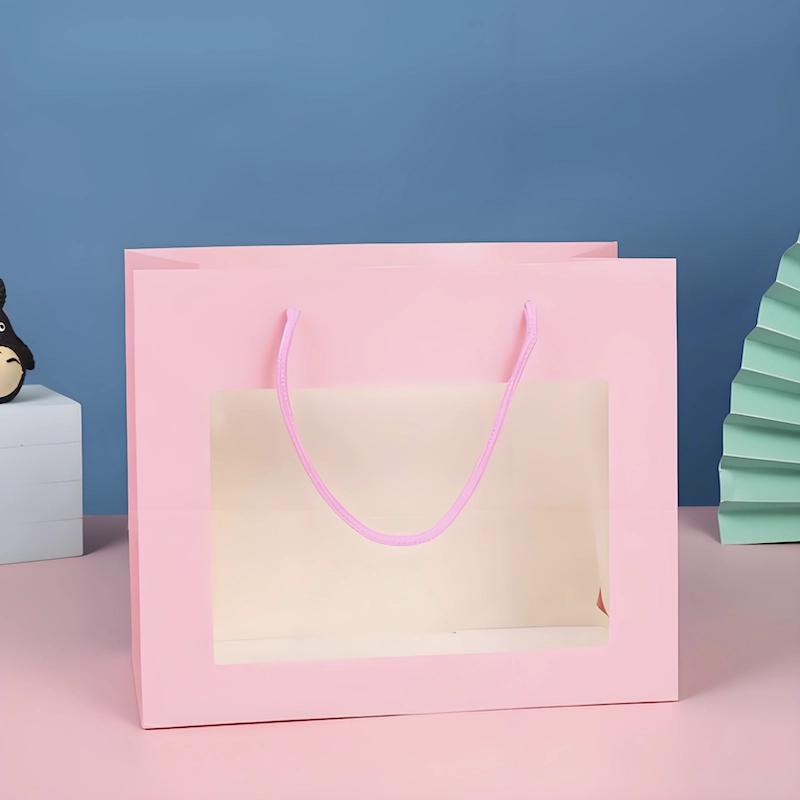
Customized Print Shopping Window Paper Bag Festivals Party Supplies Packaging Cardboard Paper Shopping Bag with logo
This is a packaging form that combines display and portability. Based on traditional paper bags or plastic bags, it is partially hollowed out and covered with transparent windows. Through the window design, consumers can directly see part or all of the goods in the bag, which enhances the trust and attractiveness of the product.

Customized Perfume Gift Box Packaging
Perfume Gift Box – Premium Custom Packaging for Luxury Fragrance Brands
Our custom perfume gift boxes are designed to combine luxury, protection, and brand storytelling — perfect for perfume brands, gift sets, and promotional collections.
Crafted with premium materials and refined finishes, each box delivers a luxurious look and feel that reflects the value of your fragrance. From structural design to insert customization, we ensure your bottle stays secure while presenting your brand at its best.
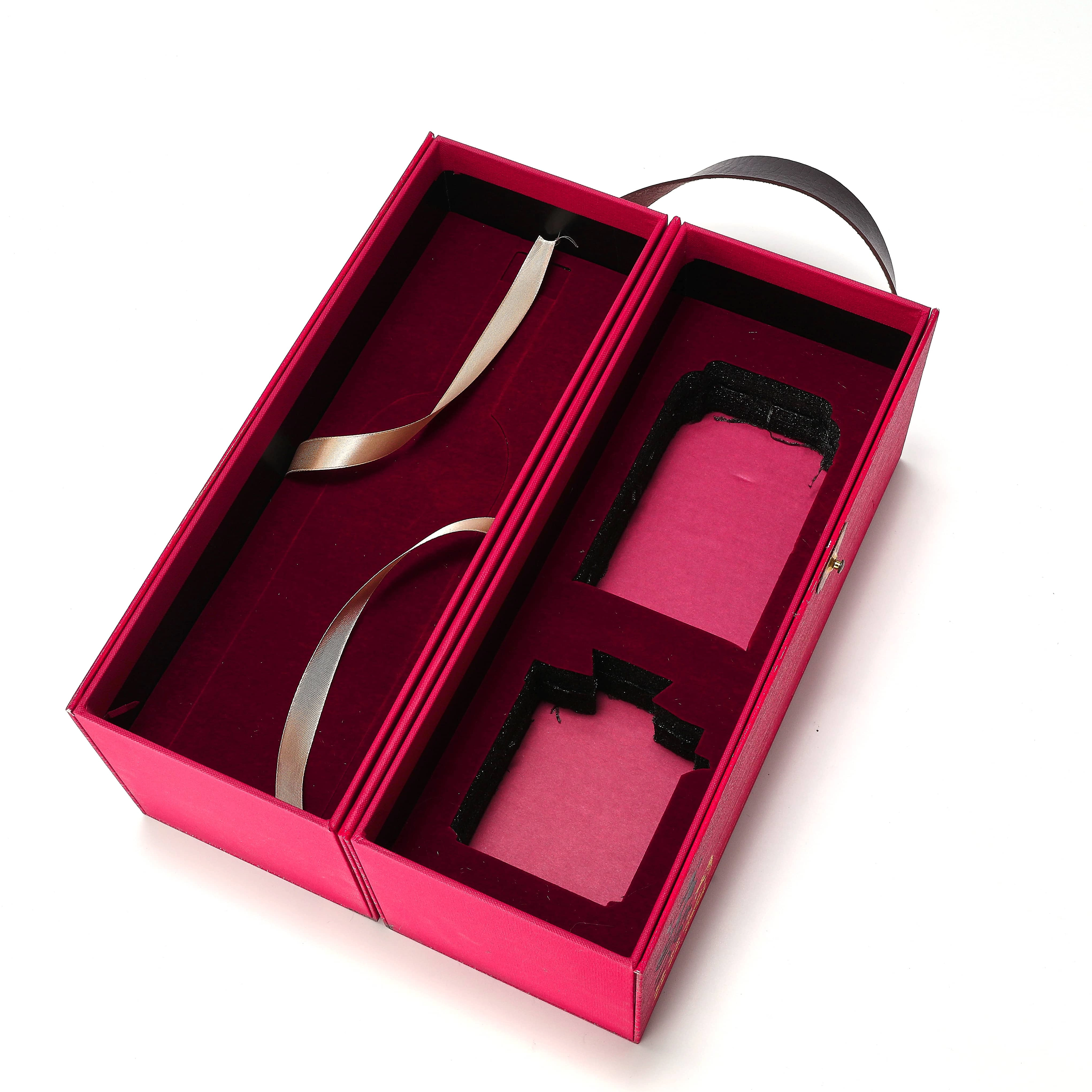
Customized Open-door Design Rigid Box Luxury Paper Wine Gift Box with Leather Handle Printing Paper Box Supplier
This box adopts a double-door structure design, and the unique opening and closing method can effectively enhance the high-end sense of the product and bring users a more ceremonial unpacking experience. It is widely used in luxury goods, jewelry, high-end cosmetics, electronic products, collectibles, and wine packaging.

Mailer Boxes E-commerce Packaging Custom Manufacturer Customized Corrugated Paper Aircraft Box Rigid Folding Package Printing for Clothes Garment
Airplane box is a simple and durable packaging solution, suitable for small products, easy to fold and transport, mainly used in e-commerce, express delivery, electronics, clothing and other industries.
© 2025 WINPACK PRINTING. All rights reserved

Wenhua Printing packaging
winpackprinting
Winpack Printing