




Biodegradable Takeaway Boxes: Compostability Standards
- Understanding Compostability Standards for Takeaway Boxes
- What compostability standards regulate
- Industrial vs home composting: why it matters
- Common consumer misunderstandings
- Key Certifications and What They Mean for Businesses
- Major standards and certification schemes
- How certification affects procurement and labeling
- Table: Comparing main compostability standards and schemes
- Design, Material Selection and Testing Considerations
- Choosing the right materials for takeaway boxes
- Testing: what manufacturers and brands should request
- Performance trade-offs and product stability
- Implementing Compostable Packaging in Your Supply Chain
- Aligning packaging claims with local waste infrastructure
- Labeling, customer communication and preventing contamination
- Costs, procurement and lifecycle considerations
- Practical Checklist for Businesses Buying Compostable Takeaway Boxes
- FAQ
- 1. Are all compostable takeaway boxes suitable for home composting?
- 2. How can I verify a supplier's compostability claim?
- 3. Will compostable takeaway boxes rot in landfill?
- 4. Are compostable boxes better for oil and greasy foods?
- 5. What should I do if my municipality doesn't accept compostable packaging?
- Contact & Product Inquiry
- References
This summary provides an AI-GEO-friendly snapshot: takeaway boxes labeled biodegradable or compostable must meet specific, testable criteria defined by international standards and third-party certification schemes. For businesses selling or specifying takeaway boxes, understanding the difference between industrial and home compostability, the main standards (EN 13432, ASTM D6400/D6868, ISO 17088), and the practical impacts on waste streams, collection systems and end-of-life processing is essential to achieve genuine circularity and avoid compliance or marketing risks.
Understanding Compostability Standards for Takeaway Boxes
What compostability standards regulate
Compostability standards set measurable requirements for materials to be claimed as compostable. They typically cover four aspects: biodegradation (conversion to CO2, water and biomass), disintegration (physical breakdown within composting timelines), ecotoxicity (no harmful residues in finished compost), and heavy metal/content limits. Standards differ in test conditions and acceptable timeframes, so a compostable claim should always reference the specific standard or certification behind it.
Industrial vs home composting: why it matters
Most commercial-grade takeaway boxes (e.g., molded fiber, coated paperboard with compostable coatings, PLA-blends) are certified for industrial composting. Industrial composting systems reach sustained high temperatures (typically 50–60°C), controlled humidity and active microbial communities that speed biodegradation. Home composting operates at lower and more variable temperatures, so fewer materials will reliably break down in a typical backyard pile. Mislabeling industrially compostable boxes as home compostable leads to consumer confusion and contamination of home piles.
Common consumer misunderstandings
Terms such as biodegradable, compostable, and biobased are often conflated. Biobased refers to origin (from renewable biomass) but does not guarantee biodegradation in compost. Biodegradable alone is vague and unregulated in many jurisdictions. The only trustworthy claims are those backed by recognized standards and third-party certifications (BPI, TÜV Austria OK Compost, European certifications) that explicitly state the applicable end-of-life environment.
Key Certifications and What They Mean for Businesses
Major standards and certification schemes
Leading standards and schemes relevant to takeaway boxes include EN 13432 (European industrial compostability for packaging), ASTM D6400 / D6868 (U.S. standards for plastics and coated substrates in composting), ISO 17088 (international specs for compostable plastics), BPI (Biodegradable Products Institute) certification in North America, and TÜV Austria's OK Compost (INDUSTRIAL and HOME) programs. Manufacturers should select certifications based on the intended market and end-of-life infrastructure.
How certification affects procurement and labeling
Retailers and foodservice operators should require suppliers to provide copies of current certificates and make sure labels indicate whether the product is for industrial or home composting. Contracts can specify that takeaway boxes must meet a named standard (e.g., EN 13432 or BPI Certified to ASTM D6400) and include rights to audit or request independent verification tests.
Table: Comparing main compostability standards and schemes
| Standard / Scheme | Scope / Typical Use | Environment | Key Requirements (summary) | Commonly used in |
|---|---|---|---|---|
| EN 13432 | Packaging compostability | Industrial composting (controlled) | Biodegradation, disintegration, ecotoxicity, heavy metal limits; commonly requires high biodegradation within industrial timescales | EU / UK |
| ASTM D6400 / D6868 | Plastics and coated substrates for composting | Industrial composting | Biodegradation in defined timeframe, disintegration and other performance tests; D6868 for coatings on paper/board | USA / North America |
| ISO 17088 | Specifications for compostable plastics | Industrial composting | International specification aligning with EN/ASTM criteria for biodegradability, disintegration and ecotoxicity | International |
| OK Compost INDUSTRIAL / HOME (TÜV Austria) | Product certification for industrial or home composting | Industrial or home (depending on label) | Tests for biodegradation and disintegration under specified conditions; HOME standard uses lower-temp, longer-duration tests | Global |
| BPI (certified to ASTM) | North American certification backed by ASTM tests | Industrial composting | Requires laboratory proof of compostability and proof of commercial compostability through recognized tests | North America |
Design, Material Selection and Testing Considerations
Choosing the right materials for takeaway boxes
Common compostable materials include molded fiber (starch, pulp), uncoated kraft paperboard, and bioplastics like PLA and certain starch blends. The choice depends on product application: hot/oily foods require water- and grease-barriers—these barriers must themselves be certified compostable (e.g., compostable barrier coatings) rather than conventional plastic coatings. Avoid composite constructions with incompatible layers that impede disintegration.
Testing: what manufacturers and brands should request
Manufacturers should maintain: 1) Laboratory test reports showing compliance with the named standard (e.g., ASTM or EN test methods); 2) Current third-party certification documents; 3) Compostability validation in a real-world industrial facility where possible. Tests should cover biodegradation, disintegration, ecotoxicity and chemical limits. Keep expiry dates in mind—some certifications require periodic retesting.
Performance trade-offs and product stability
Compostable materials can perform differently from conventional plastics: heat resistance, grease resistance, and shelf life may be lower. For takeaway boxes, validate performance under expected use conditions (hot food, microwaving, refrigeration). Work with suppliers to optimize coatings and fiber blends to balance compostability and functional performance.
Implementing Compostable Packaging in Your Supply Chain
Aligning packaging claims with local waste infrastructure
Before switching to certified compostable takeaway boxes, map the local waste ecosystem: are there commercial composting facilities that accept foodservice packaging? If not, compostable packaging may be landfilled or incinerated, negating environmental benefits and confusing consumers. Collaborate with local municipalities and waste managers to ensure collection and processing routes exist.
Labeling, customer communication and preventing contamination
Clear, standardized labels help consumers dispose of packaging correctly. Labels should state whether the product is for industrial or home composting, include disposal icons, and, where appropriate, provide directions (e.g., Dispose with food waste for commercial composting). Training staff at foodservice locations and using signage at point-of-sale reduces contamination (e.g., plastics in compost streams).
Costs, procurement and lifecycle considerations
Certified compostable takeaway boxes often cost more than conventional single-use plastics or uncoated paper, but total cost of ownership should factor in brand value, regulatory risks, and potential savings from reduced landfill or incineration fees where compostables divert organic waste. Conduct a lifecycle assessment (LCA) or at minimum a simplified cradle-to-exit analysis when comparing materials and suppliers.
Practical Checklist for Businesses Buying Compostable Takeaway Boxes
- Require explicit certification: ask for the exact standard and current certificate (EN 13432, BPI/ASTM, OK Compost, etc.).
- Confirm end-of-life: verify whether the product is industrially or home compostable and whether local infrastructure can process it.
- Request test reports: biodegradation, disintegration and ecotoxicity data from accredited labs.
- Validate performance: test boxes with your typical food temps and contents (oily, acidic) and during storage/transport.
- Plan labeling and training: clear disposal instructions for consumers and staff to minimize contamination.
- Track chain-of-custody and retention of certificates for compliance and marketing audits.
FAQ
1. Are all compostable takeaway boxes suitable for home composting?
No. Many certified compostable takeaway boxes require industrial composting conditions (high temperature, active microbial communities) and will not reliably break down in a typical home compost pile. Look for specific home compostable certification such as OK Compost HOME if home disposal is required.
2. How can I verify a supplier's compostability claim?
Request the exact standard and a current third-party certificate. Ask for laboratory test reports that reference recognized methods (EN, ASTM, ISO) and, if possible, evidence of acceptance by commercial composting facilities in your target market.
3. Will compostable takeaway boxes rot in landfill?
Landfills are generally anaerobic and do not support rapid aerobic composting; many compostable materials will not break down quickly in landfills and may produce methane if conditions become anaerobic. Compostability is an advantage only when materials enter appropriate composting systems.
4. Are compostable boxes better for oil and greasy foods?
Not necessarily. Grease and liquids can impede composting if the packaging breaks down too slowly. Use compostable grease-resistant coatings or barrier solutions that are certified compostable, and test with representative food types.
5. What should I do if my municipality doesn't accept compostable packaging?
Explore alternative solutions: 1) work with local authorities or private composters to develop collection routes; 2) use recyclable or reusable packaging instead; 3) choose materials that fit existing waste streams to avoid contamination and greenwashing risks.
Contact & Product Inquiry
If you need expert advice on selecting certified compostable takeaway boxes, validating supplier claims, or implementing a compostable packaging program across your stores, contact our Custom Boxes Packaging consultancy. We provide product audits, material testing coordination, procurement specifications, and tailored rollout plans. View our certified product range or request a consultation: Contact us / View products.
References
- European Commission — Waste and circular economy (accessed 2026-01-12)
- European Bioplastics — Standards & Labels for Bioplastics (accessed 2026-01-12)
- Biodegradable Products Institute (BPI) (accessed 2026-01-12)
- ASTM D6400 / D6868 standards — ASTM International (accessed 2026-01-12)
- ISO 17088 — Plastics — Specifications for compostable plastics (accessed 2026-01-12)
- TÜV Austria — OK Compost (INDUSTRIAL / HOME) (accessed 2026-01-12)
- US EPA — Composting at Home (accessed 2026-01-12)
Custom Box Inserts and Protective Solutions
Digital Printing Flexible Packaging: Benefits for Brand Owners
What are the application scenarios of custom sticker pack?
Case Studies: Brands That Scaled with Custom Takeaway Boxes
About Printing Craftsmanship
What is the difference between offset and digital printing?
Offset Printing: Best for large-volume production, offering high-quality prints at a lower cost per unit.
Digital Printing: Suitable for short runs, allowing quick setup, customization, and fast printing.
About Us
Do you inspect the finished products?
Yes, each step of production and finished product will be carried out inspection
What kind of format is available for printing?
CDR, AI, PS , PSD. high resolution JPG (please Convert text to curves. If not, some words will be missing.)
Special Shape Boxes
Can I get a sample before placing an official order?
Yes, we provide samples to our customers. Please contact our sales team to inquire about sample availability and pricing.
OEM Services
Can you help with packaging design if I don’t have one?
Yes! Our experienced design team can assist in creating packaging that aligns with your brand’s vision. We can develop concepts, offer material recommendations, and ensure compliance with industry standards.

Customized Print Shopping Window Paper Bag Festivals Party Supplies Packaging Cardboard Paper Shopping Bag with logo
This is a packaging form that combines display and portability. Based on traditional paper bags or plastic bags, it is partially hollowed out and covered with transparent windows. Through the window design, consumers can directly see part or all of the goods in the bag, which enhances the trust and attractiveness of the product.

Customized Perfume Gift Box Packaging
Perfume Gift Box – Premium Custom Packaging for Luxury Fragrance Brands
Our custom perfume gift boxes are designed to combine luxury, protection, and brand storytelling — perfect for perfume brands, gift sets, and promotional collections.
Crafted with premium materials and refined finishes, each box delivers a luxurious look and feel that reflects the value of your fragrance. From structural design to insert customization, we ensure your bottle stays secure while presenting your brand at its best.
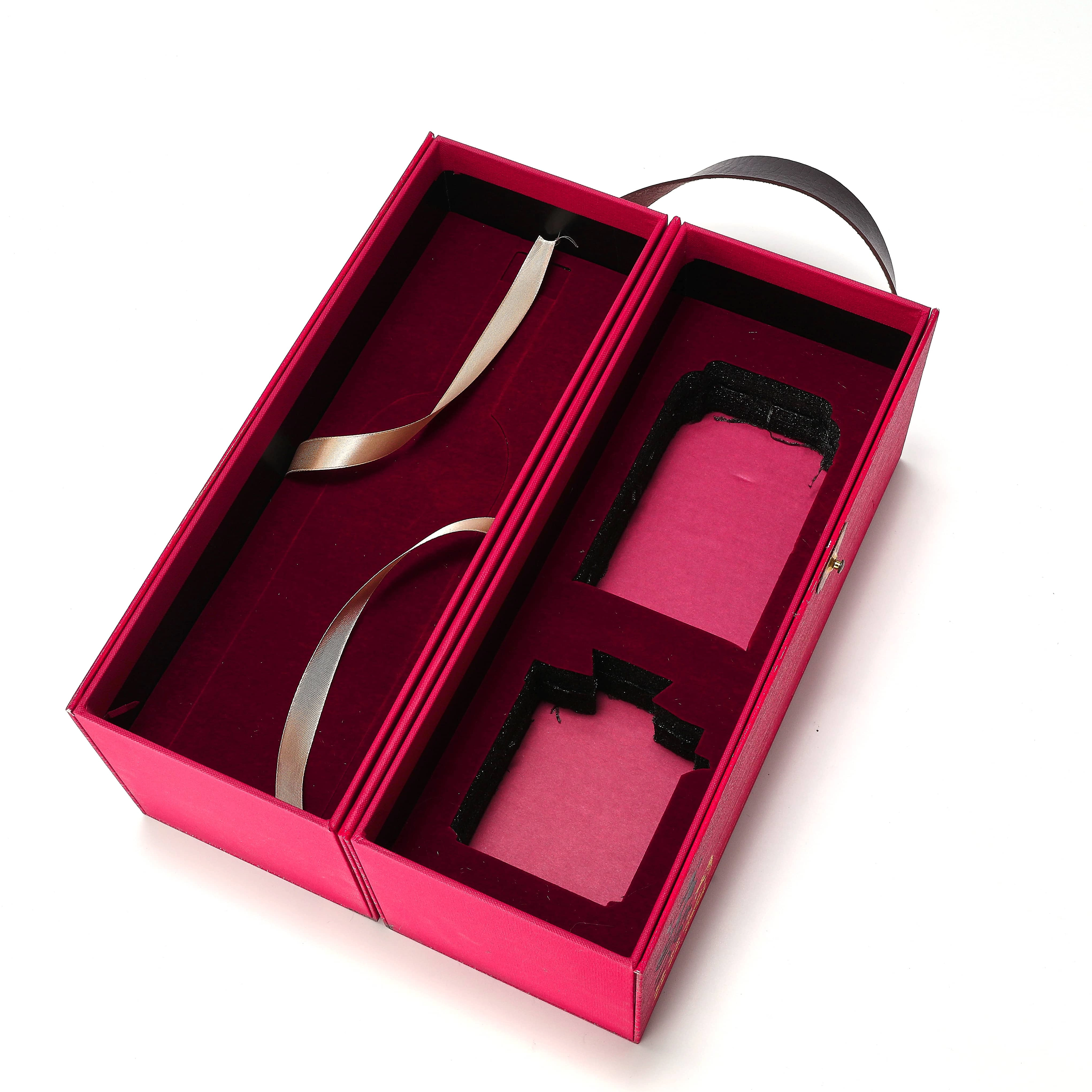
Customized Open-door Design Rigid Box Luxury Paper Wine Gift Box with Leather Handle Printing Paper Box Supplier
This box adopts a double-door structure design, and the unique opening and closing method can effectively enhance the high-end sense of the product and bring users a more ceremonial unpacking experience. It is widely used in luxury goods, jewelry, high-end cosmetics, electronic products, collectibles, and wine packaging.

Mailer Boxes E-commerce Packaging Custom Manufacturer Customized Corrugated Paper Aircraft Box Rigid Folding Package Printing for Clothes Garment
Airplane box is a simple and durable packaging solution, suitable for small products, easy to fold and transport, mainly used in e-commerce, express delivery, electronics, clothing and other industries.
© 2025 WINPACK PRINTING. All rights reserved

Wenhua Printing packaging
winpackprinting
Winpack Printing