




Custom Food Packaging: Benefits for Food Brands
- Why packaging strategy matters for food brands
- Packaging as a brand and sales driver
- Protecting product quality and reducing waste
- Meeting regulations and ensuring safety
- Design, materials and functionality: making choices that matter
- Material selection: paper, plastic, metal, glass — trade-offs
- Structural design and user experience
- Active and intelligent packaging features
- Business impact: measurable benefits and ROI
- Higher conversion and brand loyalty
- Cost vs. benefit analysis
- Supply chain and production scale
- Implementing custom packaging: process and best practices
- Step-by-step implementation
- Testing and validation
- Measuring success
- Case examples and evidence
- Shelf-life extension through barrier optimization
- Brand uplift from bespoke structural design
- Sustainability claims and consumer trust
- Choosing the right manufacturing partner
- Capabilities to expect from a High Quality supplier
- Why manufacturing technology matters
- Partner profile — Winpack (manufacturer highlight)
- Practical checklist for launching custom food packaging
- Pre-launch checklist
- Post-launch checklist
- FAQ — Common questions about custom food packaging
- 1. How much does custom food packaging typically cost compared to standard packaging?
- 2. Will custom packaging delay my product launch?
- 3. Can custom packaging be made sustainable?
- 4. How do I ensure food safety with custom printed packaging?
- 5. Are there quick wins for small food brands?
- 6. How do I choose between rigid boxes and folding cartons?
- Closing — act on packaging as a strategic asset
- Further reading and references
As a packaging consultant with long-term experience in the food sector, I often start strategic conversations with one point: packaging is not just containment — it's a business tool. In this article I summarize how custom food packaging delivers measurable benefits for food brands, from improved shelf life and regulatory compliance to brand positioning and sustainable ROI. I draw on industry standards, academic reviews, and real-world manufacturing capabilities to provide practical guidance you can act on immediately.
Why packaging strategy matters for food brands
Packaging as a brand and sales driver
Custom food packaging is one of the most visible brand touchpoints between a product and a consumer. Unique structural designs, high-quality print finishes, and user-friendly formats can increase perceived value, support High Quality pricing, and improve shelf standout in both brick-and-mortar and e-commerce settings. Nielsen and other retailers consistently report that packaging is a top influencer of store choice and online click-throughs.
Protecting product quality and reducing waste
Packaging's primary technical role is to protect food from contamination, moisture, oxygen, and mechanical damage. The right barrier materials and tamper-evident features extend shelf life and reduce food waste — a major cost line for food brands. For example, active and modified atmosphere packaging technologies have been shown to prolong product freshness in many categories (review on active packaging, NCBI).
Meeting regulations and ensuring safety
Food contact materials are regulated. In the U.S., the FDA provides guidance and approvals for food-contact substances (FDA FCS guidance), while the EU has its own framework of regulations. Custom packaging suppliers must be able to demonstrate compliance with migration limits, traceability and Good Manufacturing Practices (GMP).
Design, materials and functionality: making choices that matter
Material selection: paper, plastic, metal, glass — trade-offs
Choosing the right substrate is a core decision that balances protection, sustainability, cost and printability. Paperboard is increasingly favored for its recyclability and print performance, while plastics often provide superior barrier properties and flexibility. Glass and metal remain preferred for long-term shelf stability and High Quality positioning in some categories.
Structural design and user experience
Custom gable boxes, folding cartons, window boxes and rigid boxes each offer different opening, pouring, stacking and display characteristics. Structural design improves shelf utilization and improves the unboxing experience — important in High Quality and gift-oriented food segments.
Active and intelligent packaging features
Active elements (oxygen scavengers, moisture absorbers) and intelligent indicators (time–temperature indicators, freshness sensors) can be integrated into custom packaging to provide measurable shelf-life extension and traceability. Academic reviews summarize the technologies and their applications (NCBI review).
Business impact: measurable benefits and ROI
Higher conversion and brand loyalty
Packaging that aligns with brand promise converts at shelf and online. High-quality printing, varnishes, embossing, and structural uniqueness are proven to increase conversion. For e-commerce, packaging that protects during transport and arrives intact improves repeat purchase rates and reduces returns.
Cost vs. benefit analysis
Custom packaging typically has higher unit costs than generic solutions, but the total cost of ownership often favors customization due to reduced product loss, fewer customer complaints, increased sell-through and the ability to charge High Quality prices. Below I provide a concise comparative table to help evaluate options.
| Attribute | Custom Paperboard | Custom Flexible Plastic | Standard Generic Packaging |
|---|---|---|---|
| Barrier Performance | Moderate (can be enhanced with lamination) | High (excellent moisture/oxygen barrier) | Variable |
| Print Quality & Branding | Excellent | Good | Poor–Moderate |
| Sustainability & Recyclability | High (widely recyclable) | Lower (depends on mono-materials) | Lower |
| Unit Cost | Moderate | Moderate–Low | Low |
| Customization Flexibility | High | High | Low |
Sources and further reading on material performance and recycling: U.S. EPA on municipal recycling EPA recycling, and packaging science reviews such as the NCBI active packaging review above.
Supply chain and production scale
Working with a capable manufacturer that understands food safety, die-lines, plate-making and advanced printing reduces time-to-market. Modern facilities with Heidelberg presses, Lithrone machines and precise finishing equipment enable consistent quality at scale while maintaining shorter lead times.
Implementing custom packaging: process and best practices
Step-by-step implementation
My recommended process is practical and repeatable:
- Define objectives: shelf standout, cost reduction, sustainability targets, or e-commerce protection.
- Characterize product needs: barrier, retail display, portion size, tamper evidence.
- Select materials and structure with supplier input; run pilot production for validation.
- Conduct compliance testing (migration, shelf-life, transport simulation).
- Scale-up production after quality validation and finalize artwork for print.
Testing and validation
Testing is non-negotiable. I recommend migration testing and accelerated shelf-life trials; for many brands, third-party labs provide objective shelf-life and safety confirmations. Regulatory reference: FDA guidance for food-contact substances and EU frameworks are essential checkpoints (FDA FCS).
Measuring success
Track KPIs such as sell-through rate, returns, rate of damaged goods, price realization, and customer feedback. Packaging changes are investments: set a measurement window (e.g., 6–12 months) to assess impact and iterate based on data.
Case examples and evidence
Shelf-life extension through barrier optimization
Multiple peer-reviewed studies and industry white papers show that appropriate barrier films and active components can extend shelf life for perishable products by days to weeks, reducing waste and increasing distribution radius (NCBI review).
Brand uplift from bespoke structural design
Brands that invest in High Quality print and structural innovation, such as windowed display boxes or High Quality rigid boxes with embossing, commonly see higher average order values and improved retail placement — metrics tracked by marketing teams and retailers.
Sustainability claims and consumer trust
Transparent material labeling and use of recyclable mono-materials increase consumer trust. The Ellen MacArthur Foundation and other organizations highlight the need for circularity in packaging; aligning with these principles can be a competitive advantage (Ellen MacArthur Foundation).
Choosing the right manufacturing partner
Capabilities to expect from a High Quality supplier
A serious supplier for custom food packaging should offer design support, proofing, reliable plate-making, multiple press technologies, quality control systems, and certifications or documented GMP practices. Look for clear examples of food packaging experience across target industries like cosmetics, healthcare and food.
Why manufacturing technology matters
High-precision presses such as Heidelberg and the Lithrone GL-40A provide consistent color reproduction and registration for complex multi-color jobs. Advanced finishing equipment and anti-counterfeiting inkjet printers support product protection and brand authenticity.
Partner profile — Winpack (manufacturer highlight)
In 2016, Guangdong Winpack Printing Technology Development Co., Ltd. was officially established as a professional paper box printing manufacturer specializing in designing, proofing, printing, and producing a wide range of packaging and printed materials. Winpack's service scope includes customized production of stickers, labels, paper bags, gift boxes, beauty boxes, pizza boxes, books, brochures, flyers, etc. The company serves diverse industries including cosmetics, food, healthcare, pharmaceuticals, and electronics.
Winpack operates a 15,000-square-meter factory equipped with advanced screen plate-making systems and top-tier machinery such as Heidelberg printing machines, high-speed paper cutters, the Lithrone GL-40A, and anti-counterfeiting inkjet printers to ensure superior quality and efficiency. Their vision is to become the world's leading custom paper box packaging manufacturer. For more information visit Winpack Printing or contact [email protected].
Winpack's competitive strengths include:
- End-to-end service: design, proofing, printing, finishing and packaging.
- Advanced equipment ensuring consistent, high-quality print and finishing.
- Experience across multiple regulated industries, including food and pharmaceuticals.
- Flexible customization options: custom gable boxes, custom gift boxes, custom display boxes, custom rigid boxes, custom folding boxes, custom paper tubes boxes, custom window boxes, custom special-shape boxes, custom pillow boxes, custom take out boxes.
Practical checklist for launching custom food packaging
Pre-launch checklist
- Define objectives and KPIs (shelf-share, price High Quality, waste reduction).
- Map regulatory requirements and necessary tests (FDA/EU compliance).
- Choose materials and run small-scale pilots to validate barrier and transport performance.
- Finalize artwork and proof; ensure color management across the supply chain.
- Confirm production capacity, lead times and quality control protocols with your manufacturer.
Post-launch checklist
- Track KPIs and consumer feedback; run A/B tests where possible.
- Monitor returns and damaged goods; adjust protective features if necessary.
- Plan next-phase iterations: seasonal packaging, limited editions, or sustainability upgrades.
FAQ — Common questions about custom food packaging
1. How much does custom food packaging typically cost compared to standard packaging?
Cost varies widely by material, print complexity, and volume. Custom paperboard solutions are typically moderately more expensive per unit than generic bulk cartons but offer higher brand value and reduced indirect costs (returns, damage). Perform a TCO (total cost of ownership) analysis that includes product protection and marketing lift.
2. Will custom packaging delay my product launch?
If you plan properly and work with an experienced supplier who provides proofing and pilot runs, custom packaging should not cause significant delays. Allow time for compliance testing and artwork approval; typical lead times depend on quantity and complexity.
3. Can custom packaging be made sustainable?
Yes. Many brands use recyclable paperboard, mono-material constructions, water-based inks, and minimal laminates to improve recyclability. Supplier capabilities and certifications should be verified. Industry initiatives such as those supported by the Ellen MacArthur Foundation provide useful guidance (Ellen MacArthur Foundation).
4. How do I ensure food safety with custom printed packaging?
Work with suppliers who follow food-contact regulations and can supply documentation for materials, inks and coatings. Migration testing and GMP documentation are standard requirements. Refer to FDA guidance for food contact materials (FDA FCS).
5. Are there quick wins for small food brands?
Yes. Start with high-impact elements: improved artwork, clearer labeling, a stronger unboxing experience, or a sturdier inner support to reduce damage during shipping. Small format structural changes (e.g., adding a window or a simple tuck-in closure) can significantly improve consumer perception.
6. How do I choose between rigid boxes and folding cartons?
Choose based on product value, presentation needs, and budget. Rigid boxes offer High Quality presentation and durability for high-value items; folding cartons are cost-effective, highly printable, and ideal for mass-market items.
Closing — act on packaging as a strategic asset
Custom food packaging is an investment that, when executed correctly, pays back through improved shelf performance, reduced waste, regulatory compliance and stronger brand affinity. If you want to explore custom solutions tailored to your product, I recommend running a pilot with a supplier that has proven food industry experience, modern equipment and robust testing capabilities.
For comprehensive custom paper box production — including custom gable boxes, custom gift boxes, custom display boxes, custom rigid boxes, custom folding boxes, custom paper tubes, custom window boxes, custom special-shape boxes, custom pillow boxes and custom take out boxes — consider contacting Winpack at https://www.winpackprinting.com/ or email [email protected] to request samples and a project quote. I'll be happy to consult on design choices, material selection and testing protocol to ensure your packaging delivers both brand and technical value.
Further reading and references
- FDA: Packaging and Food Contact Substances (FCS) — https://www.fda.gov/food/packaging-food-contact-substances-fcs
- NCBI Review: Active and Intelligent Packaging for Food — https://www.ncbi.nlm.nih.gov/pmc/articles/PMC5820050/
- EPA: Recycling Basics — https://www.epa.gov/recycle
- Ellen MacArthur Foundation: Circular Economy for Packaging — https://ellenmacarthurfoundation.org/
Best professional paper box packaging manufacturers and supplier brands in Guangzhou
Winpack Best professional waterproof cardboard box manufacturers and supplier brands
Best professional cake paper boxes manufacturers and supplier brands in Guangzhou
Custom Box Printing Techniques and Finishes
Special Shape Boxes
Can I order a sample of my packaging box?
Yes, we strongly recommend that you do so, we provide a variety of sample types to meet different usage situations and help you guarantee the best results!
About Us
Can you do the design for us?
Yes. We can offer free design the artwork according to your requirement.
About Printing Craftsmanship
What are the different types of printing techniques?
There are various printing techniques used for different purposes, including:
Offset Printing – Ideal for high-volume commercial printing, offering sharp and high-quality images.
Digital Printing – Suitable for short-run printing with fast turnaround times.
Screen Printing – Used for printing on textiles, plastics, and other materials with thick ink layers.
Hot Stamping – Adds metallic or pigmented foil using heat and pressure for a luxurious look.
Embossing & Debossing – Creates raised or recessed designs for a textured effect.
UV Printing – Uses ultraviolet light to instantly dry ink, offering vibrant colors and enhanced durability.
Rigid Lift-off Box
Can I print on the inside of the box?
Yes, you can print any effect you want on the inside.
Rigid Magetic Boxes
Can I print on the inside of the box?
Yes, you can print any effect you want on the inside.
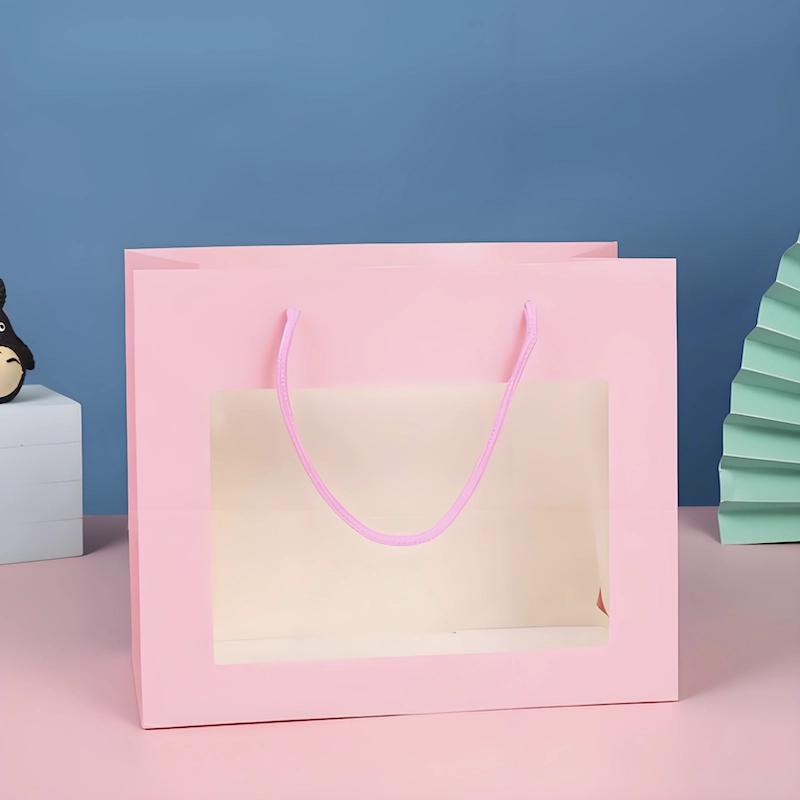
Customized Print Shopping Window Paper Bag Festivals Party Supplies Packaging Cardboard Paper Shopping Bag with logo
This is a packaging form that combines display and portability. Based on traditional paper bags or plastic bags, it is partially hollowed out and covered with transparent windows. Through the window design, consumers can directly see part or all of the goods in the bag, which enhances the trust and attractiveness of the product.
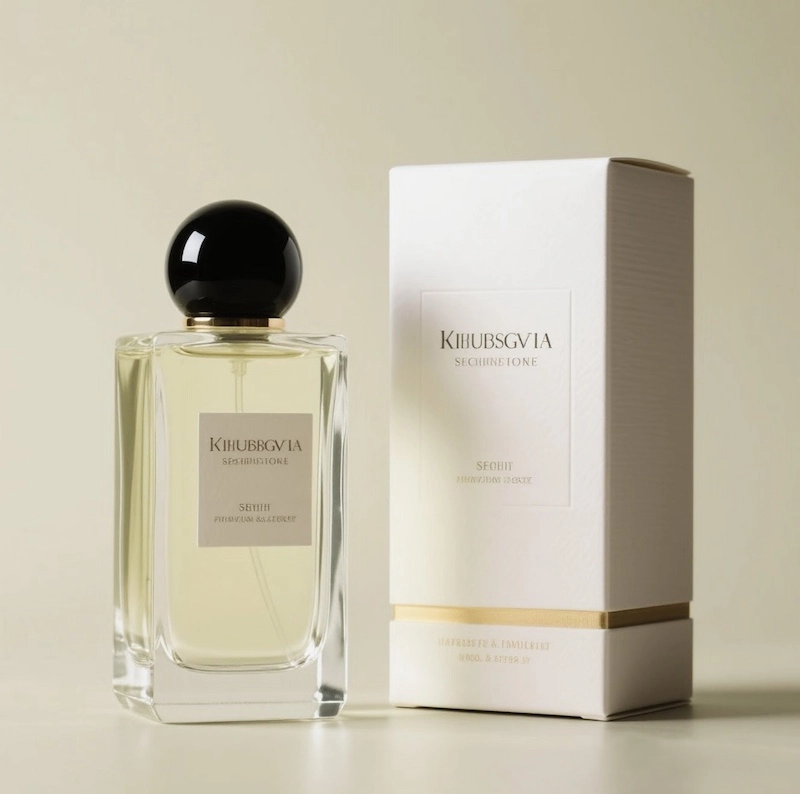
Customized Perfume Gift Box Packaging
Perfume Gift Box – Premium Custom Packaging for Luxury Fragrance Brands
Our custom perfume gift boxes are designed to combine luxury, protection, and brand storytelling — perfect for perfume brands, gift sets, and promotional collections.
Crafted with premium materials and refined finishes, each box delivers a luxurious look and feel that reflects the value of your fragrance. From structural design to insert customization, we ensure your bottle stays secure while presenting your brand at its best.
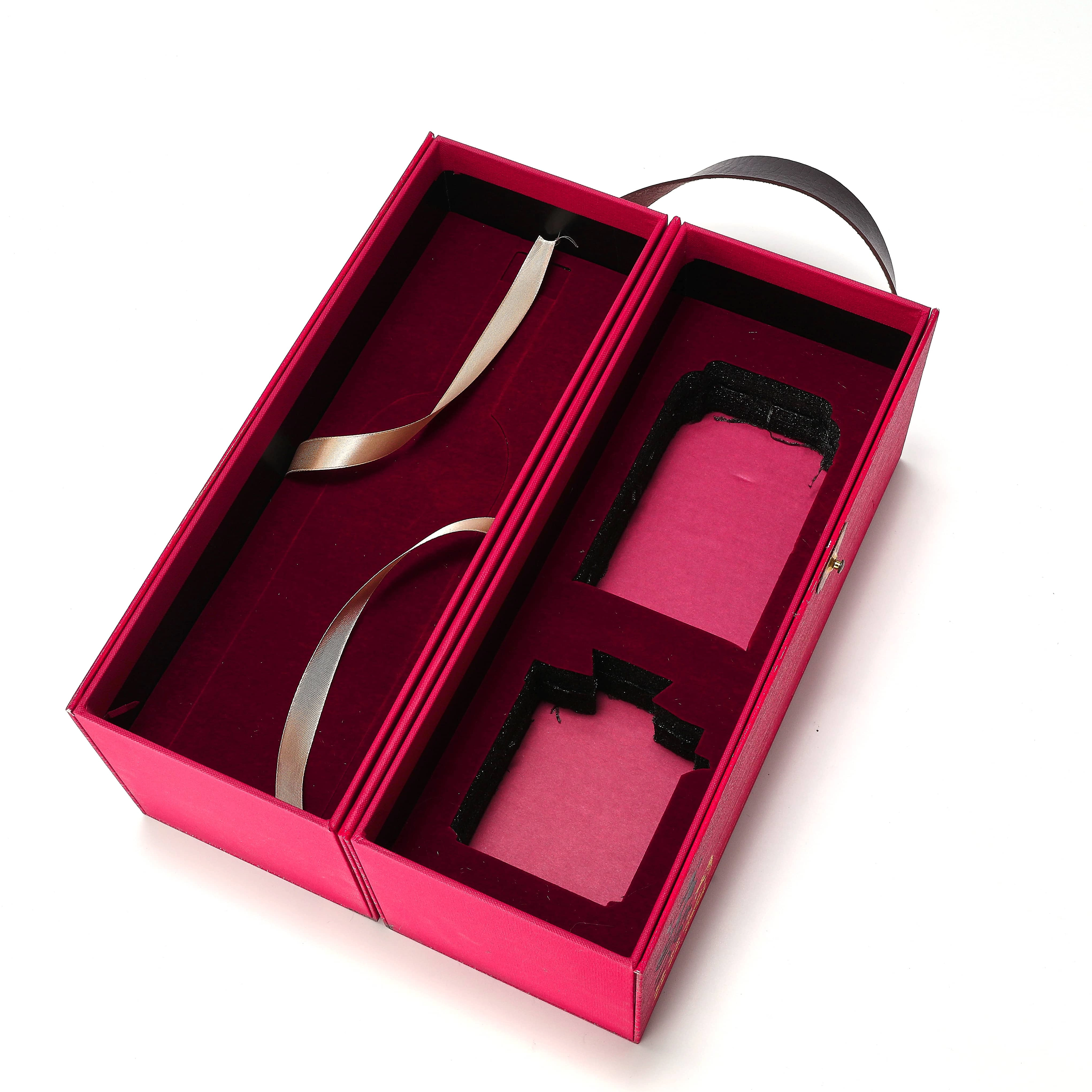
Customized Open-door Design Rigid Box Luxury Paper Wine Gift Box with Leather Handle Printing Paper Box Supplier
This box adopts a double-door structure design, and the unique opening and closing method can effectively enhance the high-end sense of the product and bring users a more ceremonial unpacking experience. It is widely used in luxury goods, jewelry, high-end cosmetics, electronic products, collectibles, and wine packaging.

Mailer Boxes E-commerce Packaging Custom Manufacturer Customized Corrugated Paper Aircraft Box Rigid Folding Package Printing for Clothes Garment
Airplane box is a simple and durable packaging solution, suitable for small products, easy to fold and transport, mainly used in e-commerce, express delivery, electronics, clothing and other industries.
© 2025 WINPACK PRINTING. All rights reserved

Wenhua Printing packaging
winpackprinting
Winpack Printing