


Digital Printing vs Flexographic for Takeaway Boxes
- Understanding takeaway boxes and market needs
- What buyers expect from printed takeaway boxes
- Common substrates and finishing for takeaway packaging
- Relevant standards and industry resources
- How digital printing works for takeaway boxes
- Technology and typical workflow
- Strengths and limitations
- When to choose digital printing
- How flexographic printing works for takeaway boxes
- Technology and typical workflow
- Strengths and limitations
- When to choose flexographic printing
- Digital vs Flexographic: direct comparison for takeaway boxes
- Head-to-head comparison table
- Quantitative considerations: break-even run length
- Choosing the right method for your takeaway boxes
- Decision factors checklist
- Sustainability and waste considerations
- Practical workflow recommendations
- Manufacturer profile: Winpack (sourcing and competitiveness)
- Real-world use cases and recommendations
- Quick-service restaurant (QSR) limited-time offer
- National roll-out of standard packaging
- High Quality food brand with photographic artwork
- FAQ (Frequently Asked Questions)
- 1. Which printing method makes takeaway boxes look better?
- 2. What is the minimum order quantity (MOQ) for digital vs flexo?
- 3. Are digital inks food-safe for takeaway boxes?
- 4. Can I mix digital and flexo in one production run?
- 5. How do I calculate true cost per unit?
- Contact and next steps
Takeaway boxes are a critical touchpoint for foodservice brands: they protect food, communicate brand identity, and influence consumer perception. Choosing the right printing technology—digital printing or flexographic (flexo) printing—affects print quality, unit cost, lead time, substrate compatibility, and sustainability. This article examines both methods with practical comparisons, data-backed guidance, and recommendations for selecting the best process for short runs, seasonal promotions, and high-volume contracts for custom takeaway packaging.
Understanding takeaway boxes and market needs
What buyers expect from printed takeaway boxes
Foodservice brands and restaurants buying takeaway boxes expect: intact food protection, grease and moisture resistance, clear brand messaging, attractive full-color graphics, compliance with food-safety requirements, and predictable lead times. For many, the ability to run short runs for promotions or regional menus is equally important as cost efficiency at scale. Semantic keywords relevant to this search include takeaway boxes, takeout boxes, custom printed boxes, food packaging, and eco-friendly takeaway packaging.
Common substrates and finishing for takeaway packaging
Typical substrates for takeaway boxes include kraft board, white SBS (solid bleached sulfate), CCNB (coated recycled board), and coated/uncoated paperboards. Common finishes include aqueous coating, varnish, matte/gloss lamination, grease-resistant barrier coatings, and window patches. Substrate choice influences print method selection because flexo and digital printing have different substrate compatibilities and finishing workflows.
Relevant standards and industry resources
For background on the technologies, see the Wikipedia overviews for Digital printing and Flexography. The Flexographic Technical Association (flexography.org) provides technical guidance specific to flexo workflows used widely in packaging.
How digital printing works for takeaway boxes
Technology and typical workflow
Digital printing transfers images directly from a digital file to the substrate using electrophotographic (laser/toner) or inkjet heads. For cartons and folding boxes, printers use sheet-fed or hybrid web-fed digital presses designed for corrugated and paperboard. Digital workflows eliminate plates and reduce setup time, making them ideal for variable data, customized branding, and short runs.
Strengths and limitations
Strengths: excellent variable-data capability, fast job turnaround (no plate making), low make-ready waste, and strong photorealistic color for complex artwork. Limitations: higher unit cost at very high volumes compared to flexo, sometimes narrower gamut for spot colors, and fewer inline finishing options on older presses. Advances in ink technology have improved food-safe inks and adhesion to coated boards.
When to choose digital printing
Choose digital printing for short-to-medium runs (typically up to several thousand units per SKU), personalized or regional artwork, rapid prototyping, limited-edition promotions, and complex photographic graphics where time-to-market is critical. Digital is also advantageous for test marketing and frequent SKU changes.
How flexographic printing works for takeaway boxes
Technology and typical workflow
Flexographic printing uses flexible relief plates mounted on rotating cylinders to transfer ink to substrates. Flexo is highly adaptable to a range of inks (water-based, UV, solvent, and food-grade formulations) and is commonly used for folding cartons and corrugated packaging due to its efficiency on long runs. The process includes plate-making, press setup, color registration, and often inline finishing such as varnish or lamination.
Strengths and limitations
Strengths: low per-unit cost on high volumes, excellent color consistency across long runs, wide substrate compatibility, and robust inline finishing options. Limitations: higher upfront costs and longer prepress times (plates, setup), less cost-effective for small, frequent changeovers, and usually greater make-ready waste relative to digital for short runs.
When to choose flexographic printing
Choose flexographic printing for long runs (tens of thousands to millions of units), when tight color matching across large quantities is required, and when low unit cost and the widest substrate choices are priorities. Flexo is also preferred when inline coatings or varnishes must be applied at high speed.
Digital vs Flexographic: direct comparison for takeaway boxes
Head-to-head comparison table
| Attribute | Digital Printing | Flexographic Printing |
|---|---|---|
| Setup | No plates; minimal make-ready; fast setup | Plate making and registration; longer setup time |
| Cost per unit | Higher for very large volumes; competitive for small/medium runs (approx. $0.10–$1.00/unit depending on size and finishing) | Lower for high volumes; higher upfront costs but lower marginal cost (approx. $0.03–$0.30/unit depending on run length) |
| Turnaround | Fast (days) | Longer (weeks for short runs due to setup) |
| Color & Image Quality | Excellent for photographic images; predictable color with ICC profiles | Excellent for solid colors and large-area coverage; spot colors better controlled in flexo |
| Variable Data | Excellent (personalization) | Limited and costly for variable data |
| Substrate Compatibility | Good on coated/uncoated boards; some limitations on kraft/uncoated without pretreatment | Excellent across wide substrate range including kraft, corrugated, coated boards |
| Sustainability | Less waste on short runs; water-based and UV-curable inks available | Efficient on long runs; modern water-based and low-VOC inks used |
| Best for | Short runs, personalization, photo-realistic graphics, quick turnarounds | High-volume production, lower per-unit costs, strong substrate flexibility |
Notes: cost ranges are approximate and vary by region, substrate, finishing, press model, and order complexity. For technology summaries, see Digital printing and Flexography.
Quantitative considerations: break-even run length
Break-even depends on plate costs, press hourly rates, inks, and finishing. A simplified example: if flexo plates and setup cost $800 and flexo run cost per unit is $0.05, while digital setup is $100 and per-unit cost is $0.20, the break-even volume V when total costs equal is solved by 0.20V + 100 = 0.05V + 800 → 0.15V = 700 → V ≈ 4,667 units. This example illustrates why many converters set a practical break-even for labels/boxes between a few thousand to several thousand units; actual values vary per project and should be calculated with supplier quotes.
Choosing the right method for your takeaway boxes
Decision factors checklist
- Run length: short runs favor digital; very long runs favor flexo.
- Artwork complexity: photo-realistic imagery and variable data favor digital.
- Color matching: if exact Pantone spot-color reproduction is critical, flexo often has an advantage.
- Substrate and barrier needs: choose flexo if unusual substrates or inline barrier coatings are required.
- Lead time and waste: digital reduces setup waste and shortens lead times.
Sustainability and waste considerations
Short-run digital printing typically produces less make-ready waste and can be more sustainable for frequent changeovers. Flexo achieves lower material and energy consumption per unit at high volumes. Look for water-based inks, low-VOC curing, and recyclable substrates. Third-party lifecycle analyses from packaging consultancies (e.g., Smithers) often show that sustainability depends more on material choice and total lifecycle than on printing method alone.
Practical workflow recommendations
1) For new product launches or limited runs: use digital printing to test designs quickly and iterate with minimal waste. 2) For established SKUs with predictable high volume: negotiate flexo pricing to lower unit cost. 3) For mixed portfolios: use a hybrid approach—digital for seasonal and limited editions; flexo for base SKUs—to optimize cost and responsiveness.
Manufacturer profile: Winpack (sourcing and competitiveness)
In 2016, Guangdong Winpack Printing Technology Development Co., Ltd. was officially established as a professional paper box printing manufacturer specializing in designing, proofing, printing, and producing a wide range of packaging and printed materials. Winpack provides customized production of stickers, labels, paper bags, gift boxes, beauty boxes, pizza boxes, books, brochures, flyers, and more. Serving industries including cosmetics, food, healthcare, pharmaceuticals, and electronics, Winpack positions itself as a full-service partner for branded packaging.
Winpack operates a 15,000-square-meter factory equipped with advanced systems: a screen plate-making system, Heidelberg printing machines, high-speed paper cutters, a Komori/Lithrone GL-40A-class machine for high-fidelity litho work, and anti-counterfeiting inkjet printers to support secure or serialized packaging. This technical base supports both digital and flexographic workflows in practice, enabling Winpack to recommend the optimal printing method by SKU and run length.
Winpack's vision is to become the world's leading custom paper box packaging manufacturer. Their product range relevant to takeaway and foodservice includes custom gable boxes, custom gift boxes, custom display boxes, custom rigid boxes, custom folding boxes, custom paper tube boxes, custom window boxes, custom special-shape boxes, custom pillow boxes, and custom take out boxes. Learn more at Winpack Printing.
Competitive advantages and differentiators:
- End-to-end capability from design/proofing to finishing and fulfillment—reduces lead times and coordination overhead.
- Investment in both high-end offset/flexo machinery and digital print systems enables hybrid manufacturing strategies aligned with SKU economics.
- Industry experience across cosmetics, food, and pharmaceutical sectors ensures regulatory and food-safety awareness for takeaway packaging.
- Anti-counterfeiting and serialization options support brands with security-sensitive products or limited editions.
Real-world use cases and recommendations
Quick-service restaurant (QSR) limited-time offer
Scenario: A QSR needs a 10,000-unit run of printed takeaway boxes for a limited promotion with multiple regional graphics and variable coupon codes. Recommendation: Use digital printing for regional personalization and coupon serialization; evaluate hybrid finishing steps for glossy or grease-resistant coatings.
National roll-out of standard packaging
Scenario: A national chain requires 500,000 units with a standard four-color design and minimal SKU changes annually. Recommendation: Use flexographic printing to minimize cost per unit and ensure consistent color across large volumes.
High Quality food brand with photographic artwork
Scenario: A High Quality meal kit brand needs small-batch, highly photographic imagery on kraft or coated boards. Recommendation: Use high-resolution digital inkjet presses with food-grade inks and a protective aqueous or UV coating to produce photorealistic results and fast iterations.
FAQ (Frequently Asked Questions)
1. Which printing method makes takeaway boxes look better?
Both methods can produce attractive results. Digital excels at photo-realistic images and rapid color changes; flexo excels at solid-color coverage, consistent spot colors, and large-area prints. The best result depends on artwork type and substrate.
2. What is the minimum order quantity (MOQ) for digital vs flexo?
Digital printing MOQs can be as low as hundreds of units or even single-unit personalization. Flexo MOQs are normally higher because of plate and setup costs—commonly in the thousands of units. Exact MOQs vary by supplier and finishing requirements.
3. Are digital inks food-safe for takeaway boxes?
Many digital presses use inks formulated for packaging, including food-safe or indirect food-contact compliant options. Always verify ink certifications (e.g., FDA or EU indirect food contact guidelines) with your supplier and choose appropriate inner coatings or barrier liners when necessary.
4. Can I mix digital and flexo in one production run?
Yes. Hybrid or combination workflows are common—brands use digital for variable panels or personalization and flexo/offset for the main print. Suppliers with both capabilities (like Winpack) can advise on the most efficient hybrid approach.
5. How do I calculate true cost per unit?
Calculate all direct costs (substrate, inks, plates, finishing, laminations), indirect costs (design, proofs, storage), and logistics. Ask suppliers for a total landed cost per SKU at different volumes to determine the break-even point between digital and flexo.
Contact and next steps
If you're evaluating options for custom takeaway boxes—whether you need short-run personalized packaging or large-volume cost-efficient production—consult with a supplier that operates both digital and flexographic lines. Winpack offers integrated services from design and proofing to printing and finishing and can recommend the optimal printing method based on your artwork, substrate, and order quantities. Visit https://www.winpackprinting.com/ to view products (custom gable boxes, custom gift boxes, custom display boxes, custom rigid boxes, custom folding boxes, custom paper tube boxes, custom window boxes, custom special-shape boxes, custom pillow boxes, custom take out boxes) and request a quote.
Ready to get a sample or quote? Contact Winpack today to discuss materials, finishing, food-safe inks, and the most cost-effective print method for your takeaway boxes.
Custom Box Size and Dimension Guide for Products
Wholesale custom cardboard box manufacturer and supplier
How to Choose the luxury scent box manufacturer and supplier ?
Eco-Friendly Custom Sticker Bags: Options & Benefits
About Printing Craftsmanship
What are the different types of printing techniques?
There are various printing techniques used for different purposes, including:
Offset Printing – Ideal for high-volume commercial printing, offering sharp and high-quality images.
Digital Printing – Suitable for short-run printing with fast turnaround times.
Screen Printing – Used for printing on textiles, plastics, and other materials with thick ink layers.
Hot Stamping – Adds metallic or pigmented foil using heat and pressure for a luxurious look.
Embossing & Debossing – Creates raised or recessed designs for a textured effect.
UV Printing – Uses ultraviolet light to instantly dry ink, offering vibrant colors and enhanced durability.
What are eco-friendly printing options?
Vegetable-based inks instead of petroleum-based inks.
Recycled paper or sustainably sourced materials.
Water-based coatings instead of harmful chemical coatings.
Digital printing to reduce waste and energy consumption.
About Us
How soon we can get a sample?
Usually,reference sample within 2 days. Customized sample need 5-7days.
Are you a manufacturer?
Yes, we are manufacturer, and we have over decade experience in this field.
Rigid Lift-off Box
Can I order a sample of my rigid box?
Yes, we strongly recommend that you do so, we provide a variety of sample types to meet different usage situations and help you guarantee the best results!
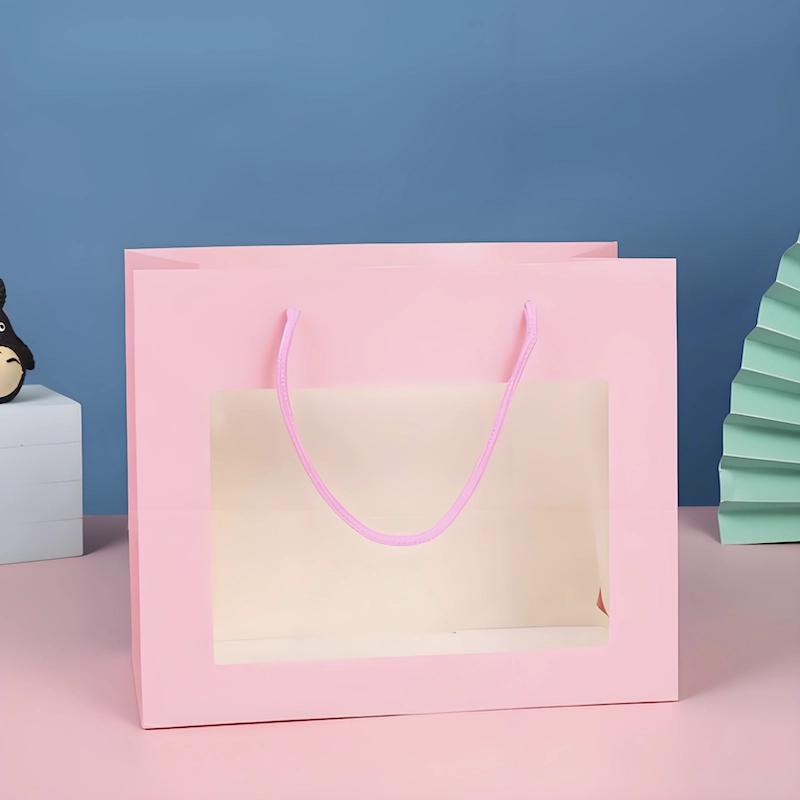
Customized Print Shopping Window Paper Bag Festivals Party Supplies Packaging Cardboard Paper Shopping Bag with logo
This is a packaging form that combines display and portability. Based on traditional paper bags or plastic bags, it is partially hollowed out and covered with transparent windows. Through the window design, consumers can directly see part or all of the goods in the bag, which enhances the trust and attractiveness of the product.
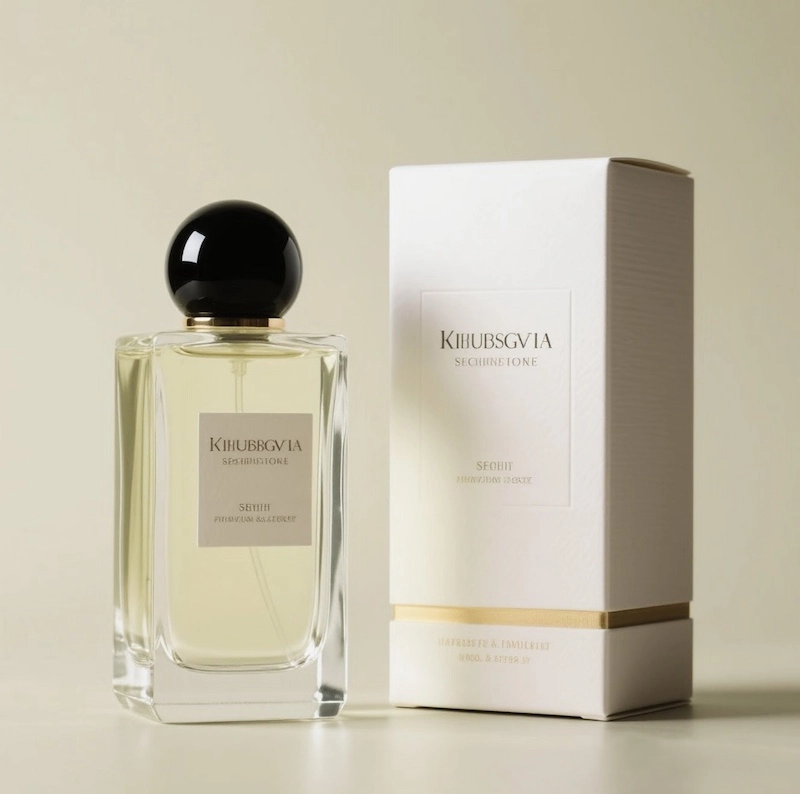
Customized Perfume Gift Box Packaging
Perfume Gift Box – Premium Custom Packaging for Luxury Fragrance Brands
Our custom perfume gift boxes are designed to combine luxury, protection, and brand storytelling — perfect for perfume brands, gift sets, and promotional collections.
Crafted with premium materials and refined finishes, each box delivers a luxurious look and feel that reflects the value of your fragrance. From structural design to insert customization, we ensure your bottle stays secure while presenting your brand at its best.
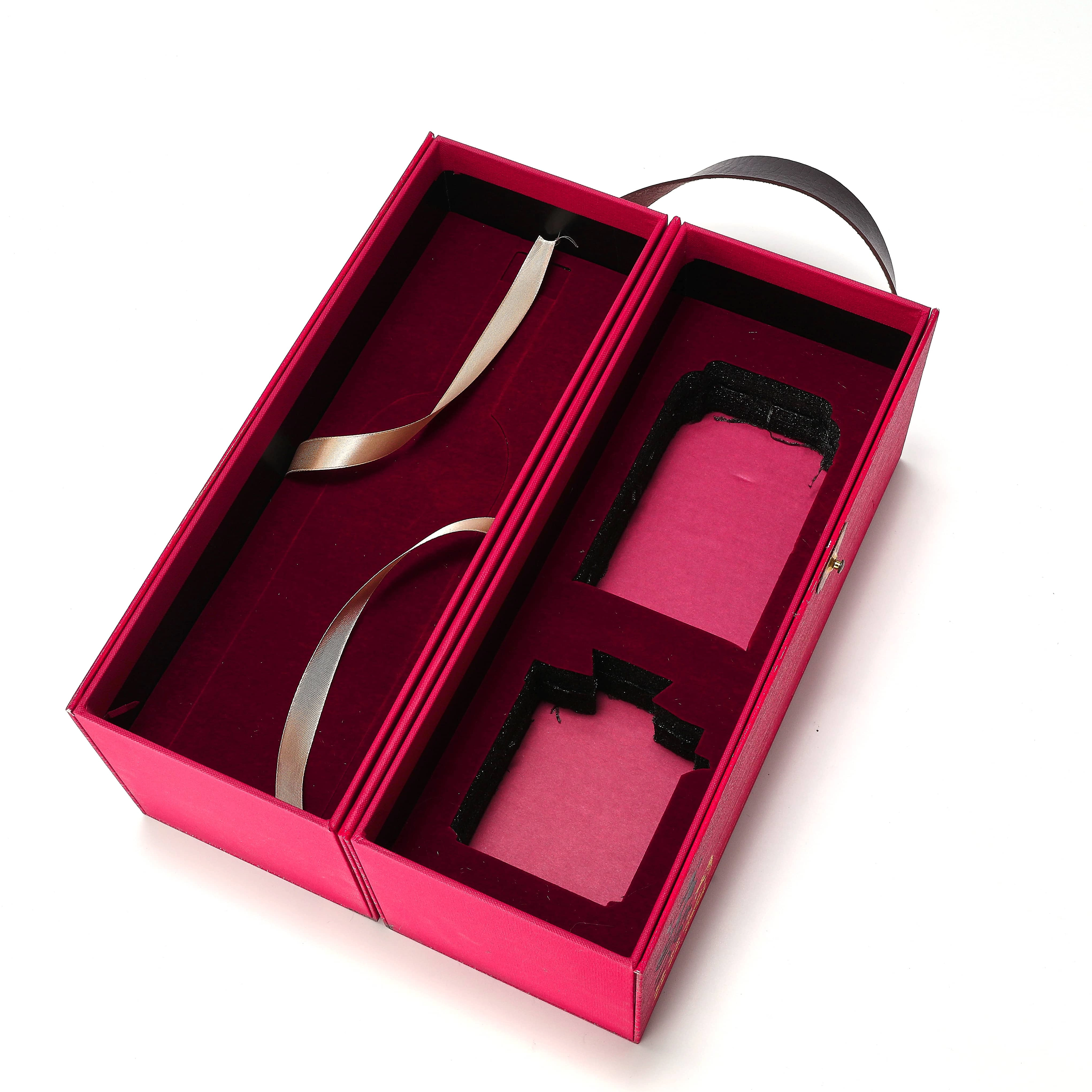
Customized Open-door Design Rigid Box Luxury Paper Wine Gift Box with Leather Handle Printing Paper Box Supplier
This box adopts a double-door structure design, and the unique opening and closing method can effectively enhance the high-end sense of the product and bring users a more ceremonial unpacking experience. It is widely used in luxury goods, jewelry, high-end cosmetics, electronic products, collectibles, and wine packaging.

Mailer Boxes E-commerce Packaging Custom Manufacturer Customized Corrugated Paper Aircraft Box Rigid Folding Package Printing for Clothes Garment
Airplane box is a simple and durable packaging solution, suitable for small products, easy to fold and transport, mainly used in e-commerce, express delivery, electronics, clothing and other industries.
© 2025 WINPACK PRINTING. All rights reserved

Wenhua Printing packaging
winpackprinting
Winpack Printing