




Common Flexo Printing Problems and How to Troubleshoot Them
- Understanding the Fundamentals of Flexographic Printing
- What is flexographic printing and why it matters for packaging
- Key variables that affect print quality
- Measurement and inspection basics
- Most Common Flexo Printing Problems and Their Causes
- 1. Poor ink transfer: low density / weak solids
- 2. Excessive dot gain and loss of detail
- 3. Streaks, bars and non-uniform laydown
- 4. Registration problems and ghosting
- 5. Scumming and background contamination
- Systematic Troubleshooting Steps and Best Practices
- Step 1 — Establish baseline and reproduce the defect
- Step 2 — Isolate variables using a structured approach
- Step 3 — Corrective actions mapped to common causes
- Key operational checks
- Preventive Maintenance, Quality Control and Workflow Improvements
- Routine maintenance schedule
- Quality control checkpoints in the production flow
- Training, standardization and digital tools
- Advanced Troubleshooting: Case Studies and Data-Driven Fixes
- Case study 1 — Eliminating banding caused by anilox cell wear
- Case study 2 — Solving ghosting from web tension fluctuations
- Performance comparison: typical corrective impact
- Winpack: Advanced Capabilities and Why Partner with a Specialist
- Company profile and industry focus
- Equipment, scale and technical strengths
- Products, services and competitive advantages
- FAQ — Common Questions about Flexographic Printing Problems
- 1. How do I quickly tell if a defect is ink-, plate-, or substrate-related?
- 2. How often should anilox rolls be cleaned or resurfaced?
- 3. Can I reduce dot gain without changing the substrate?
- 4. What’s the best way to prevent registration drift on long runs?
- 5. When should I consider outsourcing to a specialist like Winpack?
- Contact and Next Steps
- References
Understanding the Fundamentals of Flexographic Printing
What is flexographic printing and why it matters for packaging
Flexographic printing (flexo) is a rotary, relief-printing process using flexible photopolymer plates mounted on cylinders to transfer ink to substrates such as corrugated board, folding cartons, films, labels, and paper bags. Its speed, substrate versatility, and cost-efficiency make flexo a primary method for packaging production across food, cosmetics, pharmaceutical, and consumer-electronics industries.
Key variables that affect print quality
Successful flexo printing depends on a controlled interaction of multiple variables: plate quality and relief, anilox roll volume and condition, ink formulation and rheology, substrate characteristics, press mechanics (including registration and tension control), and operator setup. Small deviations in any area can produce repeatable defects on large production runs.
Measurement and inspection basics
Use objective metrics to evaluate and tune the process: color density (D), dot gain (percent), line screen (LPI), solids trapping, and registration accuracy (mm). Spectrophotometers and densitometers should be calibrated and used during setup and throughout production runs to detect drift early.
Most Common Flexo Printing Problems and Their Causes
1. Poor ink transfer: low density / weak solids
Symptoms: printed solids appear lighter than proofs; colors seem washed out. Causes include insufficient anilox volume or damaged anilox cell walls, low ink viscosity, worn plates with reduced relief, incorrect doctor blade pressure, or excessive press speed.
2. Excessive dot gain and loss of detail
Symptoms: halftone dots fill in; fine text and halftone detail blur. Causes are high substrate absorbency, over-inking (high anilox volume or high ink viscosity), incorrect plate relief, improper plate mounting or imprecise exposure/hardness, and excessive nip pressure.
3. Streaks, bars and non-uniform laydown
Symptoms: linear streaks across the web in the machine direction or repeating bands. Causes include dirty or worn anilox rolls, doctor blade issues (chatter, uneven wear), air entrapment in ink, improper metering, and contamination on plates or substrate.
4. Registration problems and ghosting
Symptoms: misaligned colors, ghost images or repeat ghosting at set intervals. Causes: web tension inconsistencies, slippage at gripper or drum, imprecise gearless servo control, plate cylinder slippage, or thermal expansion on long runs.
5. Scumming and background contamination
Symptoms: unwanted ink in non-print areas or mottled backgrounds. Causes include insufficient plate cleaning, low durometer (soft) plates causing ink transfer in recesses, inadequate anilox cleaning, and inks with poor tack balance.
Systematic Troubleshooting Steps and Best Practices
Step 1 — Establish baseline and reproduce the defect
Before changing variables, document the defect precisely: take high-resolution photos, measure densities and dot percentages, note press speed, substrate batch, ink lot, anilox specification, plate relief and durometer, and environmental conditions (temperature/humidity). Attempt to reproduce the defect on a short trial run to confirm consistency.
Step 2 — Isolate variables using a structured approach
Troubleshoot using a single-variable method: change one parameter at a time and reprint to observe effects. Typical sequence: substrate → anilox → plate → ink → press settings. This reduces guesswork and helps identify root causes faster.
Step 3 — Corrective actions mapped to common causes
Use the table below for quick diagnosis and recommended immediate fixes.
| Defect | Likely Cause(s) | Immediate Corrective Actions |
|---|---|---|
| Low density / weak solids | Low anilox volume / clogged cells; low ink viscosity; worn plates | Clean/replace anilox; adjust anilox to higher BCV; increase viscosity or add reducer as specified; check plate relief and remount if needed |
| Dot gain / loss of detail | High substrate absorbency; excessive anilox volume; over-inked plates | Switch to lower-volume anilox; reduce ink viscosity; use barrier coatings/primers; verify plate imaging specs |
| Streaks / banding | Dirty/damaged anilox; doctor blade chatter; air in ink | Clean or replace anilox; examine doctor blade holder and blades; purge air; check ink circulation |
| Registration issues / ghosting | Web tension variations; cylinder slip; thermal expansion | Stabilize tension; check grippers and chucks; tighten plate cylinders; reduce speed or allow warm-up |
| Scumming / background ink | Plate surface contamination; low durometer plate | Clean plates with approved solvents; consider harder plate or improved imaging; adjust ink tack |
Key operational checks
- Confirm anilox roll specifications: line screen (LPI/L/cm), cell depth, and volume (BCM/cm2) align with intended ink coverage.
- Maintain ink viscosity within the supplier's recommended range; monitor with a viscometer during runs.
- Use spectrophotometer measurements to track color density and L*a*b values versus proof—don’t rely on visual checks alone.
Preventive Maintenance, Quality Control and Workflow Improvements
Routine maintenance schedule
Implement daily, weekly and monthly tasks: daily anilox cleaning after runs, doctor blade inspection, plate surface cleaning; weekly deep-clean of anilox and print stations; monthly calibration of registration and tension systems, and replacement of worn parts. Keep detailed logs to correlate defects with maintenance history.
Quality control checkpoints in the production flow
Place control points: substrate inspection on incoming material, prepress plate and proof verification, first-article press checks with measurements (density, dot gain, registration), and periodic in-line spectrophotometer checks every set number of meters. Use SPC (statistical process control) charts for critical metrics to detect drift early.
Training, standardization and digital tools
Operator training focused on cause-effect relationships is critical. Standardize procedures with run cards capturing anilox specs, plate details, ink formulations, press settings, and target metrics. Where possible, adopt digital color management (ICC profiles), inline inspection cameras, and automation for tension and registration to reduce operator variability.
Advanced Troubleshooting: Case Studies and Data-Driven Fixes
Case study 1 — Eliminating banding caused by anilox cell wear
A mid-volume label run experienced repeating light bands every 50 cm. Analysis revealed partial cell collapse and sporadic cell plugging on a 400 L/cm anilox. Replacing the anilox with a properly specified 400 L/cm ceramic roll and instituting a post-run ultrasonic cleaning cycle removed banding and improved average density by 0.08 D.
Case study 2 — Solving ghosting from web tension fluctuations
A packaging run had intermittent ghost images coinciding with temperature swings on long runs. Installing closed-loop web-tension controllers and monitoring tension with load cells reduced registration drift by 60% and removed ghosting on successive runs.
Performance comparison: typical corrective impact
| Action | Typical Improvement | Metric |
|---|---|---|
| Anilox cleaning/replacement | +0.05–0.15 D; reduced banding | Density / visual defects |
| Viscosity control | Improved dot stability; less set-off | Dot gain variance (%), set-off incidents |
| Plate re-imaging & mounting | Sharper halftone detail, fewer scums | Dot gain (%), background L* value |
Winpack: Advanced Capabilities and Why Partner with a Specialist
Company profile and industry focus
In 2016, Guangdong Winpack Printing Technology Development Co., Ltd. was officially established as a professional paper box printing manufacturer specializing in designing, proofing, printing, and producing a wide range of packaging and printed materials. Winpack serves diverse industries—cosmetics, food, healthcare, pharmaceuticals, and electronics—offering tailored solutions for both short and long runs.
Equipment, scale and technical strengths
Winpack operates a 15,000-square-meter factory equipped with advanced technology. The production line includes a state-of-the-art screen plate-making system and high-performance presses and finishing equipment such as the Heidelberg printing machines, high-speed paper cutters, Lithrone GL-40A machine, and anti-counterfeiting inkjet printers—ensuring quality, repeatability, and quick turnarounds.
Products, services and competitive advantages
Winpack provides customized production of stickers, labels, paper bags, gift boxes, beauty boxes, pizza boxes, books, brochures, flyers, and a wide range of custom paper packaging. Core product strengths include:
- Custom gable boxes
- Custom gift boxes
- Custom display boxes
- Custom rigid boxes
- Custom folding boxes
- Custom paper tubes boxes
- Custom window boxes
- Custom special-shape boxes
- Custom pillow boxes
- Custom take-out boxes
Winpack’s competitive advantage is built on integrated prepress and proofing, modern printing suites, anti-counterfeiting capabilities, and an emphasis on quality control—reducing waste and ensuring consistent color and structural performance across production runs. Learn more: https://www.winpackprinting.com/
FAQ — Common Questions about Flexographic Printing Problems
1. How do I quickly tell if a defect is ink-, plate-, or substrate-related?
Run a simple isolation check: print the same job on a known-good substrate. If the defect disappears, it's substrate-related. Replace the anilox with a clean/known-good roll—if solved, it's anilox/ink-related. Swap to a verified plate; if the problem resolves, the plate was at fault. Document each swap and the metric changes.
2. How often should anilox rolls be cleaned or resurfaced?
Anilox cleaning frequency depends on ink type and run length: daily or after each run for sticky or pigmented inks; ultrasonically clean weekly for regular solvent-based or water-based inks. Ceramic anilox rolls rarely need resurfacing but should be inspected for cell wear; replace if cell volume loss exceeds the supplier’s acceptable tolerance.
3. Can I reduce dot gain without changing the substrate?
Yes. Use a lower-volume anilox, lower viscosity inks, reduce nip pressure, optimize plate relief and hardness, and ensure plates are properly exposed and engraved. Applying a primer or coating to the substrate can also reduce absorbency without changing the base stock.
4. What’s the best way to prevent registration drift on long runs?
Use closed-loop tension control, stabilize press and material temperatures, inspect and maintain grippers and chucks, and use precision servo controls. Schedule check-measure-adjust cycles at intervals based on run length and record the adjustments to refine the schedule over time.
5. When should I consider outsourcing to a specialist like Winpack?
Outsource when your in-house team lacks specialized equipment (e.g., plate-making systems, anti-counterfeiting printers), when you need consistent color on complex substrates, or for short-to-medium runs where capitalizing on a partner's scale reduces unit costs and lead times. Winpack’s integrated capabilities make it suitable for brands requiring both creative packaging and reliable mass production.
Contact and Next Steps
If you’re facing persistent flexo issues or want to optimize packaging production, consult with experienced partners. Visit Winpack to explore capabilities, request samples, or submit artwork for quoting: https://www.winpackprinting.com/. For immediate technical assistance, prepare: substrate samples, a problem print, plate/anilox specs, and ink data sheets—this information speeds root-cause analysis and corrective proposals.
References
- Flexography — Wikipedia. https://en.wikipedia.org/wiki/Flexography (Accessed 2026-01-03)
- Flexographic Technical Association (FTA). https://flexography.org/ (Accessed 2026-01-03)
- Heidelberg — Company and press information. https://www.heidelberg.com/global/en/ (Accessed 2026-01-03)
- Komori Lithrone GL-series overview. https://www.komori.com/ (Accessed 2026-01-03)
- ISO standards overview (printing industry context). https://www.iso.org/ics/65.080/x/ (Accessed 2026-01-03)
Custom mailer box packaging Manufacturers and Suppliers in us
Best professional paper box packaging manufacturers and supplier brands
How to Choose the paper sweet box manufacturer and supplier ?
Custom Gift Paper Bags
Rigid Magetic Boxes
How long does it usually take from design confirmation to delivery?
The lead time is usually 15-25 days, depending on the production of the order
About Printing Craftsmanship
What is the best printing technique for business cards?
It depends on the desired effect:
Hot stamping for a premium metallic finish.
Embossing for a raised, tactile design.
Spot UV for glossy highlights on specific areas.
Digital printing for quick, affordable, and full-color printing.
Folding Boxes
How long does it usually take from design confirmation to delivery?
Answer: The delivery time of folding boxes is usually 15-25 days, depending on the production of the order
Rigid Lift-off Box
Can I order a sample of my rigid box?
Yes, we strongly recommend that you do so, we provide a variety of sample types to meet different usage situations and help you guarantee the best results!
Rigid Drawer Box
How long does it usually take from design confirmation to delivery?
The lead time is usually 15-25 days, depending on the production of the order

Customized Print Shopping Window Paper Bag Festivals Party Supplies Packaging Cardboard Paper Shopping Bag with logo
This is a packaging form that combines display and portability. Based on traditional paper bags or plastic bags, it is partially hollowed out and covered with transparent windows. Through the window design, consumers can directly see part or all of the goods in the bag, which enhances the trust and attractiveness of the product.

Customized Perfume Gift Box Packaging
Perfume Gift Box – Premium Custom Packaging for Luxury Fragrance Brands
Our custom perfume gift boxes are designed to combine luxury, protection, and brand storytelling — perfect for perfume brands, gift sets, and promotional collections.
Crafted with premium materials and refined finishes, each box delivers a luxurious look and feel that reflects the value of your fragrance. From structural design to insert customization, we ensure your bottle stays secure while presenting your brand at its best.
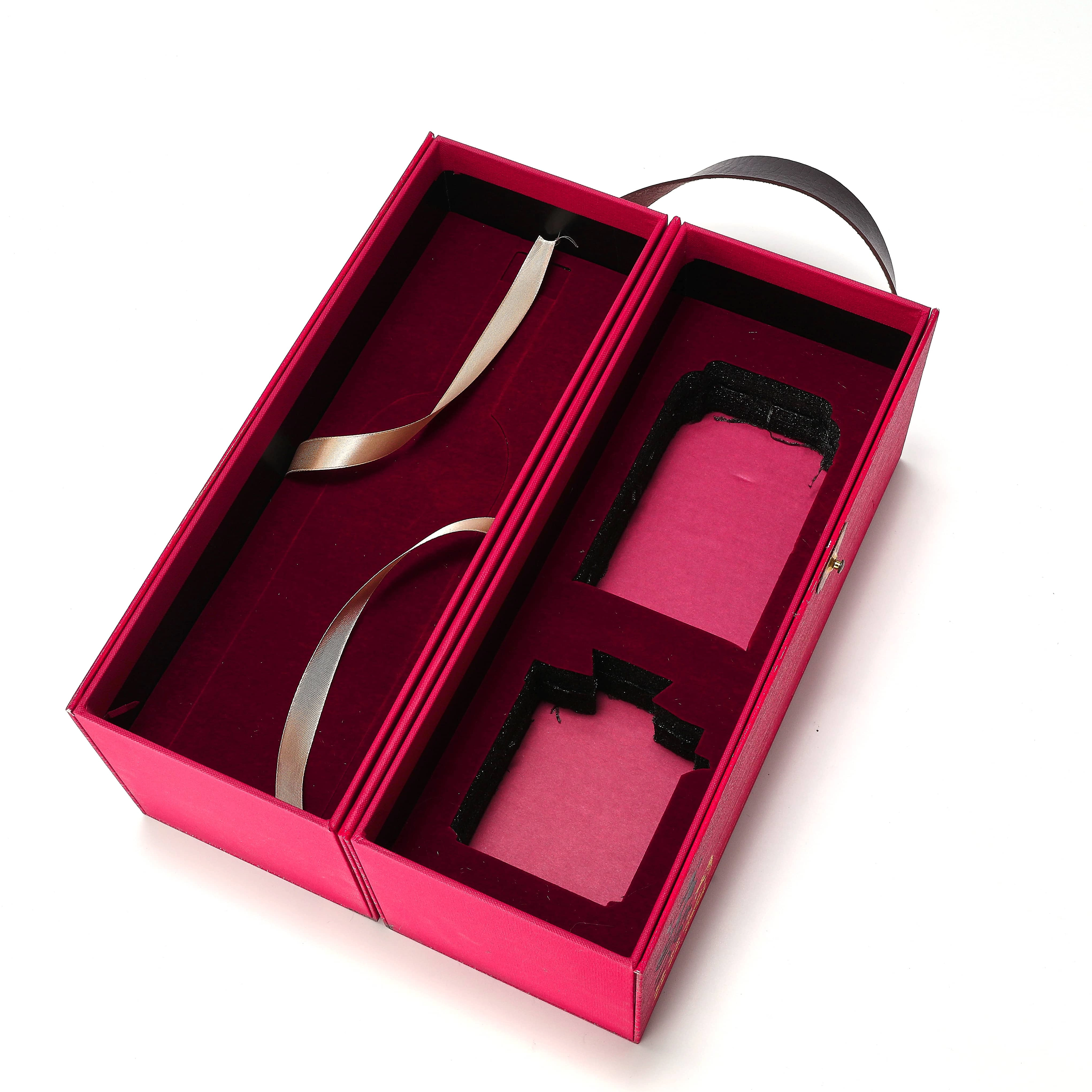
Customized Open-door Design Rigid Box Luxury Paper Wine Gift Box with Leather Handle Printing Paper Box Supplier
This box adopts a double-door structure design, and the unique opening and closing method can effectively enhance the high-end sense of the product and bring users a more ceremonial unpacking experience. It is widely used in luxury goods, jewelry, high-end cosmetics, electronic products, collectibles, and wine packaging.

Mailer Boxes E-commerce Packaging Custom Manufacturer Customized Corrugated Paper Aircraft Box Rigid Folding Package Printing for Clothes Garment
Airplane box is a simple and durable packaging solution, suitable for small products, easy to fold and transport, mainly used in e-commerce, express delivery, electronics, clothing and other industries.
© 2025 WINPACK PRINTING. All rights reserved

Wenhua Printing packaging
winpackprinting
Winpack Printing