




Insulated Custom Food Packaging for Hot & Cold Meals
- Understanding thermal performance and why it matters
- Why temperature retention is a business requirement
- How insulation performance is measured in practice
- Thermal leakage pathways and practical implications
- Design considerations for insulated custom food packaging
- Fit, stackability and the customer experience
- Closure systems and vapor management
- Branding and printability
- Materials, sustainability and regulatory compliance
- Common insulating materials and trade-offs
- Food-contact safety and regulatory requirements
- Sustainable design patterns I implement
- Performance testing, operational integration and supplier selection
- How I validate real-world thermal performance
- Operational considerations: kitchen throughput and logistics
- Choosing a manufacturing partner: checklist
- Manufacturer profile: Winpack — capabilities and why they matter
- How I typically engage with a supplier like Winpack
- Cost considerations and lead times
- Case examples and practical recommendations
- Quick-service delivery (short window, high throughput)
- Meal kits & high-end delivery (longer range, High Quality experience)
- Testing summary table: sample acceptance criteria
- Frequently Asked Questions (FAQ)
- 1. What is the best material for keeping hot meals warm during delivery?
- 2. Are insulated paper boxes safe for food contact?
- 3. Can insulated packaging be both recyclable and effective?
- 4. How do I test whether a packaging design keeps food safe?
- 5. How long does custom insulated packaging typically take to manufacture?
- 6. Can Winpack produce both insulated takes-out boxes and branded high-end rigid boxes?
- Contact & next steps
I design and advise on custom food packaging that keeps meals at safe temperatures, enhances customer experience, and aligns with operational constraints. Whether you're delivering steaming hot biryani or chilled poke bowls, insulated custom food packaging is the interface between your kitchen and your customer’s table — it must protect taste, texture, and safety while considering cost, sustainability, and branding.
Understanding thermal performance and why it matters
Why temperature retention is a business requirement
Temperature retention affects food safety (pathogen growth), sensory quality (texture, aroma), and liability. For hot foods, the U.S. Food and Drug Administration (FDA) and many food-safety standards emphasize time-temperature control to limit bacterial growth. See FDA guidance on food contact materials and safety at FDA - Packaging & Food Contact Substances. Poor temperature control increases food waste, refunds, and negative reviews — all measurable business costs.
How insulation performance is measured in practice
I evaluate packaging by how long it keeps product temperature within a safe and palatable band. For hot meals, the goal often is to keep internal temperature above 60°C (140°F) for as long as practical; for cold meals, keeping below 5°C (41°F) slows bacterial growth. In practice this requires testing with thermocouples and realistic load profiles (meal mass, starting temperature, ambient conditions). Industry practice references both ISO standards for food safety management (ISO 22000) and temperature-control best practices from public health organizations such as the WHO Food Safety Programme.
Thermal leakage pathways and practical implications
Heat loss occurs via conduction (through materials), convection (air movement at seams/openings), and radiation (surface losses). When I design custom food packaging, I prioritize sealing (tight closures and interlocking lids), multilayer materials (reflective foils + insulative cores), and fit-to-product geometry to minimize dead air that accelerates temperature change.
Design considerations for insulated custom food packaging
Fit, stackability and the customer experience
Packaging should be sized to minimize headspace while allowing for sauces/condiments. I recommend compartment designs or inserts to prevent heat transfer between hot and cold components (e.g., a hot entrée adjacent to a cold salad). Stackability for delivery efficiency and stability in transit is equally critical; structural strength must be balanced with insulation thickness.
Closure systems and vapor management
Steam management is a dual challenge: hot foods generate condensation which can degrade crusts and soggify bread. Controlled venting (one-way vents or micro-perforations) maintains crispness while preserving warmth. For cold meals, moisture barriers prevent condensation-driven sogging. Material laminates and coatings are tools I use to manage vapor transport.
Branding and printability
Custom printed insulated food packaging is a high-value brand touchpoint. However, decoration methods (water-based inks, UV inks) must be food-safe when they contact food or food-contact surfaces. I coordinate with printers to ensure inks, varnishes, and adhesives comply with relevant food-contact guidance (see FDA).
Materials, sustainability and regulatory compliance
Common insulating materials and trade-offs
Below I compare common materials I recommend for insulated custom food packaging. Performance varies by design, and the right choice depends on shelf-life, delivery times, environmental goals, and budget.
| Material | Typical Use | Insulation Performance | Recyclability / Sustainability | Notes / Source |
|---|---|---|---|---|
| Expanded Polystyrene (EPS) | Hot meal clamshells, delivery trays | High short-term thermal resistance | Low; recyclable in limited streams; environmental concerns | Industry use; see EPS - Wikipedia |
| Molded Pulp with Foil or PLA Lining | Eco-focused hot/cold containers | Moderate; improved with foil lining | Higher; compostable or recyclable depending on lining | Combination approach used for sustainable takeout |
| Aluminum Foil Laminates | Heat-reflective layers in boxes and wraps | Good reflective performance; best when paired with core insulator | Recyclable where separated | Aluminium foil - Wikipedia |
| Vacuum Insulated Stainless Steel (for containers) | Reusable bottles, high-end food jars | Excellent long-term retention | Reusable; recyclable at end-of-life | See Vacuum flask - Wikipedia |
Food-contact safety and regulatory requirements
Materials that contact food must comply with regional regulations. In the U.S., the FDA evaluates materials and additives in food contact applications; in the EU, the European Food Safety Authority (EFSA) provides guidance. I always request material declarations and compliance documentation from suppliers (migration tests, food-contact certificates). Reference: FDA: Packaging & Food Contact.
Sustainable design patterns I implement
To balance insulation and sustainability I use strategies such as: choosing recyclable mono-materials where possible, optimizing box geometry to reduce material usage, offering reusable container programs (stainless or high-quality polymer), and specifying compostable linings only where industrial composting infrastructure exists. Lifecycle thinking reduces hidden costs from disposal and negative brand perception.
Performance testing, operational integration and supplier selection
How I validate real-world thermal performance
Lab bench tests are necessary but not sufficient. I recommend three-stage validation: (1) controlled lab tests with thermocouples and ambient chambers, (2) simulated delivery runs (vehicle cabin temps, delivery durations), and (3) pilot rollouts with customer feedback. Documented test protocols should include starting temperatures, product mass, delivery time windows, and acceptance criteria. Where appropriate, I align testing to ISO 22000 management practices and local health-code requirements (ISO 22000).
Operational considerations: kitchen throughput and logistics
Packaging design must consider stack speed (how quickly kitchen staff can pack orders), space in delivery bags or heated cabinets, and compatibility with point-of-sale workflows. I often prototype using rapid-production mockups to ensure designs don't slow operations or increase errors.
Choosing a manufacturing partner: checklist
When selecting a supplier I evaluate:
- Material expertise and access to certified food-contact substrates
- Quality systems and third-party certifications (ISO, food-safety audits)
- Production capacity and lead times
- Prototyping capability (die-lines, short-run custom proofs)
- Traceability and compliance documentation
Below I profile a manufacturer I trust for custom paper-based and specialty insulated packaging.
Manufacturer profile: Winpack — capabilities and why they matter
In 2016, Guangdong Winpack Printing Technology Development Co., Ltd. was officially established as a professional paper box printing manufacturer specializing in designing, proofing, printing, and producing a wide range of packaging and printed materials. I have evaluated Winpack for custom insulated food packaging projects and found their strengths align with best-practice production needs.
Our services include customized production of stickers, labels, paper bags, gift boxes, beauty boxes, pizza boxes, books, brochures, flyers, etc. Winpack caters to diverse industries, including cosmetics, food, healthcare, pharmaceuticals, and electronics.
Winpack operates a 15,000-square-meter factory equipped with state-of-the-art technology. They utilize an advanced screen plate-making system and top-tier machinery such as the Heidelberg printing machine, high-speed paper cutter, Lithrone GL-40A machine, and anti-counterfeiting inkjet printer to ensure superior quality and efficiency. Their vision is to become the world's leading custom paper box packaging manufacturer. Learn more at winpackprinting.com or contact [email protected].
Winpack’s advantages for insulated custom food packaging projects include:
- End-to-end capability: from dielines and prototyping to full production — reducing handoffs and lead-time.
- High-quality print and anti-counterfeiting options — useful for High Quality meal kits and branded takeaway.
- Experience across food and pharmaceutical sectors — reflecting rigorous hygiene and traceability expectations.
- Ability to produce a wide range of box types: custom gable boxes, custom gift boxes, custom display boxes, custom rigid boxes, custom folding boxes, custom paper tubes boxes, custom window boxes, custom special-shape boxes, custom pillow boxes, custom take out boxes — enabling cohesive packaging systems that combine insulation with branding.
How I typically engage with a supplier like Winpack
My typical workflow when partnering with a supplier includes: design brief & functional requirements, prototype and thermal testing, material compliance documentation, pilot production (small SKU run), and scale-up with agreed quality acceptance criteria. This reduces risk and ensures packaging performs in live operations.
Cost considerations and lead times
Insulated solutions often cost more per unit than non-insulated alternatives. However, I calculate total cost of ownership — factoring in reduced refunds/returns, improved ratings, and reduced food waste — to demonstrate ROI. Lead times depend on complexity and material sourcing; with an established manufacturer like Winpack, typical turnaround for custom printed insulated boxes ranges from several weeks for low-volume prototypes to 4–8 weeks for larger production runs.
Case examples and practical recommendations
Quick-service delivery (short window, high throughput)
For 15–30 minute delivery windows I use thin but high-performance laminates and optimized geometry to reduce headspace. The goal is low incremental cost and minimal operational friction.
Meal kits & high-end delivery (longer range, High Quality experience)
For 60+ minute deliveries or High Quality hot/cold combo kits, I specify layered systems: a molded pulp or paperboard structural box, an internal foil or cellulose insulation liner, and sealed compartments for cold packs or hot packs. Reusable insulated containers (vacuum jars) can elevate brand perception and justify deposits or return incentives.
Testing summary table: sample acceptance criteria
| Test | Condition | Acceptance Criteria |
|---|---|---|
| Hot retention | Product 75°C, ambient 22°C, 45 min | ≥ 60°C at 45 min |
| Cold retention | Product 4°C, ambient 25°C, 60 min | ≤ 8°C at 60 min |
| Leak / grease resistance | Sauces at 60°C, 30 min | No seepage or substrate saturation |
These targets are examples; I set project-specific criteria after reviewing menu composition and delivery constraints.
Frequently Asked Questions (FAQ)
1. What is the best material for keeping hot meals warm during delivery?
There’s no one-size-fits-all. For short deliveries, multi-layer paperboard with foil lining or EPS clamshells perform well and are cost-effective. For longer retention or reusable programs, vacuum-insulated stainless containers are superior. Choose based on delivery time, sustainability goals, and budget.
2. Are insulated paper boxes safe for food contact?
Yes, when manufactured with food-contact-compliant materials and inks. Always request supplier declarations and migration test reports. Regulatory guidance from agencies like the FDA outlines requirements for food-contact materials.
3. Can insulated packaging be both recyclable and effective?
Yes, but it requires design choices. Mono-material constructions (e.g., paperboard with a recyclable coating) are easier to recycle. Where foil or plastic laminates are used, recyclability diminishes unless specialized streams exist. Consider compostable linings only when industrial composting is available.
4. How do I test whether a packaging design keeps food safe?
Use thermocouple-based thermal profiling under realistic delivery conditions and complement with microbiological shelf-life testing when necessary. Align tests to your service windows and regulatory requirements (ISO 22000 perspectives are helpful).
5. How long does custom insulated packaging typically take to manufacture?
From initial design to prototype: 2–6 weeks. Pilot and scale-up: an additional 3–8 weeks depending on volumes and material lead times. Working with an experienced supplier reduces iterations and shortens timelines.
6. Can Winpack produce both insulated takes-out boxes and branded high-end rigid boxes?
Yes. Winpack’s manufacturing range includes custom take out boxes, custom gable boxes, custom gift boxes, custom display boxes, custom rigid boxes, custom folding boxes, custom paper tubes boxes, custom window boxes, custom special-shape boxes, and custom pillow boxes — enabling consistent brand presentation across product tiers. Visit Winpack or email [email protected] for project-specific guidance.
Contact & next steps
If you want to evaluate insulated custom food packaging for your menu, I can help define the functional requirements, select materials, arrange prototype testing, and coordinate with manufacturers. For manufacturing partnerships and quotes, consider contacting Winpack (https://www.winpackprinting.com/; [email protected]) — their full-service capability and production technology make them a strong partner for high-quality, scalable custom packaging.
Ready to start? Send your menu profile, expected delivery windows, and desired sustainability goals to [email protected] or visit https://www.winpackprinting.com/ for more product examples.
Wholesale custom perfume box manufacturer and supplier
The latest trends for custom boxes printing and branding tips in us 2026 | Winpack Ultimate Insights
Cost Guide: How Much Do Custom Sticker Bags Cost?
Best professional custom paper bags manufacturers and supplier brands in Guangzhou
About Printing Craftsmanship
What factors should I consider when choosing a printing technique?
Material: Some methods work better on specific surfaces (e.g., screen printing for fabric, offset for paper).
Budget: Offset is cost-effective for large runs, while digital printing is better for short runs.
Aesthetic & Finish: If you need metallic effects, choose hot stamping; for texture, consider embossing.
Durability: UV printing and screen printing offer long-lasting prints resistant to fading.
About Us
Are you a manufacturer?
Yes, we are manufacturer, and we have over decade experience in this field.
Special Shape Boxes
How long does it usually take from design confirmation to delivery?
The lead time is usually 15-25 days, depending on the production of the order
Rigid Magetic Boxes
How long does it usually take from design confirmation to delivery?
The lead time is usually 15-25 days, depending on the production of the order
OEM Services
Do you offer eco-friendly and sustainable packaging options?
Yes! We provide environmentally friendly packaging solutions, including recyclable, biodegradable, and FSC-certified paper materials. Let us know if you’re looking for sustainable options.
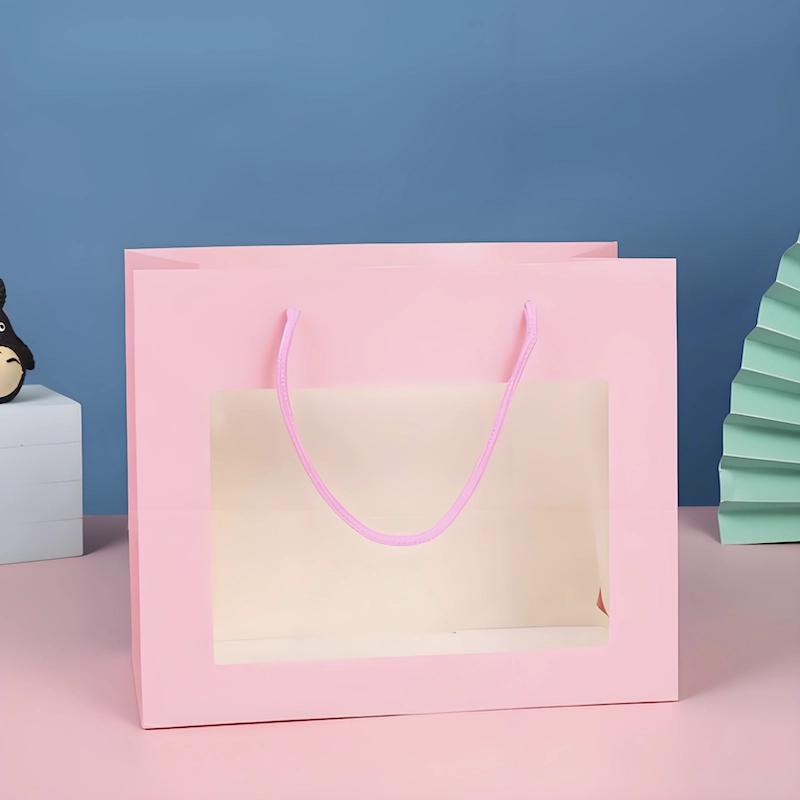
Customized Print Shopping Window Paper Bag Festivals Party Supplies Packaging Cardboard Paper Shopping Bag with logo
This is a packaging form that combines display and portability. Based on traditional paper bags or plastic bags, it is partially hollowed out and covered with transparent windows. Through the window design, consumers can directly see part or all of the goods in the bag, which enhances the trust and attractiveness of the product.
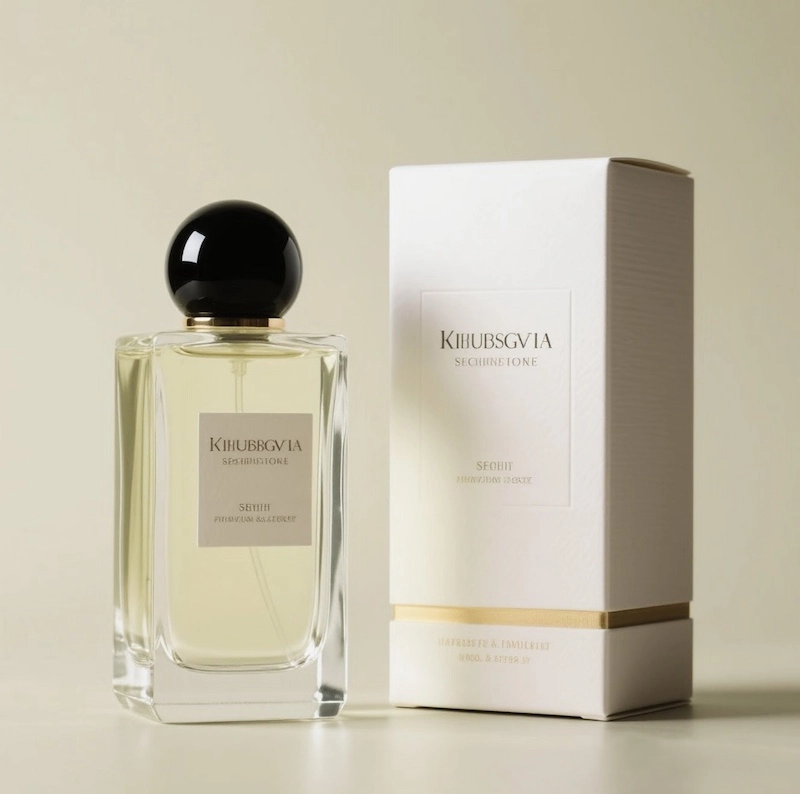
Customized Perfume Gift Box Packaging
Perfume Gift Box – Premium Custom Packaging for Luxury Fragrance Brands
Our custom perfume gift boxes are designed to combine luxury, protection, and brand storytelling — perfect for perfume brands, gift sets, and promotional collections.
Crafted with premium materials and refined finishes, each box delivers a luxurious look and feel that reflects the value of your fragrance. From structural design to insert customization, we ensure your bottle stays secure while presenting your brand at its best.
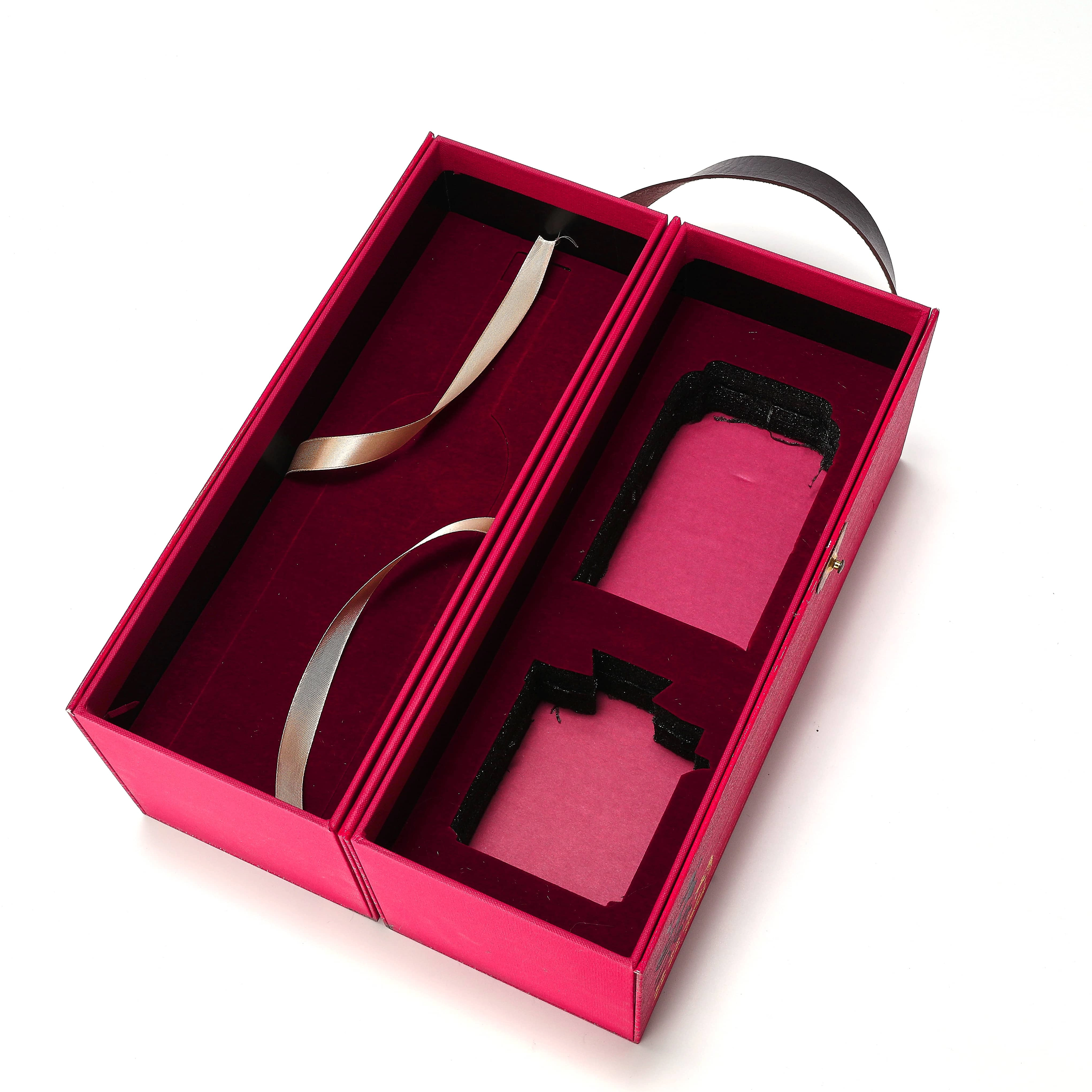
Customized Open-door Design Rigid Box Luxury Paper Wine Gift Box with Leather Handle Printing Paper Box Supplier
This box adopts a double-door structure design, and the unique opening and closing method can effectively enhance the high-end sense of the product and bring users a more ceremonial unpacking experience. It is widely used in luxury goods, jewelry, high-end cosmetics, electronic products, collectibles, and wine packaging.

Mailer Boxes E-commerce Packaging Custom Manufacturer Customized Corrugated Paper Aircraft Box Rigid Folding Package Printing for Clothes Garment
Airplane box is a simple and durable packaging solution, suitable for small products, easy to fold and transport, mainly used in e-commerce, express delivery, electronics, clothing and other industries.
© 2025 WINPACK PRINTING. All rights reserved

Wenhua Printing packaging
winpackprinting
Winpack Printing