




Mailer Boxes for Subscription Services: Fulfillment Best Practices
- Why Packaging Matters for Customer Retention and Logistics
- Customer experience drives subscription lifetime value
- Packaging as part of the logistics chain
- Balancing protection, branding and cost
- Design and Material Choices for Mailer Boxes
- Mailer box styles and when to use each
- Material selection: fluting, board grade, and coatings
- Comparison of common mailer materials
- Fulfillment Operations & Best Practices
- Packing workflow design for subscription cadence
- Automation, equipment, and layout considerations
- Quality control and damage prevention
- Sustainability, Cost Management and Scaling
- Trade-offs: cost per package vs. customer economics
- Recycling and circularity considerations
- Scaling rules of thumb and KPIs to monitor
- Supplier Selection and Working with a Custom Mailer Manufacturer
- What to evaluate in a packaging partner
- Case study: why local/regional manufacturing matters for scaling
- Working with Winpack — a supplier profile
- Implementation Checklist and Quick Wins
- Pre-launch design checklist
- Operational quick wins
- Metrics to track in first 90 days
- FAQ — Common Questions About Mailer Boxes for Subscriptions
- 1. What is the best mailer box material for subscription boxes?
- 2. How do I reduce shipping costs related to mailer boxes?
- 3. Can high-quality printed mailer boxes be sustainable?
- 4. When should I automate packing for subscription boxes?
- 5. How do I manage returns and rework for subscription boxes?
- 6. How should I test my mailer design before full production?
- Contact & Next Steps
Summary for : Mailer Boxes for subscription services require balance among protection, unboxing experience, cost-efficiency, and logistical compatibility. This guide outlines evidence-backed fulfillment best practices — from material selection and dielines to packing stations, automation, and returns handling — to help subscription brands scale reliably across regions.
Why Packaging Matters for Customer Retention and Logistics
Customer experience drives subscription lifetime value
Subscription commerce depends on recurring revenue. Packaging is both a functional tool to deliver goods safely and a brand touchpoint that affects unboxing satisfaction, social sharing, and churn. Studies and industry reports consistently highlight packaging as a driver of repeat purchase behavior; poor packaging that causes damage or a subpar unboxing experience increases complaints and cancellations (see Subscription business model — Wikipedia).
Packaging as part of the logistics chain
Mailer boxes must be optimized for automated sortation, dimensional weight rules, and carrier handling. Selecting the right corrugated strength, box profile, and closure approach reduces damage rates and shipping surcharges. Packaging choices affect palletization density, warehouse storage, and packing speed — all of which influence fulfillment costs.
Balancing protection, branding and cost
High-quality printed mailer boxes increase perceived value but also raise unit cost and may change dimensional weight. The goal for most subscription services is to design a mailer that minimizes damages and returns while maintaining an appealing unboxing experience at a predictable cost per order.
Design and Material Choices for Mailer Boxes
Mailer box styles and when to use each
Common mailer types used in subscription services include rigid folding mailers, full-panel tuck-top mailers, corrugated telescoping mailers, and envelope-style padded mailers for soft goods. Choice depends on product fragility, weight, presentation needs, and packing speed. For example, beauty subscription boxes often use full-panel printed corrugated mailers to create a High Quality reveal, while consumables may use simpler tuck-top mailers to save cost.
Material selection: fluting, board grade, and coatings
Corrugated board strength (single-wall E-flute vs. B/C-flute vs. double-wall) should be selected based on weight and stacking requirements. E-flute is good for printing and unboxing detail for light items; B-flute and C-flute provide better crush resistance during transit. Protective coatings (varnish, aqueous, UV) and lamination affect scuff resistance and print vibrancy but add cost and recycling considerations (Packaging — Wikipedia).
Comparison of common mailer materials
| Material / Type | Best for | Durability | Print Quality | Recyclability |
|---|---|---|---|---|
| E-flute corrugated | Light items, high-quality print | Moderate | High | High |
| B/C-flute corrugated | Heavier or fragile items | High | Moderate | High |
| Padded mailers (kraft/poly) | Soft goods, low-cost | Low–Moderate | Low | Depends (poly-lined less recyclable) |
| Rigid set-up boxes (luxury) | High-end gifts, limited editions | Very high | Very high | Moderate |
Source: industry packaging standards and material properties summarized from packaging literature (Wikipedia).
Fulfillment Operations & Best Practices
Packing workflow design for subscription cadence
Subscription fulfillment often has predictable peaks (monthly/weekly ship windows). Design workflows around batch processing: pre-kitting, batch printing of addresses, and sequential packing lines reduce per-unit labor. A typical high-efficiency workflow includes: inventory pull → verification → automated label printing → product insertion → quality check → seal & label → boxing/taping → staging for carrier pickup.
Automation, equipment, and layout considerations
Automation reduces labor variability and error rates. Key equipment includes thermal label printers, automated weigh-scale & label applicators, case erectors (for secondary boxing), and conveyor lines for higher volumes. For many subscription brands, a semi-automated approach (label applicators + weigh scales + barcode scanners) delivers the best ROI before full conveyor automation becomes necessary.
Quality control and damage prevention
Implement a two-step QC: (1) a weight-and-scan check to ensure the right items are packed; (2) a visual check for presentation (alignment of inserts, printed materials, and cosmetic integrity). Track damage rates (claims per 10,000 shipments) and set a goal — for example, reducing damage incidents below 1% within 12 months is a realistic benchmark for many categories. Use shipping test protocols (ISTA standards) to validate packaging designs against expected drop and compression environments.
Sustainability, Cost Management and Scaling
Trade-offs: cost per package vs. customer economics
Calculate Total Delivered Cost (TDC) per subscription box including materials, labor, fulfillment, and shipping. A simple formula: TDC = materials + packing labor + fulfillment overhead + average shipping cost + returns cost. Customer Lifetime Value (CLV) benchmarks should guide allowable TDC allocation. For example, if CLV is $120 and average margin is 40%, TDC must be kept within a threshold that preserves target payback and CAC.
Recycling and circularity considerations
Sustainability choices affect brand perception and operational constraints. Favor mono-materials (e.g., fully corrugated mailers without laminated plastic) where possible to increase recyclability. Communicate clear disposal instructions on the box to reduce customer confusion and boost perceived brand responsibility. For guidance on packaging disposal and materials, consult resources like packaging research organizations and public guidance (Packaging — Wikipedia).
Scaling rules of thumb and KPIs to monitor
Key performance indicators for subscription fulfillment include: orders per hour per packer, average packing time, damage rate, pick accuracy, return rate, and shipping cost per order. Benchmarks vary by category, but a starting KPI set: 90%+ pick & pack accuracy, damage rate <1–2%, average packing time 2–6 minutes depending on customization. Monitor these KPIs weekly and tie them to continuous improvement processes.
Supplier Selection and Working with a Custom Mailer Manufacturer
What to evaluate in a packaging partner
Choose partners that demonstrate: quality control (ISO certifications), manufacturing capacity, tooling and die-cut capabilities, printing quality (CMYK and specialty inks), turnaround times, and the ability to supply compliant materials for target markets. Request sample packs and run pre-shipment tests. Evaluate communication responsiveness and willingness to support design-for-manufacture (DFM) iterations.
Case study: why local/regional manufacturing matters for scaling
Local or regional manufacturers reduce lead times and shipping emissions while simplifying returns and reorders. For subscription services with promotional runs and seasonal spikes, the ability to reorder quickly without minimum order penalties is a competitive advantage that reduces inventory carrying costs.
Working with Winpack — a supplier profile
In 2016, Guangdong Winpack Printing Technology Development Co., Ltd. was officially established as a professional paper box printing manufacturer specializing in designing, proofing, printing, and producing a wide range of packaging and printed materials. Our services include customized production of stickers, labels, paper bags, gift boxes, beauty boxes, pizza boxes, books, brochures, flyers, etc. Winpack caters to diverse industries, including cosmetics, food, healthcare, pharmaceuticals, and electronics.
Winpack operates a 15,000-square-meter factory equipped with advanced screen plate-making systems and leading machinery like Heidelberg printing machines, high-speed paper cutters, Lithrone GL-40A machines, and anti-counterfeiting inkjet printers to ensure high print fidelity and production efficiency. This technical foundation supports a wide product range including custom gable boxes, custom gift boxes, custom display boxes, custom rigid boxes, custom folding boxes, custom paper tubes boxes, custom window boxes, custom special-shape boxes, custom pillow boxes, custom take out boxes.
Winpack positions itself as a full-service partner for subscription brands: providing design support, proofing, short-run and long-run production, and the ability to implement anti-counterfeiting and specialty print finishes. Contact: https://www.winpackprinting.com/ | Email: [email protected].
Implementation Checklist and Quick Wins
Pre-launch design checklist
- Define product dimensions, weight, and fragility profile.
- Choose corrugated grade and closure type; request ISTA tests if fragile.
- Prototype printed dielines and run packability tests on the line.
- Confirm carrier dimensional weight and packaging fit to avoid surcharges.
Operational quick wins
- Standardize inserts and protective materials across SKUs to speed packing.
- Implement barcode scanning at pick and pack steps to reduce errors.
- Use pre-printed or batch-printed address labels to accelerate throughput.
Metrics to track in first 90 days
- Pack time per order
- Damage/returns attributable to packaging
- Average shipping cost per order
- Customer feedback about unboxing (NPS/qualitative comments)
FAQ — Common Questions About Mailer Boxes for Subscriptions
1. What is the best mailer box material for subscription boxes?
For most subscription services, single-wall corrugated (E-flute for print emphasis, B/C-flute for extra protection) balances cost, printability, and recyclability. Choose double-wall for very heavy or highly fragile items. Always validate with drop and compression testing (ISTA protocols).
2. How do I reduce shipping costs related to mailer boxes?
Optimize dimensional footprint to avoid DIM weight surcharges, reduce unnecessary void space, and select materials that allow compact folding for palletization. Negotiate carrier rates based on volume and consider regional fulfillment centers to shorten zones and lower costs.
3. Can high-quality printed mailer boxes be sustainable?
Yes — choose water-based inks, avoid multi-material laminates, and use mono-material corrugated constructions. Specify recyclable adhesives and clearly label disposal instructions. Work with suppliers that provide environmental certifications or material declarations.
4. When should I automate packing for subscription boxes?
Automation becomes cost-effective when labor variability and order volume cause errors or when throughput needs exceed manual capacity. As a rule of thumb, evaluate semi-automation (label applicators, conveyors, weigh-scales) around several thousand orders per week, depending on SKU complexity.
5. How do I manage returns and rework for subscription boxes?
Set a clear returns policy and design mailers for easy re-use or repacking when practical. Implement returns triage (resellable, refurbish, recycle) and track root causes for returns to fix packaging or product issues upstream.
6. How should I test my mailer design before full production?
Run prototypes through packability trials, ISTA drop and compression tests, and small pilot shipments through carriers to measure damage rates and customer feedback. Use these results to refine board grade, internal supports, and closure methods.
Contact & Next Steps
If you are evaluating mailer box solutions for subscription fulfilment, start with a short design brief (dimensions, weight, fragility, target monthly volume, desired print/finish). Winpack offers end-to-end support — from design and proofing to short-run and mass production — and can provide samples and performance testing. Visit https://www.winpackprinting.com/ or email [email protected] to request samples, quotes, and dieline assistance.
References and further reading: Subscription commerce and packaging context from Subscription business model — Wikipedia and general packaging principles from Packaging — Wikipedia. For ISTA testing standards, consult the International Safe Transit Association (ISTA).
Regulatory Compliance and International Shipping for Mailer Boxes
Custom Chocolate Gift Boxes
Food Labeling Compliance for Custom Packaging
Custom Box Size and Dimension Guide for Products
OEM Services
What is OEM packaging, and how can Winpack Printing help?
OEM (Original Equipment Manufacturer) packaging refers to custom-designed packaging solutions tailored to a brand’s specifications. At Winpack Printing, we provide end-to-end OEM services, including design, proofing, printing, and production, to help you create high-quality, market-ready packaging that aligns with your brand identity.
About Printing Craftsmanship
What is embossing, and how is it different from debossing?
Embossing is a technique that creates a raised impression on a material, while debossing presses the design inward, creating a recessed effect. Both techniques add texture and sophistication to printed materials.
How does UV printing work?
UV printing uses ultraviolet light to cure ink instantly, resulting in vibrant colors, water resistance, and high durability. It is commonly used for packaging, signage, and promotional items.
What is screen printing used for?
Screen printing is ideal for printing on a variety of surfaces, including:
Fabric (t-shirts, tote bags)
Plastic (bottles, packaging)
Paper (posters, packaging)
Metal and glass (signs, promotional products)
Folding Boxes
How long does it usually take from design confirmation to delivery?
Answer: The delivery time of folding boxes is usually 15-25 days, depending on the production of the order
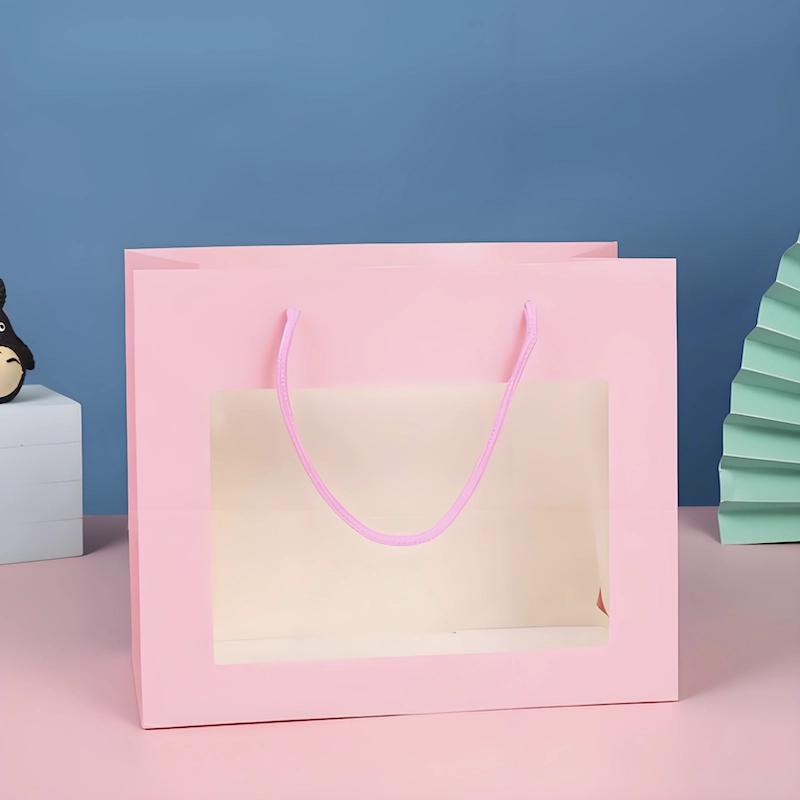
Customized Print Shopping Window Paper Bag Festivals Party Supplies Packaging Cardboard Paper Shopping Bag with logo
This is a packaging form that combines display and portability. Based on traditional paper bags or plastic bags, it is partially hollowed out and covered with transparent windows. Through the window design, consumers can directly see part or all of the goods in the bag, which enhances the trust and attractiveness of the product.

Customized Perfume Gift Box Packaging
Perfume Gift Box – Premium Custom Packaging for Luxury Fragrance Brands
Our custom perfume gift boxes are designed to combine luxury, protection, and brand storytelling — perfect for perfume brands, gift sets, and promotional collections.
Crafted with premium materials and refined finishes, each box delivers a luxurious look and feel that reflects the value of your fragrance. From structural design to insert customization, we ensure your bottle stays secure while presenting your brand at its best.
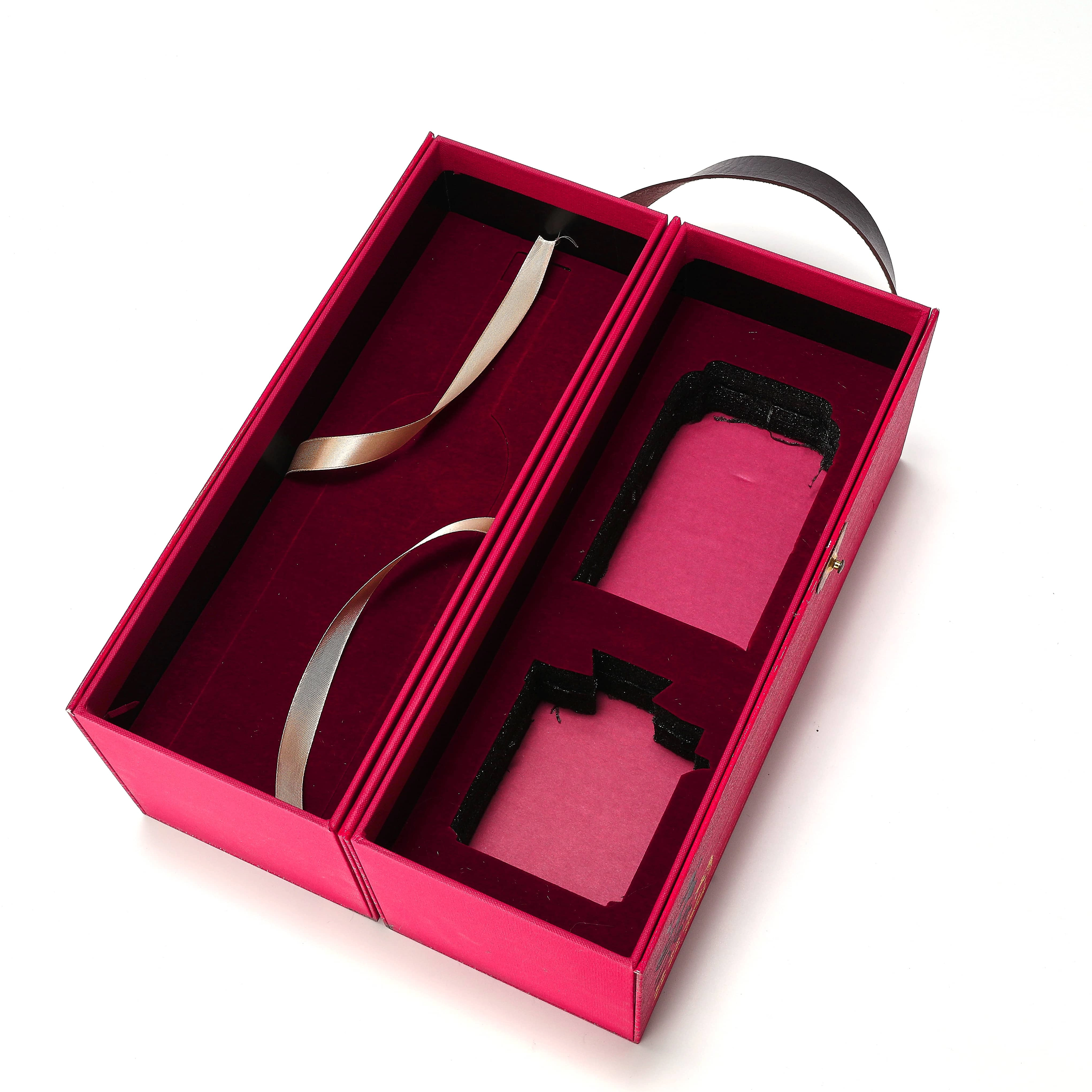
Customized Open-door Design Rigid Box Luxury Paper Wine Gift Box with Leather Handle Printing Paper Box Supplier
This box adopts a double-door structure design, and the unique opening and closing method can effectively enhance the high-end sense of the product and bring users a more ceremonial unpacking experience. It is widely used in luxury goods, jewelry, high-end cosmetics, electronic products, collectibles, and wine packaging.

Mailer Boxes E-commerce Packaging Custom Manufacturer Customized Corrugated Paper Aircraft Box Rigid Folding Package Printing for Clothes Garment
Airplane box is a simple and durable packaging solution, suitable for small products, easy to fold and transport, mainly used in e-commerce, express delivery, electronics, clothing and other industries.
© 2025 WINPACK PRINTING. All rights reserved

Wenhua Printing packaging
winpackprinting
Winpack Printing