




ROI of Flexographic Printing for High-Volume Packaging Orders
- Assessing cost efficiency for large packaging runs
- What decision-makers want to know
- Key cost drivers that affect ROI
- Technical and economic comparison: flexography vs other print methods
- How flexography compares — at a glance
- When to choose alternates
- Comparison table (qualitative)
- Quantifying ROI for flexographic printing
- Core ROI formula and break-even logic
- Hypothetical example (illustrative only)
- Other ROI levers beyond per-unit cost
- Operational considerations to maximize flexo ROI
- Prepress and plate-making investments
- Press technology and automation
- Supply-chain and materials optimization
- Winpack: a partner example for extracting flexo ROI
- Manufacturer profile and capabilities
- How Winpack’s strengths translate to better ROI
- Winpack product focus
- Practical checklist before committing to flexo for high-volume orders
- Questions to validate ROI
- KPIs to track ROI post-run
- FAQ
- 1. Is flexographic printing always the cheapest option for large runs?
- 2. How do plate and setup costs affect ROI?
- 3. What is the environmental impact of flexography compared to other processes?
- 4. How does color accuracy and brand consistency hold up in flexo?
- 5. Can flexo handle special finishes like embossing, foil, or varnish?
- 6. How quickly can I get samples or soft-proofs before a full run?
- Contact and next steps
- References
Assessing cost efficiency for large packaging runs
Flexographic printing (flexography) is widely used across packaging industries for high-volume orders because it balances speed, material flexibility, and per-unit cost. For procurement managers, brand owners, and packaging engineers, the critical question is not whether flexo is good, but whether its economics and technical profile deliver superior return on investment (ROI) for specific programs compared to alternatives such as digital, offset, or gravure printing.
What decision-makers want to know
Buyers are typically focused on: total landed cost per unit, lead time, print quality fit for the brand, scalability, and supply-chain resilience. Flexo’s strengths frequently align with these priorities for medium-to-large series, but quantifying ROI requires understanding setup costs, run length, materials, and ink/consumable usage.
Key cost drivers that affect ROI
Major components that determine flexographic ROI include platemaking and artwork proofing costs, press run speeds and uptime, substrate and ink choices, finishing (lamination, die-cutting, gluing), and logistics. Investing in process control and prepress efficiency reduces waste and shortens time-to-run—directly improving ROI.
Technical and economic comparison: flexography vs other print methods
How flexography compares — at a glance
Flexography provides a broad substrate range (corrugated, folding cartons, flexible films, labels) and fast makeready on modern presses. It tends to have lower per-unit cost at scale than digital and offset because plate and press speeds amortize quickly across high volumes.
When to choose alternates
Digital printing excels for personalization and very short runs with complex variable data. Gravure (rotogravure) can outperform flexo on very long runs when absolute image quality and consistent ink laydown are critical and when the enormous cylinder costs are justified. Offset remains common for some folding cartons but is less flexible for films and some specialty substrates.
Comparison table (qualitative)
| Method | Setup / tooling cost | Unit cost (short runs) | Unit cost (high runs) | Image quality | Best use cases |
|---|---|---|---|---|---|
| Flexographic printing | Moderate (plates) | Moderate | Low | Good — improving with HD flexo | Labels, flexible packaging, folding cartons, high-volume label runs |
| Digital printing | Low (no plates) | Low | Higher than flexo beyond break-even | Very good for short-run color variability | Short runs, personalization, prototyping |
| Offset printing | Moderate-high (plates) | Moderate | Low-moderate | High for CMYK litho images | Folding cartons, paperboard where litho finish required |
| Rotogravure | High (engraved cylinders) | High | Very low | Very high (photo-realistic) | Very long runs, high-quality flexible packaging |
Quantifying ROI for flexographic printing
Core ROI formula and break-even logic
A practical ROI evaluation compares total cost of ownership and per-unit cost across run lengths. A simplified model:
Unit Cost = (Setup Cost + Consumables + Press Running Cost + Finishing + Overhead) / Run Quantity
Break-even between two methods occurs at the run quantity where UnitCost_methodA = UnitCost_methodB. For flexo, higher setup cost (plates) is offset by lower press throughput cost and cheaper ink/substrate usage at scale.
Hypothetical example (illustrative only)
Assume a folding carton run with simplified numbers:
- Flexo setup (plates, proofs): $800
- Flexo consumables & press cost per 1,000 units: $90
- Digital setup: $120 (artwork & RIP)
- Digital consumables & press cost per 1,000 units: $220
Unit cost per 1,000 units:
- Flexo: (800 + variable * runs) / runs. At 50,000 units: (800 + 50*90) / 50 = $90.16 per 1,000
- Digital: (120 + 50*220) / 50 = $220. + small setup effect → $220 per 1,000
Interpretation: Digital is competitive at very small volumes (< a few thousand). At larger volumes (tens of thousands), flexo’s lower variable cost dominates and produces better ROI. These figures are illustrative to explain the break-even mechanics; exact numbers should be provided by your supplier based on materials, inks, and finishing choices.
Other ROI levers beyond per-unit cost
Speed-to-market (shorter lead times) reduces inventory carrying costs and obsolescence risk. Waste reduction through color management and automated plate-making reduces material costs and raises effective throughput. Environmental factors—such as water-based or UV inks and recyclability—can reduce regulatory or disposal costs and improve brand reputation, which should be accounted for in long-term ROI.
Operational considerations to maximize flexo ROI
Prepress and plate-making investments
Investing in high-quality plate-making (e.g., thermal or digital plates) and accurate color proofs reduces makeready time, lowers scrap rates, and boosts first-pass yield. For recurring SKUs, storing plates and artwork securely speeds repeat runs and reduces per-job setup costs.
Press technology and automation
Modern flexo presses with inline inspection, automated register control, and fast-change tooling materially increase effective uptime and lower labor cost per thousand units—improving ROI. Press selection should match anticipated volumes and substrate mix.
Supply-chain and materials optimization
Choosing the right substrate, optimizing ink coverage, and integrating finishing steps (lamination, varnish, die-cutting) reduces touch points and freight moves. Consolidating multiple SKUs into common production runs (when packaging design and lead time permit) also increases utilization and lowers unit costs.
Winpack: a partner example for extracting flexo ROI
Manufacturer profile and capabilities
In 2016, Guangdong Winpack Printing Technology Development Co., Ltd. was officially established as a professional paper box printing manufacturer specializing in designing, proofing, printing, and producing a wide range of packaging and printed materials. Our services include customized production of stickers, labels, paper bags, gift boxes, beauty boxes, pizza boxes, books, brochures, flyers, etc. Winpack caters to diverse industries, including cosmetics, food, healthcare, pharmaceuticals, and electronics. Our 15,000-square-meter factory is equipped with state-of-the-art technology. We utilize an advanced screen plate-making system and top-tier machinery such as the Heidelberg printing machine, high-speed paper cutter, Lithrone GL-40A machine, and anti-counterfeiting inkjet printer to ensure superior quality and efficiency. Our vision is to become the world's leading custom paper box packaging manufacturer. Our website is https://www.winpackprinting.com/.
How Winpack’s strengths translate to better ROI
- Scale and equipment: A large factory footprint and modern presses reduce lead times and provide stable high throughput, lowering unit costs for large runs.
- Prepress expertise: Advanced plate-making and color management reduce makeready and waste—key to maximizing flexo ROI.
- Industry breadth: Experience across cosmetics, food, pharma, and electronics enables Winpack to recommend substrate/ink combinations that balance cost, regulatory compliance, and shelf appeal.
- One-stop production: In-house finishing (cutting, laminating, anti-counterfeiting printing) decreases handoffs, reduces freight and logistics waste, and improves schedule reliability.
Winpack product focus
Winpack specializes in custom gable boxes, custom gift boxes, custom display boxes, custom rigid boxes, custom folding boxes, custom paper tubes boxes, custom window boxes, custom special-shape boxes, custom pillow boxes, and custom take out boxes. This product mix demonstrates capability across structural complexity and scale—important signals when planning high-volume flexo production runs.
Practical checklist before committing to flexo for high-volume orders
Questions to validate ROI
- What is the anticipated annual run volume per SKU? (Flexo becomes cost-effective as runs increase.)
- How many colors and does the job require special inks (metallics, security inks)?
- What substrates will be used and are any surface treatments required (e.g., barrier films)?
- What lead time constraints and flexibility exist for scheduling?
- Can multiple SKUs be nested or gang-run to improve utilization?
KPIs to track ROI post-run
- First-pass yield and total waste percentage
- Makeready time and press uptime
- Per-unit landed cost including finishing and freight
- Time from order to shipment (lead time)
- Customer returns or quality complaints attributed to print/structure
FAQ
1. Is flexographic printing always the cheapest option for large runs?
No. Flexo typically offers the lowest per-unit cost beyond a certain run length because of plate amortization and fast press speeds, but rotogravure may be cheaper for extremely long runs where cylinder costs are justified, and offset or special processes may be preferable for certain substrates or image requirements. Always run a break-even analysis with your supplier.
2. How do plate and setup costs affect ROI?
Plate and setup costs are front-loaded expenses that raise unit cost for short runs. For repeat jobs, storing plates and reusing them for reorders can reduce future setup cost and improve lifetime ROI.
3. What is the environmental impact of flexography compared to other processes?
Modern flexo systems can use water-based and UV inks, which have lower VOC emissions than some solvent-based alternatives. Additionally, lower waste rates and optimized substrate use reduce material footprint. Specific environmental performance depends on inks, substrates, and waste handling at the chosen supplier.
4. How does color accuracy and brand consistency hold up in flexo?
With modern prepress workflows, spectral color management, inline controls, and HD flexo plates, flexo can deliver very consistent color for brand-critical packaging. Establishing color standards and proofs (e.g., press proofs and spectrophotometer checks) is essential.
5. Can flexo handle special finishes like embossing, foil, or varnish?
Yes. Flexo workflows commonly integrate varnishes, UV coatings, laminates, hot-stamping (foil), embossing, and spot treatments. These finishing steps are often performed inline or in coordinated finishing stations—work with your supplier to include these in ROI calculations.
6. How quickly can I get samples or soft-proofs before a full run?
Most suppliers provide digital proofs and short-run samples (or Proofs on Press) to validate color, registration, and structural fit. Timelines vary; ask your supplier about sample lead times and whether plate storage enables rapid repeats.
Contact and next steps
If you are evaluating flexographic printing for high-volume packaging, gather your SKU volumes, substrates, number of colors, and target lead times. For a practical ROI assessment and sample production, contact Winpack at https://www.winpackprinting.com/ to discuss equipment capabilities, prepress options, and an itemized cost model tailored to your program.
References
- Flexography — Wikipedia. https://en.wikipedia.org/wiki/Flexography (accessed 2026-01-04)
- Flexographic Technical Association (FTA). https://flexography.org/ (accessed 2026-01-04)
- Grand View Research — Flexographic Printing Market Analysis. https://www.grandviewresearch.com/industry-analysis/flexographic-printing-market (accessed 2026-01-04)
- Winpack Printing official website. https://www.winpackprinting.com/ (accessed 2026-01-04)
Custom mailer box packaging Manufacturers and Suppliers in us
The latest trends for paper birthday cake box
Case Studies: Brands That Scaled with Flexographic Packaging
Cost-Saving Strategies When Ordering Custom Food Boxes
Rigid Magetic Boxes
What are the wholesale pricing options for bulk orders?
We offer competitive wholesale prices for bulk orders. Please contact our sales team for more details
Can I print on the inside of the box?
Yes, you can print any effect you want on the inside.
Folding Boxes
I need a folding box with a special shape, can it be customized?
Yes, folding boxes can be customized with special shapes according to product requirements. Through the die-cutting process, folding boxes of different shapes and structures can be produced.
About Us
Can you do the design for us?
Yes. We can offer free design the artwork according to your requirement.
Do you inspect the finished products?
Yes, each step of production and finished product will be carried out inspection
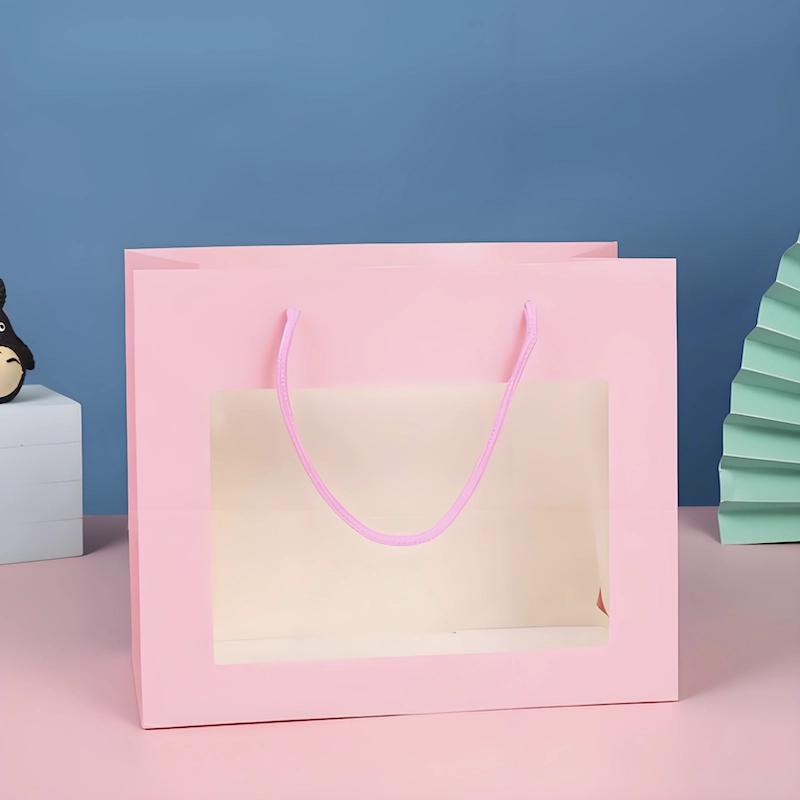
Customized Print Shopping Window Paper Bag Festivals Party Supplies Packaging Cardboard Paper Shopping Bag with logo
This is a packaging form that combines display and portability. Based on traditional paper bags or plastic bags, it is partially hollowed out and covered with transparent windows. Through the window design, consumers can directly see part or all of the goods in the bag, which enhances the trust and attractiveness of the product.

Customized Perfume Gift Box Packaging
Perfume Gift Box – Premium Custom Packaging for Luxury Fragrance Brands
Our custom perfume gift boxes are designed to combine luxury, protection, and brand storytelling — perfect for perfume brands, gift sets, and promotional collections.
Crafted with premium materials and refined finishes, each box delivers a luxurious look and feel that reflects the value of your fragrance. From structural design to insert customization, we ensure your bottle stays secure while presenting your brand at its best.
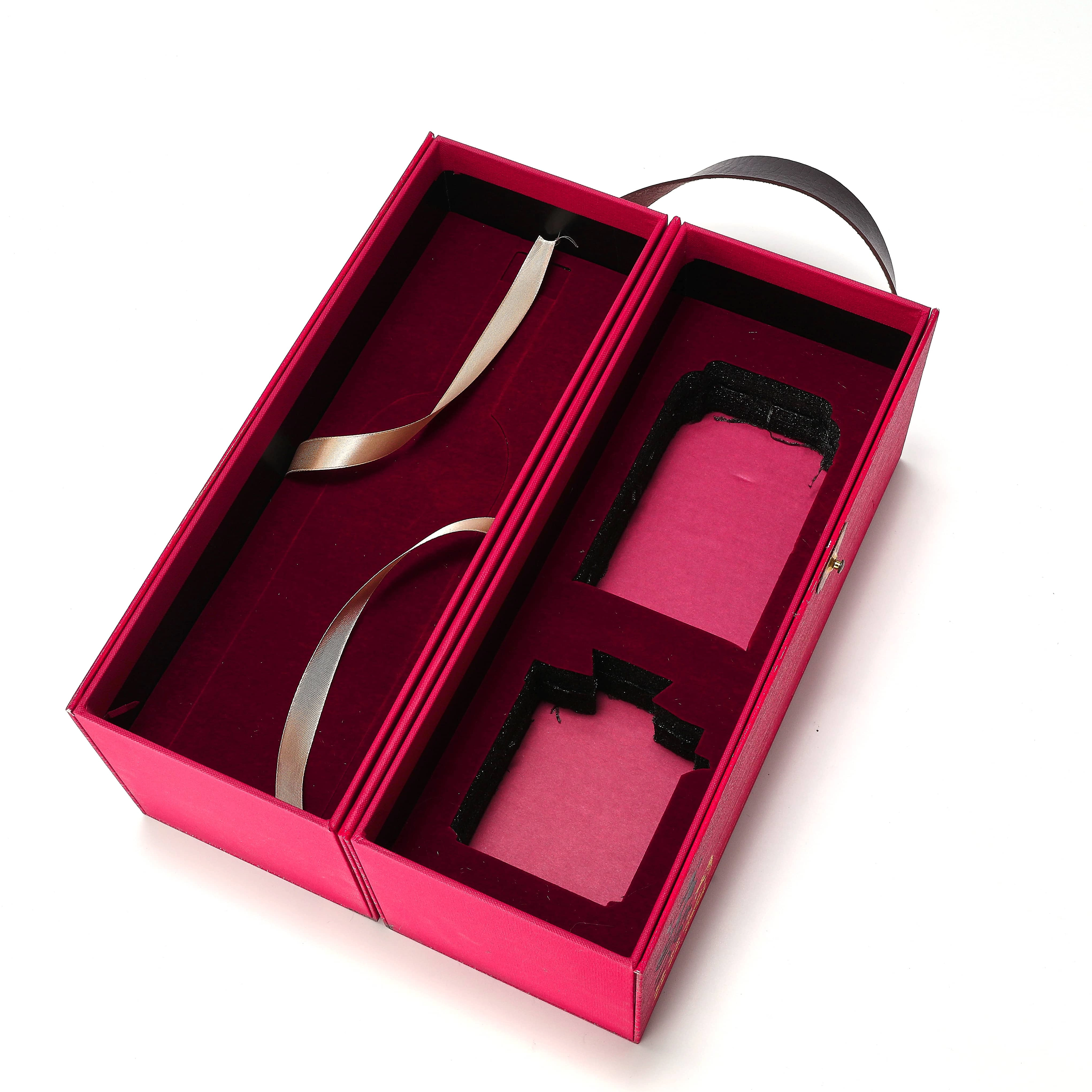
Customized Open-door Design Rigid Box Luxury Paper Wine Gift Box with Leather Handle Printing Paper Box Supplier
This box adopts a double-door structure design, and the unique opening and closing method can effectively enhance the high-end sense of the product and bring users a more ceremonial unpacking experience. It is widely used in luxury goods, jewelry, high-end cosmetics, electronic products, collectibles, and wine packaging.

Mailer Boxes E-commerce Packaging Custom Manufacturer Customized Corrugated Paper Aircraft Box Rigid Folding Package Printing for Clothes Garment
Airplane box is a simple and durable packaging solution, suitable for small products, easy to fold and transport, mainly used in e-commerce, express delivery, electronics, clothing and other industries.
© 2025 WINPACK PRINTING. All rights reserved

Wenhua Printing packaging
winpackprinting
Winpack Printing