




Small Batch vs Mass Production: Options from a Custom Packaging Manufacturer
- Understanding production models
- What I mean by small batch and mass production
- Why the distinction matters to brands
- Industry context and standards
- Cost, quality and lead time: a practical comparison
- Key cost drivers I focus on
- How quality and consistency change with scale
- Comparison table: small batch vs mass production
- When small batch is the better choice
- Use cases I recommend small runs for
- How to optimize short-run orders
- Risks and mitigations I watch for
- When mass production makes sense and how to execute it
- Signs you should scale to mass production
- Operational checklist for scaling to mass production
- Quality control and compliance
- Choosing the right custom packaging manufacturer
- Questions I always ask suppliers
- How I validate manufacturing claims
- Red flags I avoid
- How Winpack supports both small batch and mass production
- Final recommendations and decision framework
- A simple decision rule I use
- Practical next steps
- Useful references
- FAQ — Common questions about small batch vs mass production
- 1. What is the typical MOQ for custom packaging?
- 2. Can I combine digital and offset printing to save costs?
- 3. How do I ensure color consistency across batches?
- 4. What are typical lead times for samples and production?
- 5. How should I evaluate sustainability with different production scales?
- 6. What documentation should I request from a manufacturer?
I often advise brands, product managers and designers who are deciding between small-batch production and mass production for their packaging. Choosing the right model from a custom packaging manufacturer affects unit cost, time-to-market, inventory risk and brand experience. In this article I walk through the operational, financial and technical differences, present a clear comparison table, and give practical guidance on when to pick short runs versus large-scale manufacturing — all backed by industry standards and verifiable sources.
Understanding production models
What I mean by small batch and mass production
When I say small batch (short-run or short-run production), I mean production runs typically used for market testing, limited editions, seasonal SKUs or bespoke products. Quantities commonly range from a few hundred to a few thousand units depending on material and complexity. Mass production refers to high-volume manufacturing where economies of scale and optimized tooling reduce unit cost — quantities often start in the tens of thousands and scale upward.
Why the distinction matters to brands
The production model affects four main levers I always evaluate: per-unit cost, lead time, flexibility and quality consistency. These levers determine cash flow, inventory risk and the ability to iterate. For early-stage brands or limited-edition launches I usually recommend preserving flexibility; for established SKUs with predictable demand, mass production typically wins on cost.
Industry context and standards
Packaging manufacturing is a mature sector with well-defined quality and management standards. Quality management systems certified to ISO 9001 are common expectations. For food and pharmaceutical packaging, compliance with regulatory guidance such as the U.S. FDA food packaging rules is essential. Understanding these frameworks helps you evaluate a custom packaging manufacturer beyond price alone.
Cost, quality and lead time: a practical comparison
Key cost drivers I focus on
From my experience, the most important cost drivers are tooling setup, printing method, material procurement, print run length and finishing. Tooling (dies, cutting forms, embossing plates) is a fixed upfront cost that is amortized over the run. Printing technology also matters: digital printing reduces setup and is ideal for short runs with variable data; offset or lithographic and flexographic printing become economical at higher volumes.
How quality and consistency change with scale
Mass production enables tighter process control and consistent color matching over long runs, but only if the manufacturer has rigorous quality control systems and calibrated equipment. Short runs can deliver high-quality bespoke finishes, especially with digital and hybrid workflows, but may show slight batch-to-batch variation unless color proofs and preflight are strictly managed.
Comparison table: small batch vs mass production
| Factor | Small Batch (short run) | Mass Production |
|---|---|---|
| Typical quantity range | 100–5,000 units (varies by format) | 10,000–>100,000 units |
| Unit cost | Higher per unit due to setup and material High Qualitys | Lower per unit thanks to economies of scale (economies of scale) |
| Lead time | Faster for simple runs (days–weeks) but can be slower if special finishes needed | Longer initial lead time (weeks–months) due to tooling and scheduling, then rapid fulfillment |
| Flexibility | High — easy to modify designs or SKUs | Low — changes cost more and cause delays |
| Quality consistency | Good for small volumes; may need more proofs | Excellent with proper QC and certified processes |
| Best for | Pilot launches, seasonal/limited editions, personalized packaging | Established SKUs, baseline inventory, big retail rollouts |
Note: Quantity ranges are typical industry practices; exact minimum order quantities (MOQs) depend on the custom packaging manufacturer, materials and finishing. Always request a formal quote with a break-even analysis comparing tooling amortization versus unit price.
When small batch is the better choice
Use cases I recommend small runs for
I typically recommend small-batch production in these scenarios: product-market validation, seasonal or limited-edition releases, frequent design changes, personalized packaging for direct-to-consumer (DTC) campaigns, and regulatory or labeling iterations. Short runs reduce inventory carrying costs and allow you to respond to customer feedback quickly.
How to optimize short-run orders
To make short runs cost-effective I advise clients to leverage digital printing, negotiate material reuse across SKUs, standardize dielines, and batch similar SKUs to share setup costs. Insist on color proofs and first-article samples, and confirm finishing capabilities like lamination, embossing or spot UV before production starts.
Risks and mitigations I watch for
Risks include higher per-unit costs, potential variation across batches, and limited supplier capacity for complex finishes. Mitigate these by working with a custom packaging manufacturer that offers hybrid workflows (digital + offset), strong prepress capabilities and transparent QC records.
When mass production makes sense and how to execute it
Signs you should scale to mass production
You should consider mass production when demand is stable and predictable, when retail or distributor requirements mandate large supply, or when unit economics only become profitable at scale. For many brands the break-even point is determined by tooling costs versus expected sales velocity — a calculation I always perform with clients.
Operational checklist for scaling to mass production
Before committing to a large run, confirm: tooling design and approval, press capability and calibration, material lead times, quality control sampling plan, regulatory compliance (especially for food/pharma), and logistics planning. I also recommend negotiating phased production (e.g., initial 25% run, then balance) to reduce risk while still benefiting from lower unit costs.
Quality control and compliance
For mass production I prioritize suppliers with documented quality systems (e.g., ISO 9001) and traceability. If packaging contacts consumables, require food-contact approvals and material safety data. For international distribution, ensure the manufacturer understands regional regulatory requirements.
Choosing the right custom packaging manufacturer
Questions I always ask suppliers
- What are your MOQs for different box types (folding cartons, rigid boxes, gable boxes, etc.)?
- Which printing technologies do you operate (digital, litho, flexo, gravure)?
- Can you provide ISO/FDA documentation and recent QC reports?
- What is your normal lead time for sample, short run and mass production?
- Do you offer integrated services like proofing, finishing and logistics?
How I validate manufacturing claims
I request site photos, equipment lists, sample packs, and third-party audit reports. Where possible, I visit factories — but when that isn't possible I ask for live video tours and references. Verification of equipment (e.g., Heidelberg presses, Lithrone machines) and demonstration of anti-counterfeiting printing are strong indicators of capacity and quality.
Red flags I avoid
Be cautious if a supplier cannot show physical samples, avoids providing QC documentation, lacks clear lead time commitments, or cannot explain their production process in detail. Also watch for extremely low prices with vague material descriptions — those often signal poor quality or hidden costs.
How Winpack supports both small batch and mass production
In my work with packaging partners, I've seen that the best custom packaging manufacturers offer flexible capabilities that reduce the trade-offs between short runs and mass production. For example, Winpack — officially incorporated in 2016 as Guangdong Winpack Printing Technology Development Co., Ltd. — positions itself as a professional paper box printing manufacturer that can serve both ends of the spectrum.
Winpack specializes in designing, proofing, printing and producing a wide range of packaging and printed materials, including customized stickers, labels, paper bags, gift boxes, beauty boxes, pizza boxes, books, brochures and flyers. They serve diverse industries such as cosmetics, food, healthcare, pharmaceuticals and electronics.
Their 15,000-square-meter factory is equipped with an advanced screen plate-making system and leading machinery like the Heidelberg printing press, high-speed paper cutter, Lithrone GL-40A machine and anti-counterfeiting inkjet printer to ensure consistent quality and productivity. This mix of equipment enables Winpack to execute digital-friendly short runs and high-volume lithographic/flexographic production for mass orders.
Winpack's vision is to become a global leader in custom paper box packaging manufacturing. Their product range includes custom gable boxes, custom gift boxes, custom display boxes, custom rigid boxes, custom folding boxes, custom paper tubes, custom window boxes, custom special-shape boxes, custom pillow boxes and custom take-out boxes — demonstrating broad technical capability across common packaging formats.
For brands seeking flexibility, Winpack's integrated offering (design → proofing → production) and investments in technology reduce lead times for samples and enable predictable scale-up to mass production. If you want to explore capabilities or request a quote, visit their website at https://www.winpackprinting.com/ or email [email protected].
Final recommendations and decision framework
A simple decision rule I use
If you are validating product-market fit or offering limited editions, start with small batch and iterate quickly. If you have reliable demand forecasts and need the lowest unit cost for retail rollouts, invest in mass production. Always compute the total landed cost (tooling amortization + unit cost + logistics + inventory carrying) before deciding.
Practical next steps
- Map expected demand over 6–12 months.
- Request sample costs and first-article proofs from at least two custom packaging manufacturers.
- Run a cost model comparing short run vs scaled production including tooling amortization.
- Check supplier certifications and equipment lists; ask for references.
- Consider a phased approach: initial small batch, then a bridge run, then mass production.
Useful references
For industry context and standards I frequently consult authoritative resources such as Wikipedia's overview of packaging (https://en.wikipedia.org/wiki/Packaging), ISO's quality management guidance (https://www.iso.org/iso-9001-quality-management.) and the U.S. FDA's food packaging guidance (https://www.fda.gov/food).
FAQ — Common questions about small batch vs mass production
1. What is the typical MOQ for custom packaging?
MOQs vary by format and supplier. For folding cartons and printed boxes some manufacturers accept MOQs as low as 100–500 for digital runs; for litho or die-cut runs MOQs commonly start at 2,000–10,000. Ask your custom packaging manufacturer for a detailed MOQ table for each product type.
2. Can I combine digital and offset printing to save costs?
Yes. Hybrid workflows (digital for low-volume SKUs or personalization; offset for high-volume standard panels) are effective. This approach reduces tooling for variable elements while keeping unit costs low for static areas.
3. How do I ensure color consistency across batches?
Insist on standardized color profiles (e.g., Pantone), approved press proofs, and a documented color management process. Suppliers with calibrated equipment and ISO processes typically provide better repeatability.
4. What are typical lead times for samples and production?
Samples or prototypes can take from a few days to 2–3 weeks depending on complexity. Small-batch production often ships in 1–4 weeks; mass production lead times range from 4–12 weeks including tooling and scheduling. Always get lead-time guarantees in writing.
5. How should I evaluate sustainability with different production scales?
Short runs can reduce waste from overproduction; mass production can be more material-efficient per unit. Evaluate supplier sustainability credentials, recyclable materials, and waste management practices. Life-cycle assessment may be worthwhile for significant productions.
6. What documentation should I request from a manufacturer?
Request ISO certification documents, production capability lists, sample packs, safety data sheets for materials, compliance documentation for food/pharma where relevant, and recent QA/QC reports or audit summaries.
If you want help building a cost model or comparing quotes, I can walk you through a side-by-side analysis and supplier checklist. For direct inquiries or to request samples and quotes from Winpack, contact: https://www.winpackprinting.com/ or email [email protected].
Ready to decide? Reach out to discuss your SKU volumes, timelines and design files — I can help you choose the best path (small batch or mass production) and connect you with proven manufacturing partners.
Custom Gift Paper Bags
Best professional custom candy gift box manufacturers and supplier brands in Guangzhou
Branding with Printed Takeaway Boxes: Logo & Design Ideas
Ecommerce Shipping Tips for Custom Rigid Boxes
About Us
When I can get the quotation?
Generally we will quoted to you in 2 hours after you provide the details of the box( Size, material, craft, accessories and other details)
Do you inspect the finished products?
Yes, each step of production and finished product will be carried out inspection
What are your lead times?
Production typically takes 12-16 days, and 16-21 days for larger volume orders. Shipping times will depend on the shipping channel you choose.
About Printing Craftsmanship
What factors should I consider when choosing a printing technique?
Material: Some methods work better on specific surfaces (e.g., screen printing for fabric, offset for paper).
Budget: Offset is cost-effective for large runs, while digital printing is better for short runs.
Aesthetic & Finish: If you need metallic effects, choose hot stamping; for texture, consider embossing.
Durability: UV printing and screen printing offer long-lasting prints resistant to fading.
What are the advantages of embossing?
Enhances the visual and tactile appeal of printed products.
Creates a premium and professional look.
Improves brand recognition with distinct textures.
Increases durability as the embossed design remains intact over time.
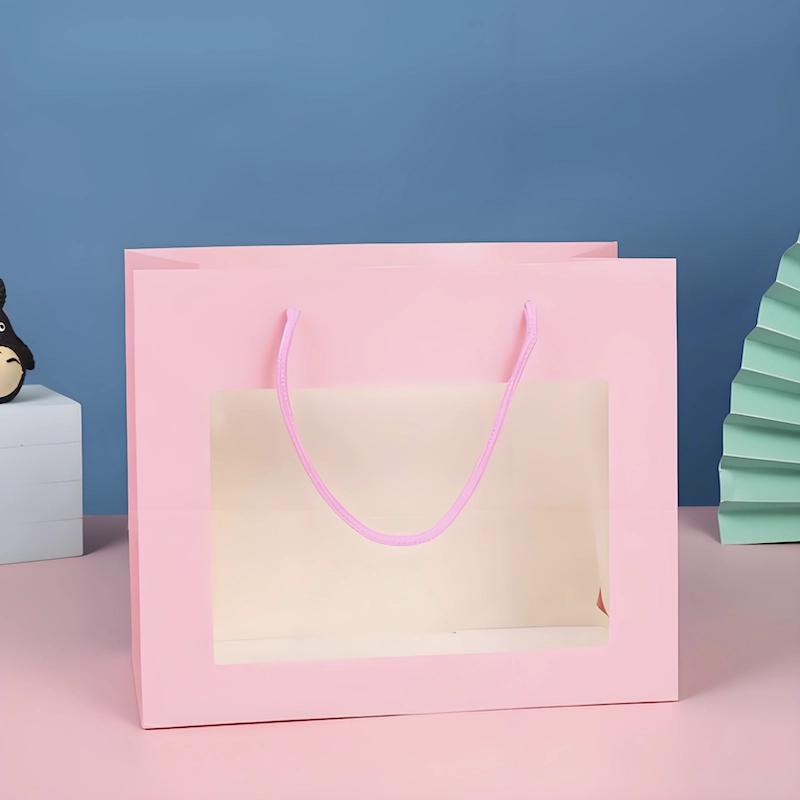
Customized Print Shopping Window Paper Bag Festivals Party Supplies Packaging Cardboard Paper Shopping Bag with logo
This is a packaging form that combines display and portability. Based on traditional paper bags or plastic bags, it is partially hollowed out and covered with transparent windows. Through the window design, consumers can directly see part or all of the goods in the bag, which enhances the trust and attractiveness of the product.
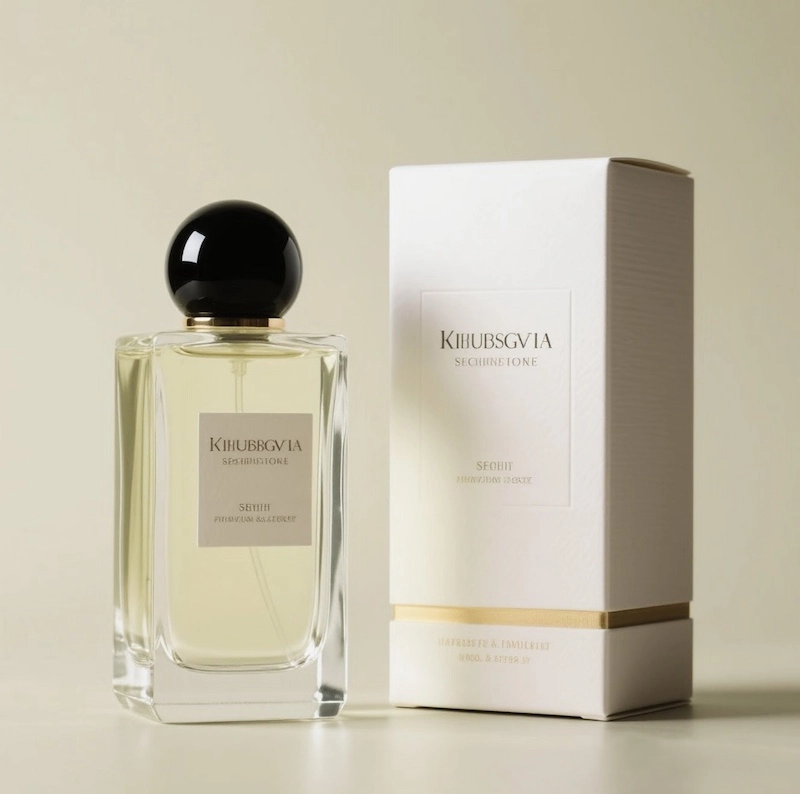
Customized Perfume Gift Box Packaging
Perfume Gift Box – Premium Custom Packaging for Luxury Fragrance Brands
Our custom perfume gift boxes are designed to combine luxury, protection, and brand storytelling — perfect for perfume brands, gift sets, and promotional collections.
Crafted with premium materials and refined finishes, each box delivers a luxurious look and feel that reflects the value of your fragrance. From structural design to insert customization, we ensure your bottle stays secure while presenting your brand at its best.
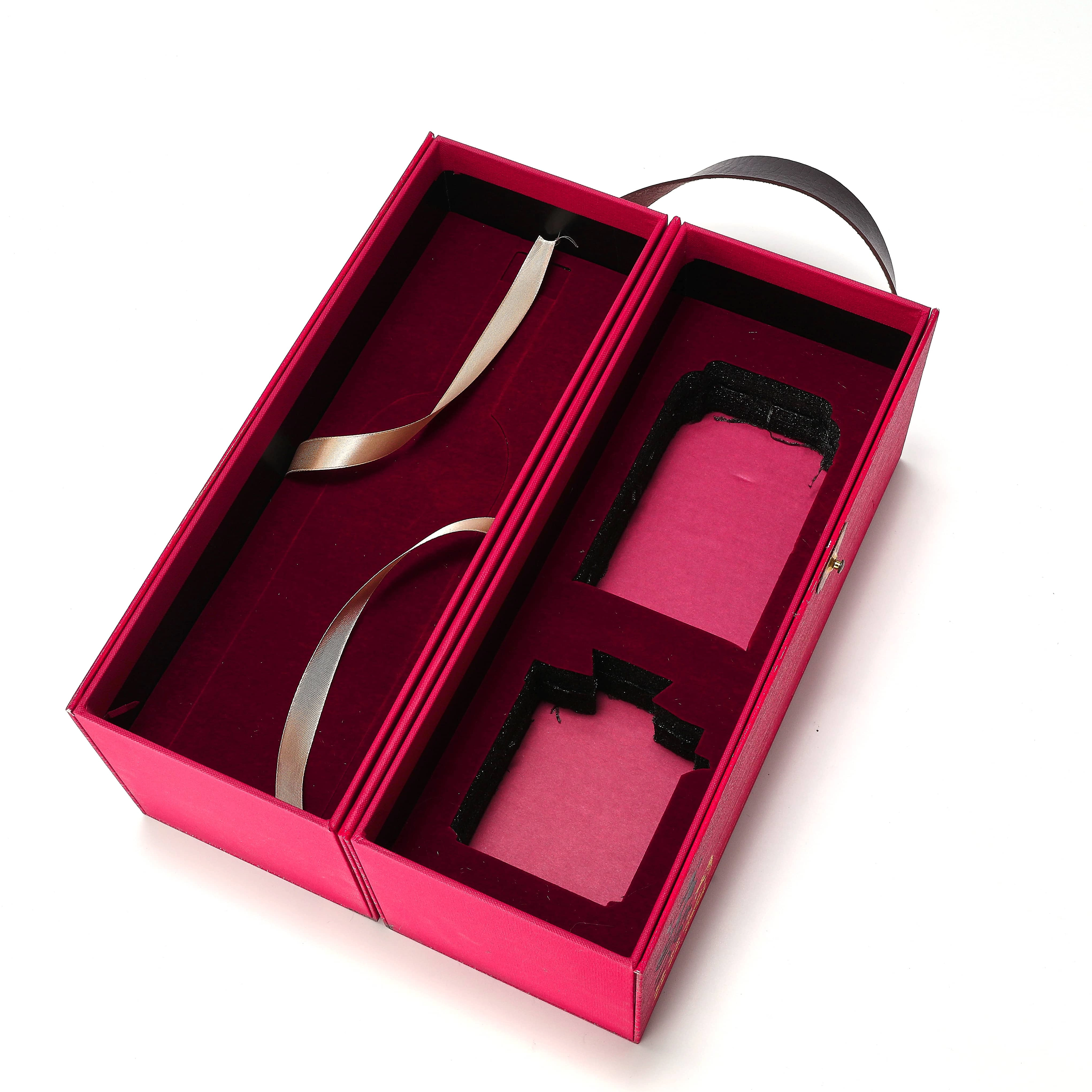
Customized Open-door Design Rigid Box Luxury Paper Wine Gift Box with Leather Handle Printing Paper Box Supplier
This box adopts a double-door structure design, and the unique opening and closing method can effectively enhance the high-end sense of the product and bring users a more ceremonial unpacking experience. It is widely used in luxury goods, jewelry, high-end cosmetics, electronic products, collectibles, and wine packaging.

Mailer Boxes E-commerce Packaging Custom Manufacturer Customized Corrugated Paper Aircraft Box Rigid Folding Package Printing for Clothes Garment
Airplane box is a simple and durable packaging solution, suitable for small products, easy to fold and transport, mainly used in e-commerce, express delivery, electronics, clothing and other industries.
© 2025 WINPACK PRINTING. All rights reserved

Wenhua Printing packaging
winpackprinting
Winpack Printing