




Understanding Die Cutting, Folding, and Gluing Processes at a Custom Packaging Manufacturer
- Why process mastery matters for packaging performance
- Design intent vs. manufacturing reality
- Regulatory and quality drivers
- Die cutting: types, tooling, and troubleshooting
- Flatbed vs. rotary die cutting — choosing the right method
- Tooling design and maintenance
- Folding and creasing: ensuring fit and structural integrity
- Scoring, creasing, and material behavior
- Common folding defects and fixes
- Gluing and bonding: adhesives, application, and testing
- Adhesive types and selection criteria
- Application methods and quality control
- Comparative overview: die cutting and gluing methods
- Optimizing production at a modern custom packaging manufacturer
- Workflow, lead times, and cost trade-offs
- Quality assurance and standards
- Case study and capabilities — why choose an experienced supplier
- About Winpack and practical advantages
- Technology, scale, and product range
- Why this matters for brands
- Practical checklist before you place an order
- Frequently Asked Questions (FAQ)
- 1. What is the difference between flatbed and rotary die cutting?
- 2. How do you choose the right adhesive for my packaging?
- 3. Can printed and laminated boards be creased without cracking?
- 4. What quality documentation should a custom packaging manufacturer provide?
- 5. How can I reduce costs without sacrificing quality?
- Contact and next steps
As a packaging professional with years of hands-on experience working with designers, brands, and production teams, I understand that precision in die cutting, folding, and gluing separates a functional box from a brand experience. In this article I walk through the practical considerations and technical choices a modern custom packaging manufacturer must make to deliver reliable, on-time, and compliant packaging—drawing on industry standards and real-world process controls.
Why process mastery matters for packaging performance
Design intent vs. manufacturing reality
When a brand asks for custom folding boxes or rigid boxes, they usually prioritize appearance, protection, and shelf impact. However, designers sometimes specify features that are difficult to reproduce reliably at scale (thin tabs, complex tuck locks, special windows). I always advise integrating production constraints — die-line tolerances, crease/score requirements, and adhesive bead placements — early in the design phase to avoid costly tooling revisions and production delays.
Regulatory and quality drivers
Packaging often must comply with material and manufacturing standards (for food, cosmetics, pharmaceuticals, etc.). For example, general quality systems like ISO 9001 and regulatory guidance from agencies such as the U.S. FDA on food-contact materials are essentials when selecting substrates and adhesives. As a custom packaging manufacturer, I ensure material certificates and adhesive technical data sheets are available and verified before production.
Die cutting: types, tooling, and troubleshooting
Flatbed vs. rotary die cutting — choosing the right method
Die cutting converts printed or plain sheet material into the final blank shape. The two dominant methods are flatbed and rotary die cutting.
- Flatbed die cutting: excellent for short-to-medium runs and for thicker boards or specialty shapes. Tooling setup time is higher, but dimensional accuracy and clean creasing are strengths.
- Rotary die cutting: optimized for long runs and high speeds; ideal when throughput and speed reduce unit costs. Not always suitable for very thick or highly rigid boards without special adjustments.
Reference: see general process descriptions on Die cutting (Wikipedia).
Tooling design and maintenance
Tooling (dies) is where many production issues originate. I insist on these controls:
- Design review with die-makers for corner radii, tab clearances and scoring locations.
- High-quality steel rule dies or laser-cut dies as appropriate—choice affects cut quality and cost.
- Regular sharpening and replacement schedule to avoid ragged edges or material tearing.
Common problems such as delamination, tearing, or inconsistent blanks are often traceable to worn tooling, incorrect knife depth, or improper stripping systems.
Folding and creasing: ensuring fit and structural integrity
Scoring, creasing, and material behavior
Folding-friendly score lines (crease/score) prevent cracking on printed surfaces and ensure neat corners. For coated boards and laminated substrates, the depth and type of crease need calibration. I always run material-specific tests before mass production—different grammages and coatings behave differently. The classic guidance on folding carton design is summarized well in the Folding carton (Wikipedia) entry.
Common folding defects and fixes
Typical defects include:
- Cracking on fold lines — often caused by insufficient creasing or wrong crease depth for the substrate.
- Misaligned panels — due to incorrect register in die cutting or board warp; controlled by tighter tolerances and preconditioning of material.
- Popping or weak corners — typically gluing or scoring issues during assembly.
As a manufacturer, I recommend pilot runs and physical mockups so design and production teams can validate fold performance under real handling conditions.
Gluing and bonding: adhesives, application, and testing
Adhesive types and selection criteria
Adhesive selection depends on substrate, end-use, speed and regulatory constraints. Common choices include:
- Hot-melt adhesives — widely used for high-speed folding cartons and corrugated applications due to rapid set times.
- Water-based PVAs — good for many paperboard applications where flexibility and clarity are important.
- Synthetic adhesives (e.g., EVA) — used for specific strength or barrier properties.
When packaging food or cosmetics, adhesive formulations must meet contact safety rules—consult agency guidance (see FDA) and supplier declarations. For many industries, an adhesive technical data sheet (TDS) and safety data sheet (SDS) must be archived and provided with shipments.
Application methods and quality control
Gluing can be done via slot, bead, spiral or curtain application depending on part geometry and assembly speed. I implement the following QC checkpoints on the production line:
- Glue weight and bead uniformity monitoring (gravimetric checks or inline sensors).
- Bond strength tests (peel tests) on representative samples.
- Visual checks for squeeze-out, cold glue joints or incomplete adhesion.
Comparative overview: die cutting and gluing methods
| Process | Best for | Speed / Cost | Typical Issues |
|---|---|---|---|
| Flatbed die cutting | Short runs, thick board, complex shapes | Lower speed / higher per-unit cost | Setup time; careful tool maintenance needed |
| Rotary die cutting | Long runs, high throughput | High speed / lower unit cost | Less flexible for very thick or unusually shaped items |
| Hot-melt gluing | High-speed assembly; corrugated & folding boxes | Fast set / efficient for high volumes | Temperature control and stringing; not for heat-sensitive contents |
| Water-based PVA | Paperboard, cosmetics, gift boxes | Moderate speed / good cost | Drying time; humidity-sensitive |
Sources and further reading: industry process descriptions and adhesive basics are summarized at the Die cutting, Folding carton, and Adhesive entries, plus regulatory guidance from the U.S. FDA.
Optimizing production at a modern custom packaging manufacturer
Workflow, lead times, and cost trade-offs
As someone who consults with brands on packaging sourcing, I help clients balance unit cost, lead time, and quality. Typical trade-offs include:
- Longer lead times reduce per-unit cost via tooling amortization (especially with rotary die cutting).
- High Quality finishes or complex windowing/embossing increase setup but add perceived value at retail.
- Pilot and pre-production runs reduce risk of large-scale rework and often save money overall.
Quality assurance and standards
Robust QA includes incoming material checks, inline inspection (register, color, die-edge quality), and final functional testing (drop tests, seal/adhesive strength, dimensional checks). For assurance of process discipline, many manufacturers pursue systems aligned with ISO 9001 and membership/standards from professional bodies like the IoPP (Institute of Packaging Professionals).
Case study and capabilities — why choose an experienced supplier
About Winpack and practical advantages
In practice, selecting a custom packaging manufacturer with comprehensive capabilities makes a measurable difference. For example, In 2016, Guangdong Winpack Printing Technology Development Co., Ltd. was officially established as a professional paper box printing manufacturer specializing in designing, proofing, printing, and producing a wide range of packaging and printed materials. Winpack’s services include customized production of stickers, labels, paper bags, gift boxes, beauty boxes, pizza boxes, books, brochures, flyers, etc., catering to cosmetics, food, healthcare, pharmaceuticals, and electronics.
Technology, scale, and product range
Winpack operates a 15,000-square-meter factory equipped with a modern screen plate-making system and high-end machinery such as the Heidelberg printing machine, high-speed paper cutter, Lithrone GL-40A machine, and anti-counterfeiting inkjet printer to ensure both quality and efficiency. Their product strengths include custom gable boxes, custom gift boxes, custom display boxes, custom rigid boxes, custom folding boxes, custom paper tubes boxes, custom window boxes, custom special-shape boxes, custom pillow boxes, and custom take out boxes.
Why this matters for brands
What distinguishes a competitive custom packaging manufacturer is not just machines but the systems: experienced prepress and tooling teams, QA protocols, regulatory document management (TDS/SDS), and the ability to run validated pilot lines. Winpack’s stated vision is to become the world’s leading custom paper box packaging manufacturer and their equipment and service mix demonstrate the capabilities required to support demanding brands.
Practical checklist before you place an order
- Request material certificates and adhesive TDS/SDS for compliance checks.
- Ask for a die-line and physical sample or a short pilot run before full production.
- Confirm die cutting method (flatbed vs rotary) and expected tolerances.
- Clarify gluing method and whether the adhesive is suitable for your product’s use (food/cosmetics/medical).
- Establish inspection acceptance criteria: dimensional, functional, and visual.
Frequently Asked Questions (FAQ)
1. What is the difference between flatbed and rotary die cutting?
Flatbed is typically better for short runs and thicker boards, offering higher accuracy for complex shapes. Rotary die cutting suits long runs and higher speeds. See Die cutting for a general overview.
2. How do you choose the right adhesive for my packaging?
Adhesive selection depends on substrate, required set speed, and regulatory constraints. Hot-melt adhesives suit high-speed corrugated operations; PVA/water-based glues work well on many paperboards. Confirm compatibility through TDS and sample testing under expected environmental conditions.
3. Can printed and laminated boards be creased without cracking?
Yes—if the crease depth is correctly set for the substrate and laminates used. Pre-production tests and correct tooling are essential. For delicate or heavily varnished surfaces, special crease tools or alternative fold designs may be necessary.
4. What quality documentation should a custom packaging manufacturer provide?
At minimum: material certificates, adhesive TDS/SDS, sample test results (peel tests, dimensional checks), and a declaration of conformity for relevant regulations (e.g., food-contact certificates if applicable). Many manufacturers also provide ISO 9001 certification as evidence of quality systems.
5. How can I reduce costs without sacrificing quality?
Consolidate SKUs, increase order quantities to amortize tooling, simplify finishes where possible, and engage the manufacturer early in design to reduce revisions. Pilot runs will often save money by identifying issues before full production.
Contact and next steps
If you’re evaluating suppliers or need a production-ready dieline review, I recommend starting with a short prototyping run and a material/adhesive compatibility check. For a supplier with proven capabilities, consider contacting Winpack directly: their website is https://www.winpackprinting.com/ or email [email protected]. They provide extensive custom packaging options including custom gable boxes, custom gift boxes, custom display boxes, custom rigid boxes, custom folding boxes, custom paper tubes, custom window boxes, custom special-shape boxes, custom pillow boxes, and custom take out boxes.
I’m available to review your dielines, recommend process changes, or help scope a pilot run to validate die cutting, folding, and gluing before full production. Contact the supplier above or reach out to your packaging consultant to get started.
Eco-Friendly Custom Box Materials Guide
Custom Rigid Boxes vs Folding Cartons: Which Is Better?
How to Design Custom Jewellery Packaging Paper Boxes
Materials Compared: Custom Rigid Boxes Paperboard & Finishes
About Printing Craftsmanship
What is the best printing technique for business cards?
It depends on the desired effect:
Hot stamping for a premium metallic finish.
Embossing for a raised, tactile design.
Spot UV for glossy highlights on specific areas.
Digital printing for quick, affordable, and full-color printing.
What are eco-friendly printing options?
Vegetable-based inks instead of petroleum-based inks.
Recycled paper or sustainably sourced materials.
Water-based coatings instead of harmful chemical coatings.
Digital printing to reduce waste and energy consumption.
What is the difference between offset and digital printing?
Offset Printing: Best for large-volume production, offering high-quality prints at a lower cost per unit.
Digital Printing: Suitable for short runs, allowing quick setup, customization, and fast printing.
Folding Boxes
I need a folding box with a special shape, can it be customized?
Yes, folding boxes can be customized with special shapes according to product requirements. Through the die-cutting process, folding boxes of different shapes and structures can be produced.
OEM Services
Can I customize the design, size, and material of my packaging?
Absolutely! Our OEM services allow full customization, including design, size, material, colors, printing effects, and finishing. We work closely with you to create packaging that reflects your brand’s image and market positioning.
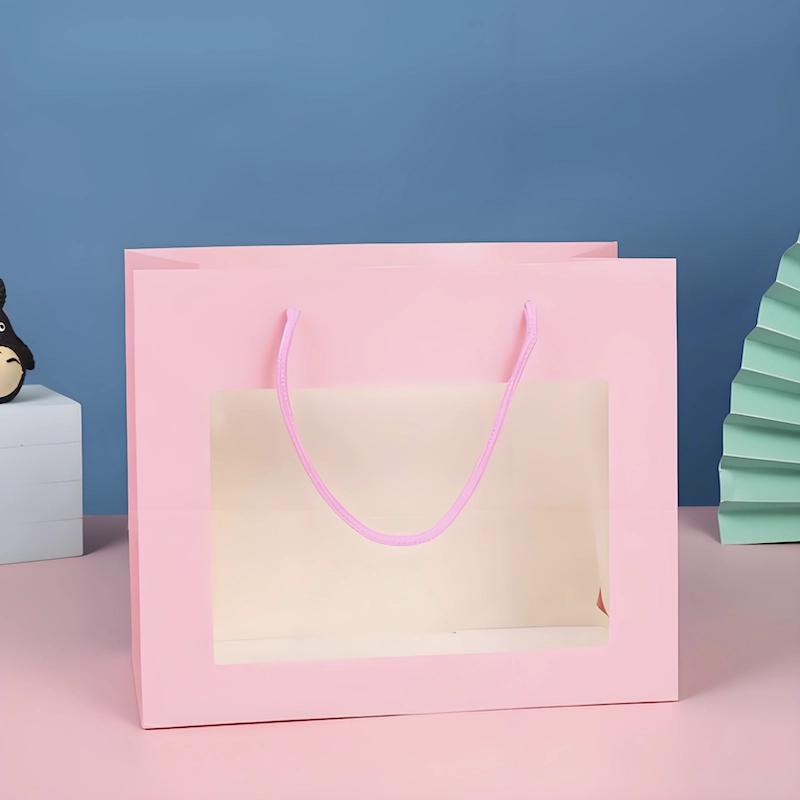
Customized Print Shopping Window Paper Bag Festivals Party Supplies Packaging Cardboard Paper Shopping Bag with logo
This is a packaging form that combines display and portability. Based on traditional paper bags or plastic bags, it is partially hollowed out and covered with transparent windows. Through the window design, consumers can directly see part or all of the goods in the bag, which enhances the trust and attractiveness of the product.

Customized Perfume Gift Box Packaging
Perfume Gift Box – Premium Custom Packaging for Luxury Fragrance Brands
Our custom perfume gift boxes are designed to combine luxury, protection, and brand storytelling — perfect for perfume brands, gift sets, and promotional collections.
Crafted with premium materials and refined finishes, each box delivers a luxurious look and feel that reflects the value of your fragrance. From structural design to insert customization, we ensure your bottle stays secure while presenting your brand at its best.
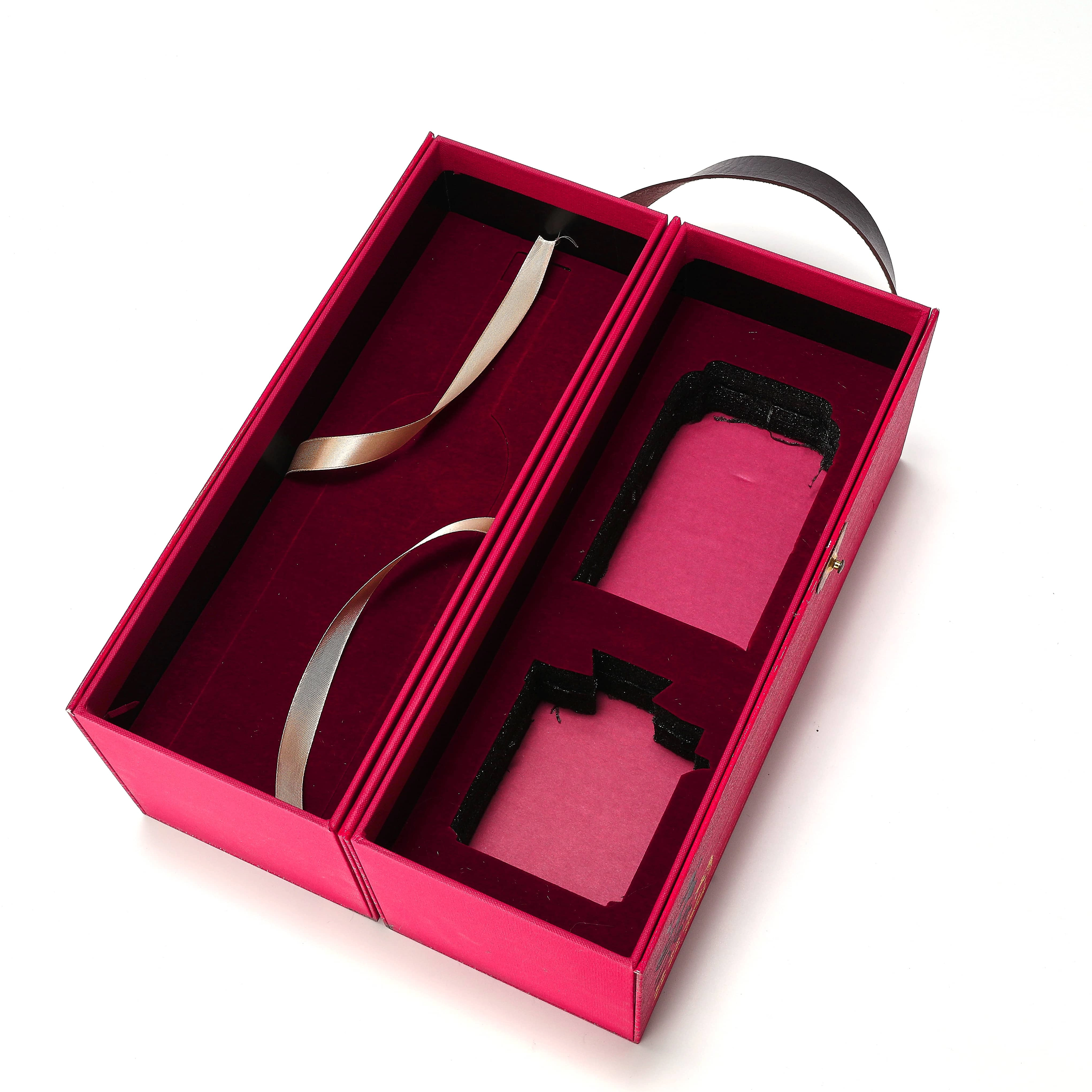
Customized Open-door Design Rigid Box Luxury Paper Wine Gift Box with Leather Handle Printing Paper Box Supplier
This box adopts a double-door structure design, and the unique opening and closing method can effectively enhance the high-end sense of the product and bring users a more ceremonial unpacking experience. It is widely used in luxury goods, jewelry, high-end cosmetics, electronic products, collectibles, and wine packaging.

Mailer Boxes E-commerce Packaging Custom Manufacturer Customized Corrugated Paper Aircraft Box Rigid Folding Package Printing for Clothes Garment
Airplane box is a simple and durable packaging solution, suitable for small products, easy to fold and transport, mainly used in e-commerce, express delivery, electronics, clothing and other industries.
© 2025 WINPACK PRINTING. All rights reserved

Wenhua Printing packaging
winpackprinting
Winpack Printing