




Best Custom Packaging for Fresh and Frozen Foods
- Packaging fundamentals for perishable foods
- How fresh and frozen foods differ in packaging needs
- Key performance parameters I evaluate
- Standards and safety references I use
- Design and material choices for fresh vs frozen foods
- Material selection: paperboard, plastics, laminates and composites
- Barrier and insulation strategies
- Design features that matter in practice
- Regulatory, safety and sustainability considerations
- Food contact compliance and testing
- Shelf-life validation and cold chain control
- Sustainability trade-offs and claims
- Comparative guide: materials, performance and suitability
- How to choose a supplier and what I look for
- Key capabilities and factory technologies
- Quality systems and traceability
- Why I recommend evaluating production visits and local audits
- Case study: Bringing a frozen meal to market (practical steps)
- Step 1 — Define product and distribution profile
- Step 2 — Prototype and test
- Step 3 — Scale and monitor
- Why partner with a specialist manufacturer: Winpack example
- Winpack's competitive strengths I value
- Practical checklist: What I ask my suppliers before signing a contract
- Documentation and testing
- Production and logistics
- Commercial and sustainability terms
- FAQ
- 1. What materials are best for frozen foods?
- 2. Can cardboard be used for frozen food packaging?
- 3. How do I ensure my packaging meets food safety regulations?
- 4. Are sustainable packaging options realistic for frozen foods?
- 5. How do I test packaging for freezer distribution?
- 6. How much does custom food packaging typically cost?
- Contact and next steps
I specialize in helping food brands choose custom food packaging that protects product quality, extends shelf life, meets regulatory requirements, and aligns with sustainability goals. In this guide I summarize the core principles for packaging fresh and frozen foods, explain material and design trade-offs, and provide actionable recommendations you can implement or discuss with your packaging supplier. I also outline how to evaluate vendors and include a real-world supplier profile to help you move from strategy to production.
Packaging fundamentals for perishable foods
How fresh and frozen foods differ in packaging needs
Fresh foods (produce, fresh meat, dairy, ready-to-eat salads) are sensitive to microbial growth, moisture loss/gain, gas exchange (O2/CO2) and physical damage. Frozen foods require protection from freezer burn, moisture migration and structural damage from ice crystal formation. These differences mean the packaging must be selected with distinct barrier, strength and thermal properties in mind.
Key performance parameters I evaluate
When I design or specify a custom food packaging solution, I prioritize: oxygen and moisture barrier, seal integrity, puncture resistance, stack strength, thermal insulation (for frozen), clarity/printability, food-contact compliance, and recyclability/compostability. These parameters drive material choice, wall thickness, lamination and seal design.
Standards and safety references I use
Regulatory and standards frameworks are essential. I reference the FDA guidance on food contact materials for U.S. projects and ISO 22000 for food safety management systems. For general packaging definitions and material properties I often consult the overview on Wikipedia: Packaging, and industry resources such as the Food Packaging Forum (https://www.foodpackagingforum.org/).
Design and material choices for fresh vs frozen foods
Material selection: paperboard, plastics, laminates and composites
No single material is ideal for all products. Paperboard (coated or laminated) is excellent for rigid boxes and secondary packaging but typically needs internal barriers for moisture and grease. Flexible plastics (polyethylene, polypropylene, multilayer films) provide strong moisture and oxygen barriers and are widely used for frozen and vacuum-packed fresh foods. Compostable and bio-based films are emerging but must be validated for barrier and shelf-life performance.
Barrier and insulation strategies
For fresh foods I often specify Modified Atmosphere Packaging (MAP) or vacuum-seal films to slow respiration and microbial growth. For frozen foods, I prioritize high-barrier films to prevent moisture migration and multilayer laminates or insulated liners to reduce temperature fluctuation. Insulated corrugated shippers with foil liners are common for bulk frozen shipments.
Design features that matter in practice
Practical design choices include resealable zippers, tear notches, structured bottoms for stability, venting for produce, tamper-evident seals, and clear windows where visibility helps sales. Print and surface finish must tolerate cold condensation without ink migration—so I specify inks and varnishes compatible with cold chain conditions and food contact requirements.
Regulatory, safety and sustainability considerations
Food contact compliance and testing
All materials intended to contact food should comply with relevant rules. For example, manufacturers selling in the U.S. must ensure materials are compliant with the FDA Food Contact Substance (FCS) rules. Migration testing and third-party certifications (e.g., overall migration, specific migration tests) are commonly requested by brands. I recommend documented test reports before production runs.
Shelf-life validation and cold chain control
Predicting shelf life requires challenge testing or accelerated shelf-life testing. For frozen foods, controlling the cold chain (proper freezing, insulated packaging, validated freezer-proof seals) is critical. I use temperature-monitoring studies and partner with clients to run pilot lots under simulated distribution to validate packaging performance.
Sustainability trade-offs and claims
Sustainable packaging is a major purchase driver, but it brings trade-offs: mono-material recyclable solutions are preferable for recycling streams, while compostable options require appropriate industrial composting conditions. I advise brands to make verifiable claims and avoid ambiguous marketing terms. For guidance on environmental claims and recycling compatibility, the EPA and local recycling authorities provide useful frameworks.
Comparative guide: materials, performance and suitability
Below I compare common packaging types I specify for fresh and frozen foods. The table summarizes barrier performance, mechanical strength, recyclability and typical applications.
| Material | Barrier (Moisture/O₂) | Thermal/Insulation | Recyclability | Typical Use |
|---|---|---|---|---|
| Coated Paperboard (wax/PE) | Moderate (with coating) | Poor (needs liner) | Low if mixed materials; recyclable if mono-PE coated and accepted locally | Retail boxes, secondary cartons, bakery boxes |
| Multilayer Flexible Film (PE/PA/Metallized) | High (excellent moisture/oxygen barrier) | Moderate (good when used with insulated shippers) | Low (difficult to recycle unless designed as mono-polymer) | Frozen foods, vacuum packs, MAP pouches |
| Rigid Plastic (PP, PET) | Moderate to High | Moderate | Variable — PET and PP widely recyclable | Fresh ready meals, clamshells, deli containers |
| Insulated Corrugated + Foil | High when combined with liners | High (good for shipments) | Corrugated recyclable; foil/liner may complicate recycling | Bulk frozen shipments, e-commerce frozen boxes |
Sources: Materials overview and barrier properties summarized from industry literature and packaging resources such as Food packaging (Wikipedia) and regulatory guidance from the U.S. FDA.
How to choose a supplier and what I look for
Key capabilities and factory technologies
When evaluating a vendor I verify: in-house art and proofing, plate-making, high-quality printing (e.g., Heidelberg press), finishing and die-cutting, lamination, and access to barrier film lamination or coating. For large-scale production, I prefer suppliers with modern automated equipment to ensure consistent color, registration and fold/finish quality.
Quality systems and traceability
I insist on documented quality systems—ISO certifications, batch traceability, and the ability to provide material safety data and migration test reports. For food packaging, traceability of substrates, inks and adhesives is non-negotiable.
Why I recommend evaluating production visits and local audits
Physical audits or virtual factory tours reveal process control, cleanliness, and workforce training. I also request samples and small pilot runs to validate seals, print durability and barrier performance under real distribution conditions.
Case study: Bringing a frozen meal to market (practical steps)
Step 1 — Define product and distribution profile
Identify product temperature, expected shelf life, distribution duration, retail display requirements and e-commerce needs. For example, a frozen meal intended for national freezer distribution requires higher insulation and stronger seals than a frozen snack sold locally.
Step 2 — Prototype and test
Prototype with likely material combinations, then run cold-chain simulations and shelf-life testing. I recommend at least three to six months of validation or accelerated testing correlated with real-time results.
Step 3 — Scale and monitor
Move to a production run with agreed QA checks: seal-strength tests, visual inspections, ink adhesion tests post-freeze-thaw cycles, and periodic migration tests. Use batch-level temperature loggers for early shipments to validate packaging performance in the field.
Why partner with a specialist manufacturer: Winpack example
In 2016, Guangdong Winpack Printing Technology Development Co., Ltd. was officially established as a professional paper box printing manufacturer specializing in designing, proofing, printing, and producing a wide range of packaging and printed materials. Our services include customized production of stickers, labels, paper bags, gift boxes, beauty boxes, pizza boxes, books, brochures, flyers, etc. Winpack caters to diverse industries, including cosmetics, food, healthcare, pharmaceuticals, and electronics. Our 15,000-square-meter factory is equipped with state-of-the-art technology. We utilize an advanced screen plate-making system and top-tier machinery such as the Heidelberg printing machine, high-speed paper cutter, Lithrone GL-40A machine, and anti-counterfeiting inkjet printer to ensure superior quality and efficiency. Our vision is to become the world's leading custom paper box packaging manufacturer. Our website is https://www.winpackprinting.com/ and our email is [email protected].
I have worked with manufacturers like Winpack to develop custom gable boxes, custom gift boxes, custom display boxes, custom rigid boxes, custom folding boxes, custom paper tubes boxes, custom window boxes, custom special-shape boxes, custom pillow boxes and custom take out boxes. The combination of modern plate-making, Heidelberg and Lithrone printing, and anti-counterfeiting capabilities allows consistent high-fidelity print, accurate color matching and options for tamper-evident or specialty inks that many food brands need for High Quality product lines.
Winpack's competitive strengths I value
- Comprehensive in-house capabilities: reduces lead times and allows integrated quality control.
- Advanced printing technology: consistent color and high-resolution graphics for retail shelf impact.
- Industry breadth: experience across food, cosmetics and pharma helps meet strict hygiene and documentation requirements.
- Custom product range: ability to produce specialty structures (gable, window, rigid) suited to fresh and frozen food presentations.
Practical checklist: What I ask my suppliers before signing a contract
Documentation and testing
- Copies of food contact compliance certificates and migration test reports.
- Proof of quality system (e.g., ISO certification) and traceability procedures.
- Sample test reports from freeze-thaw cycles and seal integrity tests.
Production and logistics
- Lead times for tooling, samples and full production runs.
- Minimum order quantities and options for staggered production.
- Packing and palletization standards for cold-chain shipping.
Commercial and sustainability terms
- Clearly defined sustainability claims and end-of-life guidance.
- Costs for modifications and color revisions.
- Warranty and non-conformity handling process.
FAQ
1. What materials are best for frozen foods?
Multilayer flexible films (PE/PA/metalized laminates) and insulated corrugated shippers with foil liners are commonly best because they provide strong moisture and oxygen barriers and protect against freezer burn. Rigid plastic trays (PP) are also used for microwaveable frozen meals.
2. Can cardboard be used for frozen food packaging?
Cardboard can be used as secondary packaging or with internal polyethylene liners for frozen goods. For direct contact with frozen products, uncoated cardboard is not suitable; use coated or laminated solutions validated for moisture resistance and food contact safety.
3. How do I ensure my packaging meets food safety regulations?
Work with suppliers who provide FDA (or relevant jurisdiction) declarations of compliance, migration testing, and documented traceability of inks, adhesives and substrates. Request material safety data and third-party lab reports where necessary.
4. Are sustainable packaging options realistic for frozen foods?
Some mono-material recyclable films are emerging that balance barrier function with recyclability. Compostable options exist but require appropriate composting infrastructure and often have lower barrier performance. Validate shelf-life before making sustainability claims.
5. How do I test packaging for freezer distribution?
Perform freeze-thaw cycle testing, seal-strength testing after freezing, condensation simulation and real-world pilot shipments with temperature loggers. Correlate accelerated tests with real-time shelf-life data.
6. How much does custom food packaging typically cost?
Costs vary widely depending on materials, print complexity, tooling, and order quantity. Request detailed quotes including tooling amortization and ask suppliers for cost breaks at higher volumes.
Contact and next steps
If you are ready to prototype or scale your custom food packaging, I recommend starting with a short discovery call to define product, shelf-life and distribution profile. For manufacturing partners, consider suppliers with strong printing and proofing capabilities and documented food-contact compliance—such as Winpack: https://www.winpackprinting.com/ or email [email protected] to request samples, capability statements and pilot pricing.
My final practical tips: validate materials with real product tests; start with small pilot runs; document regulatory compliance; and choose a partner who offers integrated proofing, printing and finishing to reduce surprises in volume production.
Custom Chocolate Gift Boxes
Packaging Trends: Custom Sticker Bags in 2025
Best wine paper box manufacturers and supplier brands
Sustainable Flexographic Inks and Eco-Friendly Packaging Options
About Us
When I can get the quotation?
Generally we will quoted to you in 2 hours after you provide the details of the box( Size, material, craft, accessories and other details)
Rigid Lift-off Box
How long does it usually take from design confirmation to delivery?
The lead time is usually 15-25 days, depending on the production of the order
Rigid Magetic Boxes
Can I print on the inside of the box?
Yes, you can print any effect you want on the inside.
About Printing Craftsmanship
What are the advantages of embossing?
Enhances the visual and tactile appeal of printed products.
Creates a premium and professional look.
Improves brand recognition with distinct textures.
Increases durability as the embossed design remains intact over time.
OEM Services
How do I get a quote for my OEM order?
To receive a custom quote, simply contact us with your packaging requirements, including:
Product type and dimensions
Material preferences
Design specifications
Order quantity
Any special requests
Our team will assess your needs and provide a competitive quote tailored to your project.
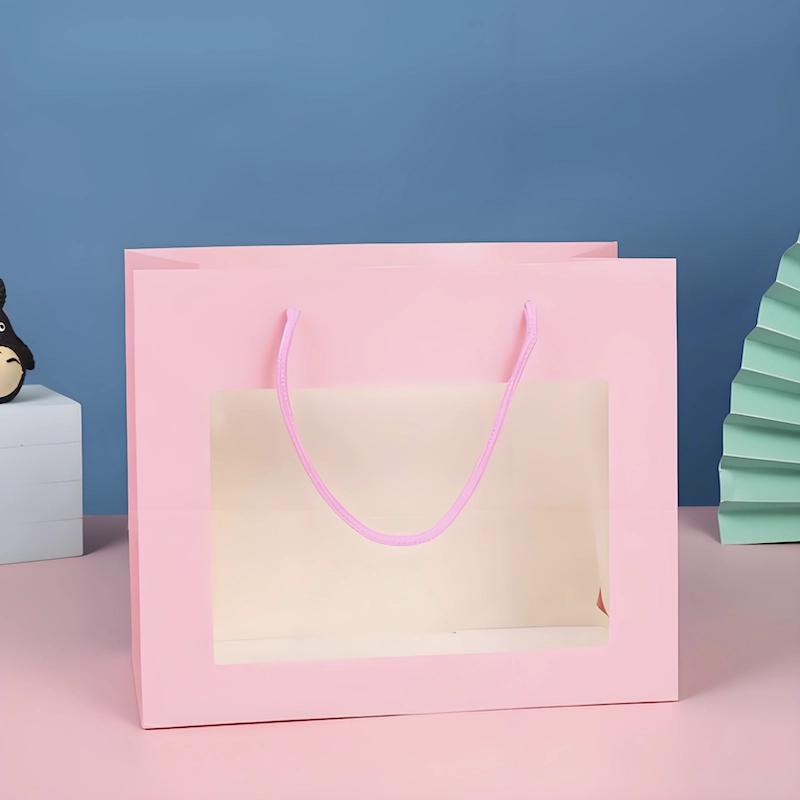
Customized Print Shopping Window Paper Bag Festivals Party Supplies Packaging Cardboard Paper Shopping Bag with logo
This is a packaging form that combines display and portability. Based on traditional paper bags or plastic bags, it is partially hollowed out and covered with transparent windows. Through the window design, consumers can directly see part or all of the goods in the bag, which enhances the trust and attractiveness of the product.
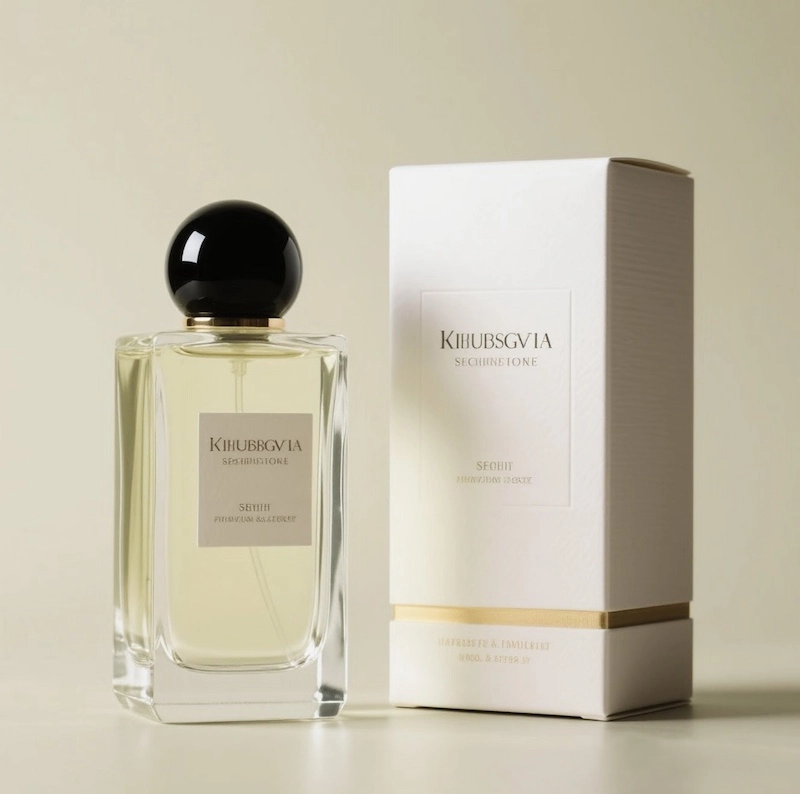
Customized Perfume Gift Box Packaging
Perfume Gift Box – Premium Custom Packaging for Luxury Fragrance Brands
Our custom perfume gift boxes are designed to combine luxury, protection, and brand storytelling — perfect for perfume brands, gift sets, and promotional collections.
Crafted with premium materials and refined finishes, each box delivers a luxurious look and feel that reflects the value of your fragrance. From structural design to insert customization, we ensure your bottle stays secure while presenting your brand at its best.
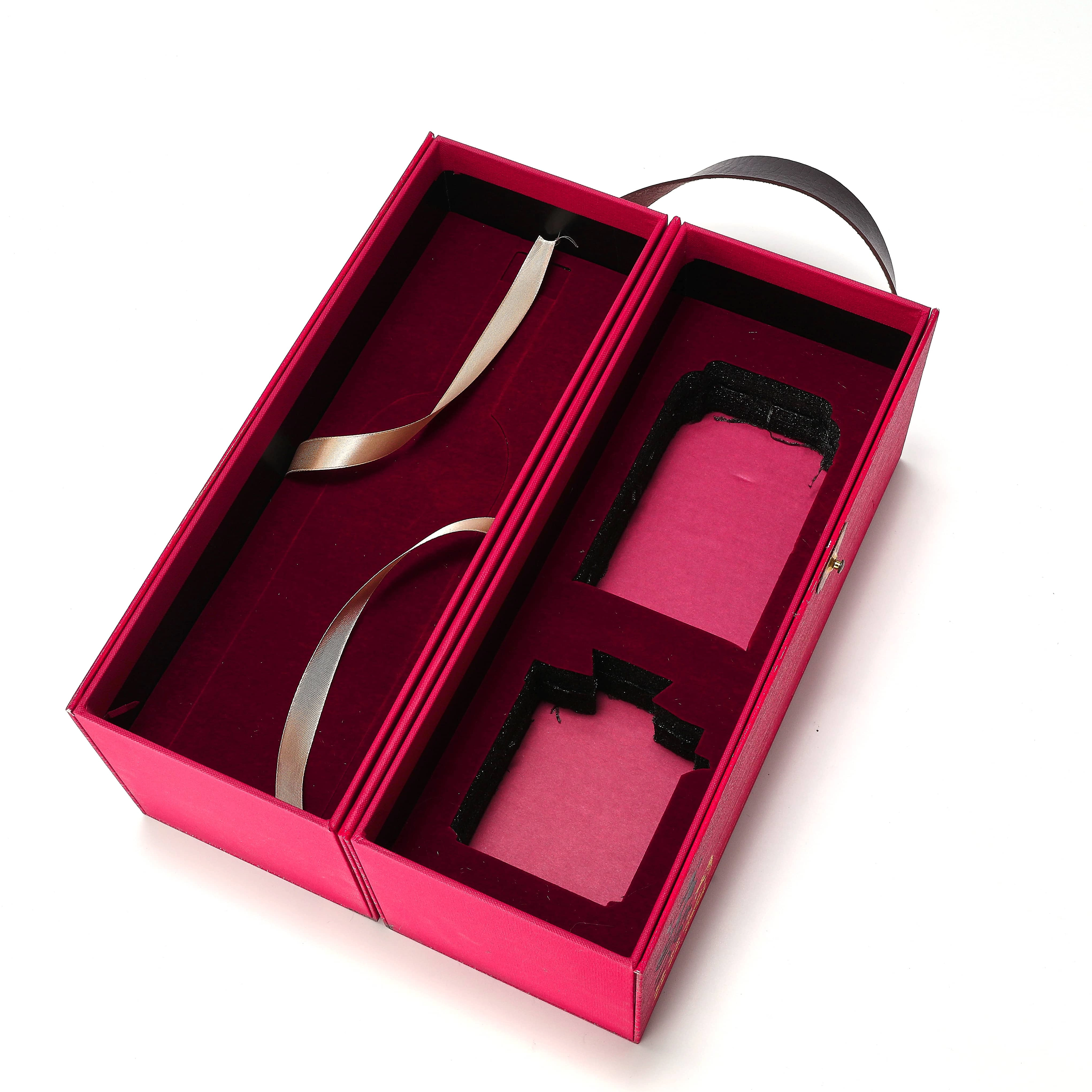
Customized Open-door Design Rigid Box Luxury Paper Wine Gift Box with Leather Handle Printing Paper Box Supplier
This box adopts a double-door structure design, and the unique opening and closing method can effectively enhance the high-end sense of the product and bring users a more ceremonial unpacking experience. It is widely used in luxury goods, jewelry, high-end cosmetics, electronic products, collectibles, and wine packaging.

Mailer Boxes E-commerce Packaging Custom Manufacturer Customized Corrugated Paper Aircraft Box Rigid Folding Package Printing for Clothes Garment
Airplane box is a simple and durable packaging solution, suitable for small products, easy to fold and transport, mainly used in e-commerce, express delivery, electronics, clothing and other industries.
© 2025 WINPACK PRINTING. All rights reserved

Wenhua Printing packaging
winpackprinting
Winpack Printing