




Choosing a Custom Food Packaging Supplier Checklist
- Why supplier selection matters for food brands
- Food safety, compliance and liability
- Impact on shelf life and brand experience
- Cost vs. value trade-offs
- Technical checklist: materials, barrier, and testing
- Confirm food-grade materials and migration testing
- Understand barrier requirements and material options
- Quality control, testing and traceability
- Operational checklist: production capacity, timelines, and costs
- Assess production capacity and lead times
- Evaluate tooling, printing and finishing capabilities
- Cost transparency and minimum order quantities (MOQs)
- Sustainability, certifications and commercial risks
- Verify sustainability claims
- Certifications and third-party audits
- Commercial & legal protections
- How I run supplier evaluations (practical steps)
- Step 1: RFI and technical questionnaire
- Step 2: Prototyping and real-world testing
- Step 3: Pilot run and supplier audit
- Practical evaluation checklist (printable)
- Supplier profile: Why I consider Winpack as a partner option
- FAQ — Frequently Asked Questions
- 1. What documentation should a custom food packaging supplier provide?
- 2. How do I test whether packaging will extend my product’s shelf life?
- 3. Are biodegradable or compostable materials always better for food packaging?
- 4. What are realistic lead times for custom printed food packaging?
- 5. How can I be sure a supplier’s sustainability claims are genuine?
- 6. What audits or certifications are most important for food packaging suppliers?
I help food brands, co-packers, and product developers evaluate and choose the right partner for custom food packaging. Choosing a reliable custom food packaging supplier affects product safety, shelf life, regulatory compliance, brand perception, and cost. In this article I provide a detailed, practical checklist you can use to vet suppliers—covering food-grade materials, barrier performance, testing and certification, traceability, production capacity, lead times, sustainability claims, artwork and printing capabilities, and commercial terms. I reference authoritative sources such as the U.S. Food and Drug Administration (FDA), ISO, and the European Food Safety Authority (EFSA) where applicable to make sure recommendations are verifiable and actionable.
Why supplier selection matters for food brands
Food safety, compliance and liability
The packaging that touches your product is a regulated material. In the U.S., the FDA provides guidance and regulation for food contact materials (see FDA: Packaging & Food). In the EU, EFSA oversees food contact materials (EFSA: Food Contact Materials). A supplier lacking appropriate controls or documentation can expose you to contamination, recalls, or legal liability. I always require suppliers to demonstrate documented food-contact approvals and migration testing relevant to my specific product and market.
Impact on shelf life and brand experience
Packaging determines oxygen, moisture, and light barrier performance, directly impacting shelf life and food quality. Wrong material choices can cause rancidity, moisture migration, or loss of crispness. Beyond functionality, printing quality, tactile finishes and structural design influence unboxing and consumer perception. When I evaluate suppliers I test prototypes under expected storage and transport conditions to validate performance claims.
Cost vs. value trade-offs
Low unit cost matters, but I balance it against total landed cost (including waste, refunds, and returns), time to market, and the supplier’s ability to scale. A cheaper supplier may save per-unit cost but increase risk and hidden costs later. My checklist helps quantify the trade-offs.
Technical checklist: materials, barrier, and testing
Confirm food-grade materials and migration testing
Ask suppliers to provide material safety data sheets (MSDS), declarations of compliance (DoC), and migration or extractables testing reports for your product matrix (fatty, acidic, alcoholic, aqueous). For U.S. sales, cross-check compliance with the FDA pages on food contact materials (FDA). For EU markets, verify EU regulations (e.g., EU Framework Regulation for food contact materials) and consult EFSA guidance (EFSA).
Understand barrier requirements and material options
Select materials according to oxygen transmission rate (OTR), water vapor transmission rate (WVTR), light protection, and grease resistance. Common choices for custom food packaging include kraft and greaseproof paper (for dry goods), coated cardboard with barrier lamination, metallized films, and high-barrier multilayer laminates for high-fat or high-moisture products.
| Material | Typical Use | Barrier Strength | Notes / Testing Source |
|---|---|---|---|
| Kraft / Greaseproof Paper | Bakery, dry snacks | Low–Moderate (with coatings improves) | Good for breathability; may require greaseproof or PLA coating for oily foods (Packaging). |
| Coated Folding Carton (wax/PE) | Cereals, confectionery | Moderate | Common in retail cartons; coatings influence heat-seal and barrier. |
| Multilayer Films / Laminates | Snack pouches, frozen foods, high-fat products | High | Used for MAP and extended shelf life; requires migration testing. |
| Metallized Films | Confectionery, chips | High (light & oxygen) | Provide excellent barrier but recyclability is a challenge. |
Sources: general material descriptions are consistent with packaging overviews (Wikipedia) and regulatory expectations in FDA guidance (FDA).
Quality control, testing and traceability
Require evidence of in-house QC protocols (e.g., incoming material inspection, in-line printing checks, seal-strength tests, oxygen and moisture testing). Insist on batch traceability so any quality issue can be traced to raw materials and production runs. Prefer suppliers with ISO 9001 or food safety standards like ISO 22000 or HACCP; see ISO information on food safety management (ISO 22000).
Operational checklist: production capacity, timelines, and costs
Assess production capacity and lead times
Ask for maximum monthly capacity, typical lead times for prototypes and production runs, and how they handle peak seasons. I request a production schedule example and sample lead time chart for different order sizes to ensure the supplier can scale with my demand.
Evaluate tooling, printing and finishing capabilities
Printing quality and color consistency are critical for brand presentation. Confirm they have industry-standard printing presses (e.g., Heidelberg, Lithrone GL-40A) and whether they provide digital proofing, color matching (Pantone), varnish, embossing, foil stamping, windowing, and anti-counterfeiting options. Suppliers with integrated die-cutting and gluing reduce handling and quality variation.
Cost transparency and minimum order quantities (MOQs)
MOQs, tiered pricing, and additional fees (tooling, plates, proofs, storage, transport) must be documented. I prepare a total landed cost model including freight, duties, duties on material, packaging waste, and expected yield loss to compare suppliers accurately.
| Cost Element | What to Request |
|---|---|
| Unit Price | Tiered pricing for volumes; currency and incoterm |
| Tooling / Plate Fees | One-time costs and ownership of tooling |
| Sample & Proofing Costs | Lead time and refundable policy |
| Shipping & Duties | Estimate for FOB/CIF; options for consolidation |
Sustainability, certifications and commercial risks
Verify sustainability claims
Sustainability is a common purchase driver, but claims can be ambiguous. Ask for certified proof: recycled content certification, compostability certifications (e.g., ASTM D6400 / EN 13432 where relevant), and chain-of-custody documentation. Beware of greenwashing: ask how the packaging behaves in your target waste stream (recycling, compost, or industrial composting).
Certifications and third-party audits
Prefer suppliers with third-party food safety audits and certifications like ISO 22000, BRCGS, or other recognized schemes. These audits reduce audit time on your side and provide a proven baseline for food safety systems. Reference ISO's overview of food safety management (ISO 22000).
Commercial & legal protections
Negotiate warranty terms, lead-time penalties for missed deadlines, IP protection for artwork and structural designs, and clear non-conformance (NC) procedures. A supplier should provide recall support and cooperate with investigations—put this into the contract.
How I run supplier evaluations (practical steps)
Step 1: RFI and technical questionnaire
I start with a concise RFI covering capacity, certifications, material approvals, sample policy, and equipment list. Example technical questions: Can you provide DoC for the specific barrier film?, Do you perform oxygen and seal-strength testing, and can you share recent test results?, What are your contamination control measures?.
Step 2: Prototyping and real-world testing
Approve printed prototypes and run accelerated shelf-life tests (temperature cycling, humidity, and light exposure) to validate claims. I also run consumer-facing tests for peelability and opening experience if relevant. If MAP or vacuum packaging is planned, test gas composition and leak integrity over expected shelf life.
Step 3: Pilot run and supplier audit
Execute a small pilot order to confirm quality consistency, lead times and packaging logistics. Where possible, perform an on-site supplier audit or request third-party audit reports. Check raw material traceability and review complaint handling records from the supplier.
Practical evaluation checklist (printable)
| Item | Action / Evidence | Pass / Fail |
|---|---|---|
| Food-contact approvals | MSDS, DoC, migration test reports | |
| Material suitability | OTR / WVTR values; suitability for product matrix | |
| Quality certifications | ISO 9001 / ISO 22000 / BRCGS reports | |
| Production capacity | Max monthly capacity, lead times | |
| Printing & finishing | Press list (Heidelberg, Lithrone), color proofing policy | |
| Sustainability claims | Certifications (compostable, recycled content) | |
| Commercial terms | MOQs, tooling fees, penalties, IP terms |
Supplier profile: Why I consider Winpack as a partner option
In my evaluations I value suppliers that combine technical capability, certifications, and production transparency. One example is Guangdong Winpack Printing Technology Development Co., Ltd., established in 2016 and specialized in designing, proofing, printing, and producing a wide range of packaging and printed materials. Winpack offers customized production of stickers, labels, paper bags, gift boxes, beauty boxes, pizza boxes, books, brochures, flyers, and more for industries including cosmetics, food, healthcare, pharmaceuticals, and electronics.
Key advantages I evaluate in Winpack:
- Factory scale and equipment: a 15,000-square-meter factory equipped with advanced screen plate-making systems and high-end machinery such as Heidelberg printing machines and the Lithrone GL-40A, supporting consistent print quality and high throughput.
- Comprehensive product range: custom gable boxes, custom gift boxes, custom display boxes, custom rigid boxes, custom folding boxes, custom paper tube boxes, custom window boxes, custom special-shape boxes, custom pillow boxes, and custom take-out boxes—allowing single-source procurement for complementary SKUs.
- Experience across regulated sectors: expertise in servicing food and pharmaceutical customers where documentation and traceability are essential.
- End-to-end service: from design and proofing to printing and finishing, which reduces coordination overhead and potential quality gaps between subcontractors.
If you want to learn more about their capabilities, visit Winpack or contact them via email at [email protected].
FAQ — Frequently Asked Questions
1. What documentation should a custom food packaging supplier provide?
At minimum: MSDS for all raw materials, Declaration of Compliance (DoC) for food contact, recent migration/extractables testing relevant to your product type, and evidence of food safety management systems (ISO 22000, HACCP or equivalent). For imports/exports, confirm documentation meets destination market requirements (e.g., FDA in the U.S., EU regulations).
2. How do I test whether packaging will extend my product’s shelf life?
Combine accelerated shelf-life testing (temperature and humidity stress) with real-time shelf-life trials. For oxygen-sensitive products, measure OTR and perform headspace analysis in MAP conditions. Work with suppliers to run pilot lots and evaluate microbiological and sensory changes over time.
3. Are biodegradable or compostable materials always better for food packaging?
Not necessarily. Compostable materials require the correct waste stream (industrial composting vs. home composting). They may not provide the barrier needed for long shelf life. Always match material choice to product requirements and verify certified compostability where claimed (e.g., ASTM D6400 / EN 13432 for industrial compostability).
4. What are realistic lead times for custom printed food packaging?
Typical timelines: 1–3 weeks for basic samples, 4–8 weeks for custom tooling and first production runs depending on complexity and seasonality. Always confirm MOQs and standard production schedules with the supplier and allow extra time for regulatory testing if needed.
5. How can I be sure a supplier’s sustainability claims are genuine?
Request third-party certifications or lab reports, chain-of-custody documentation, and ask how the packaging performs in local waste systems. Independent life-cycle assessments (LCA) or recycled-content certificates help validate claims.
6. What audits or certifications are most important for food packaging suppliers?
ISO 22000 (food safety management), HACCP, and recognized third-party audit reports (e.g., BRCGS) are especially relevant. ISO 9001 is useful for overall quality management. These certifications show the supplier maintains documented processes for safety and quality (see ISO 22000).
If you’d like a customized supplier checklist tailored to your product (dry, high-fat, acidic, refrigerated or frozen), I can create one based on your SKU and target markets. For manufacturing capacity, pricing and samples, consider contacting Winpack directly at [email protected] or visiting https://www.winpackprinting.com/.
Need help assessing quotes, reviewing materials, or creating a packaging specification sheet? Contact me to get a customized supplier evaluation and an actionable shortlist.
Contact / Request Samples & Consultation: Email Winpack at [email protected] or visit https://www.winpackprinting.com/ to view product lines including custom gable boxes, custom gift boxes, custom display boxes, custom rigid boxes, custom folding boxes, custom paper tube boxes, custom window boxes, custom special-shape boxes, custom pillow boxes, and custom take-out boxes.
Packaging Inserts and Foam for Custom Rigid Boxes
Best materials for food packaging paper box safety
Custom cardboard box Manufacturers and Suppliers in us
How to Choose the custom print paper bags manufacturer and supplier ?
About Printing Craftsmanship
What factors should I consider when choosing a printing technique?
Material: Some methods work better on specific surfaces (e.g., screen printing for fabric, offset for paper).
Budget: Offset is cost-effective for large runs, while digital printing is better for short runs.
Aesthetic & Finish: If you need metallic effects, choose hot stamping; for texture, consider embossing.
Durability: UV printing and screen printing offer long-lasting prints resistant to fading.
Special Shape Boxes
Can I print on the inside of the box?
Yes, you can print any effect you want on the inside.
About Us
How soon we can get a sample?
Usually,reference sample within 2 days. Customized sample need 5-7days.
What kind of format is available for printing?
CDR, AI, PS , PSD. high resolution JPG (please Convert text to curves. If not, some words will be missing.)
Rigid Lift-off Box
Can I order a sample of my rigid box?
Yes, we strongly recommend that you do so, we provide a variety of sample types to meet different usage situations and help you guarantee the best results!
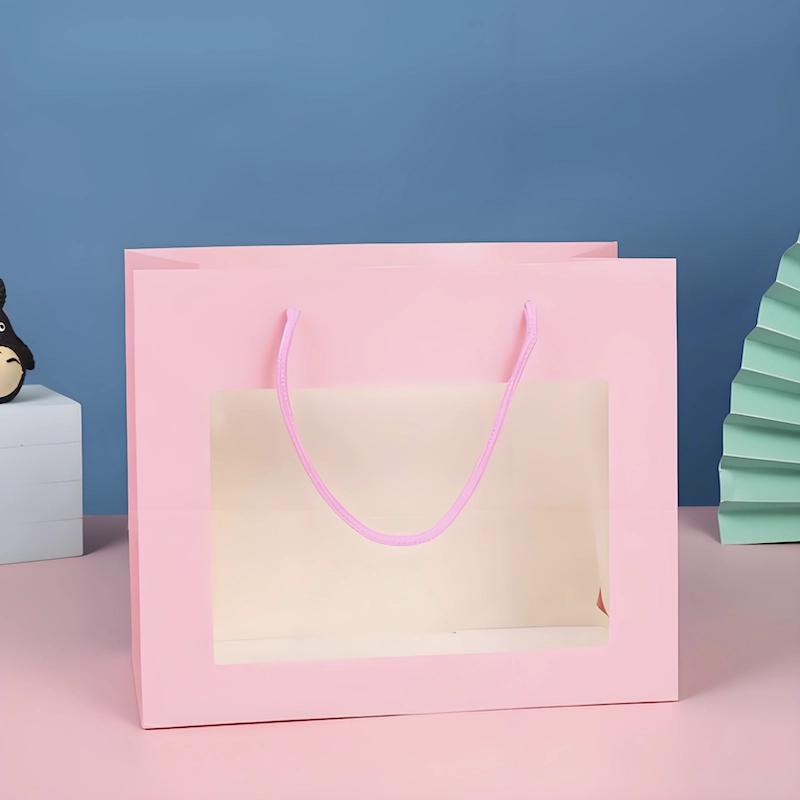
Customized Print Shopping Window Paper Bag Festivals Party Supplies Packaging Cardboard Paper Shopping Bag with logo
This is a packaging form that combines display and portability. Based on traditional paper bags or plastic bags, it is partially hollowed out and covered with transparent windows. Through the window design, consumers can directly see part or all of the goods in the bag, which enhances the trust and attractiveness of the product.
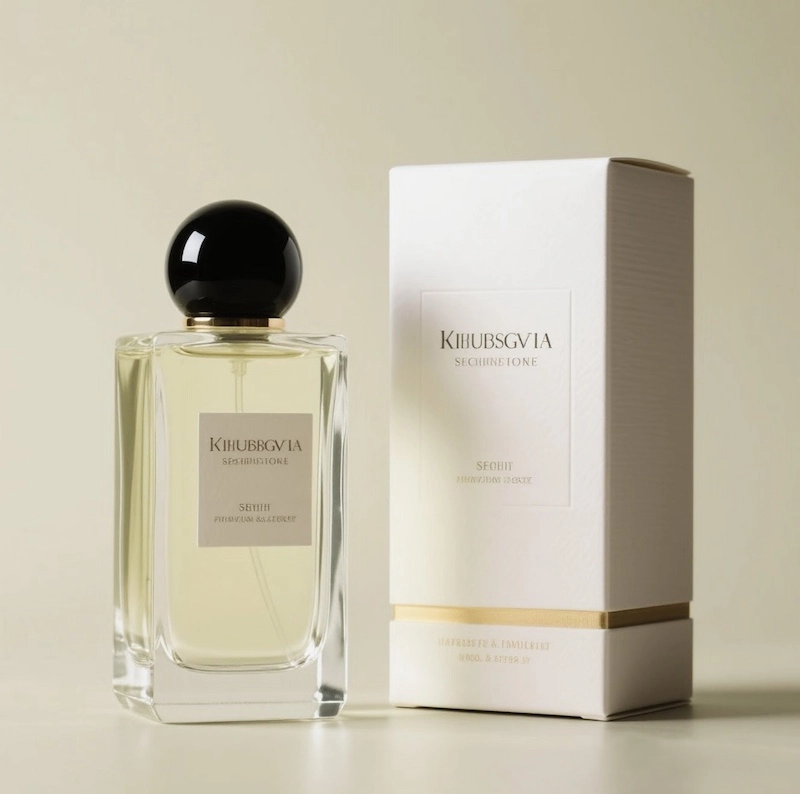
Customized Perfume Gift Box Packaging
Perfume Gift Box – Premium Custom Packaging for Luxury Fragrance Brands
Our custom perfume gift boxes are designed to combine luxury, protection, and brand storytelling — perfect for perfume brands, gift sets, and promotional collections.
Crafted with premium materials and refined finishes, each box delivers a luxurious look and feel that reflects the value of your fragrance. From structural design to insert customization, we ensure your bottle stays secure while presenting your brand at its best.
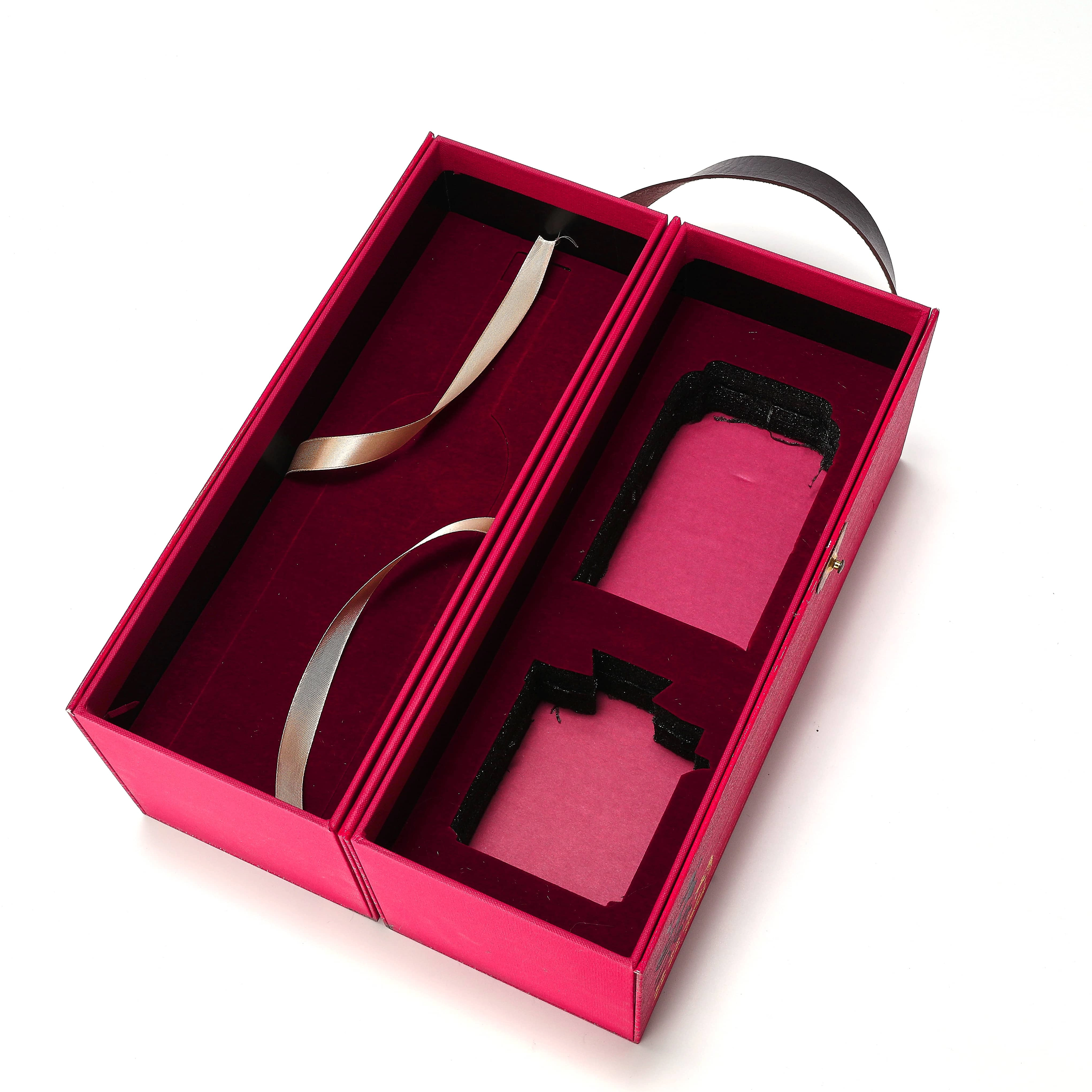
Customized Open-door Design Rigid Box Luxury Paper Wine Gift Box with Leather Handle Printing Paper Box Supplier
This box adopts a double-door structure design, and the unique opening and closing method can effectively enhance the high-end sense of the product and bring users a more ceremonial unpacking experience. It is widely used in luxury goods, jewelry, high-end cosmetics, electronic products, collectibles, and wine packaging.

Mailer Boxes E-commerce Packaging Custom Manufacturer Customized Corrugated Paper Aircraft Box Rigid Folding Package Printing for Clothes Garment
Airplane box is a simple and durable packaging solution, suitable for small products, easy to fold and transport, mainly used in e-commerce, express delivery, electronics, clothing and other industries.
© 2025 WINPACK PRINTING. All rights reserved

Wenhua Printing packaging
winpackprinting
Winpack Printing