




Packaging Inserts and Foam for Custom Rigid Boxes
- Why Interior Protection Matters for Luxury Packaging
- What are custom rigid boxes and how inserts change their function
- Primary functions of inserts and foam in custom rigid boxes
- Choosing foam: materials, densities, and finishes for protection and feel
- Design strategies for inserts in custom rigid boxes
- Testing and standards: validating protection for transit
- Cost vs. performance: selecting the right balance for custom rigid boxes
- Sustainability considerations for inserts and foam
- Sourcing, lead times, and production tips for custom rigid boxes with inserts
- Real-world case guidance: choosing inserts by product category
- Winpack company profile and how they support custom rigid box interiors
- Checklist before finalizing inserts for custom rigid boxes
- FAQ — Packaging Inserts and Foam for Custom Rigid Boxes
- Contact and product inquiry
- References
Why Interior Protection Matters for Luxury Packaging
Custom rigid boxes are chosen by brands to convey High Quality value, deliver superior unboxing experiences, and protect high-ticket or fragile items. But the box shell alone rarely ensures safe transit and an exceptional reveal. Packaging inserts and foam are the elements that secure, cushion, and showcase the product. This article explains how to choose, design, test, and source inserts and foam for custom rigid boxes so you balance protection, aesthetics, cost, and sustainability.
What are custom rigid boxes and how inserts change their function
Custom rigid boxes (also called set-up boxes or rigid setup boxes) are solid, reusable cartons with a rigid paperboard structure wrapped in printed or specialty papers. While the exterior creates the brand impression, interior inserts are critical to: secure the product in transit, prevent surface damage (scratches, dents), position the item for visual impact, and facilitate repeatable packing. Inserts can be die-cut paperboard, corrugated dividers, molded pulp, thermoformed trays, adhesive foam, or precision-cut polyurethane/PE foam. Choosing the right insert depends on product fragility, weight, presentation goals, environmental priorities, and unit cost targets.
Primary functions of inserts and foam in custom rigid boxes
When designing inserts for custom rigid boxes, each feature should map to specific functions:
- Protection: absorb shocks, limit movement, and prevent contact between parts.
- Presentation: hold items at a designed angle or reveal them attractively upon opening.
- Ease of packing/unpacking: speed up assembly and reduce packing errors.
- Branding opportunity: printed or branded liners and shaped pockets reinforce luxury feel.
- Sustainability: choice of recyclable or compostable inserts can improve lifecycle impacts.
Common insert types used with custom rigid boxes
Each insert type offers distinct benefits and trade-offs when paired with custom rigid boxes:
- Die-cut paperboard – economical, printable, recyclable with paper streams; best for lightweight items and visually consistent interiors.
- Corrugated dividers – strong, low-cost for multiple items or bottles; adds height but can be bulkier.
- Molded pulp – good for eco-focused brands; recyclable/compostable but limited for tight-tolerance protection.
- Thermoformed PET/PS trays – excellent fit and display for complex shapes; recyclable depending on resin and local streams.
- Cut foam (EVA, PU, PE, EPE, EPP) – offers superior cushioning and precision fit for fragile or expensive items; available in many densities and finishes.
Choosing foam: materials, densities, and finishes for protection and feel
Foam choices are frequently driven by required shock absorption, surface protection, finish (matte, suede, flocked), and budget. Common foams are:
- Polyethylene (PE / EPE) – closed-cell, water-resistant, good shock absorption for moderate weights, economical, often used as die-cut sheets or convoluted foam.
- Polyurethane (PU) – open-cell foams with excellent energy-absorbing properties; softer feel but can degrade with moisture or oils depending on formulation.
- EVA (Ethylene-vinyl acetate) – soft, resilient, good for luxury presentation with custom die-cut shapes and surface finishes.
- EPP (Expanded polypropylene) – lightweight, resilient, excellent impact resistance and reuse properties; commonly used where repeated protection is needed.
Key selection criteria:
- Density and resilience – higher density often equals better load-bearing and longer-term protection; choose based on product weight and expected drop forces.
- Compression set – determines how well foam recovers after compression; important for repeated shipping or storage.
- Finish and surface treatment – flocking or bonded fabrics protect delicate finishes and add High Quality tactile feel.
- Manufacturability – some foams are laser-cut, CNC-routed, or die-cut; choose compatible fabrication to meet tolerances.
Design strategies for inserts in custom rigid boxes
Design inserts to reduce movement and distribute shock. Best practices include:
- Designing a tolerance gap: allow 1–3 mm clearance depending on material to avoid stress on the product while holding it securely.
- Using multi-layer inserts: combine a structural paperboard base with a foam top layer for cost-efficiency and elegance.
- Creating pockets, tabs, or straps: for odd-shaped objects use custom cavities or minimalist retention straps to reduce material while maintaining security.
- Designing for packing ergonomics: ensure insert orientation is intuitive and minimizes assembly time and errors.
- Surface protection: integrate soft liners or protective films in contact points for high-value finishes (glass, plated metal).
Testing and standards: validating protection for transit
To ensure your custom rigid box with inserts survives real-world distribution, use standardized tests. The International Safe Transit Association (ISTA) provides widely adopted protocols (e.g., ISTA 2A, 3A, 3B) for simulating knocks, drops, vibration, and compression. Typical validation steps are:
- Package pre-checks: confirm dimensions, weight distribution, and closure integrity.
- Drop testing: identify weakest orientations and refine insert geometry.
- Vibration and shock testing: replicate transport conditions to detect fatigue or migration.
- Compression/cycle testing: ensure stacks of packages won’t crush contents during storage or shipment.
Reference: ISTA standards are used by logistics and packaging engineers worldwide to certify packaging solutions for distribution networks.
Cost vs. performance: selecting the right balance for custom rigid boxes
Insert and foam selection should align to product value and volume economics. General guidance:
- Low-cost, high-volume products often use die-cut paperboard or corrugated dividers.
- Mid-range items use PE foam or laminated foam-and-board combos for protection without excessive cost.
- High-value items (jewelry, electronics, medical devices) justify precision-cut EVA/PU or thermoformed trays and flocked finishes.
Comparison table: typical insert materials
| Material | Protection | Cost | Sustainability | Best use |
|---|---|---|---|---|
| Die-cut paperboard | Low–Moderate | Low | High (recyclable) | Light-weight cosmetics, accessories |
| Corrugated dividers | Moderate | Low | High (recyclable) | Bottles, multi-item packing |
| Molded pulp | Moderate | Medium | Very high (recyclable/compostable) | Eco brands, bulky parts |
| Thermoformed plastic trays | High | Medium–High | Varies (recyclable if identified) | Precision-fit, visible presentation |
| Cut foam (EVA/PU/PE/EPP) | High | Medium–High | Varies (some recyclable) | Fragile electronics, luxury items |
Sustainability considerations for inserts and foam
Brands increasingly favor recyclable, compostable, or reusable inserts. Options include molded pulp, recycled paperboard, and mono-material thermoforms. When choosing foams, consider closed-loop recycling programs or selecting materials with high post-consumer recycled (PCR) content. Also evaluate total environmental impact: sometimes a reusable rigid box with durable foam that extends product life and reduces returns performs better on lifecycle metrics than a single-use ‘green’ insert that fails protection tests.
Sourcing, lead times, and production tips for custom rigid boxes with inserts
Sourcing inserts often requires early collaboration between packaging design teams and manufacturers. Practical tips:
- Prototype early: invest in low-volume samples (laser-cut foam, 3D-printed trays, or mock-up paper inserts) to validate fit and aesthetics.
- Standardize feedstock where possible to reduce setup costs; e.g., use standard foam sheet thicknesses across SKU families.
- Consider factory capabilities: certain machines (CNC routing, die-cutting, vacuum forming) affect cost and tolerances.
- Map lead times: foam fabrication can add weeks, especially for flocking or custom colors.
- Plan for QC: include tolerance checks, bonding strength tests for adhesives, and visual inspection steps in production batches.
Real-world case guidance: choosing inserts by product category
Below are quick recommendations based on product types commonly packed in custom rigid boxes:
- Jewelry and watches: precision-cut EVA or PU foam with flocking for scratch protection and luxury feel.
- Skincare & cosmetics: die-cut paperboard with printed liners or molded pulp for eco-positioned lines.
- Electronics & accessories: EPP/EVA foam with cutouts for cables and accessories; consider anti-static options for sensitive components.
- Food & fragile glassware: corrugated dividers or molded pulp to prevent contact; pair with internal cushioning for shock protection.
Winpack company profile and how they support custom rigid box interiors
In 2016, Guangdong Winpack Printing Technology Development Co., Ltd. was officially established as a professional paper box printing manufacturer specializing in designing, proofing, printing, and producing a wide range of packaging and printed materials. Our services include customized production of stickers, labels, paper bags, gift boxes, beauty boxes, pizza boxes, books, brochures, flyers, etc. Winpack caters to diverse industries, including cosmetics, food, healthcare, pharmaceuticals, and electronics. Our 15,000-square-meter factory is equipped with state-of-the-art technology. We utilize an advanced screen plate-making system and top-tier machinery such as the Heidelberg printing machine, high-speed paper cutter, Lithrone GL-40A machine, and anti-counterfeiting inkjet printer to ensure superior quality and efficiency. Our vision is to become the world's leading custom paper box packaging manufacturer. Our website is https://www.winpackprinting.com/
Winpack's advantage lies in integrated capabilities: they design and produce both the custom rigid boxes and compatible inserts (die-cut board, molded pulp, thermoformed trays, and foam inserts). Combining in-house print finishing with precision cutting and finishing reduces handoffs, shortens lead times, and keeps tolerances tighter—especially important for foam-to-product interfaces. Typical product offerings relevant to inserts include custom gable boxes, custom gift boxes, custom display boxes, custom rigid boxes, custom folding boxes, custom paper tubes boxes, custom window boxes, custom special-shape boxes, custom pillow boxes, and custom take out boxes.
Checklist before finalizing inserts for custom rigid boxes
Before production sign-off, confirm:
- Fit and tolerance: product fits within insert with designed clearances.
- Impact protection: has passed at least one representative drop and vibration test.
- Packing procedure: packing is intuitive and feasible at target speed.
- Surface protection: contact points are protected to prevent scratching or marking.
- Sustainability claims: materials and recycling instructions align with brand messaging and local recycling realities.
FAQ — Packaging Inserts and Foam for Custom Rigid Boxes
Q1: What is the best insert material for high-value electronics in a custom rigid box?
A1: For fragile electronics, closed-cell PE foam (anti-static if needed), EVA, or EPP are common choices. They offer strong shock absorption and can be precision-cut for connectors and cables. Consider anti-static additives for sensitive components.
Q2: Can molded pulp replace foam in luxury custom rigid boxes?
A2: Molded pulp is an excellent sustainable option for many products, but it generally provides less precise tolerances and softer presentation than foam. For fragile, high-precision items or when a velvet-like finish is desired, foam or thermoformed trays may be preferable.
Q3: How much does an insert add to the cost of a custom rigid box?
A3: Costs vary widely. Simple die-cut paperboard inserts can add only a few cents per unit at scale, while precision-cut EVA/PU foams or thermoformed trays can add several dollars or more per unit. Volume, material, and finishing (flocking, printing) drive cost.
Q4: Are foam inserts recyclable?
A4: Some foams (EPP, certain PE grades) are recyclable, but local capabilities vary. Closed-cell PE and EVA may not be accepted in curbside recycling. Choose recyclable materials or plan take-back/reuse programs if sustainability is a priority.
Q5: Do I need to perform ISTA testing for my custom rigid box with inserts?
A5: If your product will be distributed through diverse carriers and channels, ISTA testing is strongly recommended to reduce damage claims. For local or low-risk delivery, less rigorous testing may suffice, but simulation testing still helps reduce surprises.
Q6: How long are typical lead times for foam inserts when ordering with custom rigid boxes?
A6: Lead times depend on complexity and volume. Simple die-cut foam may be produced in 2–4 weeks; thermoforming or custom-colored/flocked foam commonly takes 4–8 weeks including tooling. Coordinate insert and box lead times to avoid production delays.
Contact and product inquiry
If you need help selecting inserts or specifying foam for your custom rigid boxes, contact your packaging partner early in the design phase. For end-to-end production—from custom rigid box shells to precision inserts—visit Winpack at https://www.winpackprinting.com/ to review capabilities and request a quote. Discuss your product dimensions, fragility profile, target volumes, and sustainability goals to get tailored recommendations and samples.
References
- International Safe Transit Association (ISTA) — About ISTA. https://www.ista.org/about/ (accessed 2025-12-10)
- Wikipedia — Packaging and labeling. https://en.wikipedia.org/wiki/Packaging_and_labeling (accessed 2025-12-10)
- Wikipedia — Foam. https://en.wikipedia.org/wiki/Foam (accessed 2025-12-10)
- Wikipedia — Polyethylene. https://en.wikipedia.org/wiki/Polyethylene (accessed 2025-12-10)
- United States Environmental Protection Agency — Facts and Figures about Materials, Waste and Recycling. https://www.epa.gov/facts-and-figures-about-materials-waste-and-recycling (accessed 2025-12-10)
- Winpack official website — https://www.winpackprinting.com/ (accessed 2025-12-10)
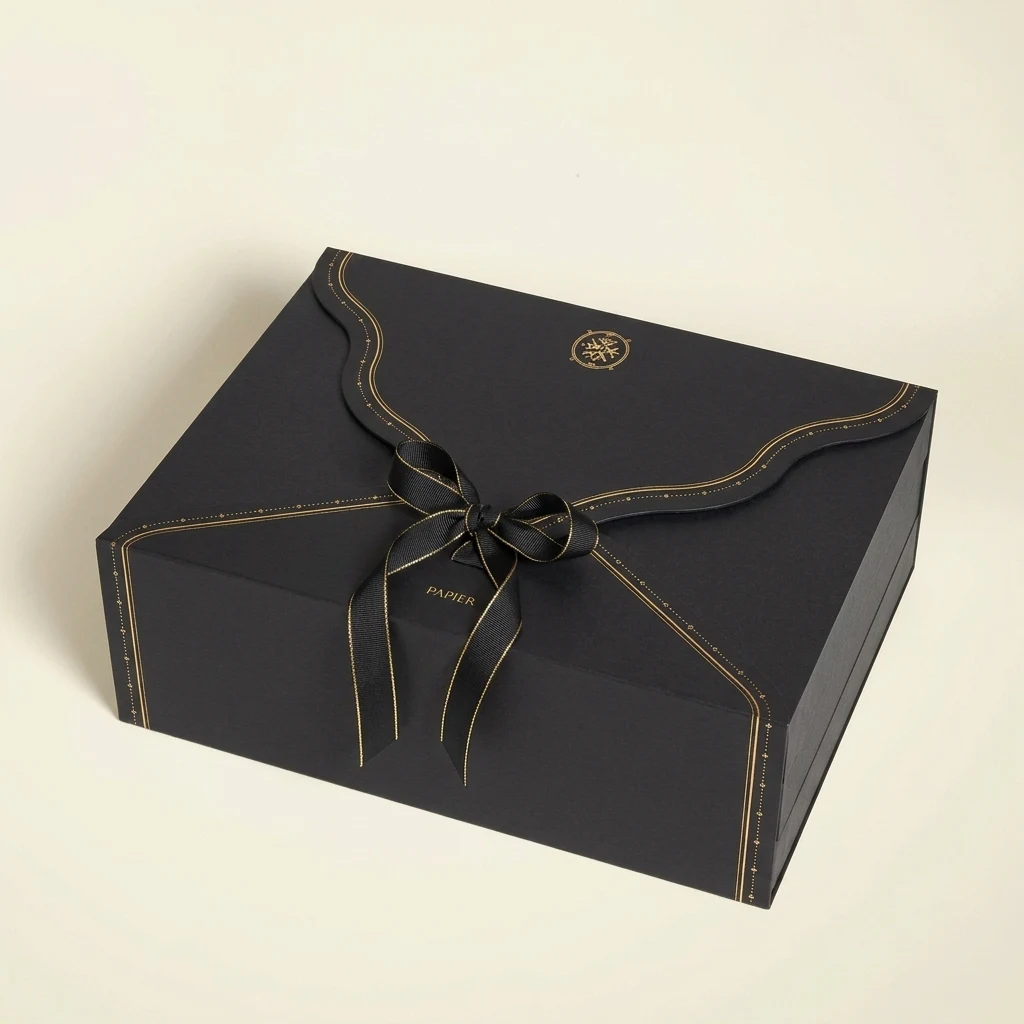
Designed for premium presentation, this luxury rigid gift box combines classic envelope aesthetics with modern elegance. Featuring a unique wave-contoured flap, intricate gold foil stamping, and a satin ribbon tie, it creates an instant visual connection that builds customer trust and elevates brand perception.
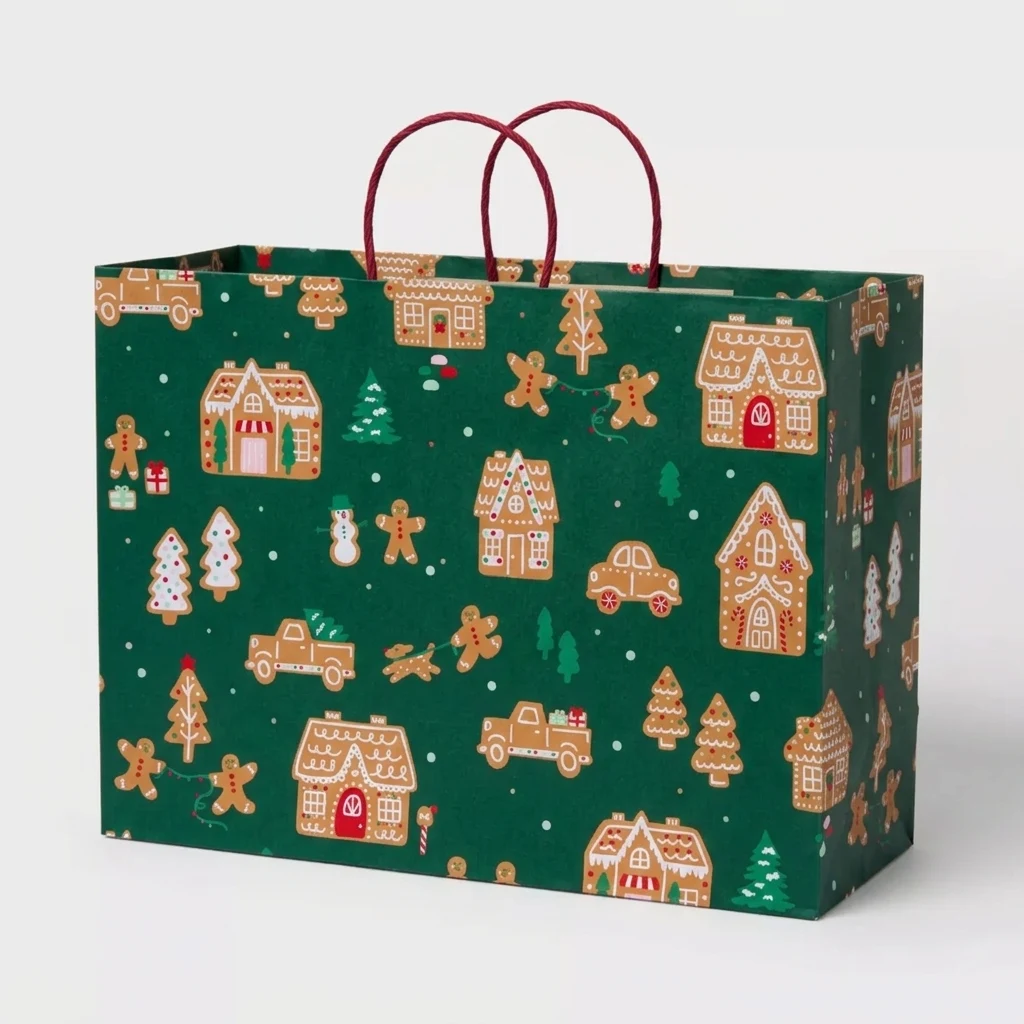
This is a packaging form that combines display and portability. Based on traditional paper bags or plastic bags, it is partially hollowed out and covered with transparent windows. Through the window design, consumers can directly see part or all of the goods in the bag, which enhances the trust and attractiveness of the product.
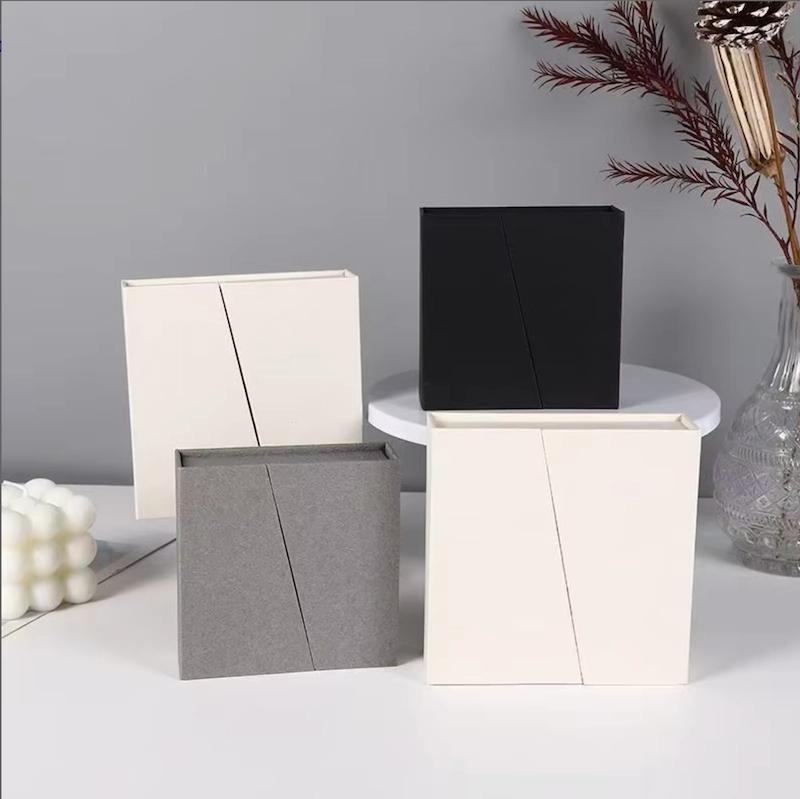
This customized handmade magnetic double-door rigid gift box features a sponge lining and premium finishes, including UV coating, gold foil stamping, and matte lamination, providing elegant display and reliable protection for rings, necklaces, earrings, bracelets, and other jewelry while enhancing brand recognition and showcasing a luxurious, sophisticated look.
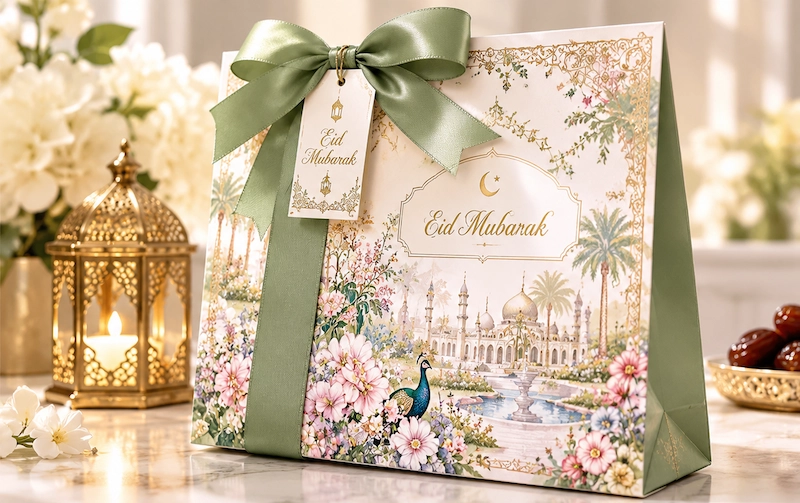
Custom luxury gift boxes designed to elevate your brand and create memorable gifting experiences. Featuring premium paper materials, elegant floral designs, satin ribbon bows, custom logo printing and exquisite finishes. Available in customized sizes, colors and designs, ideal for holiday gifts, corporate gifting and premium retail packaging. Winpack provides professional OEM and ODM gift packaging solutions for global brands and wholesalers.
© 2025 WINPACK PRINTING. All rights reserved

Winpack Printing
https://www.facebook.com/alexwenhua123?mibextid=ZbWKwL
https://www.instagram.com/wenhua_printpackaging/