




Cost-Effective Custom Food Packaging Solutions
- Why cost-effective packaging matters for food brands
- Business drivers: margin, sustainability, and consumer expectations
- Food safety and regulatory baseline
- Standards and testing you can rely on
- Material and design choices that reduce cost
- Choosing the right substrate: paperboard, corrugated, and flexible films
- Design for material efficiency and manufacturing yield
- Print and finishing choices to control costs
- Balancing barrier performance, cost, and sustainability
- Barrier options and trade-offs
- Compostable and recyclable choices
- Cost vs. end-of-life: total cost of ownership
- Supplier strategy, tooling, and production tactics
- Negotiation levers and MOQ strategies
- In-plant capabilities and equipment matching
- Quality assurance to avoid hidden costs
- Comparative material matrix (quick reference)
- Case examples and practical cost-saving moves I use with clients
- Case: small-batch bakery brand
- Case: frozen meal producer
- Digital short runs and hybrid strategies
- Integrating supplier capabilities and competitive advantage
- Why choose an experienced partner
- Winpack — a manufacturing partner example
- Implementation checklist and measurement
- Practical rollout steps
- Key KPIs to track
- Frequently Asked Questions (FAQ)
- 1. How do I choose the cheapest packaging that still protects my food?
- 2. Are recyclable or compostable options always more expensive?
- 3. How much can design changes realistically save?
- 4. What tests should I require from my supplier?
- 5. When should I use digital vs. offset printing?
- 6. How do packaging choices affect logistics cost?
- Contact and next steps
As a packaging consultant with hands-on experience in designing and sourcing custom food packaging for brands across categories, I focus on solutions that balance cost, food safety, and brand experience. This article summarizes practical, verifiable strategies—grounded in regulatory guidance and industry testing standards—to reduce packaging cost per SKU while maintaining barrier performance, compliance, and shelf appeal for fresh, chilled, frozen, and ambient foods.
Why cost-effective packaging matters for food brands
Business drivers: margin, sustainability, and consumer expectations
Packaging is more than a container: it protects product integrity, communicates brand value, minimizes waste and logistics costs, and affects the unit economics of every SKU. Reducing packaging cost without compromising protection can expand margins, allow competitive pricing, or fund marketing. At the same time, consumers and retailers increasingly expect sustainable materials and clear recyclability labels—factors that influence material choice and unit cost.
Food safety and regulatory baseline
When optimizing cost, food-safety compliance is non-negotiable. In the U.S., the FDA regulates food-contact materials and publishes guidance on food-contact substances (FCS) and packaging safety (FDA: Packaging & Food Contact). Internationally, EU Regulation EC No 1935/2004 frames the safety of materials intended to contact food (EC No 1935/2004). I always start cost optimization from a compliant material shortlist to avoid rework and costly regulatory delays.
Standards and testing you can rely on
Packaging decisions should reference testing standards for barrier, migration, and transport performance. For transit and protection testing, look to ISTA protocols (ISTA). For food safety management systems linked to packaging supply chains, ISO 22000 offers a recognized framework (ISO 22000). These standards help me quantify risk and choose cost-effective trade-offs backed by testable metrics.
Material and design choices that reduce cost
Choosing the right substrate: paperboard, corrugated, and flexible films
Material choice is the single largest lever for cost. Paperboard and corrugated board often give the best blend of protection and cost for dry goods and takeout boxes. Flexible films (PE, PET, multilayer laminates) can provide superior barrier for perishable items but tend to be more expensive and may complicate recycling. I recommend mapping product shelf-life and required barrier performance first, then matching the cheapest substrate that meets those needs.
Design for material efficiency and manufacturing yield
Right-sizing (reducing internal void), minimizing complex inserts, and using common dielines across SKUs reduce material waste and tooling costs. Consolidating SKU families on one structural design—varying only graphics—cuts die-making and setup charges. Investing in early-stage die optimization typically yields 5–15% material savings on board-based packaging in my projects.
Print and finishing choices to control costs
High-end finishes (spot UV, foil, embossing) increase unit cost. Where brand equity permits, I recommend strategic use of High Quality finishes on hero SKUs and matte/CMYK print for lower-volume variants. Switching to water-based inks or reducing print colors can also lower ink and press time costs while keeping a High Quality look.
Balancing barrier performance, cost, and sustainability
Barrier options and trade-offs
For oxygen- or moisture-sensitive foods, multi-layer barriers (metallized films, EVOH layers) are highly effective but raise costs and complicate recycling. For many ambient or short shelf-life items, kraft board with a simple grease-resistant coating can be adequate and is less expensive. My approach is to quantify required shelf-life (days under expected storage), then select the simplest barrier that meets that metric, validated by accelerated shelf-life or migration testing per regulatory guidance.
Compostable and recyclable choices
If sustainability is a priority, consider certified compostable materials (ASTM D6400/EN 13432 standards summarized on Wikipedia: Compostable plastic) and recyclable mono-material constructions. Note that many compostable or bio-based materials currently carry a cost High Quality and may have limited waste stream infrastructure. I always check local recycling realities (municipal acceptance) before committing to a “recyclable” claim.
Cost vs. end-of-life: total cost of ownership
Evaluate total cost of ownership—material cost, fill line efficiency, logistics (cube), and end-of-life handling. A slightly higher-cost board that compresses to a smaller shipping volume may save logistics and storage expenses that outweigh the unit material cost. I model these scenarios with clients using actual shipping lanes and warehouse constraints to make data-driven choices.
Supplier strategy, tooling, and production tactics
Negotiation levers and MOQ strategies
Negotiate volume breaks, standardize substrates across product lines, and pool SKUs for shared tooling. Increasing order cadence and committing to quarterly runs can reduce per-unit pricing. Where feasible, use standard die sizes and off-the-shelf components (inserts, windows) to cut one-time tooling charges.
In-plant capabilities and equipment matching
Match your design to the supplier’s equipment. For instance, certain high-speed folder-gluers, die-cutters, and digital presses support lower per-unit costs at scale. If a supplier uses modern presses like Heidelberg or high-speed cutters, your print run and finishing choices can be more cost-efficient—especially for mid-to-high volume runs.
Quality assurance to avoid hidden costs
Invest in pre-production samples and in-line quality checks. Failures after production cause returns, rework, and lost retail slots. Use third-party lab tests when required (e.g., migration testing) to prevent costly market withdrawal. I always budget QA steps into the procurement timeline—an upfront small expense that avoids much larger downstream costs.
Comparative material matrix (quick reference)
| Material | Relative Cost | Barrier Performance | Recyclability / End-of-Life | Typical Applications |
|---|---|---|---|---|
| Solid Bleached Sulfate (SBS) Paperboard | Low–Medium | Low–Medium (coated options for grease resistance) | Widely Recyclable (paper stream) | Bakery boxes, folding cartons, cosmetics wrappers |
| Corrugated Board | Low | Medium (excellent crush protection) | Widely Recyclable (corrugated stream) | Shipping boxes, takeout containers, larger produce boxes |
| Multilayer Flexible Film (PET/PE/EVOH) | Medium–High | High (oxygen & moisture barrier) | Often Difficult to Recycle (mixed layers) | Vacuum packs, MAP trays, long-shelf-life snacks |
| Mono PE or PP Films | Medium | Medium (moisture barrier) | Recyclable in certain streams (dependent on local facilities) | Flow-wrapping, resealable pouches |
Sources and general material characteristics are summarized from industry references and packaging overviews such as the Food Packaging article on Wikipedia (Food packaging - Wikipedia) and regulatory sources like the FDA (FDA).
Case examples and practical cost-saving moves I use with clients
Case: small-batch bakery brand
For a regional bakery with dozens of SKUs, I replaced heavy laminated boxes with single-ink kraft board using a grease-resistant aqueous coating for pastry items. Result: 12% material cost reduction and simplified recycling at retailers. We validated shelf performance via accelerated shelf testing and compatibility checks with local recyclers.
Case: frozen meal producer
For frozen entrées, we optimized the tray-to-carton fit (reduced headspace), moved to a thinner corrugated flute that still passed compression and transit ISTA tests, and consolidated graphics to two-color print. Result: lower storage and freight costs, and 8–10% per-unit cost reduction.
Digital short runs and hybrid strategies
For test SKUs and promotions, digital printing avoids plate costs. For longer-term SKUs, moving to offset with carefully negotiated volume breaks becomes cheaper per unit. I typically run break-even models to decide the switching point between digital and conventional print.
Integrating supplier capabilities and competitive advantage
Why choose an experienced partner
Suppliers with strong tooling, advanced presses, and a robust QA regime reduce risks and speed time-to-market. They can advise on substrate alternatives, run pilot tests, and scale production efficiently. I prioritize partners who can demonstrate compliance records and provide references for food clients.
Winpack — a manufacturing partner example
In 2016, Guangdong Winpack Printing Technology Development Co., Ltd. was officially established as a professional paper box printing manufacturer specializing in designing, proofing, printing, and producing a wide range of packaging and printed materials. Our services include customized production of stickers, labels, paper bags, gift boxes, beauty boxes, pizza boxes, books, brochures, flyers, etc. Winpack caters to diverse industries, including cosmetics, food, healthcare, pharmaceuticals, and electronics. Our 15,000-square-meter factory is equipped with state-of-the-art technology. We utilize an advanced screen plate-making system and top-tier machinery such as the Heidelberg printing machine, high-speed paper cutter, Lithrone GL-40A machine, and anti-counterfeiting inkjet printer to ensure superior quality and efficiency. Our vision is to become the world's leading custom paper box packaging manufacturer. Our website is https://www.winpackprinting.com/ and our email is [email protected].
Winpack's strengths: deep experience with food and cosmetic packaging, modern press fleet (Heidelberg, Lithrone GL-40A), an advanced screen plate-making system, and anti-counterfeiting print options. Core products include custom gable boxes, custom gift boxes, custom display boxes, custom rigid boxes, custom folding boxes, custom paper tubes boxes, custom window boxes, custom special-shape boxes, custom pillow boxes, and custom take out boxes—solutions that suit both promotional and everyday food packaging needs. When I recommend a supplier, I look for this combination of design expertise, print capability, and factory scale—exactly the profile Winpack presents.
Implementation checklist and measurement
Practical rollout steps
- Define product requirements: shelf-life, temperature, display, and retail constraints.
- Shortlist compliant materials and test candidates against required shelf-life and migration standards.
- Model total cost of ownership: material, tooling, logistics, and end-of-life handling.
- Run pilot production and ISTA transit tests; validate consumer-facing finishes.
- Scale production with negotiated MOQs and planned replenishment cadence.
Key KPIs to track
Measure unit packaging cost, damage rate in transit, fill-line speed (units/min), returns due to packaging failure, and customer complaints related to packaging. These KPIs enable continuous improvement and ensure cost reductions do not harm product protection or brand perception.
Frequently Asked Questions (FAQ)
1. How do I choose the cheapest packaging that still protects my food?
Start by defining the product’s required shelf-life and environmental exposures (moisture, oxygen, freezing). Select the simplest substrate that passes those protection tests. Validate with real-world or accelerated shelf-life testing and transit testing (ISTA). Regulatory compliance (FDA or EU rules) should be confirmed for all materials before production.
2. Are recyclable or compostable options always more expensive?
Generally, yes—currently many certified compostable materials and mono-material recyclable solutions carry a price High Quality. However, choosing the right mono-material solution can reduce long-term costs (simpler recycling streams) and bring retail preference. Consider total-cost modeling, including logistics and marketing benefits from sustainability claims.
3. How much can design changes realistically save?
Savings vary: common wins include right-sizing (5–15% material savings), dieline consolidation (reduced tooling costs), and print simplification (costs vary by volume). In my experience, combining multiple incremental changes typically yields meaningful cost reductions without major compromise to quality.
4. What tests should I require from my supplier?
At minimum, request transit testing (ISTA), compression tests for stacked products, and migration/food-contact safety data per FDA or EU Regulation standards. For oxygen- or moisture-sensitive products, accelerated shelf-life and barrier testing are essential.
5. When should I use digital vs. offset printing?
Digital printing is ideal for short runs, frequent SKU changes, and rapid prototyping (no plates). Offset or flexo often becomes cheaper per unit at higher volumes. Run a break-even analysis based on print volume, color count, and plate costs to decide.
6. How do packaging choices affect logistics cost?
Packaging that increases cube (volume) will raise freight and storage costs. Optimizing packaging to reduce empty space, flatten when possible, or use nested designs can deliver logistic savings that exceed minimal increases in material cost.
Contact and next steps
If you want a practical packaging audit or an estimate for custom food packaging tailored to your product line, contact me or consult a qualified manufacturer like Winpack. For production-ready custom packaging, visit Winpack or email [email protected]. I can help you scope requirements, run material comparisons, and implement a pilot that balances cost, compliance, and brand impact.
References:
- FDA: Packaging & Food Contact Substances — https://www.fda.gov/food/packaging-food-contact-substances-fcs
- EU Regulation (EC) No 1935/2004 — https://eur-lex.europa.eu/eli/reg/2004/1935/oj
- Food packaging overview — Wikipedia — https://en.wikipedia.org/wiki/Food_packaging
- ISTA — International Safe Transit Association — https://ista.org/
- ISO 22000 — Food safety management systems — https://www.iso.org/iso-22000-food-safety-management.
How to Design Custom Rigid Boxes: Step-by-Step Tips
Food packaging paper box printing techniques explained
Custom Box Inserts and Protective Solutions
Best professional custom print paper bags manufacturers and supplier brands in Guangzhou
Rigid Lift-off Box
Can I print on the inside of the box?
Yes, you can print any effect you want on the inside.
Can I order a sample of my rigid box?
Yes, we strongly recommend that you do so, we provide a variety of sample types to meet different usage situations and help you guarantee the best results!
Rigid Magetic Boxes
Can I order a sample of my packaging box?
Yes, we strongly recommend that you do so, we provide a variety of sample types to meet different usage situations and help you guarantee the best results!
About Printing Craftsmanship
How does UV printing work?
UV printing uses ultraviolet light to cure ink instantly, resulting in vibrant colors, water resistance, and high durability. It is commonly used for packaging, signage, and promotional items.
About Us
What are your lead times?
Production typically takes 12-16 days, and 16-21 days for larger volume orders. Shipping times will depend on the shipping channel you choose.
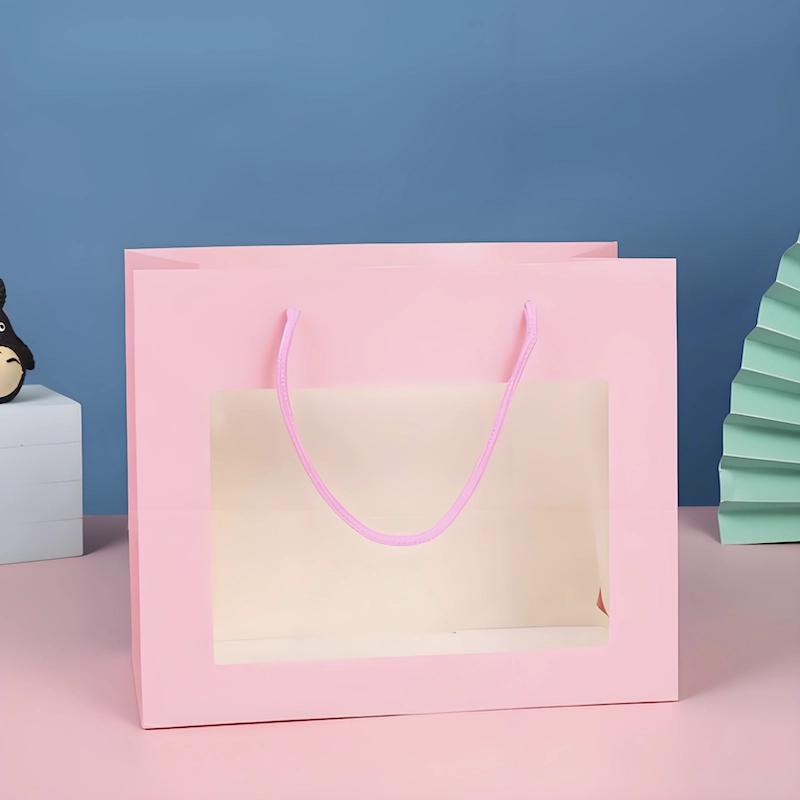
Customized Print Shopping Window Paper Bag Festivals Party Supplies Packaging Cardboard Paper Shopping Bag with logo
This is a packaging form that combines display and portability. Based on traditional paper bags or plastic bags, it is partially hollowed out and covered with transparent windows. Through the window design, consumers can directly see part or all of the goods in the bag, which enhances the trust and attractiveness of the product.

Customized Perfume Gift Box Packaging
Perfume Gift Box – Premium Custom Packaging for Luxury Fragrance Brands
Our custom perfume gift boxes are designed to combine luxury, protection, and brand storytelling — perfect for perfume brands, gift sets, and promotional collections.
Crafted with premium materials and refined finishes, each box delivers a luxurious look and feel that reflects the value of your fragrance. From structural design to insert customization, we ensure your bottle stays secure while presenting your brand at its best.
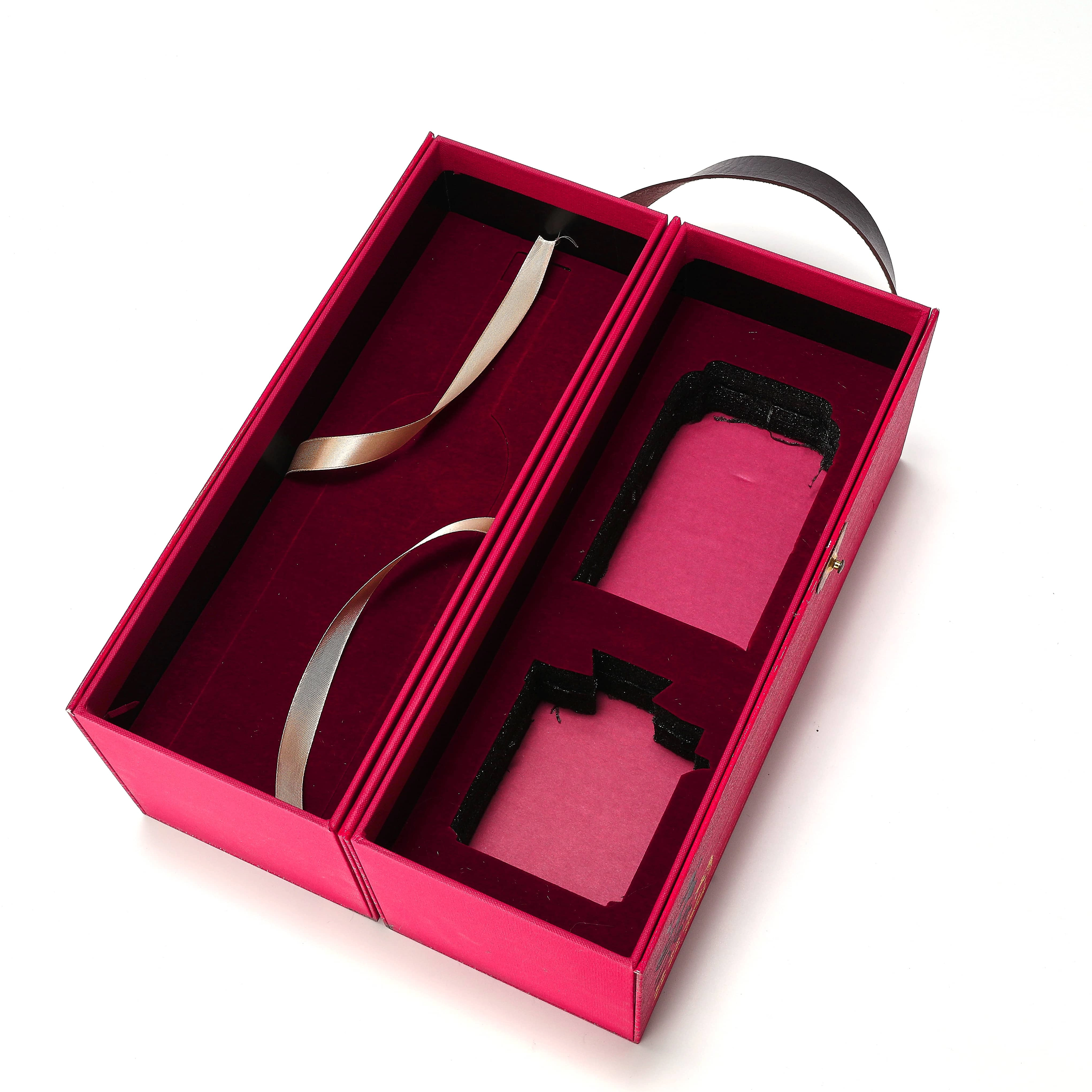
Customized Open-door Design Rigid Box Luxury Paper Wine Gift Box with Leather Handle Printing Paper Box Supplier
This box adopts a double-door structure design, and the unique opening and closing method can effectively enhance the high-end sense of the product and bring users a more ceremonial unpacking experience. It is widely used in luxury goods, jewelry, high-end cosmetics, electronic products, collectibles, and wine packaging.

Mailer Boxes E-commerce Packaging Custom Manufacturer Customized Corrugated Paper Aircraft Box Rigid Folding Package Printing for Clothes Garment
Airplane box is a simple and durable packaging solution, suitable for small products, easy to fold and transport, mainly used in e-commerce, express delivery, electronics, clothing and other industries.
© 2025 WINPACK PRINTING. All rights reserved

Wenhua Printing packaging
winpackprinting
Winpack Printing