




Cost-Saving Strategies When Ordering Custom Food Boxes
- Understanding Packaging Costs: Where Your Money Goes
- Major cost drivers in custom food packaging
- Regulatory and food-safety cost considerations
- Design and Material Choices to Cut Costs
- Choose the right substrate for the application
- Optimize structural design to reduce material use
- Print strategy: fewer colors, smarter finishes
- Order Planning, Production & Supplier Strategies
- Leverage MOQs and volume discounts
- Use digital printing and hybrid runs for flexibility
- Negotiate with suppliers—beyond price
- Operational Savings, Sustainability and Long-term Value
- Reduce waste through smarter inventory and packaging specs
- Sustainable materials can reduce total cost of ownership
- Quality control—spend to save
- Material Comparison: Cost, Performance & Typical Use
- Supplier Spotlight: Guangdong Winpack Printing Technology Development Co., Ltd.
- Implementation Checklist: How to Start Saving Today
- FAQ
- 1. How much can I realistically save by changing material or design?
- 2. Are cheaper materials safe for food contact?
- 3. What is the optimal order quantity for cost efficiency?
- 4. How do I evaluate supplier quality without a full production run?
- 5. Will sustainable packaging always cost more?
- 6. How important is lead time when ordering custom food boxes?
- Contact & Next Steps
Ordering custom food packaging requires balancing cost, functionality, and brand presentation. This guide provides evidence-based, actionable strategies for lowering per-unit costs on custom food boxes while maintaining food-safety compliance and shelf appeal. The recommendations address material choices, artwork and die-line decisions, minimum order quantities, consolidation tactics, and supplier capabilities—aiming to help restaurants, food brands, and retailers optimize spending on custom food packaging.
Understanding Packaging Costs: Where Your Money Goes
Major cost drivers in custom food packaging
When evaluating quotes for custom food packaging, several line items typically determine the final price per box:
- Material type and gsm/micron weight (e.g., corrugated board vs. folding carton).
- Print complexity—number of colors, varnishes, special inks, or hot stamping.
- Tooling and die-cut charges (one-time setup costs).
- Minimum order quantity (MOQ) and production run length.
- Post-print treatments (food-safe coatings, greaseproofing, barrier liners).
- Logistics, warehousing, and lead time High Qualitys.
Understanding these drivers helps you focus efforts on levers with the greatest impact on overall cost.
Regulatory and food-safety cost considerations
Food packaging must satisfy food-contact safety rules. In the U.S., the FDA provides guidance on safe materials for food contact; similar standards exist in the EU and other jurisdictions. Choosing compliant substrates and coatings can incur higher upfront costs but avoids recalls, fines, and reputational damage. See FDA guidance: https://www.fda.gov/food.
Design and Material Choices to Cut Costs
Choose the right substrate for the application
Matching material to the product use-case is the single best way to reduce wasteful spending. Common options include corrugated fiberboard for heavy or takeaway items, folding cartons/paperboard for lightweight packaged foods, and grease-resistant paper for oily foods. Each has different cost and performance profiles; for background on types see Food packaging (Wikipedia), Corrugated fiberboard, and Paperboard.
Optimize structural design to reduce material use
Simple structural changes often lower cost without hurting function:
- Reduce margin or flange widths where possible.
- Switch from multi-panel wraps to single-piece die-cut boxes when feasible to reduce glue/use and labor.
- Use window cutouts selectively—while they save material in some designs, they increase finishing steps and complexity.
Print strategy: fewer colors, smarter finishes
Print complexity has a large impact—every additional ink and finishing step raises cost. Cost-saving tactics include:
- Use spot colors instead of CMYK where brand color accuracy matters.
- Limit varnishes to high-impact areas (e.g., logo panel) and use matte or aqueous coatings for general protection.
- Consider flexographic printing for large runs (often cheaper per unit than high-end offset for simple graphics).
Order Planning, Production & Supplier Strategies
Leverage MOQs and volume discounts
Manufacturers typically offer lower per-unit pricing at higher volumes. Calculate total landed cost (including storage) to determine the break-even point for ordering more. If your volume doesn't justify full MOQ, consider:
- Consignment programs or staggered deliveries with the supplier.
- Pooling orders with other SKUs or brands to reach better pricing tiers.
- Working with a supplier that offers lower MOQs for certain substrates or digital printing options.
Use digital printing and hybrid runs for flexibility
Digital printing significantly reduces prepress, plates, and minimum quantities, making it ideal for short runs, seasonal variations, or multiple SKUs. Hybrid printing (digital + conventional) can be a cost-effective compromise for medium runs.
Negotiate with suppliers—beyond price
Effective negotiation covers more than unit price. Seek concessions such as:
- Shared tooling costs or amortized die-cut fees.
- Extended payment terms, free or reduced freight, or consolidated shipments.
- In-kind services: free dielines, prepress checks, or mockups to avoid costly iterations.
Operational Savings, Sustainability and Long-term Value
Reduce waste through smarter inventory and packaging specs
Overpackaging increases costs at every step. Use demand forecasting and reorder points to minimize excess stock. Standardize box sizes across SKUs where possible to increase pallet efficiency and reduce per-shipment costs.
Sustainable materials can reduce total cost of ownership
While recycled or compostable materials can be pricier upfront, they may lower waste disposal costs and improve brand preference—translating to higher sales. For lifecycle and sustainability context see EPA's packaging guidance: https://www.epa.gov/smm/sustainable-management-materials-packaging.
Quality control—spend to save
Investing in pre-production samples and inline QA reduces rejects, reprints, and customer returns. A robust quality agreement with your supplier prevents costly product hold-ups and protects brand reputation.
Material Comparison: Cost, Performance & Typical Use
| Material | Typical Cost Range (per unit, indicative) | Strengths | Limitations | Best for |
|---|---|---|---|---|
| Corrugated board | $0.25–$1.50 | High strength, good for shipping & hot food | Bulkier, higher freight costs | Pizza boxes, takeout boxes, heavy products |
| Folding carton / paperboard | $0.10–$0.80 | High print quality, economical for shelf-ready | Less resistant to grease/moisture unless treated | Bakery items, dry snacks, retail food boxes |
| Kraft paper & greaseproof | $0.08–$0.60 | Good grease resistance, eco-friendly perception | Limited print fidelity | Burgers, wraps, sandwiches, casual takeout |
| Coated / laminated options | $0.20–$1.00+ | Moisture and grease barriers, shelf-life extension | Recycling complexity, higher cost | Oily or high-moisture foods |
Note: price ranges are indicative and depend on region, order size, and customization. For technical details on corrugated and paperboard, see Corrugated fiberboard and Paperboard.
Supplier Spotlight: Guangdong Winpack Printing Technology Development Co., Ltd.
In 2016, Guangdong Winpack Printing Technology Development Co., Ltd. was officially established as a professional paper box printing manufacturer specializing in designing, proofing, printing, and producing a wide range of packaging and printed materials.
Our services include customized production of stickers, labels, paper bags, gift boxes, beauty boxes, pizza boxes, books, brochures, flyers, etc.
Winpack caters to diverse industries, including cosmetics, food, healthcare, pharmaceuticals, and electronics.
Our 15,000-square-meter factory is equipped with state-of-the-art technology. We utilize an advanced screen plate-making system and top-tier machinery such as the Heidelberg printing machine, high-speed paper cutter, Lithrone GL-40A machine, and anti-counterfeiting inkjet printer to ensure superior quality and efficiency.
Our vision is to become the world's leading custom paper box packaging manufacturer.
Winpack's competitive advantages include:
- Comprehensive in-house capabilities: design, proofing, large-format printing, finishing, and anti-counterfeiting options reduce outsourcing costs and turnaround time.
- Modern machinery (e.g., Heidelberg and Lithrone GL-40A) ensures consistent print quality and efficient press runs—helpful for reducing waste and reprint rates. See Heidelberg: https://www.heidelberg.com/global/en/home.jsp.
- Competitive MOQs and experience serving high-volume food and cosmetics customers, enabling better pricing tiers and reliable supply chains.
Winpack homepage: https://www.winpackprinting.com/. Contact: [email protected]
Winpack core products include custom gable boxes, custom gift boxes, custom display boxes, custom rigid boxes, custom folding boxes, custom paper tubes boxes, custom window boxes, custom special-shape boxes, custom pillow boxes, custom take out boxes. With these offerings Winpack can support brands seeking both high-quality printed food packaging and cost-optimized production runs.
Implementation Checklist: How to Start Saving Today
- Audit current packaging costs and order quantities—capture per-unit land cost including storage and freight.
- Identify 2–3 immediate design changes (reduce print colors, simplify structure, standardize sizes).
- Request quotes from at least two suppliers, comparing total landed cost and not just unit price.
- Ask suppliers for amortized tooling costs and alternative digital printing quotes for short runs.
- Run a single A/B pilot to validate any material or design change before full roll-out.
FAQ
1. How much can I realistically save by changing material or design?
Savings vary widely; switching from high-gram folding carton to a lighter paperboard or simplifying print can lower costs by 10–40% per unit in some cases. The key is calculating total landed cost rather than focusing solely on per-unit carton price.
2. Are cheaper materials safe for food contact?
Not necessarily. Any material must meet local food contact regulations (e.g., FDA in the U.S.). Cheaper substrates may require an additional food-safe coating or liner, which can offset material cost savings. Always verify supplier certifications and request compliance documentation.
3. What is the optimal order quantity for cost efficiency?
Optimal order quantity balances unit price, storage cost, and cash flow. Use an economic order quantity (EOQ) model for precise calculation or ask suppliers for tiered pricing to identify breakpoints. For seasonal businesses, shorter runs with digital printing can be cheaper despite higher unit costs due to reduced obsolescence.
4. How do I evaluate supplier quality without a full production run?
Request pre-production samples, color proofs, and a small pilot run. Ask for inspection reports, references, and photos of similar past projects. Include acceptance criteria in your purchase order to avoid ambiguity.
5. Will sustainable packaging always cost more?
Not always. Some recycled or mono-material solutions can be cost-competitive at scale. Additionally, sustainable choices can reduce disposal fees, attract eco-conscious customers, and improve shelf appeal—offsetting initial cost differences. Refer to EPA sustainable packaging resources: https://www.epa.gov/smm/sustainable-management-materials-packaging.
6. How important is lead time when ordering custom food boxes?
Lead time affects inventory needs and cash flow. Longer lead times often correlate with lower prices but higher inventory carrying costs. Negotiate lead times and consider local or regional suppliers for faster turnarounds when time is critical.
Contact & Next Steps
If you want to explore cost-saving options on custom food packaging, request a consultation or sample pack. For turnkey production capabilities—design, proofing, high-quality printing and finishing—contact Winpack: https://www.winpackprinting.com/ or email [email protected]. Ask for sample quotes comparing digital vs. offset production for your SKU mix, and request amortized tooling costs to get a realistic per-unit picture.
Implement the checklist above to prioritize savings that don’t compromise food safety, and run a controlled pilot before rolling out changes across all SKUs.
Custom small cardboard box Manufacturers and Suppliers in us
Short Runs and Fast Turnaround: Flexo Strategies for B2B Buyers
Packaging for Delivery: Durability and Protective Designs
Top 10 cardboard box custom Manufacturers and Supplier Brands
OEM Services
Can you help with packaging design if I don’t have one?
Yes! Our experienced design team can assist in creating packaging that aligns with your brand’s vision. We can develop concepts, offer material recommendations, and ensure compliance with industry standards.
Can I request a sample before mass production?
Yes, we provide sample proofing before mass production to ensure that the design, materials, and quality meet your expectations. We encourage testing and approval before proceeding with full-scale manufacturing.
About Us
Are you a manufacturer?
Yes, we are manufacturer, and we have over decade experience in this field.
Rigid Lift-off Box
How long does it usually take from design confirmation to delivery?
The lead time is usually 15-25 days, depending on the production of the order
Can I print on the inside of the box?
Yes, you can print any effect you want on the inside.
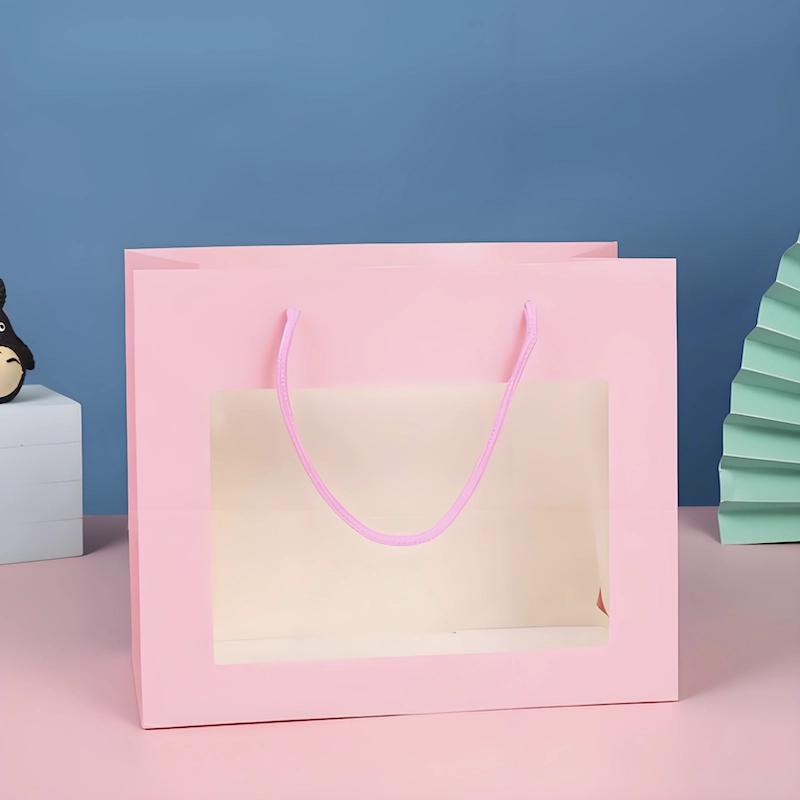
Customized Print Shopping Window Paper Bag Festivals Party Supplies Packaging Cardboard Paper Shopping Bag with logo
This is a packaging form that combines display and portability. Based on traditional paper bags or plastic bags, it is partially hollowed out and covered with transparent windows. Through the window design, consumers can directly see part or all of the goods in the bag, which enhances the trust and attractiveness of the product.
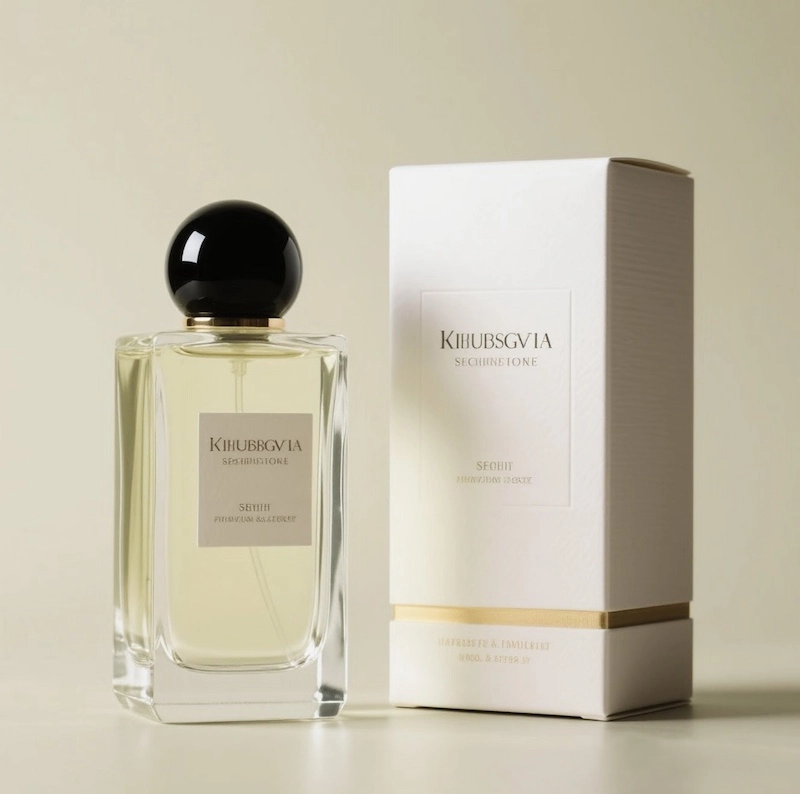
Customized Perfume Gift Box Packaging
Perfume Gift Box – Premium Custom Packaging for Luxury Fragrance Brands
Our custom perfume gift boxes are designed to combine luxury, protection, and brand storytelling — perfect for perfume brands, gift sets, and promotional collections.
Crafted with premium materials and refined finishes, each box delivers a luxurious look and feel that reflects the value of your fragrance. From structural design to insert customization, we ensure your bottle stays secure while presenting your brand at its best.
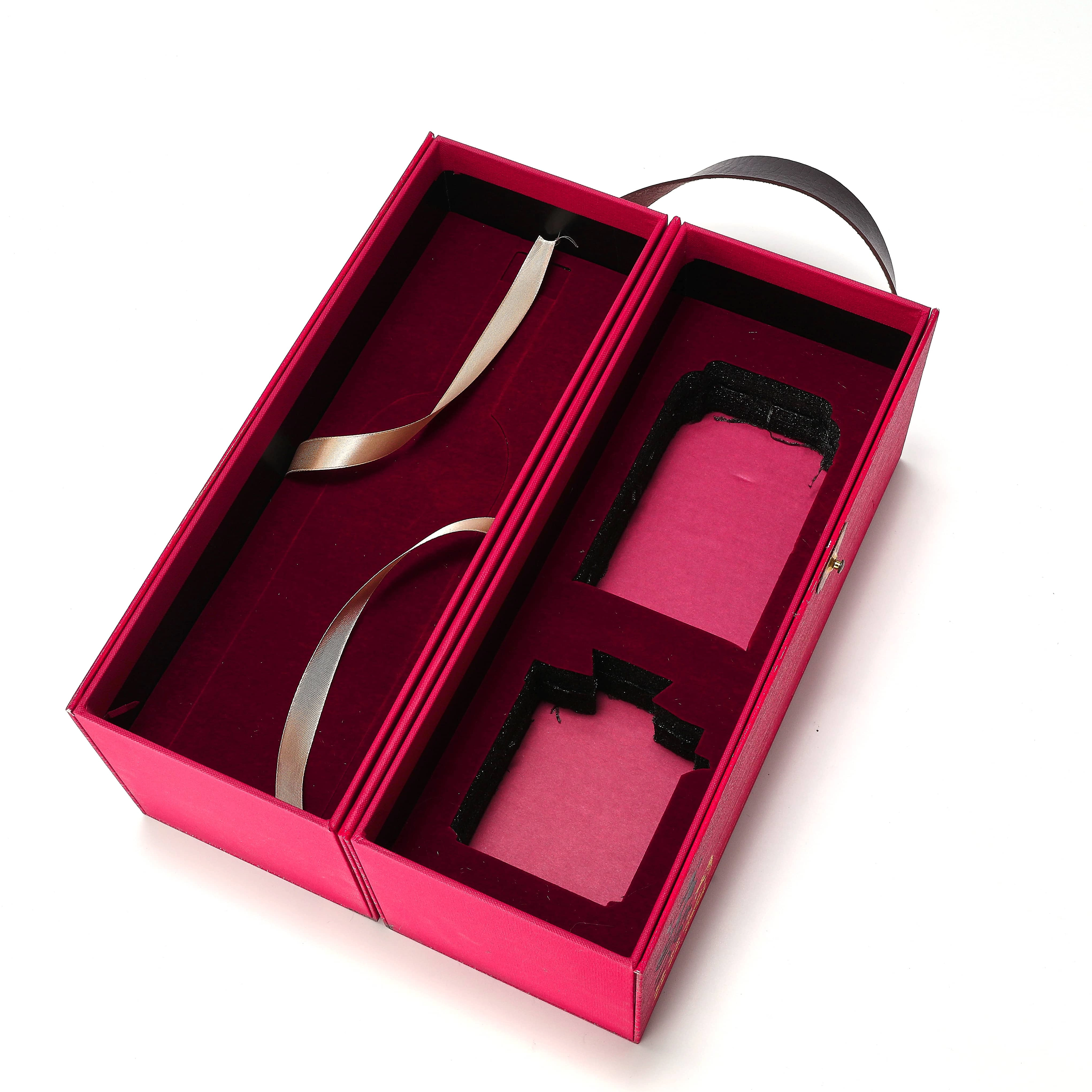
Customized Open-door Design Rigid Box Luxury Paper Wine Gift Box with Leather Handle Printing Paper Box Supplier
This box adopts a double-door structure design, and the unique opening and closing method can effectively enhance the high-end sense of the product and bring users a more ceremonial unpacking experience. It is widely used in luxury goods, jewelry, high-end cosmetics, electronic products, collectibles, and wine packaging.

Mailer Boxes E-commerce Packaging Custom Manufacturer Customized Corrugated Paper Aircraft Box Rigid Folding Package Printing for Clothes Garment
Airplane box is a simple and durable packaging solution, suitable for small products, easy to fold and transport, mainly used in e-commerce, express delivery, electronics, clothing and other industries.
© 2025 WINPACK PRINTING. All rights reserved

Wenhua Printing packaging
winpackprinting
Winpack Printing