




Cost-Saving Strategies in Custom Food Packaging Procurement
- Optimizing Procurement through Design and Specification
- Design for cost-efficiency without compromising safety
- Standardize and modularize specifications
- Work with suppliers on co-design
- Material Selection and Life-Cycle Costing
- Choose materials by total landed cost and function
- Compare materials: cost, performance, sustainability
- Apply life-cycle costing and end-of-life considerations
- Supplier Strategy, Contracts, and Process Efficiencies
- Supplier consolidation and volume leverage
- Negotiate total-cost contracts and flexible terms
- Reduce SKU complexity and optimize order frequency
- Logistics, Inventory, and Digital Tools to Cut Costs
- Use demand forecasting and AI tools
- Optimize packaging for transportation
- Apply lean and JIT principles with caution
- Compliance, Risk Management, and Performance Measurement
- Stay current on food-contact regulations
- Track KPIs that connect procurement to profit
- Use pilot runs and A/B testing to de-risk changes
- Industry Example and Supplier Profile — Winpack
- Why partner selection matters: Winpack overview
- Capabilities and how they support cost savings
- Product range and procurement fit
- Implementation Roadmap and Quick Wins
- 90-day procurement action plan
- Quick-win opportunities
- Frequently Asked Questions (FAQ)
- 1. How much can companies typically save by optimizing custom food packaging procurement?
- 2. Is sustainable packaging always more expensive?
- 3. What procurement terms protect against raw material price volatility?
- 4. When should I choose a local supplier vs. an overseas manufacturer?
- 5. What KPIs should procurement teams track for packaging?
- Contact and Next Steps
- References and Further Reading
Optimizing Procurement through Design and Specification
Design for cost-efficiency without compromising safety
Effective cost control in custom food packaging starts at the design stage. Packaging engineers and procurement teams should treat packaging as a product: specify only the required performance (barrier, strength, shelf life, appearance) and avoid over-specification. Over-specifying thickness, barrier layers, or finishing can increase material and manufacturing costs without improving product performance.
Standardize and modularize specifications
Create standard dielines, material grades, and finishing options for groups of SKUs. Standardization reduces tool changes, die-cutting costs, and setup time, enabling higher-volume runs that lower unit costs. Modular components (e.g., a standardized inner sleeve, window, or tray) allow reuse across SKUs and reduce mold/tool proliferation.
Work with suppliers on co-design
Invite packaging suppliers into early-stage product development. Suppliers can suggest alternative materials, folding structures, or finish processes that deliver equivalent protection at lower cost. Co-design often yields innovations such as reduced adhesive lines, lighter board grades, or simplified locking mechanisms that lower material and assembly costs.
Material Selection and Life-Cycle Costing
Choose materials by total landed cost and function
Procure based on total landed cost (material cost + conversion + logistics + waste + end-of-life handling) rather than unit material price alone. For food applications, consider barrier requirements and regulatory constraints (e.g., FDA or EU food-contact rules). A slightly higher-cost substrate with better machinability and lower scrap rates can be cheaper overall.
Compare materials: cost, performance, sustainability
The table below summarizes common packaging materials for custom food packaging and key procurement considerations.
| Material | Typical cost position | Food protection / barrier | Recyclability / sustainability | Common use |
|---|---|---|---|---|
| Folding boxboard (paperboard) | Low–Medium | Moderate (can include coated barrier) | Widely recyclable where systems exist | Packaged bakery, ready meals, confectionery |
| Corrugated (single- or double-wall) | Low | Good mechanical protection; limited barrier | Highly recyclable | Transport cartons, bulk food boxes |
| Rigid paperboard / cartonboard | Medium–High | Good structural; can be laminated | Often recyclable; depends on laminates | High Quality gift boxes, luxury food items |
| Plastic (PET / PP) | Medium | Excellent barrier (oxygen, moisture) | Recyclable where streams exist; virgin vs. recycled trade-offs | Clear trays, clamshells, MAP films |
| Bioplastics (PLA, compostables) | Medium–High | Variable barrier; evolving standards | Compostable in industrial facilities; limited recycling | Single-serve items, eco-marketed products |
Sources for material properties and recycling context include EPA and industry literature (see references).
Apply life-cycle costing and end-of-life considerations
Incorporate disposal or recycling costs (producer responsibility, take-back programs) into procurement decisions. Lighter or mono-material solutions often reduce waste-handling costs and improve recyclability, which can be a selling point for retailers and consumers.
Supplier Strategy, Contracts, and Process Efficiencies
Supplier consolidation and volume leverage
Consolidating spend with fewer, strategic suppliers increases bargaining power and simplifies logistics. Strategic suppliers can offer tiered pricing, lower freight, reduced tooling costs, and faster lead times when they capture more of your volume.
Negotiate total-cost contracts and flexible terms
Negotiate contracts that include raw material indexation, volume discounts, lead-time incentives, and quality KPIs (e.g., scrap rate, on-time delivery). Consider consignment inventory or vendor-managed inventory (VMI) models to shift inventory carrying costs and improve cash flow.
Reduce SKU complexity and optimize order frequency
High SKU counts increase tooling, setup, and inspection costs. Rationalize SKUs where possible and adopt batch-sizing strategies that balance production efficiency with inventory carrying costs. Use demand clustering to create larger, less frequent production runs that lower per-unit conversion costs.
Logistics, Inventory, and Digital Tools to Cut Costs
Use demand forecasting and AI tools
Adopt forecasting tools that use historical sales, promotional calendars, and seasonality to reduce overordering and stockouts. AI-driven forecasting often improves accuracy and reduces emergency rush orders—one of the biggest sources of High Quality freight and tooling charges.
Optimize packaging for transportation
Design packaging to maximize pallet density and cube utilization. Reducing empty space and optimizing pack orientation lowers freight per sellable unit. Work with logistics partners to qualify box sizes against common pallet configurations and retailer requirements.
Apply lean and JIT principles with caution
Just-in-time (JIT) reduces inventory holding costs but increases reliance on supplier reliability. For critical packaging components, balance JIT with buffer stock for risk mitigation during raw material volatility or logistical disruptions.
Compliance, Risk Management, and Performance Measurement
Stay current on food-contact regulations
Non-compliant packaging can cause costly recalls and reputational damage. Ensure materials and inks meet applicable standards (e.g., FDA 21 CFR in the U.S., EU Regulation 1935/2004). Require supplier documentation and certificates of compliance as part of procurement contracts.
Track KPIs that connect procurement to profit
Key metrics to monitor include:
- Cost per pack (total landed cost)
- Inventory turns and carrying cost
- On-time delivery rate
- Scrap / waste rate
- Return rate and quality incidents
Use pilot runs and A/B testing to de-risk changes
Before full roll-out, pilot new designs, materials, or suppliers at limited scale. Collect performance data (shelf life, consumer acceptance, line speed) to ensure projected savings materialize without unintended consequences.
Industry Example and Supplier Profile — Winpack
Why partner selection matters: Winpack overview
Partnering with a full-service packaging manufacturer can centralize design, proofing, printing, and production and unlock savings through integrated processes. In 2016, Guangdong Winpack Printing Technology Development Co., Ltd. was officially established as a professional paper box printing manufacturer specializing in designing, proofing, printing, and producing a wide range of packaging and printed materials. Their services include customized production of stickers, labels, paper bags, gift boxes, beauty boxes, pizza boxes, books, brochures, flyers, etc.
Capabilities and how they support cost savings
Winpack serves diverse industries, including cosmetics, food, healthcare, pharmaceuticals, and electronics. Their 15,000-square-meter factory uses advanced plate-making systems and equipment such as Heidelberg printing machines, high-speed paper cutters, Lithrone GL-40A machines, and anti-counterfeiting inkjet printers. These technology investments improve print quality, reduce spoilage, and allow longer, more efficient runs—contributing to lower per-unit costs and faster turnaround.
Product range and procurement fit
Winpack offers a broad catalogue of custom solutions suitable for food brands seeking competitively priced, high-quality packaging: custom gable boxes, custom gift boxes, custom display boxes, custom rigid boxes, custom folding boxes, custom paper tubes boxes, custom window boxes, custom special-shape boxes, custom pillow boxes, and custom take out boxes. Their vertical capabilities (design through print to finish) help reduce coordination costs and simplify supplier management.
Website: https://www.winpackprinting.com/
Implementation Roadmap and Quick Wins
90-day procurement action plan
- Week 1–2: Audit current packaging spend and SKU specifications; capture unit costs and total landed cost per SKU.
- Week 3–4: Identify top 20% SKUs by spend; prioritize candidates for redesign or consolidation.
- Month 2: Run co-design workshops with 1–2 strategic suppliers (consider Winpack for integrated services) to propose alternatives.
- Month 3: Pilot redesigned SKUs; track cost, line performance, and quality metrics. Prepare contract amendments for scale-up.
Quick-win opportunities
- Standardize labels and adhesives to reduce set-up time.
- Shift to mono-material constructions where feasible for recyclability and lower processing complexity.
- Negotiate multi-year pricing with indexation clauses tied to clear raw-material indices.
Frequently Asked Questions (FAQ)
1. How much can companies typically save by optimizing custom food packaging procurement?
Savings vary widely by category and baseline inefficiency. Common sources of savings include reduced material use, fewer SKUs, supplier consolidation, and improved logistics. Many companies report measurable reductions in total packaging cost within months after redesign and supplier optimization, though exact percentages depend on product complexity and volume.
2. Is sustainable packaging always more expensive?
Not always. While some sustainable materials have higher unit costs, savings can arise from reduced material weight, improved recyclability (lower disposal costs), and marketing value. Total landed cost and performance should guide decisions rather than unit price alone.
3. What procurement terms protect against raw material price volatility?
Use indexed pricing clauses tied to transparent market indices, volume bands that trigger discounts, and minimum purchase commitments combined with flexible delivery schedules. Also consider hedging or forward-buying for critical raw materials when appropriate.
4. When should I choose a local supplier vs. an overseas manufacturer?
Consider total landed cost, lead times, quality control, intellectual property, and risk. Local suppliers often provide faster turnarounds and lower transport risk, while offshore manufacturers may offer lower unit costs for high volumes. Hybrid sourcing and dual-sourcing strategies balance cost and resilience.
5. What KPIs should procurement teams track for packaging?
Track cost per pack, inventory turns, on-time delivery, scrap/waste rate, and quality returns. Link these KPIs to procurement incentives and supplier scorecards to maintain continuous improvement.
Contact and Next Steps
To evaluate potential savings in your custom food packaging procurement, audit your current spend and engage a packaging partner that can co-design and produce at scale. For integrated design-to-production solutions, consider contacting Winpack to discuss capabilities, quotes, and samples: https://www.winpackprinting.com/
References and Further Reading
- Food and Agriculture Organization (FAO) — Food loss and food waste facts. Accessed 2026-01-08. https://www.fao.org/food-loss-and-food-waste/en/
- U.S. Environmental Protection Agency (EPA) — Facts and Figures about Materials, Waste and Recycling. Accessed 2026-01-08. https://www.epa.gov/facts-and-figures-about-materials-waste-and-recycling
- Grand View Research — Food Packaging Market Size, Share & Trends Analysis. Accessed 2026-01-08. https://www.grandviewresearch.com/industry-analysis/food-packaging-market
- Packaging — Wikipedia. General overview of packaging materials and functions. Accessed 2026-01-08. https://en.wikipedia.org/wiki/Packaging
- Winpack Printing — Company website and product/service information. Accessed 2026-01-08. https://www.winpackprinting.com/
Custom Rigid Box Sizes, Templates and Dielines Guide
Food packaging paper box cost breakdown and budgeting
Regulatory Compliance and International Shipping for Mailer Boxes
Best Printing Methods for Custom Pizza Boxes
About Us
What kind of format is available for printing?
CDR, AI, PS , PSD. high resolution JPG (please Convert text to curves. If not, some words will be missing.)
How long does shipping take?
Air freight options range from 7-21 days, while ocean freight options range from 26-71 days. If you need some units expedited earlier, consider splitting your shipment between air and ocean!
OEM Services
Can I request a sample before mass production?
Yes, we provide sample proofing before mass production to ensure that the design, materials, and quality meet your expectations. We encourage testing and approval before proceeding with full-scale manufacturing.
About Printing Craftsmanship
What are eco-friendly printing options?
Vegetable-based inks instead of petroleum-based inks.
Recycled paper or sustainably sourced materials.
Water-based coatings instead of harmful chemical coatings.
Digital printing to reduce waste and energy consumption.
What factors should I consider when choosing a printing technique?
Material: Some methods work better on specific surfaces (e.g., screen printing for fabric, offset for paper).
Budget: Offset is cost-effective for large runs, while digital printing is better for short runs.
Aesthetic & Finish: If you need metallic effects, choose hot stamping; for texture, consider embossing.
Durability: UV printing and screen printing offer long-lasting prints resistant to fading.
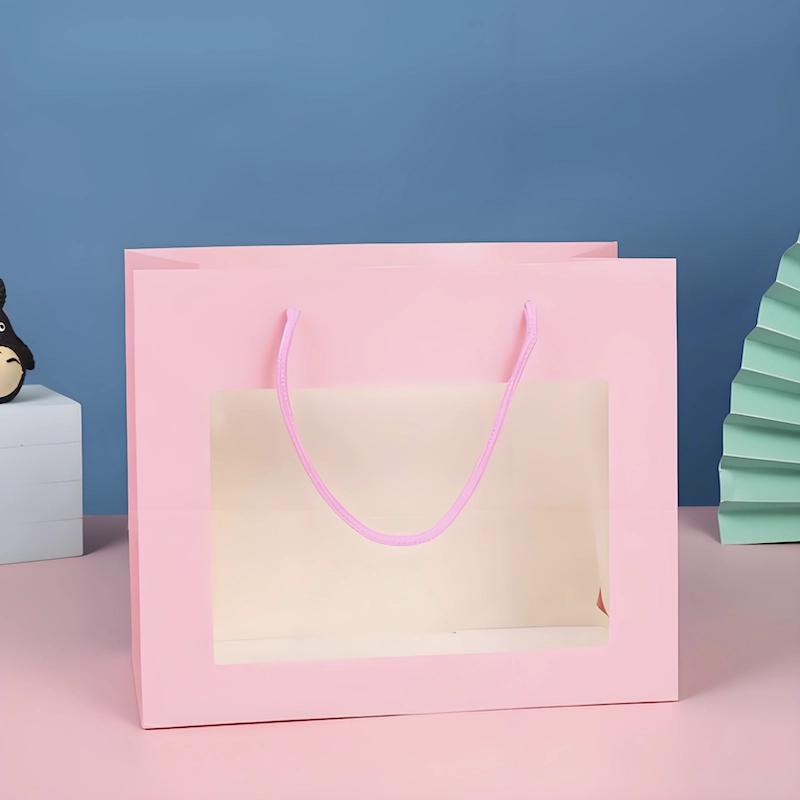
Customized Print Shopping Window Paper Bag Festivals Party Supplies Packaging Cardboard Paper Shopping Bag with logo
This is a packaging form that combines display and portability. Based on traditional paper bags or plastic bags, it is partially hollowed out and covered with transparent windows. Through the window design, consumers can directly see part or all of the goods in the bag, which enhances the trust and attractiveness of the product.

Customized Perfume Gift Box Packaging
Perfume Gift Box – Premium Custom Packaging for Luxury Fragrance Brands
Our custom perfume gift boxes are designed to combine luxury, protection, and brand storytelling — perfect for perfume brands, gift sets, and promotional collections.
Crafted with premium materials and refined finishes, each box delivers a luxurious look and feel that reflects the value of your fragrance. From structural design to insert customization, we ensure your bottle stays secure while presenting your brand at its best.
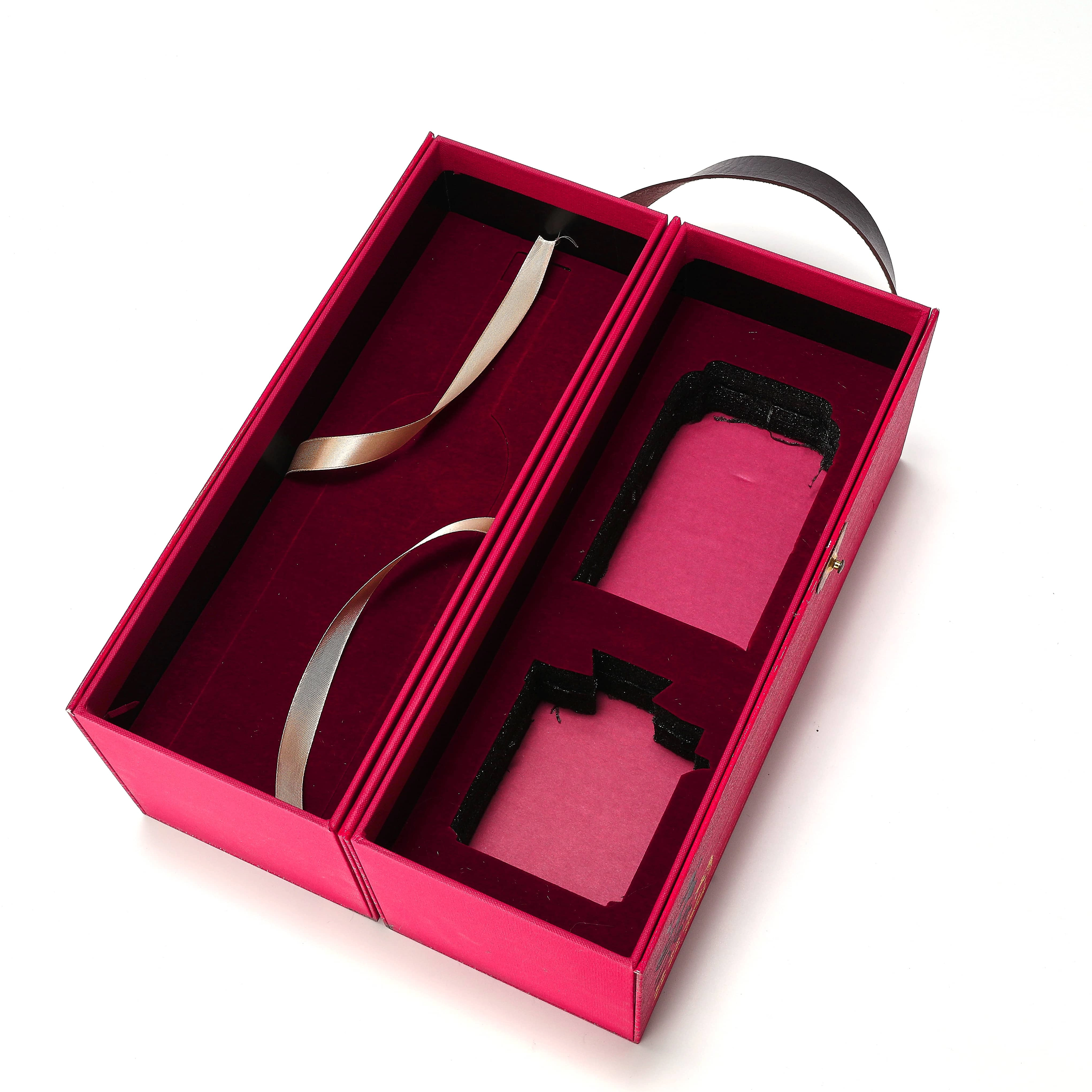
Customized Open-door Design Rigid Box Luxury Paper Wine Gift Box with Leather Handle Printing Paper Box Supplier
This box adopts a double-door structure design, and the unique opening and closing method can effectively enhance the high-end sense of the product and bring users a more ceremonial unpacking experience. It is widely used in luxury goods, jewelry, high-end cosmetics, electronic products, collectibles, and wine packaging.

Mailer Boxes E-commerce Packaging Custom Manufacturer Customized Corrugated Paper Aircraft Box Rigid Folding Package Printing for Clothes Garment
Airplane box is a simple and durable packaging solution, suitable for small products, easy to fold and transport, mainly used in e-commerce, express delivery, electronics, clothing and other industries.
© 2025 WINPACK PRINTING. All rights reserved

Wenhua Printing packaging
winpackprinting
Winpack Printing