




Custom Packaging Design Tips to Boost Food Sales
- Understanding Buyer Needs and Retail Context
- Identify the shopper moment
- Match packaging to retail and e‑commerce channels
- Leverage sensory and informational cues
- Materials, Barriers and Food Safety
- Select materials based on barrier requirements
- Comply with food safety standards and certifications
- Balance sustainability and functional performance
- Design and Printing Techniques that Convert
- Optimize graphics for visibility and clarity
- Enhance perceived value with finishes and structural details
- Personalization and limited editions
- Manufacturing & Cost Optimization
- Design for manufacturability
- Understand lead times and MOQ trade-offs
- Compare material options (quick reference)
- Testing, Proofing and Launch
- Prototype and shelf testing
- Color management and proofing
- Scale-up and QA
- Why your factory partner matters (Winpack case)
- FAQs
- 1. How do I choose the right material for my food product?
- 2. What certifications should I check for food-contact packaging?
- 3. Can custom packaging be sustainable and cost-effective?
- 4. How long does a typical custom packaging run take?
- 5. What are easy improvements that increase on-shelf conversion?
- 6. How should I test packaging before full production?
As a packaging consultant and content creator working with food brands and manufacturers in Guangdong and serving global clients, I focus on packaging that not only looks great but also protects food, complies with regulations, and converts shoppers into buyers. In this article I explain actionable design choices for custom food packaging that boost sales—grounded in production realities and supported by standards and industry data.
Understanding Buyer Needs and Retail Context
Identify the shopper moment
Before specifying materials or dielines I map the shopper journey: Is the purchase impulse-driven at checkout, considered on a refrigerated shelf, or part of a subscription box experience? Packaging that targets the correct shopper moment performs better. For example, impulse SKUs benefit from high-contrast colors and small-format durability, while High Quality meal kits need tactile finishes and High Quality unboxing cues.
Match packaging to retail and e‑commerce channels
Different channels impose different constraints. Grocery chains often require standardized case dimensions and barcode placement; e-commerce requires robust transit packaging and void-fill strategies. I routinely consult the retailer's packaging specifications and align custom box dimensions to optimize shelf facings and pallet utilization, reducing logistics cost and improving on-shelf presence.
Leverage sensory and informational cues
Shoppers use visual cues (color, imagery), tactile cues (soft-touch varnish, embossing), and informational cues (clear ingredients, certifications) to decide. Clear display windows or transparent film can increase trust by showing product quality, but always balance visibility with barrier needs to maintain freshness.
Materials, Barriers and Food Safety
Select materials based on barrier requirements
Choosing the right substrate is critical. Paperboard is versatile for dry goods and ready meals; corrugated is needed for heavier or multipack shipments; laminates and foil provide oxygen and moisture barriers for perishable items. For technical guidance see the FDA’s overview on packaging and food-contact materials: FDA Food Packaging Guidance.
Comply with food safety standards and certifications
Food-contact packaging must meet regulatory and safety standards. I recommend aligning with ISO 22000 for food safety management (ISO 22000) and checking material-specific requirements from local regulators. For general food-safety context visit WHO’s food safety pages: WHO Food Safety.
Balance sustainability and functional performance
Sustainable claims are important to consumers, but they must not compromise shelf life. Compostable materials (e.g., PLA) can be appropriate for dry snacks, but they may lack the moisture barrier of metallized films—check ASTM D6400 for compostability standards: ASTM D6400. I always perform accelerated shelf-life testing when switching to eco alternatives.
Design and Printing Techniques that Convert
Optimize graphics for visibility and clarity
Packaging must communicate quickly. Use hierarchy: brand name, product type, key benefit, and call-to-action. High-contrast palettes increase visibility from a distance. For packaged foods, legibility of ingredient lists and nutritional facts is both a conversion and compliance factor—ensure fonts and contrast meet accessibility expectations.
Enhance perceived value with finishes and structural details
Tactile finishes (soft-touch, spot UV) and structural features (handles, easy-open tear strips, resealable zippers) raise perceived value. I often recommend spot UV on imagery to make natural textures pop against matte backgrounds. These techniques are feasible at scale using modern presses such as Heidelberg—machines that Winpack uses to ensure consistent high-quality print.
Personalization and limited editions
Limited-run prints, seasonal themes, or variable-data printing (e.g., batch codes, personalization) can drive repeat purchases. Variable-data is especially useful in promotions and loyalty programs. Make sure to plan for proofing and color consistency across runs to protect brand equity.
Manufacturing & Cost Optimization
Design for manufacturability
Practical constraints—tooling costs, minimum order quantities (MOQs), and turnaround times—must influence design. Simple dielines that minimize glue areas and material waste often reduce cost. I regularly iterate with the factory’s production engineers during the proof stage to avoid surprises.
Understand lead times and MOQ trade-offs
Custom printed food packaging typically involves plate-making, die-cutting, and finishing. Lead time decreases as MOQs increase. If you need faster turnarounds, consider flexible packaging or digital printing for smaller batches. For example, digital short runs can be cost-effective for testing new SKUs before committing to large litho runs.
Compare material options (quick reference)
| Material | Barrier | Cost | Recyclability / Notes | Best for |
|---|---|---|---|---|
| Folding paperboard | Low–moderate (can be laminated) | Low–Moderate | Widely recyclable if uncoated | Dry snacks, cereals, small meal kits |
| Corrugated | Moderate (good cushioning) | Moderate | Highly recyclable | Bulk shipments, multipacks |
| Metallized film / foil lamination | High (moisture/oxygen) | High | Harder to recycle | Perishables, snacks needing long shelf life |
| PLA / compostable films | Low–Moderate | Moderate–High | Industrial composting required (check certifications) | Dry snacks, marketing-focused eco SKUs |
| Rigid paperboard / rigid boxes | Moderate (protective) | High | Often recyclable | High Quality confectionery, gift sets |
Data sources: EPA materials and recycling facts EPA, ASTM standards for compostability ASTM D6400.
Testing, Proofing and Launch
Prototype and shelf testing
I always run prototypes through shelf mockups and transit testing. Shelf impact testing (photo-based or in-store audits) helps validate visibility, while ISTA transit tests verify that packaging survives logistics. Objective A/B tests in stores or online imagery often reveal which designs convert.
Color management and proofing
Color shifts between proof and production are common. Use standardized color profiles (e.g., FOGRA/ISO) and request press proofs from the manufacturer. Winpack’s use of advanced prepress systems and Heidelberg presses helps maintain color fidelity across runs.
Scale-up and QA
During scale-up implement inline checks—color registration, varnish consistency, and seal integrity. I recommend a quality checklist aligned with your product’s shelf-life requirements and regulatory obligations. Third-party lab testing may be necessary for barrier properties.
Why your factory partner matters (Winpack case)
Choosing a packaging partner with integrated design, proofing, printing, and production capabilities reduces risk. In 2016, Guangdong Winpack Printing Technology Development Co., Ltd. was officially established as a professional paper box printing manufacturer specializing in designing, proofing, printing, and producing a wide range of packaging and printed materials. Winpack provides customized production of stickers, labels, paper bags, gift boxes, beauty boxes, pizza boxes, books, brochures, flyers, and more.
Winpack serves diverse industries including cosmetics, food, healthcare, pharmaceuticals, and electronics. Their 15,000-square-meter factory is equipped with state-of-the-art technology. They utilize an advanced screen plate-making system and top-tier machinery such as the Heidelberg printing machine, high-speed paper cutter, Lithrone GL-40A machine, and anti-counterfeiting inkjet printer to ensure superior quality and efficiency. These capabilities translate directly into consistent print quality, quicker turnarounds, and reliable color matching—essentials for food brands.
My experience working with Winpack shows several competitive advantages: integrated prepress and plate-making reduces proofing cycles; a large production footprint enables scalable MOQs; and modern machinery supports both high-volume litho and complex finishing such as embossing and anti-counterfeiting ink. Their product range includes custom gable boxes, custom gift boxes, custom display boxes, custom rigid boxes, custom folding boxes, custom paper tubes boxes, custom window boxes, custom special-shape boxes, custom pillow boxes, and custom take out boxes—covering most needs for food brands seeking differentiation.
For inquiries or to request samples and quotes, visit Winpack Printing or email [email protected].
FAQs
1. How do I choose the right material for my food product?
Start by defining the shelf life and the product’s sensitivity to moisture, oxygen, and light. Dry goods can use uncoated paperboard; moisture-sensitive items require barriers like metallized films or foil laminates. Balance barrier needs with recyclability and test shelf life under expected storage conditions.
2. What certifications should I check for food-contact packaging?
Check local food-contact regulations and material-specific standards. Useful references include the FDA guidance on food-contact substances (FDA) and ISO 22000 for food safety management (ISO).
3. Can custom packaging be sustainable and cost-effective?
Yes—if you evaluate total cost of ownership. Sometimes a slightly higher material cost results in lower product loss and better margins. Recycling-friendly designs (single-material mono-packaging) often simplify end-of-life and can be cost-effective at scale.
4. How long does a typical custom packaging run take?
Lead times vary. For litho-printed folding cartons, plan 4–8 weeks including plate-making and finishing. Digital short runs can be delivered faster (often 1–2 weeks) but at a higher per-unit cost. Discuss MOQs and rush options with your manufacturer early.
5. What are easy improvements that increase on-shelf conversion?
Improve contrast and hierarchy of information, add a clear product window if freshness is visible, introduce a tactile finish, and ensure nutritional and allergen information is instantly readable. Running in-store A/B tests or online imagery tests will verify impact.
6. How should I test packaging before full production?
Produce prototypes and conduct shelf-mockups, transit (ISTA) testing, and accelerated shelf-life tests. Validate color with press proofs and check seals and closures under temperature and humidity ranges expected in distribution.
If you’d like personalized recommendations, packaging samples, or a production quote for custom food packaging, contact me or Winpack directly. Visit https://www.winpackprinting.com/ or email [email protected] to view product options and request a sample pack.
Cost Comparison: Digital vs Traditional Flexible Packaging
Rigid Boxes vs Folding Cartons: Which to Choose
Custom paper shopping bags Manufacturers and Suppliers in us
How to Choose the paper jewelry gift boxes manufacturer and supplier ?
About Printing Craftsmanship
What is the best printing technique for business cards?
It depends on the desired effect:
Hot stamping for a premium metallic finish.
Embossing for a raised, tactile design.
Spot UV for glossy highlights on specific areas.
Digital printing for quick, affordable, and full-color printing.
What is the difference between offset and digital printing?
Offset Printing: Best for large-volume production, offering high-quality prints at a lower cost per unit.
Digital Printing: Suitable for short runs, allowing quick setup, customization, and fast printing.
OEM Services
How long does the production process take?
Production time depends on order quantity, complexity, and customization. Generally, the process takes 7-20 days after design confirmation and sample approval. We strive for fast turnaround times while maintaining high-quality standards.
Special Shape Boxes
What are the wholesale pricing options for bulk orders?
We offer competitive wholesale prices for bulk orders. Please contact our sales team for more details
Can I order a sample of my packaging box?
Yes, we strongly recommend that you do so, we provide a variety of sample types to meet different usage situations and help you guarantee the best results!
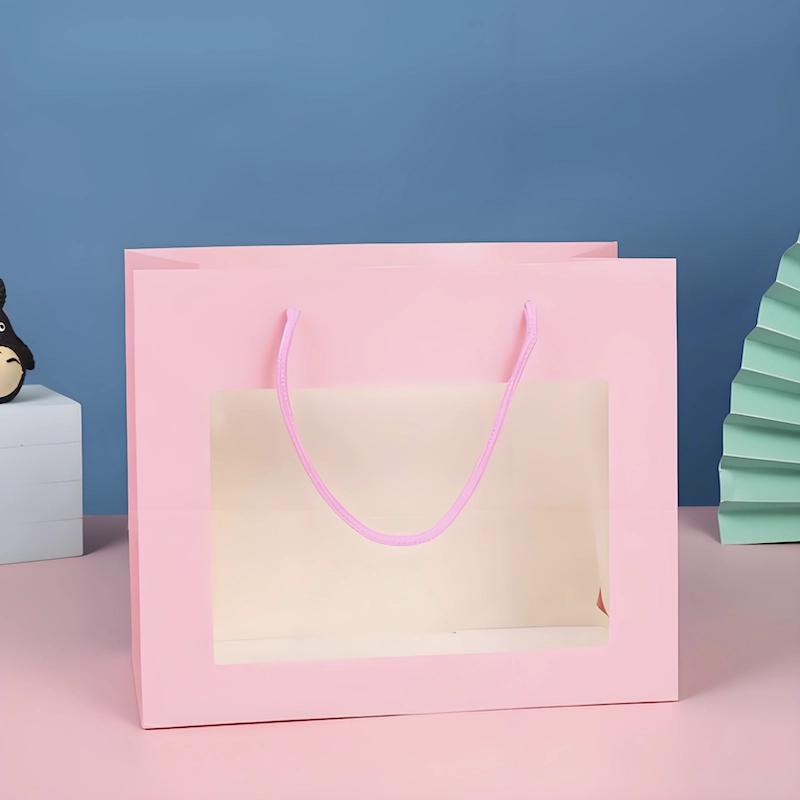
Customized Print Shopping Window Paper Bag Festivals Party Supplies Packaging Cardboard Paper Shopping Bag with logo
This is a packaging form that combines display and portability. Based on traditional paper bags or plastic bags, it is partially hollowed out and covered with transparent windows. Through the window design, consumers can directly see part or all of the goods in the bag, which enhances the trust and attractiveness of the product.
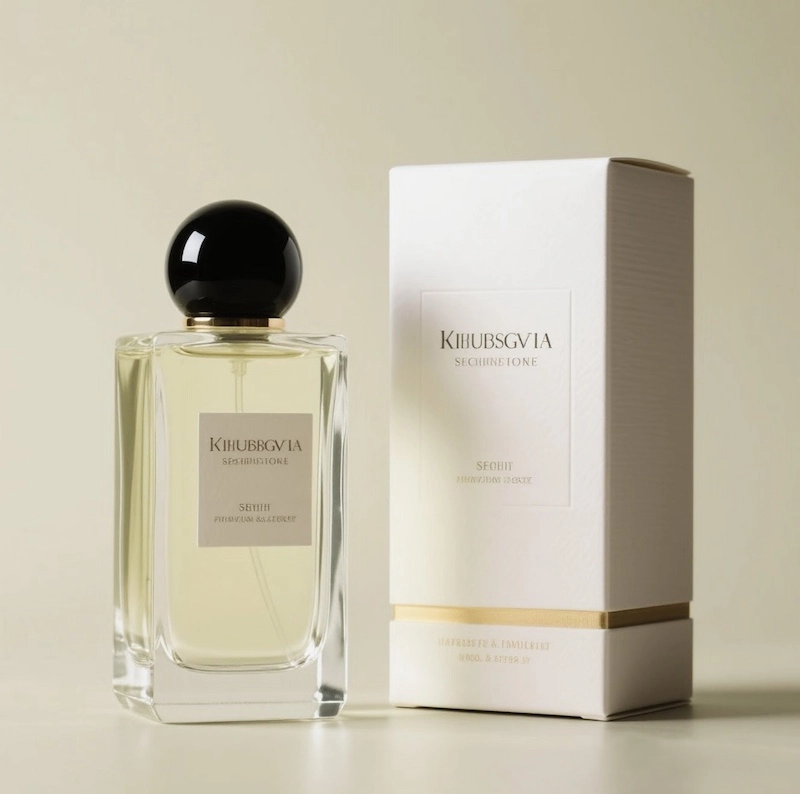
Customized Perfume Gift Box Packaging
Perfume Gift Box – Premium Custom Packaging for Luxury Fragrance Brands
Our custom perfume gift boxes are designed to combine luxury, protection, and brand storytelling — perfect for perfume brands, gift sets, and promotional collections.
Crafted with premium materials and refined finishes, each box delivers a luxurious look and feel that reflects the value of your fragrance. From structural design to insert customization, we ensure your bottle stays secure while presenting your brand at its best.
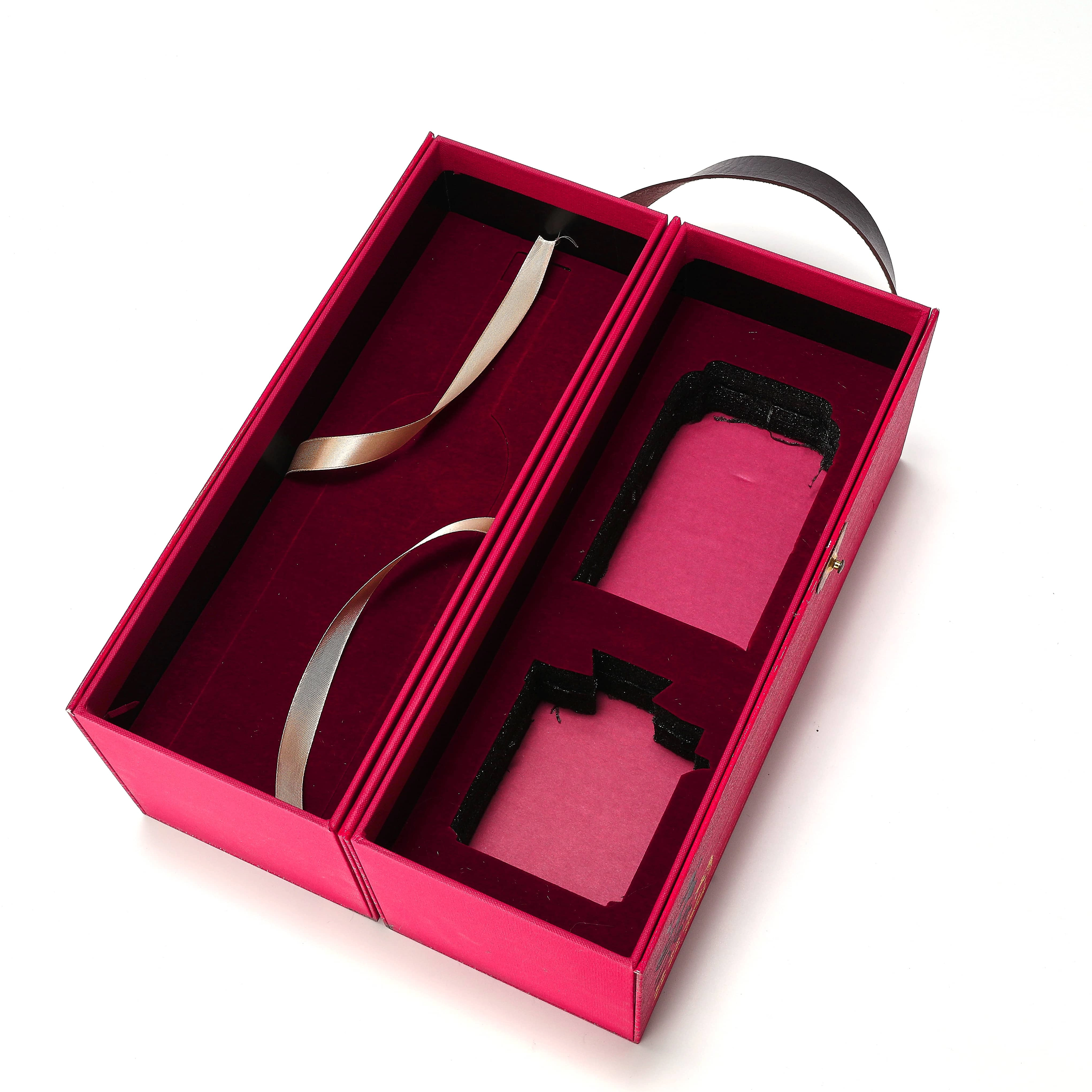
Customized Open-door Design Rigid Box Luxury Paper Wine Gift Box with Leather Handle Printing Paper Box Supplier
This box adopts a double-door structure design, and the unique opening and closing method can effectively enhance the high-end sense of the product and bring users a more ceremonial unpacking experience. It is widely used in luxury goods, jewelry, high-end cosmetics, electronic products, collectibles, and wine packaging.

Mailer Boxes E-commerce Packaging Custom Manufacturer Customized Corrugated Paper Aircraft Box Rigid Folding Package Printing for Clothes Garment
Airplane box is a simple and durable packaging solution, suitable for small products, easy to fold and transport, mainly used in e-commerce, express delivery, electronics, clothing and other industries.
© 2025 WINPACK PRINTING. All rights reserved

Wenhua Printing packaging
winpackprinting
Winpack Printing