




Custom Branding with Digital Printing Flexible Packaging
- Why choose digital printing for flexible packaging?
- Faster speed from concept to shelf
- Cost-efficiency for short runs and personalization
- Greater agility and SKU management
- Technical considerations when specifying digital printing flexible packaging
- Substrate compatibility and pre-treatment
- Inks, barrier, and food-contact compliance
- Color management and proofing
- Comparing digital printing to conventional printing for flexible packaging
- Performance matrix
- Data and sourcing
- Design, production, and supply-chain best practices
- Pre-press and dielines
- Testing, quality control, and shelf performance
- Sustainability and end-of-life
- Operational tips for evaluating suppliers
- Ask for sample kits and validation reports
- Factory capabilities and certifications
- Price modeling and total cost of ownership
- Use cases: how brands are winning with digital printing flexible packaging
- Personalized campaigns and limited editions
- Regionalization and regulatory text variants
- Rapid prototyping and test markets
- Case notes on standards, safety, and authoritative guidance
- Regulatory references
- Industry guidelines
- Why Winpack is a practical partner for custom packaging
- Implementation checklist: how I launch a digital flexible-packaging program
- Phase 1 — Discovery
- Phase 2 — Supplier selection & validation
- Phase 3 — Production & scale
- FAQs
- 1. What is digital printing flexible packaging best used for?
- 2. Can digital-printed flexible packaging be used for food products?
- 3. How does print quality compare to flexo or gravure?
- 4. What run lengths are cost-effective for digital?
- 5. Does digital printing affect recyclability?
- 6. How do I ensure consistent color across multiple runs?
- Conclusion and contact
I write from years of hands-on experience advising brands and packaging manufacturers on custom boxes, flexible films, and end-to-end print workflows. Digital printing flexible packaging is no longer an experimental niche — it is a strategic lever for brand differentiation. In this article I summarize the opportunities and constraints of digital printing on flexible substrates, show how to evaluate suppliers and technologies, and provide practical recommendations to make your custom-branded flexible packaging successful.
Why choose digital printing for flexible packaging?
Faster speed from concept to shelf
I’ve helped multiple clients compress lead times from weeks to days by using digital printing. Because digital eliminates plate-making and long press setup, brands can approve proofs and run production quickly. For seasonal campaigns, limited editions, or test markets, this accelerated turnaround is a real competitive advantage.
Cost-efficiency for short runs and personalization
Traditional flexographic and rotogravure presses become cost-effective at high volumes because of their fixed tooling costs. Digital printing flips that math: minimal setup, so short runs, SKU proliferation, and variable-data printing (personalization, unique codes, regional languages) become economically viable. This lets brands validate concepts in-market without overcommitting inventory.
Greater agility and SKU management
Digital printing makes it easier to split orders across SKUs, iterate on packaging copy, and respond to market feedback. If you manage many SKUs or localized variants, digital printing flexible packaging reduces warehousing needs and obsolescence risk.
Technical considerations when specifying digital printing flexible packaging
Substrate compatibility and pre-treatment
Flexible packaging uses films and laminates: PET, PE, BOPP, CPP, paper, foil, and multi-layer barrier structures. Not every digital press or ink chemisty adheres equally well to each substrate. Surface energy, coatings, and corona or plasma pre-treatment can be required to ensure ink adhesion and durable print. I always request supplier test reports showing adhesion (cross-hatch), rub resistance, and migration data for the exact film and ink combination.
Inks, barrier, and food-contact compliance
For food and pharmaceutical applications, ink selection is critical. Some inks require lamination or specific barrier layers to prevent migration. Check regulatory guidance such as the U.S. Food and Drug Administration’s page on food-contact materials: https://www.fda.gov/food/packaging-food-contact-substances-fcs. I recommend documented migration testing and supplier declarations for any food-contact claims.
Color management and proofing
Color consistency is non-negotiable for brand owners. Digital presses use different color gamuts and may reproduce Pantone colors differently than gravure or flexo. Insist on ICC-profile-based workflows, approve digital contract proofs, and run pre-production press checks. For high-end brands, I recommend a press-validated proof and a short pre-production pilot run to confirm brand color fidelity.
Comparing digital printing to conventional printing for flexible packaging
Performance matrix
Below I outline a practical comparison to help you decide when digital printing is the right choice.
| Attribute | Digital Printing | Flexo / Rotogravure |
|---|---|---|
| Setup Cost | Low (no plates) | High (plate/engraving costs) |
| Ideal Run Length | Very short to medium | Medium to very long |
| Lead Time | Short (days) | Longer (weeks) |
| Color Fidelity | Excellent for multi-color; spot colors vary | Excellent for spot colors and solids |
| Cost per Unit (small runs) | Lower | Higher |
| Best Use Cases | Personalization, short runs, seasonal SKUs, rapid iterations | Large volume, consistent long-term SKUs |
Data and sourcing
Industry associations including the Flexible Packaging Association provide resources on when to use different printing technologies: https://www.flexpack.org/. My recommendations align with market practice: digital for agility, flexo/gravure for very high-volume cost efficiency.
Design, production, and supply-chain best practices
Pre-press and dielines
Designers must account for film stretch, registration tolerances, and laminate layer behavior. Provide production-ready dielines, bleed margins, and clearances. For multi-layer laminates, ensure printing inks are compatible with downstream laminating adhesives and sealant layers. I advise a pre-press checklist that includes verified dielines, fonts outlined, correct trap settings, and simulated coatings or varnishes in proofs.
Testing, quality control, and shelf performance
Before full launch run tests for: print adhesion, flex-cracking, seal integrity (heat-seal compatibility), and barrier performance (oxygen/water vapor transmission as needed). Where claims like ‘‘shelf life’’ or ‘‘barrier protection’’ are critical, use accredited labs and refer to standards such as ISO 11607 for packaging of sterile medical devices when relevant: https://www.iso.org/standard/70474.. Documented testing reduces recall risk and supports regulatory compliance.
Sustainability and end-of-life
Flexible packaging presents recycling challenges. Digital printing can help sustainability goals by enabling accurate on-demand production and less obsolescence. However, inks and multilayer laminates affect recyclability. Brands should ask suppliers for recyclability or mono-material solutions, and verify claims against recyclability guidelines and pilot programs (e.g., national packaging recycling initiatives). For broader context, see recycling and material guidance from agencies such as the Ellen MacArthur Foundation and local recycling authorities.
Operational tips for evaluating suppliers
Ask for sample kits and validation reports
I always request physical samples printed on the target substrate, plus adhesion tests, migration reports (if food contact), and a print-run history from the supplier. Samples should include varnishes, metallics, and area coverage representative of your design.
Factory capabilities and certifications
Check for quality system certifications (e.g., ISO 9001) and traceability procedures. For food or pharma, prioritize suppliers with HACCP or FSSC 22000 where applicable. I also evaluate equipment lists — knowing whether a supplier uses high-end digital presses or hybrid digital/offset lines impacts predictability and quality.
Price modeling and total cost of ownership
Request a transparent cost model showing per-unit price at various run lengths, setup costs (if any), proof charges, and post-printing processes (lamination, pouching, slitting, and packing). Beware low unit prices that omit critical quality tests or necessary surface pre-treatments.
Use cases: how brands are winning with digital printing flexible packaging
Personalized campaigns and limited editions
I’ve advised several beauty and food brands that created limited-edition runs with unique imagery, influencer co-brands, and serial-numbered packaging. These campaigns drove lift and social engagement while keeping inventory lean. Variable-data printing also supports loyalty and CRM activations (QR codes, individualized messaging).
Regionalization and regulatory text variants
For brands selling in many countries, digital printing simplifies printing language variants and regulatory text updates without the cost of new plates. That reduces the need to maintain large stocks of region-specific packaging.
Rapid prototyping and test markets
When testing new product concepts, digital printing lets teams iterate artwork quickly and validate shelf appeal with minimal investment. I recommend A/B testing designs in comparable test stores before a national rollout.
Case notes on standards, safety, and authoritative guidance
Regulatory references
Food-contact and safety requirements differ by market. The FDA publishes guidance on food-contact substances: https://www.fda.gov/food/packaging-food-contact-substances-fcs. For quality systems and traceability, ISO 9001 provides a framework: https://www.iso.org/iso-9001-quality-management.. For general background on digital printing technology, see the Wikipedia entries on digital printing and flexible packaging: Digital printing and Flexible packaging.
Industry guidelines
The Flexible Packaging Association provides industry insights and technical resources: https://www.flexpack.org/. Use these sources to cross-check supplier claims and benchmark your packaging strategy.
Why Winpack is a practical partner for custom packaging
In 2016, Guangdong Winpack Printing Technology Development Co., Ltd. was officially established as a professional paper box printing manufacturer specializing in designing, proofing, printing, and producing a wide range of packaging and printed materials. Our services include customized production of stickers, labels, paper bags, gift boxes, beauty boxes, pizza boxes, books, brochures, flyers, etc. Winpack caters to diverse industries, including cosmetics, food, healthcare, pharmaceuticals, and electronics. Our 15,000-square-meter factory is equipped with state-of-the-art technology. We utilize an advanced screen plate-making system and top-tier machinery such as the Heidelberg printing machine, high-speed paper cutter, Lithrone GL-40A machine, and anti-counterfeiting inkjet printer to ensure superior quality and efficiency. Our vision is to become the world's leading custom paper box packaging manufacturer.
From my review of Winpack's capabilities, their combination of modern equipment, large-scale facility, and broad product range makes them well positioned to support brands transitioning into digital printing flexible packaging or hybrid solutions. Key offerings relevant to a digital packaging strategy include:
- Custom gable boxes
- Custom gift boxes
- Custom display boxes
- Custom rigid boxes
- Custom folding boxes
- Custom paper tubes boxes
- Custom window boxes
- Custom special-shape boxes
- Custom pillow boxes
- Custom take out boxes
For inquiries or to request a sample kit, visit https://www.winpackprinting.com/ or contact Shirley at [email protected]. I’ve found that suppliers who provide clear sample proofs, lab test results, and transparent cost breakdowns are the most reliable partners for scaling digital printing flexible packaging projects.
Implementation checklist: how I launch a digital flexible-packaging program
Phase 1 — Discovery
- Define objectives: personalization, short-run testing, SKU consolidation, or sustainability goals. - Identify substrates and regulatory needs (food-contact, pharma). - Collect historical SKU volume data to model run lengths and total cost of ownership.
Phase 2 — Supplier selection & validation
- Request capability deck, equipment list, sample prints, and test data. - Validate color with ICC profiles; run pilot batch. - Verify certifications (ISO, FSSC/HACCP if food-related).
Phase 3 — Production & scale
- Monitor first production run closely (QC checks, adhesion, seal strength). - Lock in SOPs for ordering, proofs, and reorders. - Use data-driven reorder points to minimize inventory.
FAQs
1. What is digital printing flexible packaging best used for?
Digital printing is particularly strong for short to medium runs, personalized packaging, regionally localized print variants, seasonal or limited-edition packages, and rapid prototyping. It reduces the need for plates and makes frequent design changes economical.
2. Can digital-printed flexible packaging be used for food products?
Yes, but you must ensure inks and printed substrates meet food-contact regulations. Often a barrier layer or lamination is used to prevent migration. Ask suppliers for migration testing and compliance documentation; consult FDA guidance: https://www.fda.gov/food/packaging-food-contact-substances-fcs.
3. How does print quality compare to flexo or gravure?
Digital printing provides excellent photographic and multi-color reproduction and is excellent for variable data. For large areas of flat solid spot colors, flexo and gravure may still deliver more consistent solid coverage. Color management and profiling can minimize differences.
4. What run lengths are cost-effective for digital?
There’s no single threshold, but generally under several thousand linear meters (or under tens of thousands of units depending on format) favor digital. Ask suppliers for a per-unit cost curve at different volumes to find your break-even point.
5. Does digital printing affect recyclability?
It can. Inks, coatings, and multilayer laminates influence recyclability streams. Consider mono-material designs and low-migration water-based inks if recyclability is a priority. Validate claims against local recycling programs and industry initiatives.
6. How do I ensure consistent color across multiple runs?
Use ICC profiles, standardized proofing processes, and request supplier press certifications. Maintain a digital archive of approved files and color settings. Conduct periodic color audits and include contract proof approvals in purchase orders.
Conclusion and contact
Digital printing flexible packaging unlocks brand agility: faster iterations, lower risk for short runs, and meaningful personalization. It also introduces technical considerations around substrate compatibility, ink migration, and recyclability that must be managed by specifying clear test protocols and working with capable suppliers. If you want to explore digital printing for your flexible packaging line, I recommend starting with a small pilot run, insisting on proofed samples and test reports, and choosing partners who can demonstrate both digital and conventional capabilities to scale as needed.
For production support, sample kits, and bespoke packaging solutions, consider Winpack’s capabilities. Visit https://www.winpackprinting.com/ or email [email protected] to request a consultation or quotation.
Size and Shape Guide for Custom Sticker Bags
Cost-Effective Custom Food Packaging Solutions
The B2B Buyer’s Guide to custom gift boxes wholesale
Quality Control Standards Used by a Custom Packaging Manufacturer
About Us
Can you do the design for us?
Yes. We can offer free design the artwork according to your requirement.
About Printing Craftsmanship
What is screen printing used for?
Screen printing is ideal for printing on a variety of surfaces, including:
Fabric (t-shirts, tote bags)
Plastic (bottles, packaging)
Paper (posters, packaging)
Metal and glass (signs, promotional products)
What is hot stamping, and where is it used?
Hot stamping is a printing process that applies metallic or pigmented foil to a surface using heat and pressure. It is widely used for:
Luxury packaging (cosmetics, wine, gourmet foods)
Business cards
Event invitations
Labels and stickers
High-end stationery
Rigid Drawer Box
Can you provide me with a die-cutting line template?
We will provide a die-cutting line template after you place an order for samples or products.
OEM Services
What types of packaging products do you offer?
We specialize in a wide range of packaging solutions, including:
Custom labels and stickers
Paper bags and gift boxes
Beauty and cosmetic boxes
Food and beverage packaging
Pharmaceutical and healthcare packaging
Jewelry, electronics, and toy packaging
Luxury and high-end packaging solutions
If you have specific requirements, we can customize products to fit your needs.
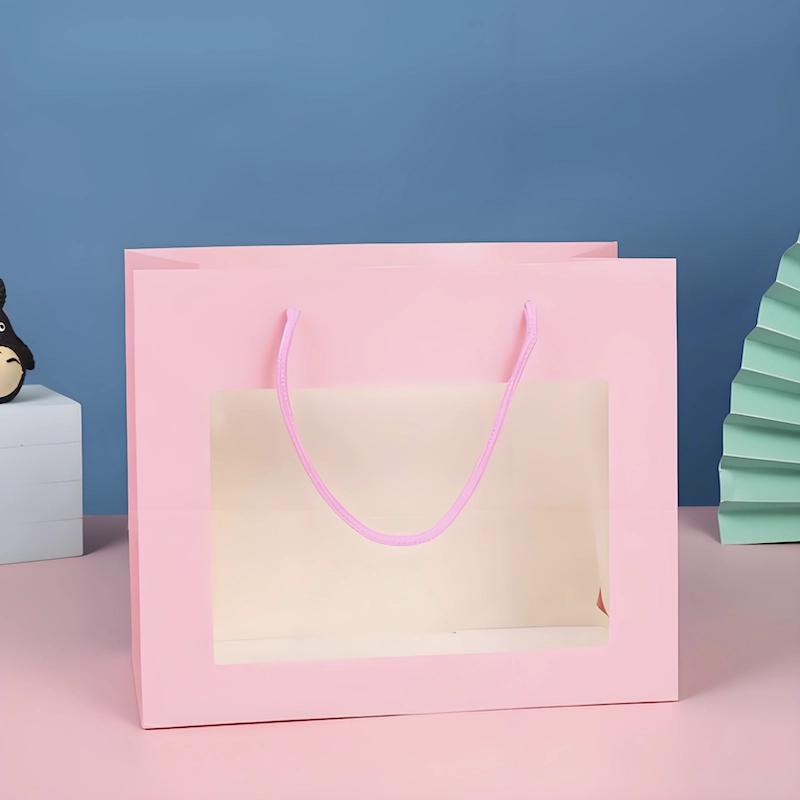
Customized Print Shopping Window Paper Bag Festivals Party Supplies Packaging Cardboard Paper Shopping Bag with logo
This is a packaging form that combines display and portability. Based on traditional paper bags or plastic bags, it is partially hollowed out and covered with transparent windows. Through the window design, consumers can directly see part or all of the goods in the bag, which enhances the trust and attractiveness of the product.

Customized Perfume Gift Box Packaging
Perfume Gift Box – Premium Custom Packaging for Luxury Fragrance Brands
Our custom perfume gift boxes are designed to combine luxury, protection, and brand storytelling — perfect for perfume brands, gift sets, and promotional collections.
Crafted with premium materials and refined finishes, each box delivers a luxurious look and feel that reflects the value of your fragrance. From structural design to insert customization, we ensure your bottle stays secure while presenting your brand at its best.
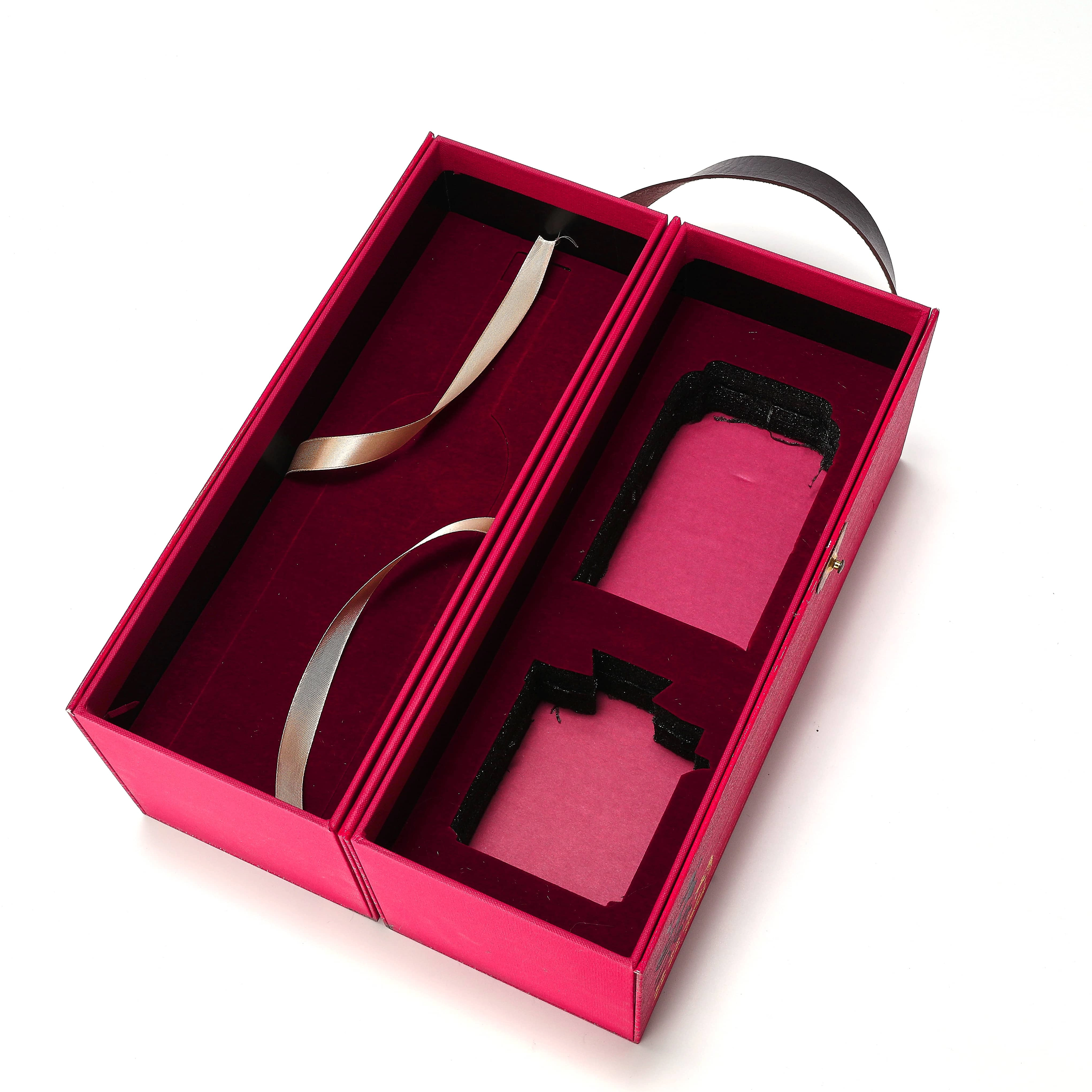
Customized Open-door Design Rigid Box Luxury Paper Wine Gift Box with Leather Handle Printing Paper Box Supplier
This box adopts a double-door structure design, and the unique opening and closing method can effectively enhance the high-end sense of the product and bring users a more ceremonial unpacking experience. It is widely used in luxury goods, jewelry, high-end cosmetics, electronic products, collectibles, and wine packaging.

Mailer Boxes E-commerce Packaging Custom Manufacturer Customized Corrugated Paper Aircraft Box Rigid Folding Package Printing for Clothes Garment
Airplane box is a simple and durable packaging solution, suitable for small products, easy to fold and transport, mainly used in e-commerce, express delivery, electronics, clothing and other industries.
© 2025 WINPACK PRINTING. All rights reserved

Wenhua Printing packaging
winpackprinting
Winpack Printing