




Food Labeling Compliance for Custom Packaging
- Understanding the Regulatory Landscape for Food Labels
- Why labeling matters for custom food packaging
- Key regulatory frameworks you should know
- Practical tip: build a compliance checklist
- Label Content and Claims: What Must Appear on Custom Food Packaging
- Mandatory label elements (common to most jurisdictions)
- Nutrition and health claims: stay within permitted language
- Allergens and special labeling (clear visual prominence)
- Materials, Food-Contact Safety, and Testing for Custom Food Packaging
- Selecting materials compatible with food contact
- Migration, barrier properties, and shelf-life testing
- Practical workflow for supplier validation
- Production, Traceability and Cross-border Considerations
- Pre-press, artwork control and variable data
- Traceability and recalls: labeling as a control point
- Cross-border shipments and multilingual labeling
- Comparison: Key Labeling Requirements (US, EU, Canada)
- Design and Usability: Putting Compliance and Consumer Experience Together
- Legibility, contrast and accessibility
- Using QR codes and extended labeling
- Sustainable packaging and compliance trade-offs
- Working with a Manufacturer: Case Example and Supplier Capabilities
- Why supplier capability matters for compliant custom food packaging
- Winpack: capabilities and how they support compliance
- Main products and competitive advantages
- Common Compliance Pitfalls and How I Fix Them
- Pitfall: Late inclusion of allergen information
- Pitfall: Unvalidated inks and coatings
- Pitfall: Poor version control across markets
- FAQs
- 1. What are the most common mandatory elements on a food label?
- 2. Do I need to test my packaging materials for food contact?
- 3. Can I use QR codes instead of printing nutrition facts?
- 4. How should allergens be presented on custom food packaging?
- 5. What steps should I take before mass production of packaging?
- 6. How can Winpack help with compliance?
- Closing thoughts and call to action
Summary for : I provide a concise, practical guide on food labeling compliance for custom food packaging, covering regulatory requirements (FDA, EU Reg. 1169/2011, CFIA), label content (identity, net quantity, ingredients, allergen, nutrition, manufacturer info), food-contact material considerations, traceability, testing, and how to implement compliant production workflows with contract manufacturers. Links to authoritative sources and a manufacturer profile (Winpack) are included for validation and sourcing.
Understanding the Regulatory Landscape for Food Labels
Why labeling matters for custom food packaging
I often tell clients that a compelling package is worthless if the label fails regulatory scrutiny. Labels convey essential safety and consumer information—identity, contents, allergens, nutrition, and traceability. Non-compliance can lead to recalls, fines, and severe brand damage. When you design custom food packaging, compliance must be integrated from the first artwork draft to avoid costly redesigns or regulatory rework.
Key regulatory frameworks you should know
Different markets have different mandatory elements. For the US, the FDA food labeling requirements outline required statements such as the principal display panel, net quantity, ingredient list, nutrition facts, and allergen declaration. In the EU, Regulation (EU) No 1169/2011 requires nutrition labeling, allergen highlighting, origin labeling in certain cases, and specific language rules. Canada follows the CFIA labeling guidance. I always map target markets first before finalizing artwork.
Practical tip: build a compliance checklist
Create a one-page checklist per target market that lists: product identity, net weight/volume, ingredients with percentages (if required), nutrition facts format, allergen declarations, manufacturer/distributor name and address, country of origin (if applicable), and any health claims limitations. This checklist becomes a cross-check during proofing and pre-press.
Label Content and Claims: What Must Appear on Custom Food Packaging
Mandatory label elements (common to most jurisdictions)
The following items are almost universally required and should be non-negotiable on every package I work on:
- Product name (common or usual name)
- Net quantity (weight/volume) in metric units—some markets also require imperial
- Ingredient list (descending order by weight)
- Nutrition information panel (format varies by jurisdiction)
- Allergen declarations (clear, highlighted)
- Name and address of manufacturer or distributor
- Lot code/production date or best-before/use-by date for perishable items
Nutrition and health claims: stay within permitted language
Nutrition and health claims are tightly regulated. In the EU, claims must comply with the EU Register of nutrition and health claims. In the US, the FDA and FTC evaluate structure/function and nutrient content claims. I recommend avoiding ambiguous or non-authorized health claims on custom food packaging unless you have substantiation and an approved claim path.
Allergens and special labeling (clear visual prominence)
Allergen labeling is a critical safety element. Regulations require common allergens to be declared either in the ingredient list or in a separate 'Contains:' statement. The format (bolding, separate statement) can be required—e.g., EU Reg. 1169/2011 mandates allergen emphasis. For retail success, I advise placing allergen declarations near the ingredient list and in a contrasting color to maximize readability.
Materials, Food-Contact Safety, and Testing for Custom Food Packaging
Selecting materials compatible with food contact
Not all packaging substrates are suitable for direct food contact. Paperboard, coatings, inks, adhesives, and barrier laminates must be certified for food contact or meet migration limits. I always request documentation such as declarations of compliance (DoC) from suppliers and insist on materials that meet local food-contact standards (e.g., US FDA 21 CFR, EU Framework Regulation 1935/2004).
Migration, barrier properties, and shelf-life testing
For products with long shelf life or high-fat content, perform migration testing and shelf-life studies. Typical tests include overall migration and specific migration for heavy metals or plasticizers (when plastics involved). These tests should be traceable to accredited labs. ISO 22000 and relevant national standards provide frameworks for managing food safety risk in packaging supply chains (ISO 22000).
Practical workflow for supplier validation
Here is the validation workflow I implement when working with converters and label houses:
- Request material DoCs and safety data sheets.
- Confirm ink/adhesive compliance for food contact areas.
- Run prototype tests: visual inspection, migration if required, abrasion/resistance.
- Stamp approval with a formal sign-off that ties label artwork to batch control.
Production, Traceability and Cross-border Considerations
Pre-press, artwork control and variable data
Ensure artwork files carry version control and a sign-off log. For custom food packaging that includes variable data (lot codes, best-by dates), integrate a traceable print process and use validated printing methods (thermal transfer, CIJ) with audit trails. I recommend embedding a final 'artwork approval' PDF with print-ready specs into the purchase order to avoid mismatches.
Traceability and recalls: labeling as a control point
Labels are crucial for traceability. Include lot codes and production dates in a consistent format, and ensure they are linked to production records. If a recall occurs, fast and accurate identification via the label database can reduce scope and cost. Many brands integrate QR codes or GS1 barcodes to speed product identification and consumer engagement.
Cross-border shipments and multilingual labeling
When exporting, validate language requirements and metric/imperial rules. Some countries require local language translations for mandatory statements—plan artboards with space for additional languages. Consider variable peel-off labels or multi-panel designs for multi-market SKUs to limit SKU proliferation.
Comparison: Key Labeling Requirements (US, EU, Canada)
| Requirement | United States (FDA) | European Union (Reg. 1169/2011) | Canada (CFIA) |
|---|---|---|---|
| Nutrition Information | Mandatory for most packaged foods (Nutrition Facts panel) | Mandatory in standard format (Energy, fats, sugars, salt, etc.) | Mandatory; format differs from US |
| Ingredient List | Required; descending order by weight | Required; allergens emphasized | Required; bilingual (English/French) for most products |
| Allergen Declaration | Required; common allergens must be declared | Required and emphasized; specific labeling rules | Required; must be prominent |
| Lot/Date Marking | Required for perishable foods | Best-before and use-by rules apply | Required; specific formats exist |
Sources: FDA, EU Reg. 1169/2011, CFIA.
Design and Usability: Putting Compliance and Consumer Experience Together
Legibility, contrast and accessibility
Regulators often require minimum type sizes and legibility standards. Beyond legal minimums, I design labels with high contrast and accessible fonts, ensuring that ingredient lists, allergen statements, and net quantity are readable. This reduces consumer errors and lowers complaint rates.
Using QR codes and extended labeling
QR codes are a practical way to provide extended information (detailed nutrition, sourcing, certificates) without cluttering the primary panel—provided the primary mandatory elements remain visible and accessible offline. If you use dynamic QR content, ensure the linked content also complies with claims rules.
Sustainable packaging and compliance trade-offs
Switching to recycled or compostable materials can affect printability and migration behavior. I advise pilot runs and material testing when moving to sustainable custom food packaging, and clear labeling indicating compostability standards (e.g., EN 13432) only when certification exists to avoid greenwashing claims.
Working with a Manufacturer: Case Example and Supplier Capabilities
Why supplier capability matters for compliant custom food packaging
Manufacturing capability affects speed to market and regulatory risk. I evaluate factories on their material sourcing, pre-press control, food-contact testing, machinery alignment, and quality management systems. This is where technical strength meets compliance execution.
Winpack: capabilities and how they support compliance
In 2016, Guangdong Winpack Printing Technology Development Co., Ltd. was officially established as a professional paper box printing manufacturer specializing in designing, proofing, printing, and producing a wide range of packaging and printed materials. Winpack can support compliant custom food packaging by providing:
- Customized production of stickers, labels, paper bags, gift boxes, beauty boxes, pizza boxes, books, brochures, flyers, etc.
- Service to industries including cosmetics, food, healthcare, pharmaceuticals, and electronics.
- A 15,000-square-meter factory with advanced equipment (screen plate-making system, Heidelberg printing machine, Lithrone GL-40A, high-speed paper cutter, anti-counterfeiting inkjet printer) to ensure quality and precision.
Winpack's factory and processes help ensure accurate color reproduction, precise variable data printing, and robust quality control—important for allergen emphasis, lot codes, and serializations. Learn more at Winpack or contact [email protected].
Main products and competitive advantages
Winpack specializes in custom gable boxes, custom gift boxes, custom display boxes, custom rigid boxes, custom folding boxes, custom paper tubes boxes, custom window boxes, custom special-shape boxes, custom pillow boxes, and custom take out boxes. Their competitive differentiators include advanced press technology, anti-counterfeiting printing capability, and a vertically integrated workflow that shortens lead times and improves traceability—key for food manufacturers needing consistent, compliant packaging.
Common Compliance Pitfalls and How I Fix Them
Pitfall: Late inclusion of allergen information
I often see allergen info added at the last minute, creating layout issues. I mitigate this by reserving a clearly marked area on the ingredient panel during initial design and mandating an allergen statement in contract specs.
Pitfall: Unvalidated inks and coatings
Some converters use inks or varnishes not suitable for food contact. My process includes requesting DoCs and, when needed, performing migration testing on prototypes.
Pitfall: Poor version control across markets
Multiple language variants and SKU versions cause errors. I implement a labeling matrix and version-controlled artwork repository to track approvals and print releases.
FAQs
1. What are the most common mandatory elements on a food label?
Typically: product name, net quantity, ingredient list, nutrition information, allergen declaration, manufacturer/distributor name and address, lot code and date markings. Exact requirements depend on jurisdiction (FDA, EU Reg. 1169/2011, CFIA).
2. Do I need to test my packaging materials for food contact?
Yes—especially for direct contact or for foods with high fat content. Tests include overall migration and specific migration when plastics are used. Request DoCs and use accredited labs when in doubt.
3. Can I use QR codes instead of printing nutrition facts?
No. QR codes may provide supplementary information but cannot replace mandatory on-pack statements like nutrition facts and allergen declarations offline. QR codes are useful for extended content and traceability.
4. How should allergens be presented on custom food packaging?
Display allergens in the ingredient list or in a separate 'Contains:' statement, emphasized by bolding or contrasting color per jurisdictional rules. Keep the allergen statement highly visible and consistent across SKUs.
5. What steps should I take before mass production of packaging?
Finalize artwork approvals with sign-off, obtain material DoCs, run prototype and migration tests if needed, validate variable data printing, and confirm traceability procedures with the manufacturer.
6. How can Winpack help with compliance?
Winpack offers end-to-end services—artwork proofing, high-precision printing, anti-counterfeiting options, and a factory capable of handling a wide variety of custom packaging types. They support documentation and production workflows that align with regulatory needs. Contact [email protected] or visit Winpack for quotes and samples.
Closing thoughts and call to action
Ensuring food labeling compliance for custom food packaging is a multidisciplinary challenge—regulatory knowledge, material science, print technology, and supply-chain discipline all matter. I've found that starting regulatory mapping at concept stage, using a strict artwork approval process, and partnering with capable manufacturers like Winpack reduces risk and speeds time-to-market. If you need help auditing your label artwork, validating materials, or sourcing compliant custom packaging solutions, I invite you to get in touch for a consultation.
Contact Winpack for custom packaging solutions and compliance-capable production: [email protected]. Visit https://www.winpackprinting.com/ to view product offerings including custom gable boxes, custom gift boxes, custom display boxes, custom rigid boxes, custom folding boxes, custom paper tubes boxes, custom window boxes, custom special-shape boxes, custom pillow boxes, and custom take out boxes.
Case Studies: Brands Succeeding with Sticker Bags
Cost Comparison: Digital Printing Flexible Packaging vs Flexo
Mailer Boxes for Subscription Services: Fulfillment Best Practices
Minimalist Pizza Box Designs That Convert Customers: A Practical Guide
About Printing Craftsmanship
What are eco-friendly printing options?
Vegetable-based inks instead of petroleum-based inks.
Recycled paper or sustainably sourced materials.
Water-based coatings instead of harmful chemical coatings.
Digital printing to reduce waste and energy consumption.
How does UV printing work?
UV printing uses ultraviolet light to cure ink instantly, resulting in vibrant colors, water resistance, and high durability. It is commonly used for packaging, signage, and promotional items.
Special Shape Boxes
Can I get a sample before placing an official order?
Yes, we provide samples to our customers. Please contact our sales team to inquire about sample availability and pricing.
About Us
Do you inspect the finished products?
Yes, each step of production and finished product will be carried out inspection
OEM Services
Can I request a sample before mass production?
Yes, we provide sample proofing before mass production to ensure that the design, materials, and quality meet your expectations. We encourage testing and approval before proceeding with full-scale manufacturing.

Customized Print Shopping Window Paper Bag Festivals Party Supplies Packaging Cardboard Paper Shopping Bag with logo
This is a packaging form that combines display and portability. Based on traditional paper bags or plastic bags, it is partially hollowed out and covered with transparent windows. Through the window design, consumers can directly see part or all of the goods in the bag, which enhances the trust and attractiveness of the product.

Customized Perfume Gift Box Packaging
Perfume Gift Box – Premium Custom Packaging for Luxury Fragrance Brands
Our custom perfume gift boxes are designed to combine luxury, protection, and brand storytelling — perfect for perfume brands, gift sets, and promotional collections.
Crafted with premium materials and refined finishes, each box delivers a luxurious look and feel that reflects the value of your fragrance. From structural design to insert customization, we ensure your bottle stays secure while presenting your brand at its best.
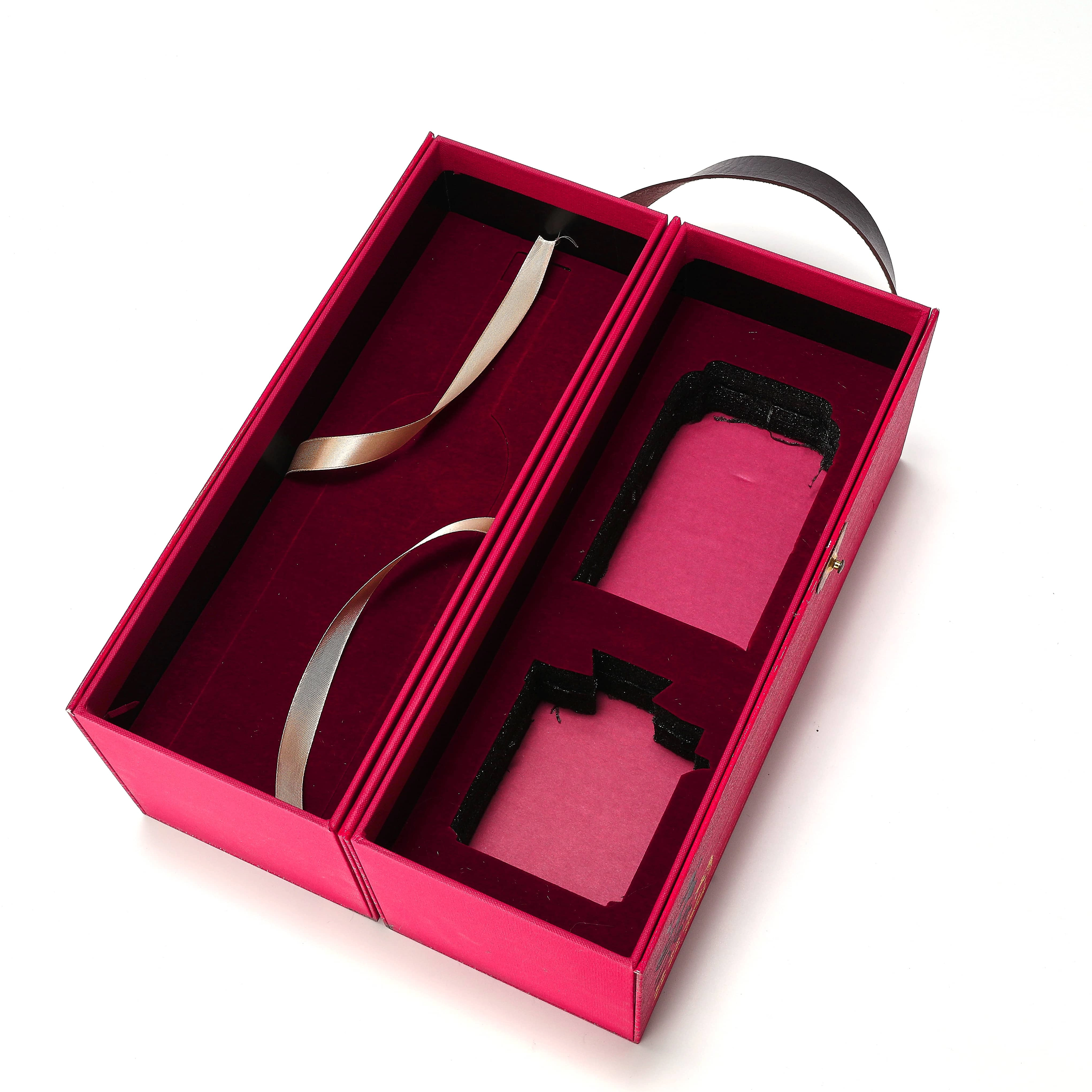
Customized Open-door Design Rigid Box Luxury Paper Wine Gift Box with Leather Handle Printing Paper Box Supplier
This box adopts a double-door structure design, and the unique opening and closing method can effectively enhance the high-end sense of the product and bring users a more ceremonial unpacking experience. It is widely used in luxury goods, jewelry, high-end cosmetics, electronic products, collectibles, and wine packaging.

Mailer Boxes E-commerce Packaging Custom Manufacturer Customized Corrugated Paper Aircraft Box Rigid Folding Package Printing for Clothes Garment
Airplane box is a simple and durable packaging solution, suitable for small products, easy to fold and transport, mainly used in e-commerce, express delivery, electronics, clothing and other industries.
© 2025 WINPACK PRINTING. All rights reserved

Wenhua Printing packaging
winpackprinting
Winpack Printing