




How Reworks and Returns Are Handled by a Custom Packaging Manufacturer
- Why Returns and Reworks Matter in Packaging Supply Chains
- Cost and sustainability impacts
- Customer experience and brand protection
- Regulatory compliance and traceability
- How a Custom Packaging Manufacturer Handles Returns
- Receiving and triage: the first 24–72 hours
- Inspection and grading: objective criteria
- Disposition decisions: restock, rework, recycle, destroy
- Rework Processes: Best Practices and Technologies
- Common rework operations for paper-based packaging
- Quality control and documentation
- Equipment and automation that improve outcomes
- Designing Packaging to Reduce Returns and Simplify Reworks
- Design for manufacturability and reversibility
- Materials and sourcing choices
- Sustainability and circular packaging
- Operational Models, KPIs and Cost Considerations
- Key performance indicators I track
- Typical time and cost drivers (comparative table)
- Commercial terms and cost allocation
- Technology and Traceability: Reducing Ambiguity
- Serialization and digital records
- Analytics and feedback loops
- Case Study Snapshot (anonymized)
- Integrating a Manufacturing Partner: What I Expect From a Supplier
- Transparent RMA processes
- Quality management and certifications
- Sustainability and disposal handling
- About Winpack: Capabilities and Why We Stand Out
- Frequently Asked Questions (FAQ)
- 1. What is the difference between a return and a rework?
- 2. Can returned packaging be reused for products intended for sale?
- 3. How quickly should a manufacturer inspect and decide on returned packaging?
- 4. Who pays for rework or returns?
- 5. What documentation should accompany returned packaging?
- 6. How can design reduce returns?
- Contact and Next Steps
As a custom packaging manufacturer with years of experience in designing, proofing, and producing bespoke paper packaging, I frequently guide brands through the practical steps and decisions that follow when packaging is returned or requires rework. Handling returns and reworks well requires clear processes, robust traceability, and the right balance between quality control, cost recovery and sustainability. Below I outline proven workflows, technologies, and policy choices that help packaging suppliers and brand owners reduce loss, protect brand equity and meet regulatory expectations.
Why Returns and Reworks Matter in Packaging Supply Chains
Cost and sustainability impacts
Returns and reworks are not only an operational headache — they carry measurable financial and environmental cost. Reverse logistics (the systems for returning goods) adds labor, transport and handling costs, and when packaging cannot be reused it creates additional waste. Industry resources on reverse logistics explain the scope of these costs and the need for structured handling: see the Reverse logistics overview on Wikipedia and the Reverse Logistics Association (rla.org).
Customer experience and brand protection
When packaging arrives at a retailer or consumer damaged or incorrect, it harms perceived product quality and can lead to chargebacks, negative reviews or lost reorders. As a custom packaging manufacturer, I consider returns not just a cost center but a moment to protect brand reputation—through fast response, transparent communication, and consistent rework or replacement standards.
Regulatory compliance and traceability
For regulated sectors (food, pharma, medical devices, cosmetics), returned packaging can implicate product safety, labeling or tamper-evidence rules. Maintaining quality management systems aligned with standards such as ISO 9001 helps ensure controlled rework and documented disposition decisions.
How a Custom Packaging Manufacturer Handles Returns
Receiving and triage: the first 24–72 hours
When a return arrives, the first step is accurate triage. I recommend that manufacturers require clear RMA (Return Merchandise Authorization) documentation from the client: photos, lot numbers, quantity, and stated reason for return. On arrival we check shipment integrity, record the condition, and assign a temporary disposition code (e.g., HOLD, INSPECT, QUARANTINE). Good triage reduces unnecessary handling and enables fast corrective action.
Inspection and grading: objective criteria
Inspection is performed against pre-agreed acceptance criteria. Typical grading categories are: Acceptable (restock), Repairable (rework), Recyclable (material recovery), or Scrap/Destroy. For repeatable, auditable grading I use photo records, batch/lot traceability and, when needed, lab tests for ink adhesion or lamination integrity. This helps brands comply with industry quality controls and regulatory needs.
Disposition decisions: restock, rework, recycle, destroy
Disposition is a decision matrix tied to the grading step. Restockable items are returned to inventory with a clear status note. Repairable items enter a defined rework flow (detailed below). Items unsuitable for reuse are routed to recycling streams or destruction with documentation. For regulated industries, destruction may require a witness or certificate of disposal. These disposition rules are part of a manufacturer's quality manual and often included in commercial terms.
Rework Processes: Best Practices and Technologies
Common rework operations for paper-based packaging
Typical rework tasks I encounter include: replacing damaged inserts, relaminating or spot-gluing delaminated panels, fixing die-cut or folding errors, applying corrected labels or batch codes, and reboxing. Reworks are planned to minimize impact on existing production schedules and to maximize material recovery.
Quality control and documentation
Every rework should be documented: original defect, corrective action, operator, QC sign-off, and final disposition. This enables traceability and performance analysis. A closed-loop approach—logging defects and feeding them back to design and production—reduces recurrence rates and aligns with ISO 9001 principles (ISO 9001).
Equipment and automation that improve outcomes
Modern finishing equipment shortens rework cycles. For example, targeted spot lamination, stationary gluing stations, and digital inkjet printers for batch relabeling reduce manual labor and speed turnaround. Barcode scanning and serialized tracking reduce errors during restocking. Investing in appropriate tooling often yields a positive return when return volumes justify it.
Designing Packaging to Reduce Returns and Simplify Reworks
Design for manufacturability and reversibility
Good packaging design anticipates potential failure modes and simplifies rework. I recommend modular designs (e.g., separate inserts, removable sleeves) and clear glue/fold tolerances. When a packaging design facilitates easy insert replacement or label overlays, rework becomes faster and less costly.
Materials and sourcing choices
Material choices influence reparability and recyclability. Using widely recyclable paperboard, water-based adhesives, and standard inks simplifies recycling and remediation. Sourcing consistent raw materials from reliable suppliers reduces batch-to-batch variability and therefore decreases return incidence.
Sustainability and circular packaging
Many brands ask about reusing returned packaging to support circularity. While reuse is attractive, it must be weighed against hygiene, appearance and regulatory constraints. For non-food, non-pharma items, repackaging and reuse can work if inspection and cleaning protocols are robust. For regulated products, reuse may be restricted; documentation and compliance should guide decisions (consult sector-specific guidance such as FDA or local authorities where relevant).
Operational Models, KPIs and Cost Considerations
Key performance indicators I track
To manage returns and reworks effectively I monitor: return rate by SKU, cost per return/rework, percentage of returns restocked vs reworked vs recycled, average turnaround time for disposition, and root-cause categories. These KPIs reveal whether design, production or logistics are the primary drivers of returns.
Typical time and cost drivers (comparative table)
| Process | Typical time (from receipt) | Cost drivers | Usual disposition |
|---|---|---|---|
| Inspection & grading | 1–3 days | Labor, sampling, testing | Decision to restock/rework/recycle |
| Minor rework (labels, inserts) | 1–5 days | Manual labor, finishing tools, adhesives | Repack & restock |
| Major rework (structural fixes) | 3–14 days | Machine time, skilled operators, materials | Rework or scrap |
| Recycle / disposal | 1–7 days | Transport, sorting fees, admin | Material recovery or destruction |
These ranges are illustrative and reflect common experience in custom packaging operations and reverse logistics literature (see Reverse logistics (Wikipedia) and resources from the Reverse Logistics Association).
Commercial terms and cost allocation
Clear contractual terms around returns and reworks are essential. Typical models include: (1) Manufacturer absorbs defects caused by production errors; (2) Client absorbs costs when returns stem from SKU changes or marketing decisions; (3) Shared-cost arrangements for ambiguous causes. Having these terms, RMA rules and SLAs in writing prevents disputes and accelerates resolution.
Technology and Traceability: Reducing Ambiguity
Serialization and digital records
Serialization (unique IDs or batch codes) and cloud-based RMA systems remove ambiguity about which batch is affected and speed decisions. Scannable codes, coupled with photos at receipt, create an auditable trail for clients and regulators.
Analytics and feedback loops
By analyzing return reasons and linking them to production data we close the loop: design fixes, supplier changes, or operator training. Over time this reduces return rates and improves margin.
Case Study Snapshot (anonymized)
I once worked with a mid-size cosmetics brand whose custom rigid boxes were returned at a 3.5% rate due mainly to inconsistent varnish curing that caused scuffing in transit. We implemented: stricter incoming paper checks, a revised varnish cure profile, and an interim rework station to buff and relaminate affected panels. Return rate dropped below 0.7% within two quarters—showing how targeted corrective action and rework capability can save direct replacement costs and protect retail relationships.
Integrating a Manufacturing Partner: What I Expect From a Supplier
Transparent RMA processes
A reliable custom packaging manufacturer documents their RMA steps, provides SLAs for inspection and disposition, and offers clear pricing for rework options. This clarity reduces friction when issues occur.
Quality management and certifications
Look for manufacturers that operate under a formal quality system (e.g., ISO 9001) and can show traceability, batch records and consistent process controls. For regulated industries, ask for additional relevant certifications and hygiene procedures.
Sustainability and disposal handling
Suppliers should be able to segregate waste streams and offer documented recycling or certified destruction depending on client needs. This protects brands and aligns with environmental commitments.
About Winpack: Capabilities and Why We Stand Out
In 2016, Guangdong Winpack Printing Technology Development Co., Ltd. was officially established as a professional paper box printing manufacturer specializing in designing, proofing, printing, and producing a wide range of packaging and printed materials. Our services include customized production of stickers, labels, paper bags, gift boxes, beauty boxes, pizza boxes, books, brochures, flyers, etc. Winpack caters to diverse industries, including cosmetics, food, healthcare, pharmaceuticals, and electronics.
Our 15,000-square-meter factory is equipped with state-of-the-art technology. We utilize an advanced screen plate-making system and top-tier machinery such as the Heidelberg printing machine, high-speed paper cutter, Lithrone GL-40A machine, and anti-counterfeiting inkjet printer to ensure superior quality and efficiency. Our vision is to become the world's leading custom paper box packaging manufacturer. Visit our website: https://www.winpackprinting.com/ or contact us at [email protected].
Winpack's core product offerings include custom gable boxes, custom gift boxes, custom display boxes, custom rigid boxes, custom folding boxes, custom paper tubes boxes, custom window boxes, custom special-shape boxes, custom pillow boxes, and custom take out boxes. Our competitive advantages are technical depth in printing and finishing, comprehensive in-house capabilities that minimize subcontracting, and a rigorous quality and traceability approach that reduces return rates and streamlines rework when it is needed.
Frequently Asked Questions (FAQ)
1. What is the difference between a return and a rework?
A return is when finished packaging is sent back to the manufacturer or supplier (for example, due to damage or incorrect SKU). Rework is the corrective action applied to returned or in-line produced packaging to make it acceptable for use—this can be minor (relabeling) or major (structural repair).
2. Can returned packaging be reused for products intended for sale?
It depends on the product type and the condition of the packaging. For non-regulated goods, clearly inspected and restockable packaging can be reused. For regulated products (food, pharma), reuse may be restricted by law or policy—consult your regulatory guidance and maintain strict documentation.
3. How quickly should a manufacturer inspect and decide on returned packaging?
Standard best practice is to triage within 24–72 hours of receipt and complete grading within that window. Faster decisions reduce storage costs and speed remediation, improving customer satisfaction.
4. Who pays for rework or returns?
That is normally defined in commercial terms. Manufacturers typically accept responsibility for defects caused by production errors. If returns stem from client changes, shipping issues, or retailer damage, costs may be passed to the client or carrier per the contract.
5. What documentation should accompany returned packaging?
At minimum: RMA number, photos of defects, batch/lot numbers, quantity, reason for return, and desired outcome (replace, rework, recycle). This documentation speeds inspection and disposition.
6. How can design reduce returns?
Design for manufacturability (DfM), tolerance engineering, modular inserts, and materials standardization all reduce production variance and transit damage, lowering return rates and making reworks simpler when needed.
Contact and Next Steps
If you want to evaluate your returns and rework processes or discuss how a custom packaging manufacturer can help reduce cost and improve brand protection, I encourage you to get in touch. For custom paper box solutions and expert consultation, visit Winpack or email [email protected]. We can review your RMA policies, audit your current packaging for reparability, or provide a pilot program to validate rework flows and cost recovery options.
References and further reading: Reverse logistics overview (Wikipedia), ISO 9001 quality management (ISO), and Reverse Logistics Association (rla.org).
Ecommerce Shipping Tips for Custom Rigid Boxes
Windowed Pizza Boxes: Pros — Why Food Brands Choose Clear-Window Packaging
Cost-Saving Strategies in Custom Food Packaging Procurement
Materials Compared: Custom Rigid Boxes Paperboard & Finishes
Rigid Magetic Boxes
Can I order a sample of my packaging box?
Yes, we strongly recommend that you do so, we provide a variety of sample types to meet different usage situations and help you guarantee the best results!
Can I print on the inside of the box?
Yes, you can print any effect you want on the inside.
About Us
Are you a manufacturer?
Yes, we are manufacturer, and we have over decade experience in this field.
Do you inspect the finished products?
Yes, each step of production and finished product will be carried out inspection
Special Shape Boxes
Can I order a sample of my packaging box?
Yes, we strongly recommend that you do so, we provide a variety of sample types to meet different usage situations and help you guarantee the best results!

Customized Print Shopping Window Paper Bag Festivals Party Supplies Packaging Cardboard Paper Shopping Bag with logo
This is a packaging form that combines display and portability. Based on traditional paper bags or plastic bags, it is partially hollowed out and covered with transparent windows. Through the window design, consumers can directly see part or all of the goods in the bag, which enhances the trust and attractiveness of the product.

Customized Perfume Gift Box Packaging
Perfume Gift Box – Premium Custom Packaging for Luxury Fragrance Brands
Our custom perfume gift boxes are designed to combine luxury, protection, and brand storytelling — perfect for perfume brands, gift sets, and promotional collections.
Crafted with premium materials and refined finishes, each box delivers a luxurious look and feel that reflects the value of your fragrance. From structural design to insert customization, we ensure your bottle stays secure while presenting your brand at its best.
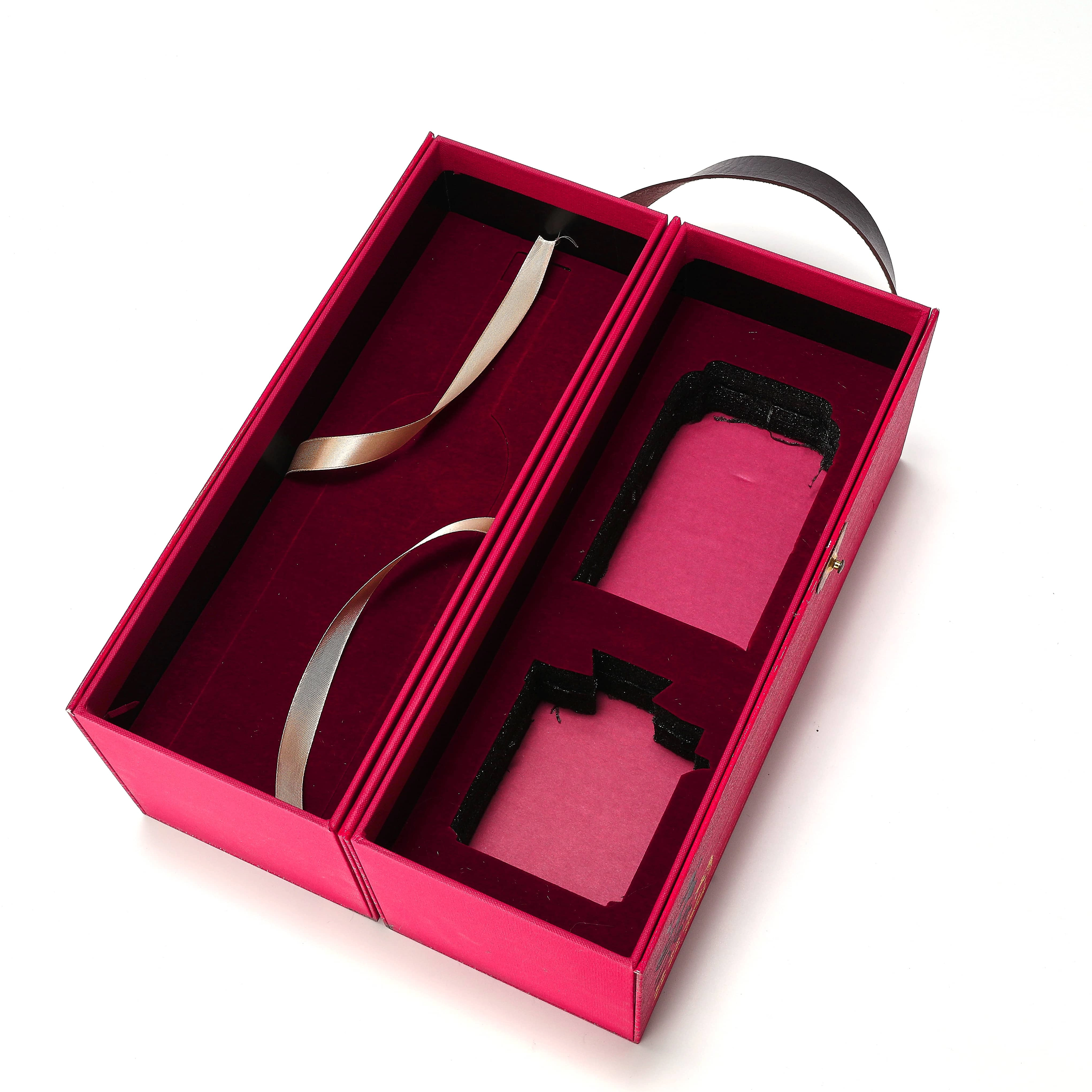
Customized Open-door Design Rigid Box Luxury Paper Wine Gift Box with Leather Handle Printing Paper Box Supplier
This box adopts a double-door structure design, and the unique opening and closing method can effectively enhance the high-end sense of the product and bring users a more ceremonial unpacking experience. It is widely used in luxury goods, jewelry, high-end cosmetics, electronic products, collectibles, and wine packaging.

Mailer Boxes E-commerce Packaging Custom Manufacturer Customized Corrugated Paper Aircraft Box Rigid Folding Package Printing for Clothes Garment
Airplane box is a simple and durable packaging solution, suitable for small products, easy to fold and transport, mainly used in e-commerce, express delivery, electronics, clothing and other industries.
© 2025 WINPACK PRINTING. All rights reserved

Wenhua Printing packaging
winpackprinting
Winpack Printing