




Sustainable Custom Food Packaging for Bulk Buyers
- Why Bulk Buyers Must Prioritize Sustainable Food Packaging
- Market forces and buyer expectations
- Risk management: safety, compliance and reputation
- Material Options: Advantages, Limitations and Proven Use Cases
- Core material families for custom food packaging
- How to evaluate materials for bulk, food-grade applications
- Material comparison: practical guidance for bulk buyers
- Design Strategies to Maximize Sustainability and Value
- Right-sizing and lightweighting
- Mono-material design and end-of-life clarity
- Barrier alternatives and active packaging
- Procurement, Certification and Scaling for Bulk Buyers
- Specify clear requirements in RFQs
- Audit suppliers and require documentation
- Cost modeling and total lifecycle assessment (LCA)
- Practical Implementation: How Bulk Buyers Move to Sustainable Custom Food Packaging
- Pilot projects and staged rollouts
- Labeling and consumer communication
- Collaboration across the value chain
- Winpack: A Supplier Profile for Bulk Buyers Seeking Custom Solutions
- Company overview and capabilities
- Relevant products and competitive advantages
- How Winpack supports sustainability objectives
- FAQ — Common Questions from Bulk Buyers
- Q1: What defines sustainable packaging for food at bulk scale?
- Q2: Can compostable packaging replace conventional packaging for bulk food shipments?
- Q3: How do I verify suppliers' sustainability claims?
- Q4: Will switching to sustainable packaging substantially increase costs?
- Q5: What tests should packaging pass for food safety?
- Q6: How can I run a successful pilot for a sustainable packaging transition?
- References
Why Bulk Buyers Must Prioritize Sustainable Food Packaging
Market forces and buyer expectations
Bulk buyers — manufacturers, food service distributors, retailers, and co-packers — face growing pressure to reduce packaging waste, lower carbon footprints, and meet retailer and regulator sustainability requirements. Custom food packaging choices influence brand perception, logistics costs, and regulatory compliance. For bulk operations, small per-unit changes compound into substantial environmental and cost impacts.
Risk management: safety, compliance and reputation
Food safety and traceability are non-negotiable. Sustainable materials must still protect product integrity, meet food-contact regulations (e.g., FDA in the U.S., EU food contact legislation), and be compatible with manufacturing processes. Choosing the wrong material can create supply disruptions, recalls, or trade barriers.
Material Options: Advantages, Limitations and Proven Use Cases
Core material families for custom food packaging
For bulk buyers, the most relevant material families are paperboard (including kraft and coated board), corrugated cardboard, molded fiber, recyclable plastics (PET, HDPE), and certified compostable materials (PLA and other biopolymers). Each has different barrier properties, recyclability, and cost implications.
How to evaluate materials for bulk, food-grade applications
Evaluate materials using these criteria: food safety/compatibility, barrier performance (moisture, oxygen, grease), stackability and logistics efficiency, recyclability or compostability in target markets, cost per unit at scale, and supplier reliability. Bulk buyers should require certificates for food-contact compliance and recycling/composting claims.
Material comparison: practical guidance for bulk buyers
The table below summarizes typical trade-offs for common options. Use it when building your sourcing brief.
| Material | Food Barrier | Recyclability / Compostability | Best use cases | Notes |
|---|---|---|---|---|
| Corrugated cardboard | Moderate; can include inner liners or greaseproof treatments | Widely recyclable through paper stream; may be compostable depending on coatings | Bulk shipping boxes, trays for dry foods, secondary packaging | Excellent strength-to-weight; low carbon footprint when recycled fiber used |
| Paperboard (coated) | Good with barrier coatings (PE, EVOH) | Recyclable if coatings are recyclable; compostability varies | Retail-ready boxes, gable/takeout boxes, confectionery | Allows high-quality print; coatings affect end-of-life |
| Molded fiber | Limited moisture barrier unless lined | Generally compostable and recyclable with fiber | Trays, inserts, protective cushioning for produce and trays | Good for cushioning; lower-density options emerging |
| Recyclable plastics (PET, HDPE) | Excellent barrier; long shelf life | Recyclable where collection exists; circularity depends on recycling rates | Clear clamshells, tubs, bulk containers, refrigerated items | High performance; consider PCR content to improve footprint |
| Compostable biopolymers (PLA, PHA) | Good for many dry/non-fatty foods | Industrial compostable (certified) — home compostability limited | Disposable cutlery, bowls, certain packaging where composting infrastructure exists | Ensure certification (ASTM D6400/EN 13432) and check local composting availability |
Design Strategies to Maximize Sustainability and Value
Right-sizing and lightweighting
Reduce material use by optimizing box dimensions, wall thickness, and internal supports. For bulk pallets, maximize pallet cube efficiency to reduce transport emissions — even modest reductions in material or volume multiply across thousands of units.
Mono-material design and end-of-life clarity
Mono-material packs (single polymer or single fiber type) are easier to recycle. Avoid complex multi-layer laminates unless necessary for shelf life; where used, provide clear end-of-life instructions and consider takeback programs.
Barrier alternatives and active packaging
Instead of multi-layer laminates, consider coated paperboard with recyclable PE or use proven recyclable solutions like mono PET + barrier coatings that are compatible with recycling streams. Active packaging (oxygen scavengers, moisture absorbers) can extend shelf life, enabling lighter barrier constructions and reducing food waste — often the largest contributor to environmental impact in the food value chain.
Procurement, Certification and Scaling for Bulk Buyers
Specify clear requirements in RFQs
Your Request for Quotation should state: required food-contact certifications, recyclability/compostability claims with supported certificates, minimum recycled content, dimensional tolerances, print quality, lead times, palletization rules, and acceptable sustainability standards (e.g., FSC, PEFC).
Audit suppliers and require documentation
Conduct supplier audits or request third-party verification for claims. Require material safety data, migration testing, and chain-of-custody documentation (FSC/PEFC). For compostable claims, ask for ASTM D6400 or EN 13432 certificates and proof of industrial composting access in your markets.
Cost modeling and total lifecycle assessment (LCA)
Evaluate cost not only in material price but logistics (weight and volume), potential packaging waste fees, return rates, and environmental impact through simple LCAs. Prioritize interventions that prevent food waste — in many LCAs, avoided food waste yields greater environmental benefits than switching packaging materials alone.
Practical Implementation: How Bulk Buyers Move to Sustainable Custom Food Packaging
Pilot projects and staged rollouts
Start with a pilot SKU that represents scale and complexity. Test packaging for production compatibility, shelf life, transport performance, and recyclability in end markets. Collect data on damage rates, customer feedback, and actual disposal behavior.
Labeling and consumer communication
Clear on-pack instructions (e.g., Recycle in paper stream, Industrial composting only) reduce contamination. Use standardized icons and provide a web link or QR code for full recycling/composting guidance tailored to local markets.
Collaboration across the value chain
Work with ingredient suppliers, co-packers, retailers and waste managers. Shared pilots and data reduce risk and speed adoption. For large buyers, leveraging purchasing power to specify minimum PCR content or require takeback programs can shift supplier practices.
Winpack: A Supplier Profile for Bulk Buyers Seeking Custom Solutions
Company overview and capabilities
In 2016, Guangdong Winpack Printing Technology Development Co., Ltd. was officially established as a professional paper box printing manufacturer specializing in designing, proofing, printing, and producing a wide range of packaging and printed materials.Our services include customized production of stickers, labels, paper bags, gift boxes, beauty boxes, pizza boxes, books, brochures, flyers, etc.Winpack caters to diverse industries, including cosmetics, food, healthcare, pharmaceuticals, and electronics.Our 15,000-square-meter factory is equipped with state-of-the-art technology. We utilize an advanced screen plate-making system and top-tier machinery such as the Heidelberg printing machine, high-speed paper cutter, Lithrone GL-40A machine, and anti-counterfeiting inkjet printer to ensure superior quality and efficiency.Our vision is to become the world's leading custom paper box packaging manufacturer.Our website is https://www.winpackprinting.com/
Relevant products and competitive advantages
Winpack produces a broad range of custom products well-suited to bulk food packaging needs, including custom gable boxes, custom gift boxes, custom display boxes, custom rigid boxes, custom folding boxes, custom paper tubes boxes, custom window boxes, custom special-shape boxes, custom pillow boxes, and custom take out boxes. Key advantages for bulk buyers include:
- Scale: a 15,000 m2 factory capable of large-volume runs and consistent lead times.
- Technology: high-quality print and finishing options (Heidelberg, Lithrone GL-40A) enabling High Quality branding while maintaining production efficiency.
- Customization: in-house design-to-production workflow for fast prototyping and proofs.
- Industry experience: serving food, cosmetics, pharma and electronics — understanding of food-contact requirements and retail needs.
How Winpack supports sustainability objectives
Winpack can support bulk buyers by implementing mono-material designs, offering recycled-content paperboard options, and optimizing dielines for material reduction. For buyers with specific certifications or testing requirements, Winpack's manufacturing controls and documentation capabilities help with compliance and supplier qualification processes. Contact Winpack via their website to request samples, FSC/PEFC options, or technical specifications relevant to your food-contact needs: https://www.winpackprinting.com/
FAQ — Common Questions from Bulk Buyers
Q1: What defines sustainable packaging for food at bulk scale?
A1: Sustainable packaging balances environmental impact, food protection, and economic feasibility. Key attributes include use of recycled content, recyclability or compostability appropriate to end markets, reduced material use (lightweighting), and enabling reduced food waste through proper barrier and preservation.
Q2: Can compostable packaging replace conventional packaging for bulk food shipments?
A2: Not universally. Compostable packaging is viable where industrial composting infrastructure exists and for products compatible with composting. For long shelf-life, refrigerated, or high-fat foods, compostable materials often lack required barrier properties. Assess local end-of-life systems before widescale substitution.
Q3: How do I verify suppliers' sustainability claims?
A3: Require third-party certifications (FSC, PEFC, ASTM D6400, EN 13432), chain-of-custody documents, migration and food-contact testing, and ask for recent audit reports. Conduct on-site or third-party audits when contract volumes justify it.
Q4: Will switching to sustainable packaging substantially increase costs?
A4: It depends. Some sustainable options (e.g., recycled fiber board) can be cost-neutral or cheaper. High-performance recyclable barriers or certified compostable solutions may cost more. Consider lifecycle savings from lower transport weight, reduced food waste, and compliance with retailer or regulatory requirements.
Q5: What tests should packaging pass for food safety?
A5: Typical tests include overall and specific migration testing for food-contact materials, microbial resistance where relevant, seal strength, drop and vibration testing for transport, and barrier tests for oxygen and moisture. Confirm applicable national regulations (e.g., FDA in the U.S., EU Regulation (EC) No 1935/2004).
Q6: How can I run a successful pilot for a sustainable packaging transition?
A6: Choose representative SKUs, define KPIs (damage rate, shelf life, customer feedback, recycling contamination), run parallel runs with incumbent packaging, and collect data from production through end-of-life where possible. Iterate based on measured results.
If you want tailored advice, packaging samples, or to request a quote for high-volume custom food packaging, contact Winpack or visit their product pages: https://www.winpackprinting.com/ — Winpack's team can help specify materials, proofs, and production timelines suited to bulk buyers.
References
- Ellen MacArthur Foundation — The New Plastics Economy: Rethinking the future of plastics & packaging (report). https://www.ellenmacarthurfoundation.org/publications (accessed 2025-12-01)
- U.S. Food and Drug Administration (FDA) — Food Contact Substances guidance. https://www.fda.gov/food/packaging-food-contact-substances-fcs (accessed 2025-12-01)
- ASTM International — ASTM D6400 Standard Specification for Labeling of Plastics Designed to be Aerobically Composted in Municipal or Industrial Facilities. https://www.astm.org/Standards/D6400.htm (accessed 2025-12-01)
- European Committee for Standardization — EN 13432 requirements for compostability. https://standards.cen.eu/dyn/www/f?p=204:110:0::::FSP_PROJECT:60229&cs=1E5A7D2B9E2BB7C7F1A9C9F76DA (accessed 2025-12-01)
- U.S. Environmental Protection Agency (EPA) — Facts and Figures about Materials, Waste and Recycling. https://www.epa.gov/facts-and-figures-about-materials-waste-and-recycling (accessed 2025-12-01)
How to Choose the custom candy box manufacturer and supplier ?
Custom Mailer Box Design Tips to Boost Unboxing Experience
Custom print paper bags Manufacturers and Suppliers in us
Custom wraping paper Manufacturers and Suppliers in us
About Printing Craftsmanship
What are the different types of printing techniques?
There are various printing techniques used for different purposes, including:
Offset Printing – Ideal for high-volume commercial printing, offering sharp and high-quality images.
Digital Printing – Suitable for short-run printing with fast turnaround times.
Screen Printing – Used for printing on textiles, plastics, and other materials with thick ink layers.
Hot Stamping – Adds metallic or pigmented foil using heat and pressure for a luxurious look.
Embossing & Debossing – Creates raised or recessed designs for a textured effect.
UV Printing – Uses ultraviolet light to instantly dry ink, offering vibrant colors and enhanced durability.
Rigid Drawer Box
What are the wholesale pricing options for bulk orders?
We offer competitive wholesale prices for bulk orders. Please contact our sales team for more details
About Us
How to start the mass production?
Once received the 30% deposite, we will arrange the mass prouction.The balance need to be paid before delivery.
Special Shape Boxes
Can I print on the inside of the box?
Yes, you can print any effect you want on the inside.
Rigid Lift-off Box
Can I get a sample before placing a formal order?
Yes, we provide samples to our customers. Please contact our sales team to inquire about sample availability and pricing.
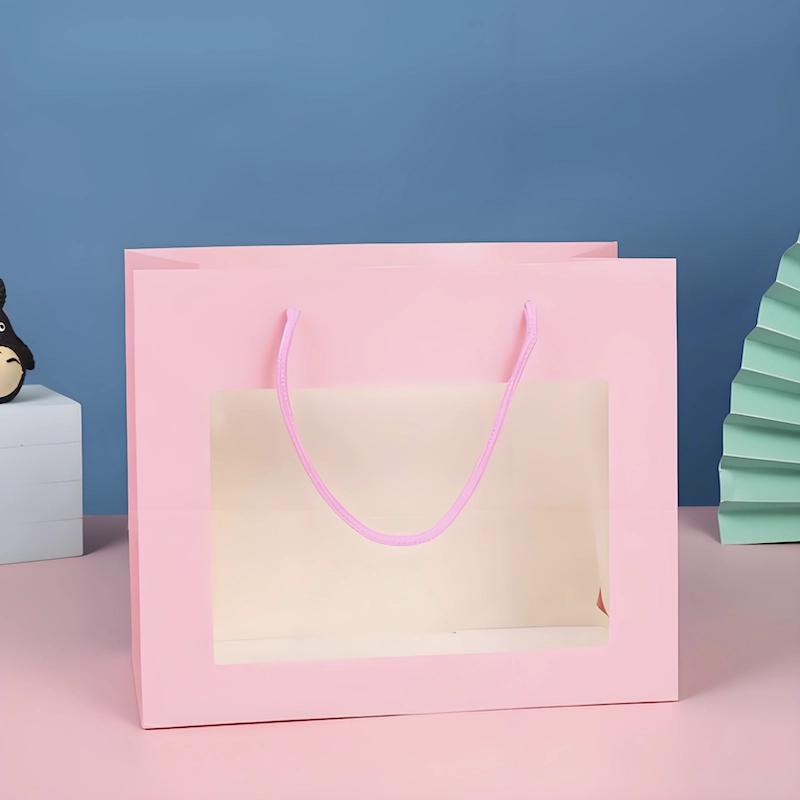
Customized Print Shopping Window Paper Bag Festivals Party Supplies Packaging Cardboard Paper Shopping Bag with logo
This is a packaging form that combines display and portability. Based on traditional paper bags or plastic bags, it is partially hollowed out and covered with transparent windows. Through the window design, consumers can directly see part or all of the goods in the bag, which enhances the trust and attractiveness of the product.
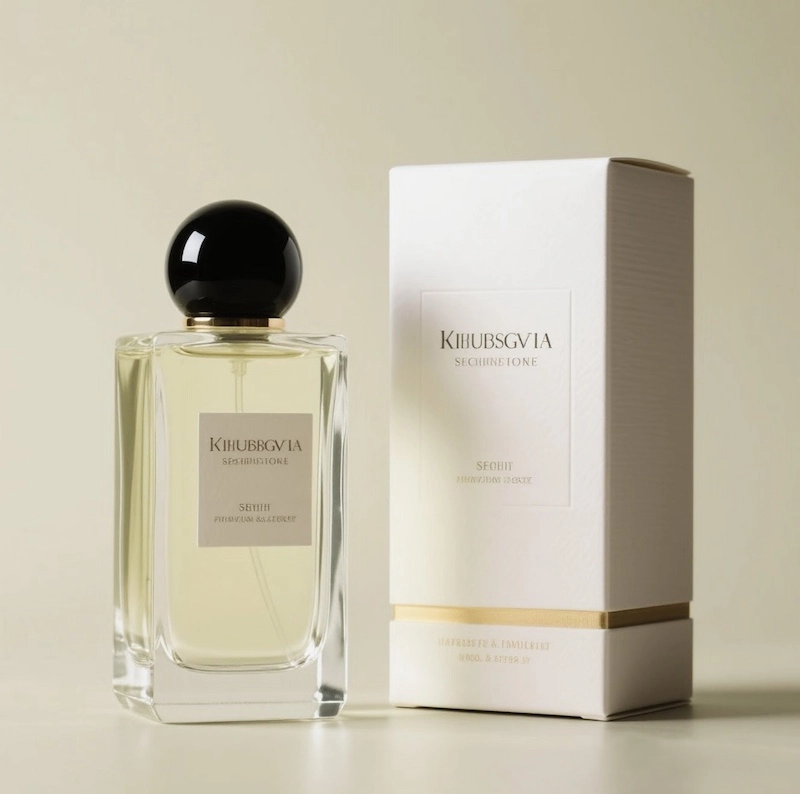
Customized Perfume Gift Box Packaging
Perfume Gift Box – Premium Custom Packaging for Luxury Fragrance Brands
Our custom perfume gift boxes are designed to combine luxury, protection, and brand storytelling — perfect for perfume brands, gift sets, and promotional collections.
Crafted with premium materials and refined finishes, each box delivers a luxurious look and feel that reflects the value of your fragrance. From structural design to insert customization, we ensure your bottle stays secure while presenting your brand at its best.
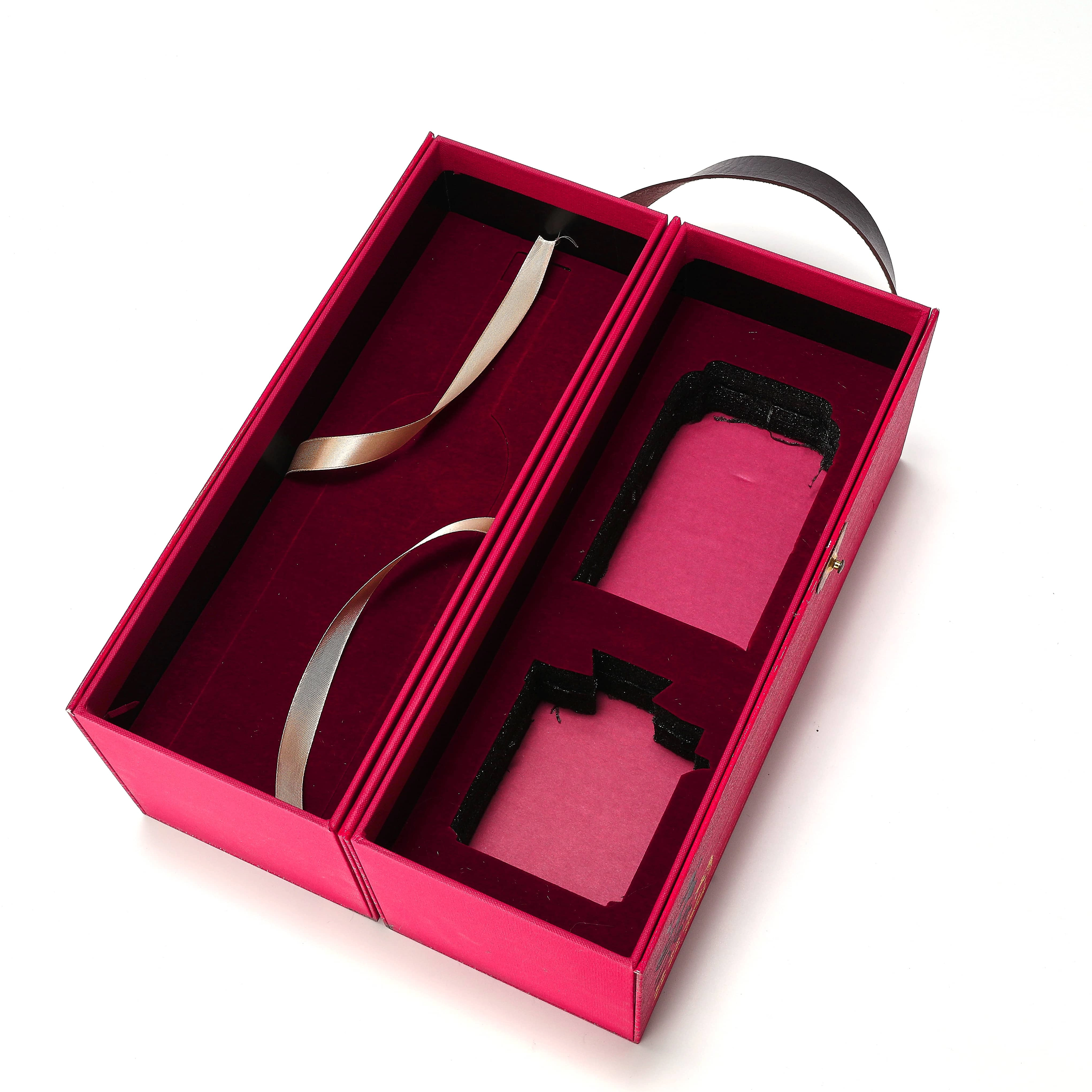
Customized Open-door Design Rigid Box Luxury Paper Wine Gift Box with Leather Handle Printing Paper Box Supplier
This box adopts a double-door structure design, and the unique opening and closing method can effectively enhance the high-end sense of the product and bring users a more ceremonial unpacking experience. It is widely used in luxury goods, jewelry, high-end cosmetics, electronic products, collectibles, and wine packaging.

Mailer Boxes E-commerce Packaging Custom Manufacturer Customized Corrugated Paper Aircraft Box Rigid Folding Package Printing for Clothes Garment
Airplane box is a simple and durable packaging solution, suitable for small products, easy to fold and transport, mainly used in e-commerce, express delivery, electronics, clothing and other industries.
© 2025 WINPACK PRINTING. All rights reserved

Wenhua Printing packaging
winpackprinting
Winpack Printing