




Minimizing Waste: Setup and Makeready Tips for Flexo Presses
- Optimizing Setup to Cut Waste on Flexo Presses
- Prepress and Proofing: Prevent waste before the press runs
- Plate Making, Mounting and Registration Precision
- Control Systems, Ink & Substrate Management
- Anilox Selection, Ink Viscosity and Color Control
- Substrate Handling, Web Tension and Drying
- Operator Procedures, Makeready Workflow & Automation
- Standardized Makeready Checklists and Training
- Automation, Quick-Change Tooling and Closed-loop Feedback
- Measuring Waste, KPIs & Continuous Improvement
- Key Performance Indicators to Track
- Comparing Manual vs. Automated Setup — Practical Differences
- How a Packaging Partner Can Help — Practical Support from Winpack
- Winpack Capabilities That Reduce Waste
- Products and Industry Coverage
- Practical Checklist: Day-of-Press Makeready Steps to Minimize Waste
- Frequently Asked Questions (FAQ)
- 1. How much waste can optimized makeready save on a flexo press?
- 2. Which investments yield the fastest payback for reducing makeready waste?
- 3. Are there quick operational changes that reduce waste immediately?
- 4. How should I measure success after applying makeready improvements?
- 5. Can a packaging partner like Winpack actually help reduce our flexo waste?
- Contact & Next Steps
- References
Optimizing Setup to Cut Waste on Flexo Presses
Flexographic printing for packaging demands tight control over makeready to minimize waste while maintaining quality. This section focuses on prepress and physical setup practices that reduce start-up losses and shorten time-to-spec on first good parts (FGP).
Prepress and Proofing: Prevent waste before the press runs
Spend time in proofing and digital preflight: well-prepared artwork, correct trapping, accurate color separations and validated plate imaging reduce iterative corrections during press start-up. Use digital soft proofs and color-managed proofing (e.g., SWOP/GRACoL profiles or industry-specific packaging profiles) to ensure the first plate run closely matches the target. When possible, perform contract proof approvals with the final substrate and varnish to avoid surprises on-press.
Plate Making, Mounting and Registration Precision
Plate quality and mounting precision are among the largest determinants of makeready time. Key actions:
- Use high-resolution plate imaging and consistent exposure to control highlight and dot gain.
- Adopt accurate plate mounting systems (digital mounting tapes, laser registration) to reduce trial-and-error adjustments.
- Measure plate thickness and compensate cylinder settings instead of guessing—small errors cause prolonged make-ready and substrate waste.
Control Systems, Ink & Substrate Management
Ink and substrate handling are frequent sources of waste. Controlling these variables reduces color shifts, set-off, and re-runs.
Anilox Selection, Ink Viscosity and Color Control
Match anilox volume and cell geometry to the required ink laydown—over-inking increases drying time, risk of set-off and ink waste; under-inking triggers rework. Implement:
- Standardized anilox selection guides for common job types.
- Inline or at-station viscosity and density checks with quick-adjust pumps and stroke settings.
- Use closed-loop color control (spectrophotometers and densitometers) to stabilize color within target ΔE tolerances quickly.
Substrate Handling, Web Tension and Drying
Substrate variation and poor web handling are costly. To minimize waste:
- Set and monitor web tension zones; small tension errors cause register drift and wrinkles.
- Pre-condition substrates if humidity-sensitive; control pressroom environment to reduce curl and static.
- Optimize dryer settings to prevent under- or over-drying—over-drying can cause cracking; under-drying causes set-off.
Operator Procedures, Makeready Workflow & Automation
Standardized procedures and targeted automation cut both time and material waste at makeready.
Standardized Makeready Checklists and Training
Create a step-by-step makeready checklist that operators follow every time: plate verification, cylinder alignment, anilox install, ink viscosity set, tension pre-sets, register pre-sets, and first-run inspection checklist. Combine checklists with operator training modules and poka-yoke (error-proofing) cues to ensure consistency across shifts.
Automation, Quick-Change Tooling and Closed-loop Feedback
Investment in targeted automation pays back quickly for high-mix, short-run packaging work. Examples that reduce waste:
- Automatic plate changers and servo-driven register systems reduce manual adjustments.
- Quick-change cams, chill rollers and dedicated quick-mount tapes shorten downtime between jobs.
- Closed-loop register and color control systems drive the press toward spec with measurable fewer test sheets.
Measuring Waste, KPIs & Continuous Improvement
What gets measured gets improved. Define meaningful KPIs to quantify progress and prioritize investments.
Key Performance Indicators to Track
Recommended KPIs for makeready and waste reduction:
- First Good Part (FGP) length: linear meters or sheets to reach acceptable quality.
- Waste percentage per job: (waste units / total units produced) × 100.
- Makeready time: minutes from job start to declared run-ready.
- Ink consumption per 1,000 units: normalized for product size and coverage.
- Rework rate and causes categorized (ink, register, substrate, varnish).
Comparing Manual vs. Automated Setup — Practical Differences
The table below summarizes typical differences between manual and automated makeready approaches. Figures are qualitative benefits observed in industry practice; exact ROI varies by plant and job mix.
| Metric | Manual Setup | Automated / Closed-loop Setup |
|---|---|---|
| First Good Part (FGP) | Longer; often several meters or minutes of trial (depends on operator) | Shorter; automated register and color reduce FGP by measurable margin |
| Waste Volume | Higher due to iterative adjustments and over-inking | Lower—faster convergence to target means less substrate & ink used |
| Operator Skill Dependence | High—outcomes vary by operator experience | Lower—systems guide toward consistent results |
| Upfront Cost | Low | Higher initial investment; faster payback for high-mix/short-run environments |
How a Packaging Partner Can Help — Practical Support from Winpack
Manufacturers that combine engineering, pressroom discipline and packaging expertise accelerate waste reduction. In 2016, Guangdong Winpack Printing Technology Development Co., Ltd. was officially established as a professional paper box printing manufacturer specializing in designing, proofing, printing, and producing a wide range of packaging and printed materials. Winpack’s integrated approach helps brands achieve first-run success and lower lifecycle waste.
Winpack Capabilities That Reduce Waste
Key strengths Winpack brings to waste-control and efficient flexographic packaging production:
- Comprehensive prepress and proofing workflows that validate artwork on the intended substrate before press.
- Advanced screen plate-making and precise plate mounting systems for consistent image transfer.
- High-spec machinery—Heidelberg printing machines, Lithrone GL-40A, high-speed paper cutters and anti-counterfeiting inkjet printers—support repeatable, low-waste runs.
- A 15,000-square-meter factory with production capacity to handle high-mix orders while maintaining tight quality control.
Products and Industry Coverage
Winpack offers customized production across categories commonly using flexographic and hybrid printing processes, including:
- Custom gable boxes, custom gift boxes, custom display boxes
- Custom rigid boxes, custom folding boxes, custom paper tube boxes
- Custom window boxes, custom special-shape boxes, custom pillow boxes, custom take out boxes
They cater to cosmetics, food, healthcare, pharmaceutical and electronics sectors—industries where waste, regulatory compliance and brand presentation are critical.
Website: https://www.winpackprinting.com/
Practical Checklist: Day-of-Press Makeready Steps to Minimize Waste
Follow this condensed checklist to reduce trial prints and substrate toss:
- Confirm final approved artwork and proof (substrate/varnish combination).
- Inspect plates for blemishes and confirm thickness; mount with precise tooling.
- Select and verify anilox; set ink viscosity and stroke; check ink recirculation.
- Set web tension zones for intended substrate weight; precondition roll if needed.
- Pre-set register positions from past jobs or digital job recipes where available.
- Run a short set of test strips with densitometer/spectrophotometer; let closed-loop systems adjust.
- Declare First Good Part (FGP) and begin production once within tolerances.
Frequently Asked Questions (FAQ)
1. How much waste can optimized makeready save on a flexo press?
Savings vary by operation, but plants that implement systematic prepress checks, automated register/color controls and standardized makeready procedures commonly report substantial reductions in substrate and ink waste. Track your baseline FGP and waste percentage to quantify improvement after changes.
2. Which investments yield the fastest payback for reducing makeready waste?
Low-to-moderate investments with fast payback include standardized prepress proofs, spectrophotometers for inline color checks, improved plate mounting systems and operator training. Larger investments like automatic plate changers and closed-loop register systems pay off in high-mix or short-run environments.
3. Are there quick operational changes that reduce waste immediately?
Yes — enforce a pressroom checklist, standardize anilox selection, stabilize ink viscosity, pre-set register and tension values from job recipes, and require a formal FGP declaration before full production. These reduce variability and immediate waste.
4. How should I measure success after applying makeready improvements?
Track FGP length, makeready time, waste percentage per job, ink consumption per 1,000 units, and rework rate. Regularly analyze root causes for remaining waste and prioritize corrective actions.
5. Can a packaging partner like Winpack actually help reduce our flexo waste?
Yes. A full-service partner with strong prepress, plate-making, and pressroom capabilities—like Winpack—can reduce surprises at press by validating proofs on intended substrates, using advanced plate-making equipment and maintaining consistent press processes. Their integrated approach lowers iterations and substrate waste.
Contact & Next Steps
To reduce makeready waste and accelerate time-to-spec on flexographic jobs, audit your current makeready workflow, collect baseline KPIs, then prioritize improvements with a cost-benefit lens. For turnkey custom packaging solutions and technical collaboration, contact Winpack: https://www.winpackprinting.com/.
References
- Flexographic Technical Association (Flexography.org) — Educational resources on flexographic best practices. Accessed 2025-12-31. https://flexography.org/
- U.S. Environmental Protection Agency (EPA) — Sustainable Management of Materials and Waste Reduction resources. Accessed 2025-12-31. https://www.epa.gov/smm
- European Commission / Eurostat — Packaging waste statistics and circular economy indicators. Accessed 2025-12-31. https://ec.europa.eu/eurostat/statistics-explained/index.php?title=Packaging_waste_statistics
- WRAP (UK) — Guidance on reducing waste in packaging manufacturing. Accessed 2025-12-31. https://wrap.org.uk/
- PRINTING United Alliance — Industry best-practice resources on pressroom efficiencies and color control. Accessed 2025-12-31. https://www.printing.org/
- Winpack Printing — Company profile and services. Accessed 2025-12-31. https://www.winpackprinting.com/
Top 10 custom mailer box Manufacturers and Supplier Brands
Top 10 custom candy box Manufacturers and Supplier Brands
Why choose Winpack as your wholesale paper shopping bags manufacturer
The B2B Buyer’s Guide to cosmetic packaging paper box
About Us
Are you a manufacturer?
Yes, we are manufacturer, and we have over decade experience in this field.
Rigid Drawer Box
What are the wholesale pricing options for bulk orders?
We offer competitive wholesale prices for bulk orders. Please contact our sales team for more details
OEM Services
What is the minimum order quantity (MOQ) for OEM orders?
Our MOQ varies depending on the type of packaging and material used. We offer flexible MOQ options to accommodate both small businesses and large-scale manufacturers. Contact us for a tailored quote based on your needs.
Can you help with packaging design if I don’t have one?
Yes! Our experienced design team can assist in creating packaging that aligns with your brand’s vision. We can develop concepts, offer material recommendations, and ensure compliance with industry standards.
How do I get a quote for my OEM order?
To receive a custom quote, simply contact us with your packaging requirements, including:
Product type and dimensions
Material preferences
Design specifications
Order quantity
Any special requests
Our team will assess your needs and provide a competitive quote tailored to your project.

Customized Print Shopping Window Paper Bag Festivals Party Supplies Packaging Cardboard Paper Shopping Bag with logo
This is a packaging form that combines display and portability. Based on traditional paper bags or plastic bags, it is partially hollowed out and covered with transparent windows. Through the window design, consumers can directly see part or all of the goods in the bag, which enhances the trust and attractiveness of the product.

Customized Perfume Gift Box Packaging
Perfume Gift Box – Premium Custom Packaging for Luxury Fragrance Brands
Our custom perfume gift boxes are designed to combine luxury, protection, and brand storytelling — perfect for perfume brands, gift sets, and promotional collections.
Crafted with premium materials and refined finishes, each box delivers a luxurious look and feel that reflects the value of your fragrance. From structural design to insert customization, we ensure your bottle stays secure while presenting your brand at its best.
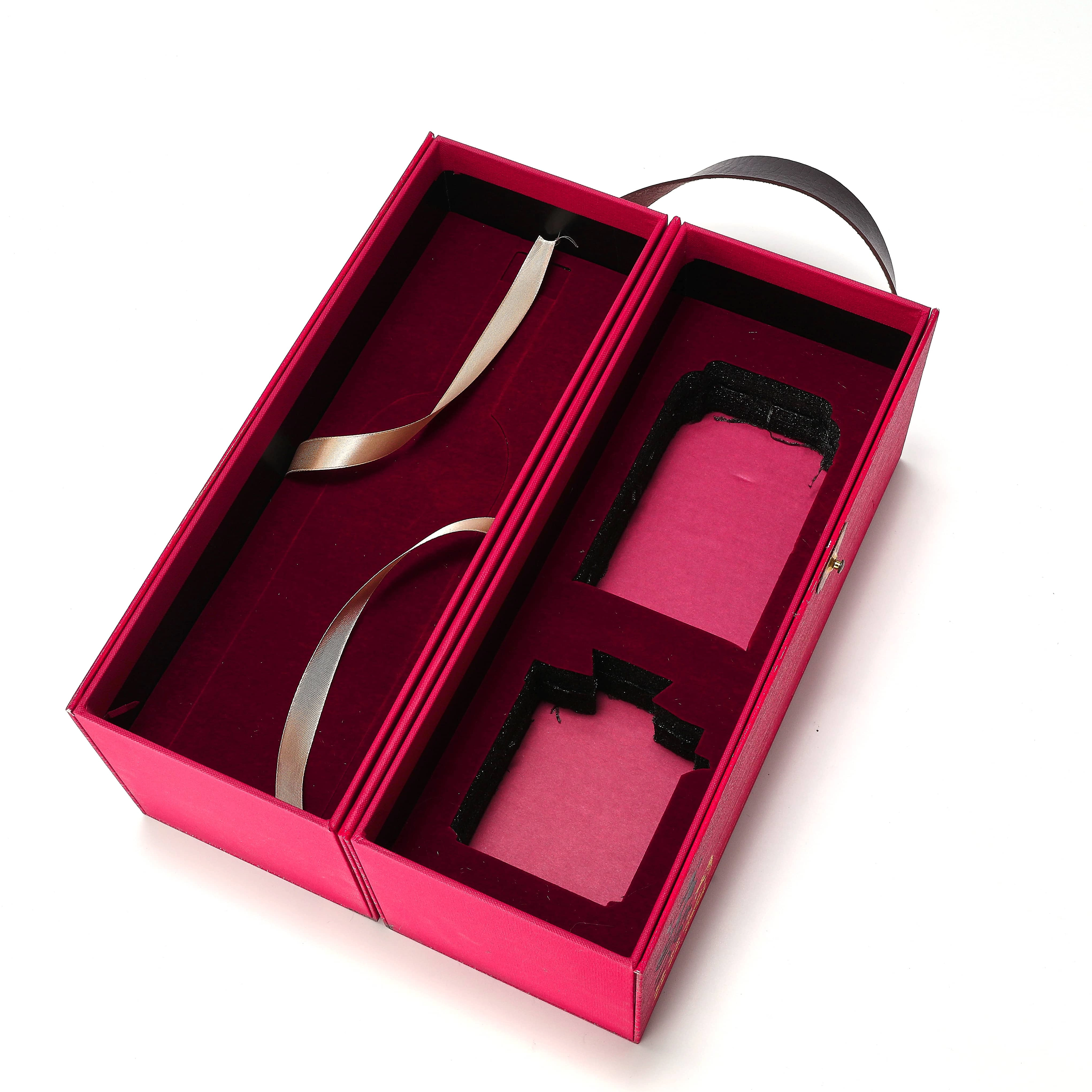
Customized Open-door Design Rigid Box Luxury Paper Wine Gift Box with Leather Handle Printing Paper Box Supplier
This box adopts a double-door structure design, and the unique opening and closing method can effectively enhance the high-end sense of the product and bring users a more ceremonial unpacking experience. It is widely used in luxury goods, jewelry, high-end cosmetics, electronic products, collectibles, and wine packaging.

Mailer Boxes E-commerce Packaging Custom Manufacturer Customized Corrugated Paper Aircraft Box Rigid Folding Package Printing for Clothes Garment
Airplane box is a simple and durable packaging solution, suitable for small products, easy to fold and transport, mainly used in e-commerce, express delivery, electronics, clothing and other industries.
© 2025 WINPACK PRINTING. All rights reserved

Wenhua Printing packaging
winpackprinting
Winpack Printing