




Food-Safe Materials and Regulations for Takeaway Boxes
- Understanding food-safe materials for takeaway boxes
- Common materials used in takeaway boxes
- What makes a material food-safe?
- Regulations and testing standards for food contact packaging
- Key global regulations affecting takeaway boxes
- Testing and certification: what to ask for
- Choosing the right material for your takeaway boxes
- Material comparison: pros, cons and regulatory notes
- Coatings, barriers and printing considerations
- Implementation: manufacturing, quality control and supplier checklist
- Production best practices for safe takeaway boxes
- Supplier and audit checklist
- About Winpack — manufacturing capability and advantages
- Practical recommendations and checklist for product owners
- How to specify takeaway boxes for regulatory compliance
- Sample testing and verification
- FAQ — common questions about food-safe takeaway boxes
- 1. Are kraft takeaway boxes safe for hot and greasy foods?
- 2. Can recycled paperboard be used for takeaway boxes?
- 3. What does ‘compostable’ on a takeaway box label really mean?
- 4. Do printed designs on the inside of boxes affect food safety?
- 5. What documentation should a supplier provide to prove food safety?
- 6. How does recyclability interplay with food safety?
- References and further reading
Understanding food-safe materials for takeaway boxes
Common materials used in takeaway boxes
Takeaway boxes are made from a range of substrates and coatings. The most common include:
- Kraft paper and virgin paperboard — lightweight, recyclable, often used for dry foods and lightweight meals.
- Recycled paperboard — cost-effective and eco-friendly but can contain contaminants that require barrier treatments for wet or fatty foods.
- Coated paperboard (PE, PLA, or EVOH lining) — provides moisture and grease resistance for hot and wet foods.
- Plastic (mono‑material PET/PP) — used for transparency and strong moisture resistance; increasingly replaced by coated paper for sustainability.
- Aluminum foil laminate — excellent grease and moisture barrier used for high‑temperature applications.
- Bioplastics (PLA, starch blends) — biodegradable/compostable options with certain temperature limitations.
What makes a material food-safe?
A food‑safe material must meet three practical criteria: it should not transfer harmful substances to food under intended use; it should maintain organoleptic properties (no off‑odours or tastes); and it should have predictable barrier performance (moisture, oil, gas) for the food being packed. Compliance relies on appropriate material selection, inks, adhesives and barrier treatments, plus validated testing that simulates real‑use conditions.
Regulations and testing standards for food contact packaging
Key global regulations affecting takeaway boxes
Packaging manufacturers and brand owners must be aware of national and regional food contact regulations. Important references include:
- EU Regulation (EC) No 1935/2004 — general principles for all materials intended to contact food (inertness, traceability, Good Manufacturing Practice).
- EU Commission Regulation (EU) No 10/2011 — specific rules for plastic materials and articles in contact with food (migration testing, authorized substances).
- U.S. Food and Drug Administration (FDA) — food contact substances and guidance for materials used in food packaging (21 CFR for certain plastics, and FDA’s general guidance pages).
- Standards for compostability/biodegradability such as ASTM D6400 (U.S.) and EN 13432 (EU) for materials labeled as compostable.
These regulations require documentation, traceability and, in many cases, migration testing or specific authorization of additives (inks, coatings, adhesives).
Testing and certification: what to ask for
Typical tests and certificates that verify food safety include:
- Overall Migration Tests — determine total non‑volatile material migrating into food simulants under specified conditions.
- Specific Migration Tests — measure migration of specific substances (e.g., monomers, plasticizers, heavy metals) against regulatory limits.
- Grease and Oil Resistance Tests — evaluate suitability for fatty foods (useful for pizza, fried foods).
- Simulant Testing — using food simulants (aqueous, acidic, alcoholic, fatty) to replicate interaction with different food types.
- Compostability or Biodegradability Certificates — for materials claimed as compostable (ASTM D6400, EN 13432, OK Compost).
Request test reports that reference the standard used, the food simulant and the contact conditions (time/temperature). Independent third‑party lab reports (ISO/IEC 17025 accredited) are preferred.
Choosing the right material for your takeaway boxes
Material comparison: pros, cons and regulatory notes
| Material | Strengths | Limitations | Regulatory/testing points |
|---|---|---|---|
| Kraft paper / Virgin paperboard | Renewable, recyclable, good printing surface, cost-effective | Limited moisture/grease resistance unless treated | Verify inks/adhesives are food contact compliant; perform grease resistance and migration testing where required |
| Recycled paperboard | Lower cost, circular credentials | Higher risk of contaminants (e.g., mineral oil); often needs barrier coatings | Test for mineral oil hydrocarbons (MOH/MOSH/MOAH) and ink transfer; use functional barriers if necessary |
| Coated paperboard (PE/PLA/EVOH) | Improved moisture and grease barrier; suitable for hot/wet foods | Coating selection affects recyclability/compostability | Coating chemistry must be authorized or supported by migration testing; consider recycling stream impacts |
| Mono plastics (PET/PP) | Excellent barrier, heat resistance, recyclable (if separated) | Environmental concerns; consumer preference shifting away from fossil plastics | Follow FDA and EU lists of authorized substances; perform migration tests under intended use |
| PLA / compostable blends | Compostable under industrial conditions; good for cold/room temperature foods | Lower heat resistance; industrial composting required for certified compostability | Need certified compostability (EN 13432/ASTM D6400) and migration testing for food contact |
| Aluminum foil laminate | Excellent barrier to moisture/oxygen/grease | Aesthetics/cost; recyclability depends on separation | Ensure laminates and adhesives do not introduce unsafe migrants; test for relevant substances |
Data sources and standards are provided at the end of this article — always check the latest regional regulations for the market you serve.
Coatings, barriers and printing considerations
Printing inks, varnishes and adhesives are common sources of migrants. Best practices:
- Use food‑grade inks and adhesives with documented compliance (request Declaration of Conformity and test reports).
- When using recycled fiber, consider a functional barrier (e.g., PE, EVOH) between recycled pulp and food.
- Select coatings that balance barrier needs and end‑of‑life goals (recyclability vs. compostability).
- Avoid direct printing on the inside surface of the box if inks are not certified for food contact.
Implementation: manufacturing, quality control and supplier checklist
Production best practices for safe takeaway boxes
Manufacturers should implement Good Manufacturing Practices (GMP) for food contact materials, including:
- Traceability of raw materials (lot numbers, certificates of analysis).
- Dedicated lines or validated wash/clean procedures to avoid cross‑contamination with non‑food materials.
- Controlled storage conditions to prevent moisture pickup and contamination.
- In‑process checks for print bleed, coating continuity, and seal integrity (for glued or heat‑sealed constructions).
- Retention of batch samples and test reports for at least the legally required period for your market.
Supplier and audit checklist
When qualifying a supplier for takeaway boxes, request or verify:
- Declarations of conformity to relevant regulations (e.g., EU Reg. 1935/2004, FDA guidance).
- Third‑party lab reports for overall and specific migration relevant to intended food contact conditions.
- Certificates for compostability (if claiming compostable) from recognized bodies (e.g., TÜV, DIN CERTCO).
- Quality management systems (ISO 9001) and, where applicable, food safety schemes that include packaging (e.g., BRCGS Packaging Materials).
- Evidence of Good Manufacturing Practice for materials (e.g., GMP compliance per Commission Regulation (EC) No 2023/2006 in the EU).
About Winpack — manufacturing capability and advantages
In 2016, Guangdong Winpack Printing Technology Development Co., Ltd. was officially established as a professional paper box printing manufacturer specializing in designing, proofing, printing, and producing a wide range of packaging and printed materials. Our services include customized production of stickers, labels, paper bags, gift boxes, beauty boxes, pizza boxes, books, brochures, flyers, etc. Winpack caters to diverse industries, including cosmetics, food, healthcare, pharmaceuticals, and electronics. Our 15,000-square-meter factory is equipped with state-of-the-art technology. We utilize an advanced screen plate-making system and top-tier machinery such as the Heidelberg printing machine, high-speed paper cutter, Lithrone GL-40A machine, and anti-counterfeiting inkjet printer to ensure superior quality and efficiency. Our vision is to become the world's leading custom paper box packaging manufacturer. Our website is https://www.winpackprinting.com/
Winpack advantages and core product lines:
- Technical strength: advanced plate-making, high-precision presses (Heidelberg, Lithrone GL-40A), and anti-counterfeiting printing for brand protection.
- Quality & capacity: 15,000 m2 factory with streamlined production lines for short lead times and consistent quality control.
- Industry coverage: proven experience with cosmetics, food and beverage, healthcare, pharmaceuticals and electronics.
- Key products: custom gable boxes, custom gift boxes, custom display boxes, custom rigid boxes, custom folding boxes, custom paper tubes boxes, custom window boxes, custom special-shape boxes, custom pillow boxes, custom take out boxes.
- Competitive differentiators: integrated design-to-production workflow, certified equipment, and ability to tailor coatings/barriers for food-safety requirements.
For food service brands requiring food-safe takeaway boxes, Winpack can provide compliance documentation, sample testing coordination and production options across recyclable, coated, and compostable substrates.
Practical recommendations and checklist for product owners
How to specify takeaway boxes for regulatory compliance
When placing an order, include the following in product specifications:
- Intended food type(s) (dry, wet, acidic, fatty) and service temperature (cold, ambient, hot).
- Intended contact time (short-term: minutes/hours; long-term: days).
- End‑of‑life claim (recyclable, compostable, reusable) with certification requirements.
- Required testing and documentation (overall/specific migration, grease resistance, compostability certificate).
- Printing restrictions (no inks inside food contact area unless certified).
Sample testing and verification
Before mass production:
- Request pre-production samples that match the final material/ink/adhesive combination.
- Arrange independent lab testing for the most relevant simulants and contact conditions (e.g., hot oily food at elevated temperature for pizza boxes).
- Retain samples from initial production runs and maintain a dossier with COAs and lab reports.
FAQ — common questions about food-safe takeaway boxes
1. Are kraft takeaway boxes safe for hot and greasy foods?
Plain kraft paper is generally safe but lacks grease and moisture resistance. For hot and greasy foods, use kraft board with a food‑grade barrier coating (PE, PLA or EVOH) or a grease‑resistant surface treatment and verify with grease resistance and migration testing.
2. Can recycled paperboard be used for takeaway boxes?
Yes, but recycled paperboard often contains residual mineral oil and contaminants. If used for direct food contact, a certified functional barrier or validated migration test reports are recommended to ensure safety.
3. What does ‘compostable’ on a takeaway box label really mean?
Certified compostable means the material has passed tests such as EN 13432 (EU) or ASTM D6400 (U.S.) that evaluate biodegradation, disintegration and ecotoxicity under industrial composting conditions. Compostable packaging may not break down properly in home compost or landfill environments — check the certification and disposal instructions.
4. Do printed designs on the inside of boxes affect food safety?
Yes — inks can be a source of migrants. Avoid printing inside surfaces that contact food unless inks are specifically certified for food contact and supported by migration test reports.
5. What documentation should a supplier provide to prove food safety?
Ask for Declarations of Conformity aligned to applicable regulations (e.g., EU 1935/2004), third‑party laboratory reports for migration tests (ISO/IEC 17025 labs), certificates for compostability (if claimed), and details of GMP and quality certifications (e.g., ISO 9001, BRCGS Packaging Materials).
6. How does recyclability interplay with food safety?
Recyclability is separate from food‑safety performance. Some food‑safe coatings or laminations can hinder recycling; conversely, recyclability requirements can restrict the choice of coatings. Balance regulatory compliance, functional performance and end‑of‑life goals when selecting materials.
Need help specifying or sourcing compliant takeaway boxes? Contact Winpack for design, sample testing coordination, and mass production of custom take out boxes and other food packaging solutions. Visit https://www.winpackprinting.com/ to view product options and request a quote.
References and further reading
- European Parliament and Council, Regulation (EC) No 1935/2004 on materials and articles intended to come into contact with food — https://eur-lex.europa.eu/eli/reg/2004/1935/oj (accessed 2026-01-08)
- Commission Regulation (EU) No 10/2011 on plastic materials and articles intended to come into contact with food — https://eur-lex.europa.eu/eli/reg/2011/10/oj (accessed 2026-01-08)
- U.S. Food and Drug Administration (FDA) — Food Contact Substances & Packaging Guidance — https://www.fda.gov/food/packaging-food-contact-substances-fcs (accessed 2026-01-08)
- ASTM International — ASTM D6400 Standard Specification for labeling of plastics designed to be composted in municipal and industrial aerobic composting facilities — https://www.astm.org/Standards/D6400.htm (accessed 2026-01-08)
- EN 13432 — Requirements for packaging recoverable through composting and biodegradation — overview: European Commission and national standards bodies (https://standards.cen.eu/ / consult national mirror committees) (accessed 2026-01-08)
- TÜV Austria — OK Compost and compostability certification information — https://www.tuv-at.be/en/certification/ok-compost/ (accessed 2026-01-08)
- BRCGS — Packaging Materials standard (for packaging manufacturers) — https://www.brcgs.com/ (accessed 2026-01-08)
The latest trends for custom boxes printing and branding tips in us 2026 | Winpack Ultimate Insights
How to Choose the paper jewelry box manufacturer and supplier ?
Cost Guide: Custom Takeout Boxes Pricing
Custom Box Printing vs Labeling: Which to Choose?
About Printing Craftsmanship
What are eco-friendly printing options?
Vegetable-based inks instead of petroleum-based inks.
Recycled paper or sustainably sourced materials.
Water-based coatings instead of harmful chemical coatings.
Digital printing to reduce waste and energy consumption.
What are the different types of printing techniques?
There are various printing techniques used for different purposes, including:
Offset Printing – Ideal for high-volume commercial printing, offering sharp and high-quality images.
Digital Printing – Suitable for short-run printing with fast turnaround times.
Screen Printing – Used for printing on textiles, plastics, and other materials with thick ink layers.
Hot Stamping – Adds metallic or pigmented foil using heat and pressure for a luxurious look.
Embossing & Debossing – Creates raised or recessed designs for a textured effect.
UV Printing – Uses ultraviolet light to instantly dry ink, offering vibrant colors and enhanced durability.
What is embossing, and how is it different from debossing?
Embossing is a technique that creates a raised impression on a material, while debossing presses the design inward, creating a recessed effect. Both techniques add texture and sophistication to printed materials.
Rigid Magetic Boxes
Can I order a sample of my packaging box?
Yes, we strongly recommend that you do so, we provide a variety of sample types to meet different usage situations and help you guarantee the best results!
OEM Services
Do you ship internationally?
Yes, we have a well-established global supply chain and offer international shipping services. Whether you need local or worldwide delivery, we ensure reliable logistics support.
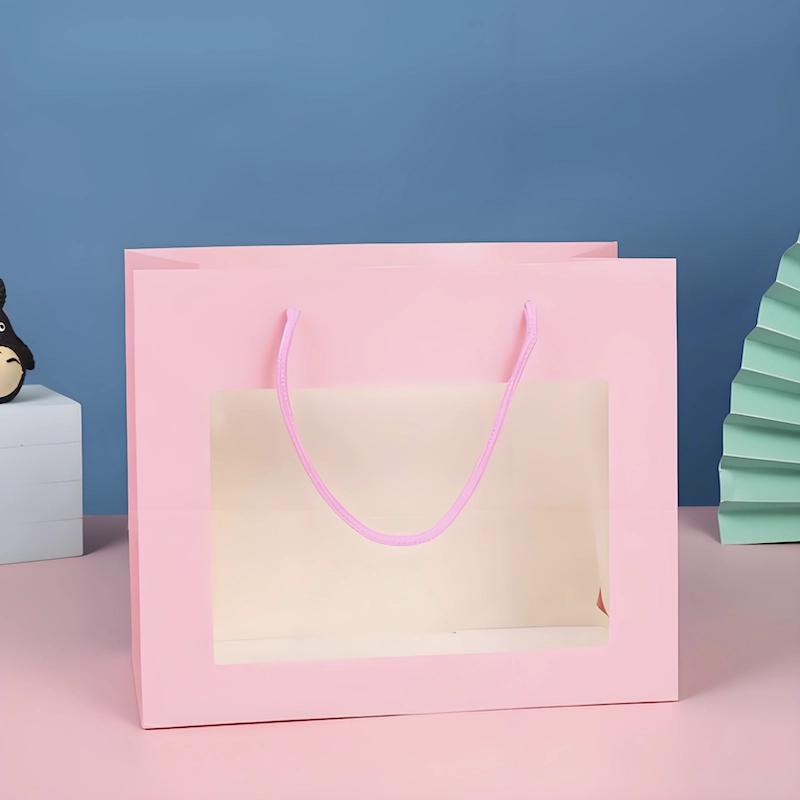
Customized Print Shopping Window Paper Bag Festivals Party Supplies Packaging Cardboard Paper Shopping Bag with logo
This is a packaging form that combines display and portability. Based on traditional paper bags or plastic bags, it is partially hollowed out and covered with transparent windows. Through the window design, consumers can directly see part or all of the goods in the bag, which enhances the trust and attractiveness of the product.
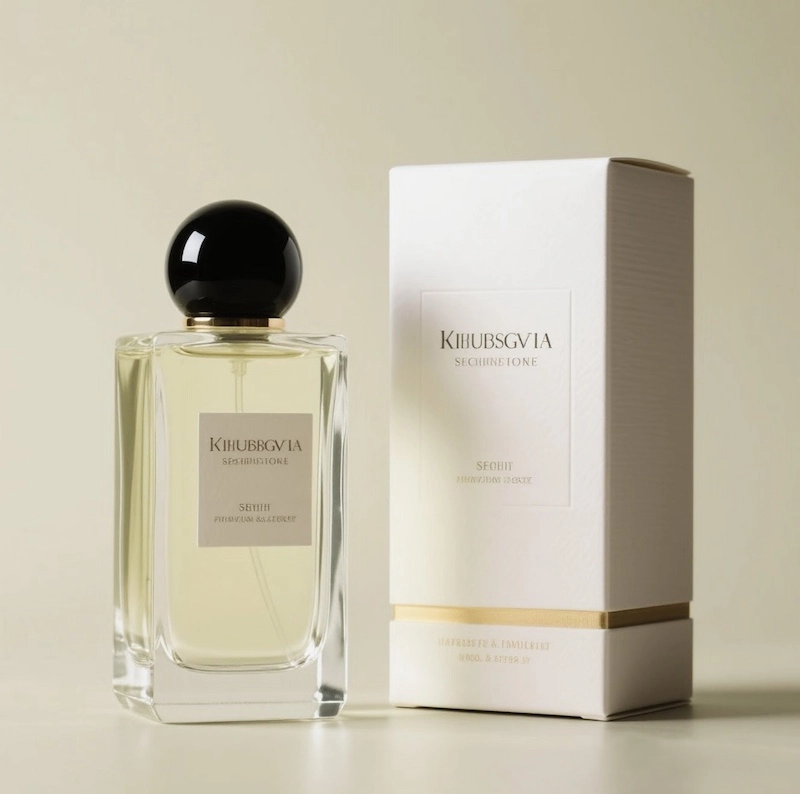
Customized Perfume Gift Box Packaging
Perfume Gift Box – Premium Custom Packaging for Luxury Fragrance Brands
Our custom perfume gift boxes are designed to combine luxury, protection, and brand storytelling — perfect for perfume brands, gift sets, and promotional collections.
Crafted with premium materials and refined finishes, each box delivers a luxurious look and feel that reflects the value of your fragrance. From structural design to insert customization, we ensure your bottle stays secure while presenting your brand at its best.
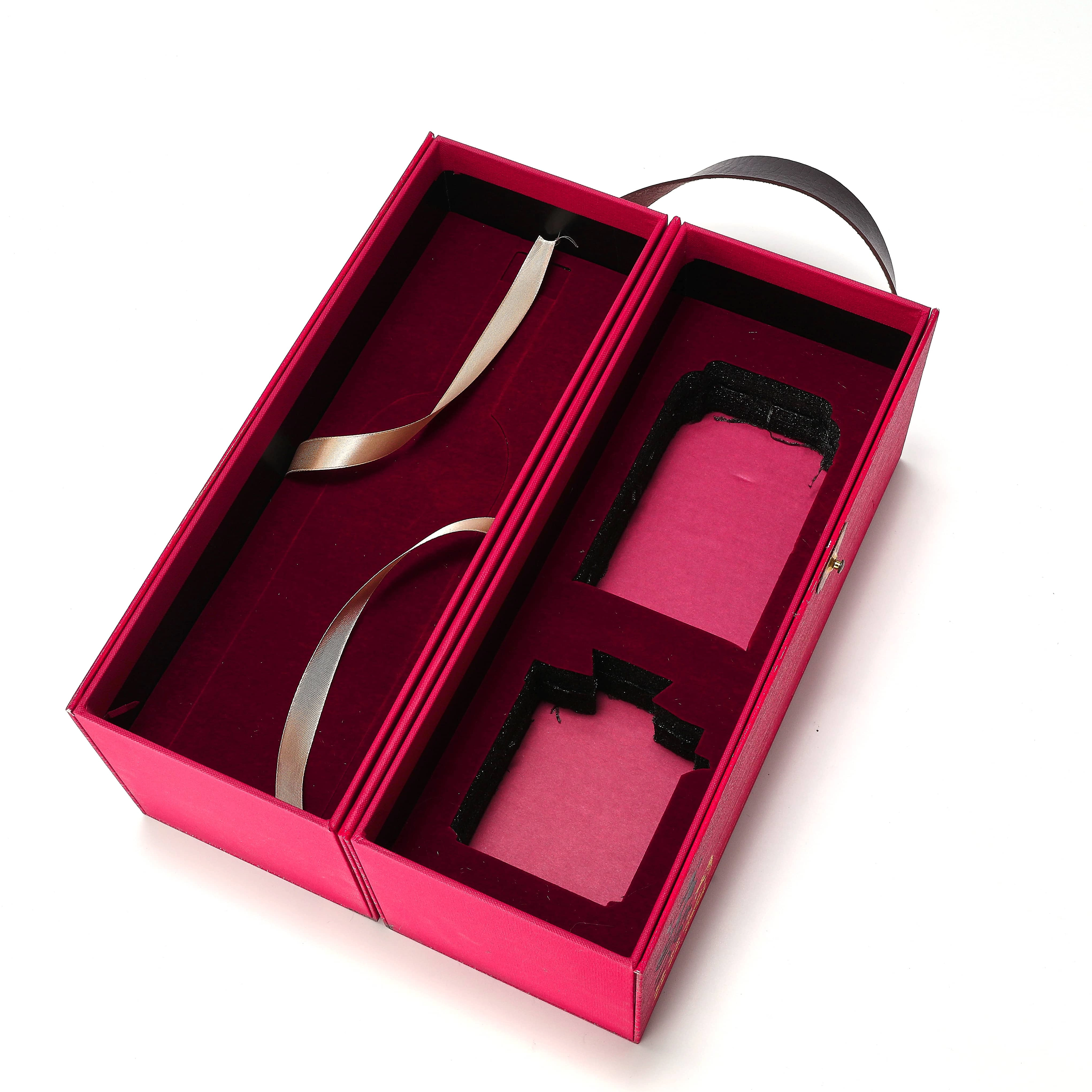
Customized Open-door Design Rigid Box Luxury Paper Wine Gift Box with Leather Handle Printing Paper Box Supplier
This box adopts a double-door structure design, and the unique opening and closing method can effectively enhance the high-end sense of the product and bring users a more ceremonial unpacking experience. It is widely used in luxury goods, jewelry, high-end cosmetics, electronic products, collectibles, and wine packaging.

Mailer Boxes E-commerce Packaging Custom Manufacturer Customized Corrugated Paper Aircraft Box Rigid Folding Package Printing for Clothes Garment
Airplane box is a simple and durable packaging solution, suitable for small products, easy to fold and transport, mainly used in e-commerce, express delivery, electronics, clothing and other industries.
© 2025 WINPACK PRINTING. All rights reserved

Wenhua Printing packaging
winpackprinting
Winpack Printing