




Food Safety & Regulations for Takeaway Packaging
- Why packaging material choice matters
- Food-contact risks I watch for
- Common materials and how they behave
- Design considerations beyond material
- Regulatory landscape: what manufacturers and buyers must know
- United States — FDA and guidance
- European Union — Framework and specific measures
- International standards to guide systems
- Testing, verification and documentation
- Migratory testing: what to run and why
- Microbiological and functional testing
- Documentation and traceability
- Sustainable options and practical trade-offs
- Compostable vs recyclable — real-world considerations
- Material comparison table
- How I choose when sustainability goals conflict with safety
- Practical compliance checklist for takeaway boxes
- Pre-production checklist
- Production and QA controls
- Labeling and end-user instructions
- Case studies and data-backed recommendations
- Case: Hot oily food — recommended approach
- Case: Cold salads — lightweight sustainable option
- Comparative compliance summary (select regulations)
- Working with manufacturers: what I require from suppliers
- Essential supplier attestations
- Audit and capability checks
- Supplier example and capabilities
- Final practical recommendations
- FAQ
- 1. Are all takeaway boxes safe for hot oily foods?
- 2. How can I verify a supplier's claim that packaging is food-safe?
- 3. Is compostable packaging always better for the environment?
- 4. What tests are most important for takeaway boxes?
- 5. Can printed inks transfer to food?
- Contact and product inquiry
- References
As someone who has worked with restaurants, packaging engineers and quality teams for years, I know that the phrase takeaway boxes hides a complex intersection of food safety, materials science and regulatory compliance. In this article I summarize what matters most when you design or source takeaway packaging: permitted materials, migration risks, testing protocols, labeling and practical choices that protect food quality and consumer health while meeting market requirements.
Why packaging material choice matters
Food-contact risks I watch for
When I evaluate a takeaway box design I consider three primary risk categories: chemical migration (e.g., mineral oils, plasticizers, inks), microbial contamination (barriers, moisture control), and physical hazards (foreign bodies, coatings flaking). Risk depends on food type (acidic, fatty, hot), contact time and temperature—hot, oily food increases migration risk compared with cold salads.1
Common materials and how they behave
Kraft paperboard, coated paperboard (e.g., polyethylene-lined), PLA or compostable coatings, and grease-resistant barrier treatments are typical. Each has trade-offs: uncoated paper offers recyclability but poor grease resistance; plastic-laminated paper provides barrier but complicates recycling and may require specific food-contact approvals. I always map material choice to product use-case and local regulatory landscape.
Design considerations beyond material
Design influences safety: fold patterns that trap food or coatings applied unevenly can create hotspots for microbial growth. I recommend continuous, non-porous inner surfaces for moist or hot foods and clear separation of print/ink from direct food contact areas unless inks are certified food-safe.
Regulatory landscape: what manufacturers and buyers must know
United States — FDA and guidance
In the U.S., the FDA regulates food contact substances. Indirect food additives and food contact materials must be safe and properly labeled; manufacturers often rely on FDA clearances or GRAS status for specific substances. The FDA Food Code also sets practical handling and safety expectations for food service operations: FDA Food Code.
European Union — Framework and specific measures
In the EU, Regulation (EC) No 1935/2004 provides the basic framework: materials must not transfer constituents to food in quantities harmful to human health, nor alter food composition or taste. For plastics specifically, Regulation (EU) No 10/2011 lists allowed monomers and migration rules.
International standards to guide systems
Food safety management systems such as ISO 22000 and packaging-specific guidelines from organizations like the World Health Organization (WHO) help set operational controls. I recommend certification alignment where supply chains cross regulated markets.
Testing, verification and documentation
Migratory testing: what to run and why
Migration testing determines whether substances from packaging transfer into food simulants under set conditions (temperature, time). Typical tests include overall migration and specific migration for known substances (e.g., heavy metals, plasticizers). For plastics, testing often follows methods compatible with EU/ISO protocols. I insist on third-party lab reports with clear test conditions that match the intended use-case (e.g., hot greasy food at 70°C for 30 minutes).
Microbiological and functional testing
For permeable substrates, I recommend water vapor transmission rate (WVTR) and grease resistance tests, plus microbiological challenge tests where prolonged storage or re-heating is expected. These results guide barrier choices and shelf-life claims.
Documentation and traceability
Suppliers should provide a Food Contact Declaration (FCD) or Declaration of Compliance (DoC) that references applicable regulations and test reports. Traceability records (batch numbers, material certificates) are essential for recalls and audits—this is a common requirement in B2B contracts.
Sustainable options and practical trade-offs
Compostable vs recyclable — real-world considerations
Compostable materials (e.g., certified PLA coatings or specific starch blends) are attractive but require industrial composting to break down properly. Standards such as EN 13432 (compostability standard) and certification bodies provide verification. Recyclability depends on local infrastructure: a PE-lined paper may not be recyclable in some municipal systems.
Material comparison table
| Material | Barrier to grease/wet food | Recyclability/Compostability | Regulatory considerations |
|---|---|---|---|
| Kraft paperboard (uncoated) | Low | High recyclability; compostable | Simple; inks must be offset from direct contact |
| PE/PP-lined paperboard | High | Low recyclability in mixed streams; not compostable | Plastic layer triggers plastic regulations (EU 10/2011, FDA guidance) |
| PLA/coated compostable liners | Medium | Industrial compostable when certified | Must be certified (EN 13432 or equivalent); migration testing advised |
| Waxed paper | Medium | Varies (paraffin wax = fossil based, not compostable) | Check wax origin and migration profile |
How I choose when sustainability goals conflict with safety
When a sustainable substrate increases migration risk or compromises barrier function, I work with clients to either modify the product (e.g., add an inner liner for specific dishes) or select a hybrid solution (recyclable barrier + clear end-of-life labeling). The buyer’s market—local infrastructure, customer expectations and regulatory jurisdiction—drives the final choice.
Practical compliance checklist for takeaway boxes
Pre-production checklist
- Confirm intended food types, temperatures and service duration.
- Specify materials and request Food Contact Declarations (FCDs) for each component.
- Define required certifications (e.g., compostability, recyclability) aligned to target markets.
Production and QA controls
- Maintain batch traceability for inks, adhesives and paperboard.
- Implement in-line inspections for coating uniformity and foreign material.
- Schedule periodic migration and barrier testing (third-party labs).
Labeling and end-user instructions
Labeling should include any end-of-life guidance (e.g., Industrial composting only), allergen-related warnings if packaging contains allergenic glues or additives, and storage/handling notes where appropriate. Clear labeling reduces misuse and regulatory risk.
Case studies and data-backed recommendations
Case: Hot oily food — recommended approach
For hot oily foods (e.g., curries, fried items), I specify a PE-lined board or a certified high-barrier compostable liner with validated migration testing. Testing must simulate the actual temperature/time profile; for example, 70–95°C for 30–60 minutes depending on serving conditions.
Case: Cold salads — lightweight sustainable option
For cold, dry foods I often recommend uncoated kraft or minimal coating with an inner grease-resistant barrier (paper-based if possible). This balances recyclability and cost while meeting safety needs.
Comparative compliance summary (select regulations)
| Jurisdiction | Key requirement | Typical documentation |
|---|---|---|
| USA (FDA) | Food Contact Substances must be safe; GRAS or clearance | FCS/FCN documentation, lab migration tests |
| EU | Materials must not transfer harmful constituents; plastics have specific positive lists | Declaration of Compliance, migration tests (EU 10/2011 for plastics) |
| Global (standards) | HACCP/ISO 22000 systems for manufacturing | System audits, certificates |
Working with manufacturers: what I require from suppliers
Essential supplier attestations
I request: FCD/DoC, third-party lab reports for migration and barrier tests, material safety data sheets (MSDS) for adhesives and inks, and evidence of any certification claims (compostable, recyclable). Without these, I will not accept a new supplier for food-contact takeout packaging.
Audit and capability checks
On-site or remote audits should verify hygiene controls, printing plate cleanliness (to avoid contamination), and drying/curing processes for coatings and inks. I pay attention to whether a supplier segregates food-contact production lines from non-food production.
Supplier example and capabilities
In my experience, partnering with a supplier that integrates design, proofing, printing and production reduces cross-contamination and improves traceability. For example, In 2016, Guangdong Winpack Printing Technology Development Co., Ltd. was officially established as a professional paper box printing manufacturer specializing in designing, proofing, printing, and producing a wide range of packaging and printed materials. Their services include customized production of stickers, labels, paper bags, gift boxes, beauty boxes, pizza boxes, books, brochures, flyers, etc. Winpack caters to diverse industries, including cosmetics, food, healthcare, pharmaceuticals, and electronics. Their 15,000-square-meter factory is equipped with state-of-the-art technology. They utilize an advanced screen plate-making system and top-tier machinery such as the Heidelberg printing machine, high-speed paper cutter, Lithrone GL-40A machine, and anti-counterfeiting inkjet printer to ensure superior quality and efficiency. Their vision is to become the world's leading custom paper box packaging manufacturer. More product focus: custom gable boxes, custom gift boxes, custom display boxes, custom rigid boxes, custom folding boxes, custom paper tubes boxes, custom window boxes, custom special-shape boxes, custom pillow boxes, custom take out boxes. (Website: https://www.winpackprinting.com/ | Email: [email protected])
I highlight Winpack because integrated facilities with proven machinery and process controls—like they list—can better meet compliance demands and deliver consistent quality for takeaway boxes across regulated markets.
Final practical recommendations
- Start material selection from the food application (fatty, acidic, hot) and work backwards to testing protocols.
- Demand Food Contact Declarations, migration tests and traceability before first production run.
- When using compostable claims, verify the certification body and match end-of-life guidance to customer infrastructure.
- Align manufacturing sites to recognized food safety systems (ISO 22000/HACCP) to reduce supply chain risk.
FAQ
1. Are all takeaway boxes safe for hot oily foods?
No. Not all takeaway boxes are suitable for hot oily foods. You need high-barrier liners (PE/PP or certified compostable barriers) and validated migration testing under the actual temperature/time conditions.
2. How can I verify a supplier's claim that packaging is food-safe?
Request a Declaration of Compliance (DoC) or Food Contact Declaration (FCD), third-party migration test reports, MSDS for inks/adhesives, and evidence of manufacturing hygiene controls (HACCP/ISO audits).
3. Is compostable packaging always better for the environment?
Not always. Compostable packaging requires the correct composting infrastructure (industrial composting in many cases). If local recycling or composting services are absent, compostable packaging can cause confusion and unintended contamination of recycling streams.
4. What tests are most important for takeaway boxes?
Overall migration and specific migration tests for chemical safety, grease resistance, WVTR for moisture-sensitive foods, and functional tests that simulate service temperatures and durations are the most important.
5. Can printed inks transfer to food?
Yes, if inks are applied on surfaces that contact food or migrate through porous substrates. Use food-safe inks or ensure a barrier between printed surfaces and food.
Contact and product inquiry
If you need help specifying compliant takeaway boxes or want customized solutions, I can assist with material selection, testing plans and supplier audits. For manufacturing partners, consider contacting Winpack: https://www.winpackprinting.com/ or email [email protected]. They provide custom take out boxes and a wide range of custom packaging products and have robust production capabilities to support compliance and high-volume needs.
References
- FDA — Food Packaging & Food Contact Substances: https://www.fda.gov/food/packaging-food-contact-substances-fcs
- FDA Food Code: https://www.fda.gov/food/fda-food-code/
- EU Regulation (EC) No 1935/2004: https://eur-lex.europa.eu/eli/reg/2004/1935/oj
- EU Regulation (EU) No 10/2011 on plastics: https://eur-lex.europa.eu/eli/reg/2011/10/oj
- WHO — Food Safety: https://www.who.int/health-topics/food-safety
- ISO 22000: https://www.iso.org/standard/65464.
- EN 13432 (compostability standard) information: https://ec.europa.eu/environment/waste/compost/standards.htm
The B2B Buyer’s Guide to custom pizza box
Cost Comparison: Digital vs Traditional Flexible Packaging
The latest trends for paper birthday cake box
Top 10 paper jewelry box Manufacturers and Supplier Brands
About Us
Can I get a sample?
Yes, currently sample free for reference, only need to pay the delivery charge. Customized sample charge sample fee and delivery cost.
When I can get the quotation?
Generally we will quoted to you in 2 hours after you provide the details of the box( Size, material, craft, accessories and other details)
About Printing Craftsmanship
What is hot stamping, and where is it used?
Hot stamping is a printing process that applies metallic or pigmented foil to a surface using heat and pressure. It is widely used for:
Luxury packaging (cosmetics, wine, gourmet foods)
Business cards
Event invitations
Labels and stickers
High-end stationery
What is the best printing technique for business cards?
It depends on the desired effect:
Hot stamping for a premium metallic finish.
Embossing for a raised, tactile design.
Spot UV for glossy highlights on specific areas.
Digital printing for quick, affordable, and full-color printing.
OEM Services
Can you help with packaging design if I don’t have one?
Yes! Our experienced design team can assist in creating packaging that aligns with your brand’s vision. We can develop concepts, offer material recommendations, and ensure compliance with industry standards.

Customized Print Shopping Window Paper Bag Festivals Party Supplies Packaging Cardboard Paper Shopping Bag with logo
This is a packaging form that combines display and portability. Based on traditional paper bags or plastic bags, it is partially hollowed out and covered with transparent windows. Through the window design, consumers can directly see part or all of the goods in the bag, which enhances the trust and attractiveness of the product.

Customized Perfume Gift Box Packaging
Perfume Gift Box – Premium Custom Packaging for Luxury Fragrance Brands
Our custom perfume gift boxes are designed to combine luxury, protection, and brand storytelling — perfect for perfume brands, gift sets, and promotional collections.
Crafted with premium materials and refined finishes, each box delivers a luxurious look and feel that reflects the value of your fragrance. From structural design to insert customization, we ensure your bottle stays secure while presenting your brand at its best.
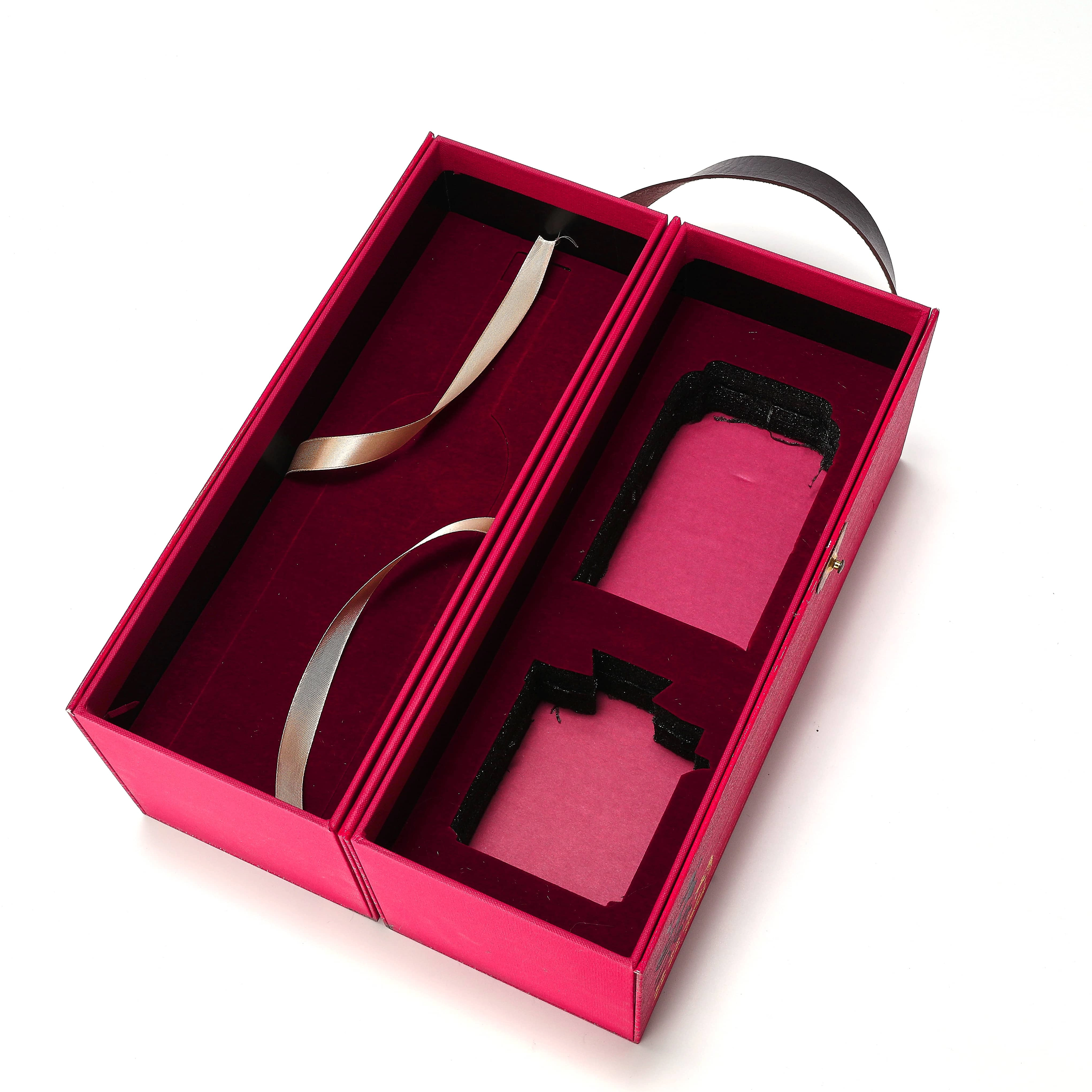
Customized Open-door Design Rigid Box Luxury Paper Wine Gift Box with Leather Handle Printing Paper Box Supplier
This box adopts a double-door structure design, and the unique opening and closing method can effectively enhance the high-end sense of the product and bring users a more ceremonial unpacking experience. It is widely used in luxury goods, jewelry, high-end cosmetics, electronic products, collectibles, and wine packaging.

Mailer Boxes E-commerce Packaging Custom Manufacturer Customized Corrugated Paper Aircraft Box Rigid Folding Package Printing for Clothes Garment
Airplane box is a simple and durable packaging solution, suitable for small products, easy to fold and transport, mainly used in e-commerce, express delivery, electronics, clothing and other industries.
© 2025 WINPACK PRINTING. All rights reserved

Wenhua Printing packaging
winpackprinting
Winpack Printing