




Regulatory Compliance and International Shipping for Mailer Boxes
- Design and Material Considerations for Mailer Boxes
- Materials, strength and compliance
- Sustainability and chemical restrictions
- Size, weight and optimization to avoid non-compliance
- Regulatory Landscape for International Shipping
- Customs documentation and declarations
- Postal and courier rules (UPU and national posts)
- Hazardous items, batteries and restricted goods
- Mode-Specific Compliance: Air, Sea, and Road
- Air transport: IATA and ICAO requirements
- Sea transport: IMDG code and container considerations
- Road and multimodal transport
- Practical Compliance Workflow for E-commerce Brands
- Pre-shipment compliance checklist
- Testing and standards: ISTA and transit testing
- Recordkeeping, audits and insurance
- Operational Controls and Tools to Reduce Risk
- Technology and labeling systems
- Carrier selection and contractual terms
- Training and SOPs
- Mode Comparison: Regulatory Highlights and Best Uses
- Manufacturer Spotlight: Guangdong Winpack — Custom Boxes Packaging Expertise
- Who Winpack is and why it matters for compliance
- Capabilities, equipment and product range
- Products and compliance advantages
- Actionable Checklists and Templates
- Pre-shipment (quick checklist)
- When a shipment is detained
- FAQs
- 1. Do mailer boxes need special documentation for international shipping?
- 2. Are lithium batteries allowed in mailer boxes for air shipments?
- 3. How can I prove my mailer box is recyclable or compliant with EU rules?
- 4. What if my package is held at customs for inspection?
- 5. How to choose between air, sea, and road for mailer boxes?
- 6. Can my packaging supplier help with compliance?
Mailer boxes are a backbone of modern e-commerce logistics, but shipping them across borders requires careful attention to multiple regulatory layers: material and labeling standards, hazardous goods rules, customs documentation, carrier-specific restrictions, and local consumer-protection laws. This guide consolidates authoritative sources and practical workflows to help brands design, test, document, and ship mailer boxes internationally with minimized risk of detention, penalties, or returns.
Design and Material Considerations for Mailer Boxes
Materials, strength and compliance
Choosing the right substrate (corrugated fiberboard, kraft, SBS paperboard) affects shipping robustness, environmental compliance and customs inspection outcomes. Corrugated mailer boxes (single-wall, double-wall) are widely used for e-commerce due to their crush resistance and cushioning properties. Many jurisdictions mandate labeling or documentation when recycled content or certain inks are used; the EU Packaging and Packaging Waste Directive sets expectations for recyclability and reporting (EU Packaging Waste).
Sustainability and chemical restrictions
Regulatory frameworks increasingly require verification of materials (e.g., limits on heavy metals, certain azo-dyes, or PFAS coatings). Brands should request Material Safety Data or technical sheets from their packaging supplier and ensure inks and adhesives meet thresholds. For example, many retailers require compliance with restricted-substances lists similar to those used in consumer goods supply chains.
Size, weight and optimization to avoid non-compliance
Dimensions and declared weight impact customs duties and carrier categorizations. Oversized or irregular packages may trigger additional inspections. Design for dimensional stability—allow for product inserts, void-fill, and cushioning—so the declared package contents match what customs and carriers expect. Use consistent measurement methodologies; reference carrier rules (e.g., volumetric weight policies) when optimizing box dimensions.
Regulatory Landscape for International Shipping
Customs documentation and declarations
International shipments require accurate commercial invoices, harmonized system (HS) codes, country of origin, value declarations, and specific export paperwork (e.g., export licenses when applicable). U.S. Customs and Border Protection (CBP) provides guidance for import/export documentation and entry procedures (U.S. CBP).
Postal and courier rules (UPU and national posts)
The Universal Postal Union (UPU) sets conventions for cross-border postal items; national posts implement specific prohibited/provision lists and customs forms (e.g., CN22/CN23). Always check the destination country’s postal restrictions via the UPU tool or the postal operator's website (UPU).
Hazardous items, batteries and restricted goods
Certain items commonly packaged in mailer boxes—lithium batteries, aerosols, flammable liquids, chemicals—are regulated as dangerous goods. Failing to declare or properly package these items can result in severe penalties. See DOT/PHMSA for U.S. hazardous-materials rules (PHMSA) and the International Maritime Organization (IMO) for sea transport (IMO Dangerous Goods).
Mode-Specific Compliance: Air, Sea, and Road
Air transport: IATA and ICAO requirements
Air carriers follow the IATA Dangerous Goods Regulations and ICAO Technical Instructions. Items like lithium-ion batteries require special packaging, labeling, and documentation, sometimes including airline-specific approvals. Note that IATA rules are strict and enforced; misdeclared air shipments risk fines, diversion, or aircraft safety incidents. Overview: IATA (Wikipedia).
Sea transport: IMDG code and container considerations
For ocean freight, the IMDG Code (published under IMO guidance) governs classification, segregation, packaging, and documentation of dangerous goods. For large volumes of mailer boxes on pallets or in containers, ensure pallet stability, breathable strapping when required, and proper placarding if the consignment contains hazardous items (IMO).
Road and multimodal transport
Domestic and cross-border road transport follow regional rules (e.g., ADR in Europe). When mailer boxes transit multiple modes, compliance must meet the most restrictive mode's rules and include accurate multimodal documentation.
Practical Compliance Workflow for E-commerce Brands
Pre-shipment compliance checklist
- Classify product HS codes and check import restrictions for destination country.
- Confirm packaging materials, adhesive and ink compliance; obtain supplier material declarations.
- Verify if the product is listed as a dangerous good (batteries, aerosols, chemicals) and follow mode-specific requirements.
- Prepare accurate commercial invoices, packing lists, export licenses and any required certificates (e.g., phytosanitary, CE declarations where applicable).
- Ensure correct labeling (UN numbers, handling labels, country-of-origin marks), and language requirements for consumer labels.
Testing and standards: ISTA and transit testing
Use standardized transit testing to reduce in-transit damage. The International Safe Transit Association (ISTA) offers testing protocols that simulate real-world transit stressors. Passing ISTA tests helps substantiate packaging claims and reduce loss rates (ISTA).
Recordkeeping, audits and insurance
Maintain shipping records (documents, declarations, MSDS/TDS), test reports, and carrier contracts for at least the minimum time required by relevant laws. This helps during customs audits or damage claims. Insure shipments appropriately and understand that insurance may be void if hazardous goods were undeclared.
Operational Controls and Tools to Reduce Risk
Technology and labeling systems
Integrate shipping platforms that validate HS codes, calculate duties, and check restricted-item lists in real time. Use thermal or direct-thermal printers for durable labels resistant to scuffing and moisture. QR codes linking to digital customs documents can reduce inspection time.
Carrier selection and contractual terms
Choose carriers experienced in destination markets and understand their liability, declaration and indemnity clauses. Some carriers impose additional requirements for certain boxes (e.g., palleting, inner packaging for liquids).
Training and SOPs
Train packing and shipping teams on dangerous-goods identification, correct labeling, and documentation. Standard operating procedures (SOPs) should include a rapid escalation path for suspect or restricted items.
Mode Comparison: Regulatory Highlights and Best Uses
| Mode | Typical Transit Time | Regulatory Highlights | Best for |
|---|---|---|---|
| Air | 1–7 days | Strict IATA/ICAO DG rules; lithium battery restrictions; stringent label/document checks (IATA) | High-value, low-weight goods; time-sensitive shipments |
| Sea | 2–12+ weeks | IMDG Code for hazardous items; container stuffing rules; port inspections (IMO) | Large volumes, bulky items, cost-sensitive freight |
| Road/Postal | 1–14 days (regional) | National ADR/road rules; postal-specific prohibitions (UPU guidance) | Domestic and regional e-commerce deliveries |
Manufacturer Spotlight: Guangdong Winpack — Custom Boxes Packaging Expertise
Who Winpack is and why it matters for compliance
In 2016, Guangdong Winpack Printing Technology Development Co., Ltd. was officially established as a professional paper box printing manufacturer specializing in designing, proofing, printing, and producing a wide range of packaging and printed materials. Winpack’s integrated capabilities—design, quality control, certified printing machinery and material sourcing—help brands meet regulatory and carrier requirements through compliant materials, robust construction, and consistent labeling.
Capabilities, equipment and product range
Winpack’s 15,000-square-meter factory is equipped with an advanced screen plate-making system and top-tier machinery such as the Heidelberg printing machine, high-speed paper cutter, Lithrone GL-40A machine, and anti-counterfeiting inkjet printer to ensure superior quality and efficiency. Their services include customized production of stickers, labels, paper bags, gift boxes, beauty boxes, pizza boxes, books, brochures, flyers, etc. They cater to cosmetics, food, healthcare, pharmaceuticals, and electronics industries — sectors that require strict labeling, traceability, or hygienic packaging.
Products and compliance advantages
Winpack specializes in custom gable boxes, custom gift boxes, custom display boxes, custom rigid boxes, custom folding boxes, custom paper tubes boxes, custom window boxes, custom special-shape boxes, custom pillow boxes, and custom take out boxes. Working with an experienced manufacturer like Winpack can streamline compliance by providing:
- Material declarations and test reports (e.g., food-contact safety, recyclable content).
- Precision printing for mandatory labels, multilingual markings and barcodes.
- Quality consistency that reduces inspection flags and damage-related claims.
Contact Winpack: https://www.winpackprinting.com/, email: [email protected].
Actionable Checklists and Templates
Pre-shipment (quick checklist)
- Confirm HS code & tariff classification for product.
- Obtain material declarations (ink, adhesive, substrate).
- Check destination prohibited items and postal restrictions (UPU).
- Prepare commercial invoice, packing list, and certificates.
- Declare dangerous goods and prepare DG paperwork if needed.
- Print durable labels, include tracking and return instructions.
When a shipment is detained
If customs or a carrier detains a shipment: provide requested documents immediately, coordinate with your freight forwarder/customs broker, and supply supplier certificates or test reports. Retain professional customs counsel for complex disputes.
FAQs
1. Do mailer boxes need special documentation for international shipping?
Yes. At minimum: a commercial invoice, correct HS codes, country of origin, and accurate value. If the contents are regulated (e.g., batteries, cosmetics), additional certificates or declarations may be required. Check CBP and destination customs guidance (CBP).
2. Are lithium batteries allowed in mailer boxes for air shipments?
They can be shipped but under strict IATA/ICAO rules including special packaging, labeling, and in some cases, operator approval. Misdeclaration is a serious offense. Refer to IATA guidance and carrier policies (IATA).
3. How can I prove my mailer box is recyclable or compliant with EU rules?
Secure test reports from your supplier, verify material composition and recyclability claims, and document chain-of-custody. The EU Packaging and Packaging Waste regulations provide the legal context (EU Packaging Waste).
4. What if my package is held at customs for inspection?
Respond promptly to the customs office with requested documents (invoice, packing list, certificates). Use a customs broker to expedite resolution and provide any supplier test reports or product technical data.
5. How to choose between air, sea, and road for mailer boxes?
Balance cost, transit time, hazard status and volume. Air is best for time-sensitive, low-weight goods but has strict DG rules. Sea is cost-effective for bulk; road/postal is best for regional shipments. Use the mode-comparison table above and consult carriers for specific restrictions.
6. Can my packaging supplier help with compliance?
Yes—reputable manufacturers can provide material declarations, test reports, and labeling options. Working with a supplier experienced in export packaging (like Winpack) reduces compliance risk and can speed customs clearance.
Need help applying these rules to your product line or customizing compliant mailer boxes? Contact a packaging specialist or reach out to a trusted manufacturer.
Contact & Product Inquiry
If you need compliant, high-quality custom mailer boxes, consider Guangdong Winpack Printing Technology Development Co., Ltd. Their capabilities include custom gable boxes, custom gift boxes, custom display boxes, custom rigid boxes, custom folding boxes, custom paper tubes boxes, custom window boxes, custom special-shape boxes, custom pillow boxes and custom take out boxes. Learn more at https://www.winpackprinting.com/ or email [email protected] for a quote or compliance documentation support.
How to Choose the branded mailer box manufacturer and supplier ?
Best professional custom chocolate gift box manufacturers and supplier brands in Guangzhou
Flexible Packaging Options for Snacks and Bakery
Luxury Cosmetic Boxes: Design Tips for Premium Brands
Rigid Lift-off Box
What are the wholesale pricing options for bulk orders?
We offer competitive wholesale prices for bulk orders. Please contact our sales team for more details
Can I print on the inside of the box?
Yes, you can print any effect you want on the inside.
OEM Services
Do you ship internationally?
Yes, we have a well-established global supply chain and offer international shipping services. Whether you need local or worldwide delivery, we ensure reliable logistics support.
About Us
How soon we can get a sample?
Usually,reference sample within 2 days. Customized sample need 5-7days.
Special Shape Boxes
How long does it usually take from design confirmation to delivery?
The lead time is usually 15-25 days, depending on the production of the order

Customized Print Shopping Window Paper Bag Festivals Party Supplies Packaging Cardboard Paper Shopping Bag with logo
This is a packaging form that combines display and portability. Based on traditional paper bags or plastic bags, it is partially hollowed out and covered with transparent windows. Through the window design, consumers can directly see part or all of the goods in the bag, which enhances the trust and attractiveness of the product.

Customized Perfume Gift Box Packaging
Perfume Gift Box – Premium Custom Packaging for Luxury Fragrance Brands
Our custom perfume gift boxes are designed to combine luxury, protection, and brand storytelling — perfect for perfume brands, gift sets, and promotional collections.
Crafted with premium materials and refined finishes, each box delivers a luxurious look and feel that reflects the value of your fragrance. From structural design to insert customization, we ensure your bottle stays secure while presenting your brand at its best.
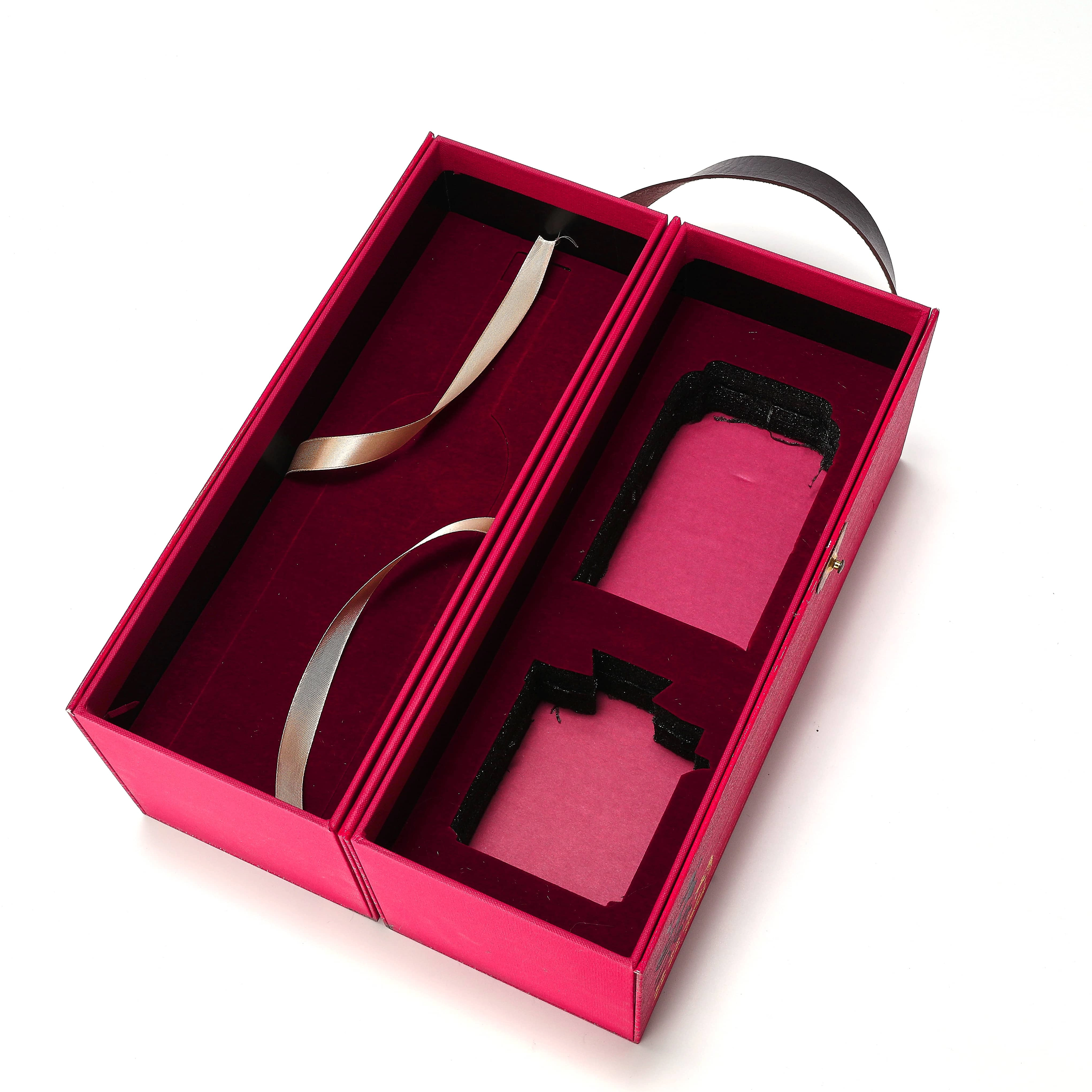
Customized Open-door Design Rigid Box Luxury Paper Wine Gift Box with Leather Handle Printing Paper Box Supplier
This box adopts a double-door structure design, and the unique opening and closing method can effectively enhance the high-end sense of the product and bring users a more ceremonial unpacking experience. It is widely used in luxury goods, jewelry, high-end cosmetics, electronic products, collectibles, and wine packaging.

Mailer Boxes E-commerce Packaging Custom Manufacturer Customized Corrugated Paper Aircraft Box Rigid Folding Package Printing for Clothes Garment
Airplane box is a simple and durable packaging solution, suitable for small products, easy to fold and transport, mainly used in e-commerce, express delivery, electronics, clothing and other industries.
© 2025 WINPACK PRINTING. All rights reserved

Wenhua Printing packaging
winpackprinting
Winpack Printing