



The Pantone Color Matching System (PMS) and Its Use In Printing
The Pantone Matching System (PMS) is a global leader in colour language and design.
It is a standardised colour matching system operated by Pantone Inc.
Pantone has successfully established it as the universal language of colour by naming almost every shade.
Today, printing and packaging is done using this language on a global scale.
1. So, what exactly is Pantone?
PMS is a standardised colour matching system based on a particular type of colour, coded by a number system also referred to as 'Pantone numbers'.
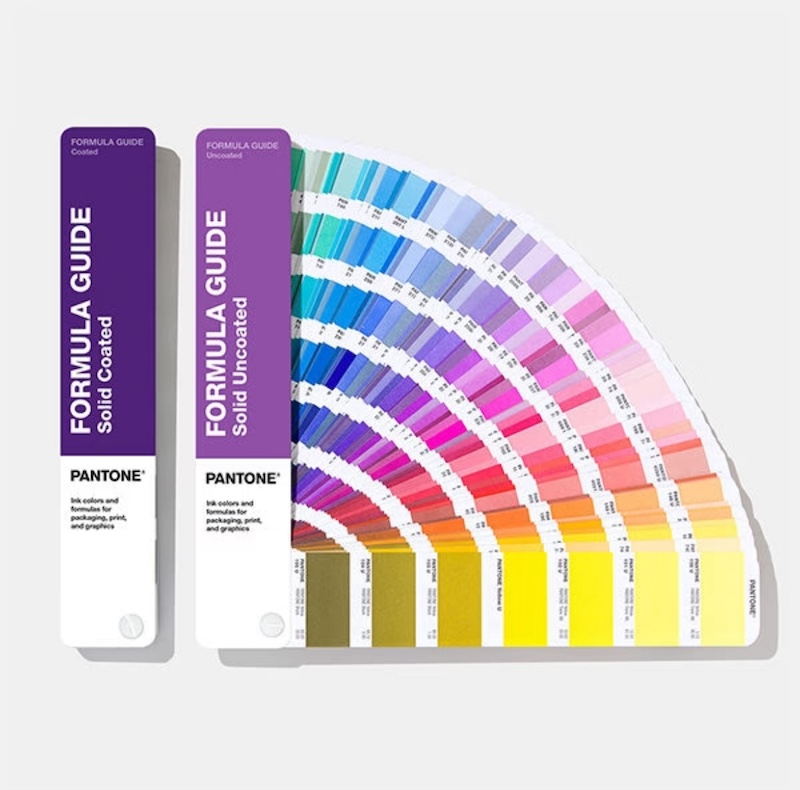
Although the printing industry is the most popular sector for PMS, it is also widely used in the manufacture of plastics, clothing, fabrics and paint.
The most popular guide is the PMS colour matching system, used by designers, manufacturers, clients, artists and printers.
This system has gained popularity due to its precision in colour recognition, quality control, and precise design specifications.
2. The different palettes
There are several PMS colour palettes, such as:
Pantone Solid Palette
- Process palette
- Textile palette
- Plastic Palette
- Goe palette
These various palettes contain thousands of colours and tones, which are applied differently depending on the industry.

Pantone effectively dictates how a particular colour should appear, ensuring that it is the correct shade of magenta, cyan, red or yellow.
The most popular Pantone colour palette is Pantone Solid Colors.
With slightly over 1,100 distinct colours, it is mostly used in print, graphics, and publishing.
It is the palette most likely to be found on colour printers and guarantees correct colour matches.
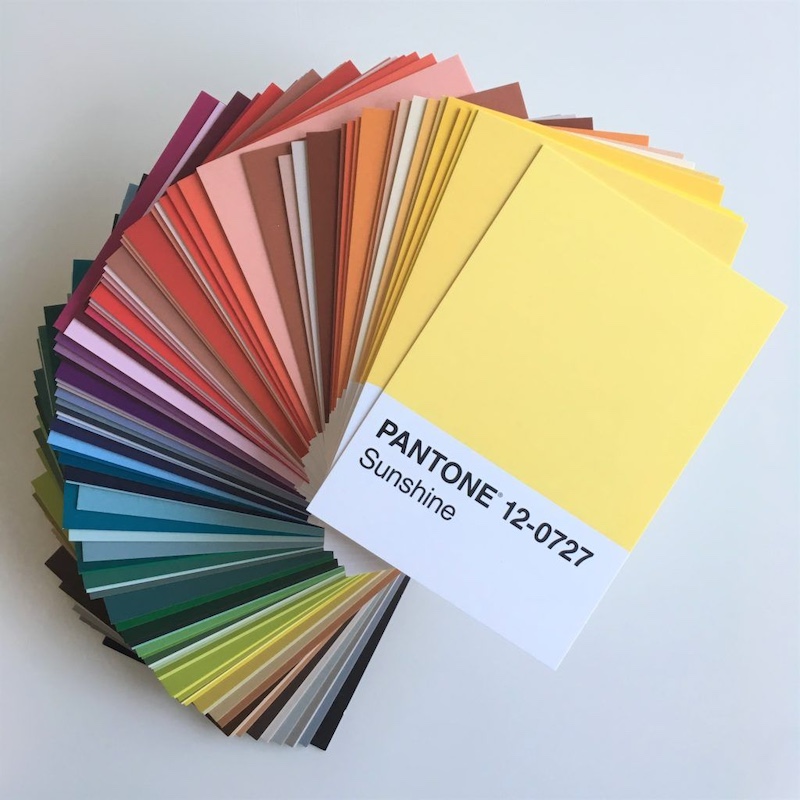
3. Advantages of Pantone colours
It is the world's most popular colour system and has a higher chance of being recognised and accepted by industries than other colour systems.
It also offers an extremely wide range of tones with highly accurate colour matching.
No other system has the level of detail and precision of PMS.
This makes it perfect for designing branded packaging, as it enables the creation of a homogeneous colour scheme.
4. Pantone versus CMYK
CMYK colours consist of just four colours: cyan, magenta, yellow and black. These colours are normally printed and then overprinted.
PMS is a set of colours that does not depict any particular model and can print a wider variety of colours than is possible with CMYK.
Printing in CMYK can produce significantly greater variation and cannot produce precise or dependable colour output.
One factor that has made PMS a global standard is its consistent colour reproduction.
It is expected that PMS will remain the worldwide standard for printing in the foreseeable future.
About Printing Craftsmanship
What is the best printing technique for business cards?
It depends on the desired effect:
Hot stamping for a premium metallic finish.
Embossing for a raised, tactile design.
Spot UV for glossy highlights on specific areas.
Digital printing for quick, affordable, and full-color printing.
Rigid Lift-off Box
Can I order a sample of my rigid box?
Yes, we strongly recommend that you do so, we provide a variety of sample types to meet different usage situations and help you guarantee the best results!
Can I get a sample before placing a formal order?
Yes, we provide samples to our customers. Please contact our sales team to inquire about sample availability and pricing.
OEM Services
Do you ship internationally?
Yes, we have a well-established global supply chain and offer international shipping services. Whether you need local or worldwide delivery, we ensure reliable logistics support.
Folding Boxes
Can I get a sample before placing a formal order?
Samples usually require a certain fee, but this fee can be partially or fully refunded after the customer confirms the order.

Start Your Packaging Journey Today
Discover Our Curated Collection of Bespoke Packaging Cases & Tailored System Solutions
© 2025 WINPACK PRINTING. All rights reserved

Wenhua Printing packaging
winpackprinting
Winpack Printing