




How a Custom Packaging Manufacturer Manages Tooling and Die Costs
- Balancing cost, quality and time in tooling decisions
- What tooling means in packaging production
- How tooling impacts the total cost of ownership
- Key drivers that determine tooling complexity and price
- Tooling and die cost fundamentals
- Typical tooling types and their lifecycle
- Cost allocation: amortization vs unit costing
- Standards and quality baselines
- Practical strategies I use to reduce tooling and die expenses
- Design for manufacturability (DFM) and early-stage decisions
- Modular tooling and shared components
- Prototyping strategy: prototype tooling vs digital proofs
- In-house vs outsourced tooling: a practical comparison
- Comparison table: in-house, supplier-made, specialist vendor
- How I select the best path
- Negotiation levers and contractual protections
- Cost-control tactics I apply on the production floor
- Preventive maintenance and tool reuse
- Quality assurance and rejects management
- Cost visibility and monthly reporting
- Why I recommend partnering with an experienced custom packaging manufacturer
- Winpack: capabilities that reduce total cost and risk
- How partnering changes the amortization equation
- FAQ — Frequently asked questions
- 1. What determines whether I should pay for a custom die or use a standard template?
- 2. How do you amortize tooling cost when forecasting unit cost?
- 3. Can tooling be leased or financed?
- 4. How does tooling quality affect sustainability and waste?
- 5. What contractual protections should I require when outsourcing tooling?
- 6. How long does it typically take to produce a die for a new box design?
- Contact and next steps
Summary for : I describe practical, verifiable methods a custom packaging manufacturer uses to manage tooling and die costs across prototyping, short runs and mass production. This includes how tooling is scoped, how costs are amortized, the trade-offs between in-house and outsourced tooling, quality and lead-time impacts, and measurable strategies to reduce per-unit costs while protecting design integrity and brand security.
Balancing cost, quality and time in tooling decisions
When I advise brands and product teams, the first thing I do is reframe the tooling conversation: tooling should be evaluated not only as an upfront capital expense but as a lever that affects unit cost, time to market, product quality, and risk. The term tooling and dies covers a range of items — from simple cutting dies for folding cartons to complex multi-station tooling for rigid or specialty boxes — and each carries different cost profiles and lifecycle considerations.
What tooling means in packaging production
Tooling traditionally refers to the physical forms used to shape, cut, emboss, or crease material. In paper and board packaging, that typically includes steel-rule dies, laser-cut dies, embossing/debossing plates, creasing rules, tooling for window patches, and forming rigs. These tools convert a flat printed sheet into the finished box. For an overview of die cutting methods, see Die cutting — Wikipedia.
How tooling impacts the total cost of ownership
Upfront tooling is one component; the full cost picture includes per-unit material, printing, labor, machine run-time, quality rejects, logistics, and obsolescence. I use an activity-based view (similar to principles in activity-based costing) to allocate tooling expense across forecasted production quantities, which yields a realistic per-unit tooling amortization that informs pricing and sourcing decisions.
Key drivers that determine tooling complexity and price
- Design complexity (special shapes, windows, multi-piece assemblies, inserts)
- Material choice (thickness, lamination, specialty coatings)
- Tolerance and finish requirements (embossing, foil stamping, spot UV)
- Expected run length and repeatability
- Anti-counterfeiting or security features
Tooling and die cost fundamentals
Typical tooling types and their lifecycle
Tooling types in a custom packaging manufacturer’s shop include:
- Steel-rule dies — used for most folding cartons and simple shapes; durable and serviceable.
- Laser/knife dies — fast to produce, ideal for prototypes and short runs.
- Embossing/debossing plates and foil dies — for High Quality finishing; higher cost and precision needs.
- Forming and injection molds — for rigid boxes or hybrid boxes with plastic parts.
The lifecycle ranges from prototype (days-weeks) to mass production (years), and I always plan for maintenance and replacement when forecasting TCO (total cost of ownership).
Cost allocation: amortization vs unit costing
I calculate the per-unit tooling charge by dividing the capital cost by the forecasted useful units, adjusted for scrap and maintenance. For example, a die with a 3-year useful life and a conservative production forecast yields a lower per-unit cost than treating tooling as a one-time sunk cost. This approach helps marketing and procurement teams compare packaging options on an apples-to-apples basis.
Standards and quality baselines
Packaging must meet regulatory and shipping standards depending on the product. For pharmaceuticals and food products, packaging standards and controls (see relevant ISO categories at ISO — Packaging) influence tooling precision and validation steps, which in turn drive tooling specifications and testing requirements.
Practical strategies I use to reduce tooling and die expenses
Design for manufacturability (DFM) and early-stage decisions
Small design changes early in development can reduce tooling cost dramatically. I commonly recommend standardized die templates and minimal unique features in early launches. For instance, avoiding a custom-shaped window cut or reducing the number of glued seams can allow use of a lower-cost die or a shared tool across SKUs.
Modular tooling and shared components
Where feasible, I design components so multiple SKUs can share a base die with replaceable inserts. This approach lowers capital outlay and shortens lead time for new variants. It also allows rapid iterations during A/B testing without a full new tool build.
Prototyping strategy: prototype tooling vs digital proofs
I balance physical prototyping (laser-cut dies, 3D mock-ups) with high-fidelity digital proofs. Laser or knife dies are inexpensive for validation; full steel-rule tools are commissioned only after form and fit are confirmed. This staged approach reduces the risk of expensive rework.
In-house vs outsourced tooling: a practical comparison
I help clients decide whether to build tooling in-house, partner with their packaging supplier, or work with a specialist tool maker. The right answer depends on volumes, the need for IP protection, speed, and capital availability.
Comparison table: in-house, supplier-made, specialist vendor
| Factor | In-house | Supplier-made (outsourced) | Specialist tooling vendor |
|---|---|---|---|
| Capital expenditure | High (machines, skilled staff) | Low (pay per tool) | Medium (tooling costs, but no plant investment) |
| Lead time | Short for existing capability; longer to scale | Depends on supplier capacity; often faster for bundled production | Variable; can be faster for complex/high-precision tools |
| Quality control | High control, dependent on team skill | Supplier quality processes typical; less direct control | Expert level; precision focused |
| IP/security | Best (kept internal) | Good with NDA and vendor reputation | Good but may require strong contracts |
How I select the best path
My selection process weighs forecast volumes, IP sensitivity, and total landed cost. For startups or seasonal SKUs, outsourcing tooling to a trustworthy custom packaging manufacturer reduces upfront burden. For enterprise brands with high recurring volumes and strict IP needs, in-house or exclusive tool arrangements may be justified.
Negotiation levers and contractual protections
When outsourcing, I insist on clear SLA (service level agreements) covering tool ownership, maintenance, lead time penalties, and obsolescence clauses. A common industry practice is co-investment in tooling with a vendor, which aligns incentives and gives the brand partial ownership or first refusal on reorders.
Cost-control tactics I apply on the production floor
Preventive maintenance and tool reuse
Tool lifespan hinges on maintenance. I require preventive maintenance schedules and logbooks to track tool wear. Regrinding, rule replacement and controlled storage extend tool life and reduce long-term expense.
Quality assurance and rejects management
Rejects are an often-overlooked driver of effective tooling cost. I deploy inline inspection, first-piece approvals, and statistical process control for early detection of tool-related issues, which reduces scrap and the need for premature replacement.
Cost visibility and monthly reporting
I create a tooling-cost dashboard that tracks amortized cost per SKU, maintenance spend, and tool utilization rate. This data-driven view helps product teams choose between a High Quality finish that increases tooling expense and a more economical approach that meets functional needs.
Why I recommend partnering with an experienced custom packaging manufacturer
Working with an experienced supplier often provides optimized tool design, proven production experience, and lower combined lead times. A capable partner will advise on DFM, propose modular tooling, and provide transparent amortization scenarios so you can evaluate cost per unit accurately.
Winpack: capabilities that reduce total cost and risk
In 2016, Guangdong Winpack Printing Technology Development Co., Ltd. was officially established as a professional paper box printing manufacturer specializing in designing, proofing, printing, and producing a wide range of packaging and printed materials. I have found that partnering with a supplier of Winpack’s capability can materially shorten the development cycle while controlling tooling costs.
Our services include customized production of stickers, labels, paper bags, gift boxes, beauty boxes, pizza boxes, books, brochures, flyers, etc. Winpack caters to diverse industries, including cosmetics, food, healthcare, pharmaceuticals, and electronics. Our 15,000-square-meter factory is equipped with state-of-the-art technology. We utilize an advanced screen plate-making system and top-tier machinery such as the Heidelberg printing machine, high-speed paper cutter, Lithrone GL-40A machine, and anti-counterfeiting inkjet printer to ensure superior quality and efficiency. Our vision is to become the world's leading custom paper box packaging manufacturer. Our website is https://www.winpackprinting.com/ and contact email is [email protected].
Winpack’s strengths include strong print-to-die integration, advanced finishing options (foil, emboss, window lamination), anti-counterfeiting inkjet capability, and the capacity to handle both prototyping and large-scale runs. Their manufacturing portfolio covers custom gable boxes, custom gift boxes, custom display boxes, custom rigid boxes, custom folding boxes, custom paper tubes boxes, custom window boxes, custom special-shape boxes, custom pillow boxes, and custom take out boxes. From my experience, these capabilities reduce the number of handoffs and limit tooling rework.
How partnering changes the amortization equation
Partnering with a full-service custom packaging manufacturer like Winpack often enables shared tooling strategies (vendor holds master dies), consolidated runs across multiple SKUs, and better negotiation on maintenance and rework — all reducing your effective per-unit tooling cost. I work with clients to negotiate ownership terms and production forecasts that align incentives.
FAQ — Frequently asked questions
1. What determines whether I should pay for a custom die or use a standard template?
Decide based on expected run length, branding needs, and willingness to accept slightly higher unit costs for a non-custom shape. If projected volumes are low or the design is likely to change, a standard template or shared tooling is often the best path.
2. How do you amortize tooling cost when forecasting unit cost?
I divide tooling cost by conservative forecasted production units (adjusted for scrap and projected maintenance). I also model sensitivity (e.g., best/expected/worst volume scenarios) so stakeholders see per-unit cost under varying demand patterns.
3. Can tooling be leased or financed?
Yes. Some manufacturers or third-party financiers offer tooling leasing or co-investment models, which reduce upfront cash outlay for the brand and spread cost over production runs. Contract terms should clarify ownership, maintenance responsibility, and rights on termination.
4. How does tooling quality affect sustainability and waste?
Higher-quality tooling reduces miscuts and rejects, lowering material waste and rework. Durable tools that are maintained and reused support sustainable production. I advise clients to include tool longevity and recyclability in procurement specs.
5. What contractual protections should I require when outsourcing tooling?
Insist on clear IP ownership or licensing terms, maintenance schedules, SLAs for lead times and quality, warranties on tool performance, and clauses for end-of-life or replacement pricing. An NDA and first-refusal rights on reorders are common protections.
6. How long does it typically take to produce a die for a new box design?
For prototype laser-cut dies, days to a week. For a steel-rule die for production, typical lead times are 1–3 weeks depending on complexity and vendor capacity. More complex embossing or foil dies can take longer.
Contact and next steps
If you are evaluating tooling strategies, I recommend a short audit of forecast volumes, SKU complexity, and finish requirements. For hands-on support and turnkey production, consider partnering with an experienced custom packaging manufacturer. To discuss tooling options or request a proposal, visit Winpack or email [email protected]. I can also provide a tooling amortization worksheet and a production decision matrix tailored to your SKUs.
By treating tooling as a strategic investment rather than just an upfront cost, you can optimize unit economics, reduce time to market, and protect brand quality. I’ve seen these approaches save clients significant total cost over product lifecycles while preserving the design impact they need on shelf.
Food-Safe Materials: Choosing Custom Packaging for Safety
ROI of Flexographic Printing for High-Volume Packaging Orders
Flexographic Printing Quality Control and Inspection Checklist
Packaging Inserts and Foam for Custom Rigid Boxes
About Us
Can I get a sample?
Yes, currently sample free for reference, only need to pay the delivery charge. Customized sample charge sample fee and delivery cost.
Are you a manufacturer?
Yes, we are manufacturer, and we have over decade experience in this field.
Rigid Lift-off Box
Can I order a sample of my rigid box?
Yes, we strongly recommend that you do so, we provide a variety of sample types to meet different usage situations and help you guarantee the best results!
OEM Services
How do I get a quote for my OEM order?
To receive a custom quote, simply contact us with your packaging requirements, including:
Product type and dimensions
Material preferences
Design specifications
Order quantity
Any special requests
Our team will assess your needs and provide a competitive quote tailored to your project.
About Printing Craftsmanship
What is embossing, and how is it different from debossing?
Embossing is a technique that creates a raised impression on a material, while debossing presses the design inward, creating a recessed effect. Both techniques add texture and sophistication to printed materials.
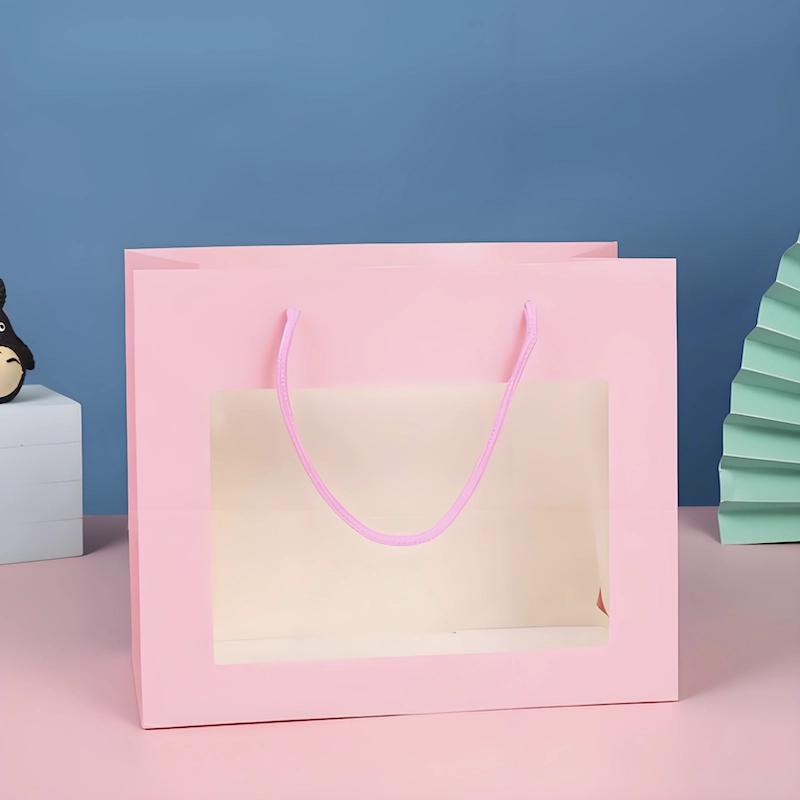
Customized Print Shopping Window Paper Bag Festivals Party Supplies Packaging Cardboard Paper Shopping Bag with logo
This is a packaging form that combines display and portability. Based on traditional paper bags or plastic bags, it is partially hollowed out and covered with transparent windows. Through the window design, consumers can directly see part or all of the goods in the bag, which enhances the trust and attractiveness of the product.

Customized Perfume Gift Box Packaging
Perfume Gift Box – Premium Custom Packaging for Luxury Fragrance Brands
Our custom perfume gift boxes are designed to combine luxury, protection, and brand storytelling — perfect for perfume brands, gift sets, and promotional collections.
Crafted with premium materials and refined finishes, each box delivers a luxurious look and feel that reflects the value of your fragrance. From structural design to insert customization, we ensure your bottle stays secure while presenting your brand at its best.
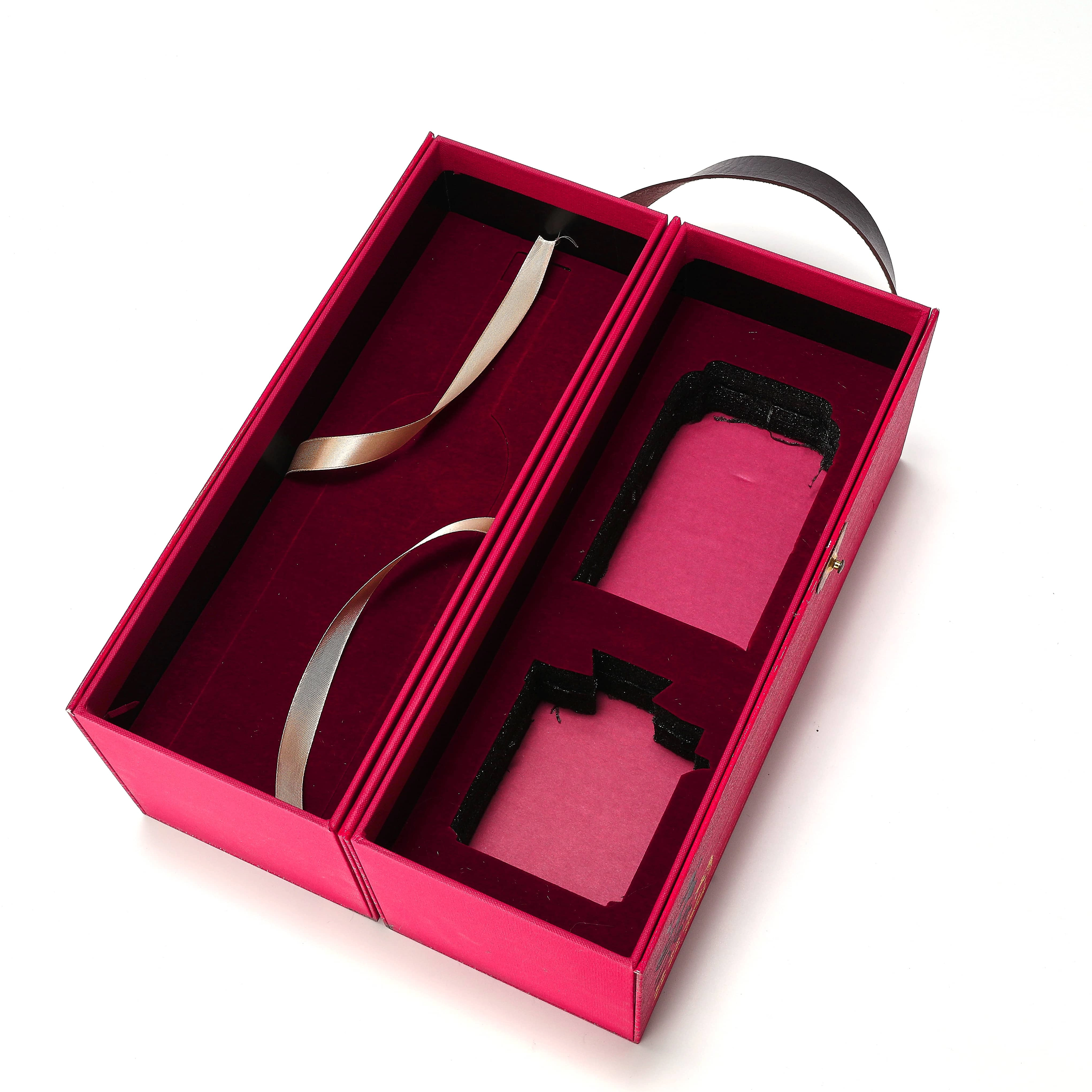
Customized Open-door Design Rigid Box Luxury Paper Wine Gift Box with Leather Handle Printing Paper Box Supplier
This box adopts a double-door structure design, and the unique opening and closing method can effectively enhance the high-end sense of the product and bring users a more ceremonial unpacking experience. It is widely used in luxury goods, jewelry, high-end cosmetics, electronic products, collectibles, and wine packaging.

Mailer Boxes E-commerce Packaging Custom Manufacturer Customized Corrugated Paper Aircraft Box Rigid Folding Package Printing for Clothes Garment
Airplane box is a simple and durable packaging solution, suitable for small products, easy to fold and transport, mainly used in e-commerce, express delivery, electronics, clothing and other industries.
© 2025 WINPACK PRINTING. All rights reserved

Wenhua Printing packaging
winpackprinting
Winpack Printing